Support

Ephesus Theatre

About

The Ephesus Theatre is a majestic ancient structure and one of the most brilliant highlights of the ancient city of Ephesus, located near the modern Turkish town of Selçuk in Turkey. Situated on the slopes of Mount Panayir, this theater is considered one of the most impressive and best-preserved ancient theaters in the world. In antiquity, it wasn't just a venue for performances; it was a true center of cultural and social life in Ephesus, gathering thousands of citizens for various events.
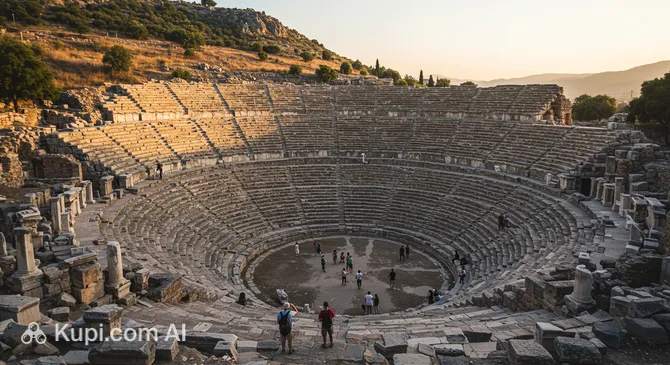
Ephesus Theatre. Illustration.
Source: Kupi.com AI

Traveler photos:

The scale of the theater is mind-boggling: its 68 rows of seats, arranged in an amphitheater, could hold up to 30,000 spectators at once! Originally built during the Hellenistic period, the theater was significantly expanded and rebuilt by the Romans, especially during the reign of Emperor Claudius in the 1st century AD. This reconstruction gave it the monumental appearance whose remains we can see today.

The theater's stage deserves special attention; it was once richly decorated with Ionic and Corinthian columns, as well as sculptures depicting gods and emperors. Although Ephesus is now about 5 kilometers from the Aegean coast due to river silt deposits, in its prime, the city was a major port, and the theater played a key role in its vibrant life. Visiting the Ephesus Theatre is a unique opportunity to touch history and feel the scale of ancient civilization.

Contacts

Since the Ephesus Theatre is part of the extensive archaeological complex of ancient Ephesus, it is best to check official Turkey tourism websites or tourist information centers in the city of Selçuk for the most accurate and up-to-date information regarding opening hours, admission fees, and possible tours. You can reach the theater as part of a visit to the entire ancient city of Ephesus, which is regularly served by buses and taxis from Selçuk.

How to contactContact
AddressAcarlar, Atatürk, 35920 Selçuk/İzmir, Türkiye
Websitewww.ephesus.us

What to Do

A visit to the Ephesus Theatre is a true immersion into the history and culture of the ancient world. Once here, you can enjoy the unique atmosphere of the ancient amphitheater, carefully examine its impressive architectural features, and try to imagine how, over 1,900 years ago, grand theatrical performances and thrilling gladiator battles took place on this very stage. Climbing to the upper rows, you will be rewarded with a magnificent panoramic view of the ruins of ancient Ephesus and the picturesque surroundings—it's the perfect spot for taking memorable photos.

From the height of the theater, you can spot interesting details of the surrounding landscape. Look for the three hills made of brick rising on pedestals—they once took the form of three bull statues, which are the symbol of the modern city of Selçuk. Additionally, the famous Marble Street begins at the theater. Walking down it through the Gates of Mazaeus and Mithridates, you can reach other iconic structures of Ephesus, including the legendary Library of Celsus, as you continue your fascinating journey through the ancient city.

Getting There

The Ephesus Theatre is located within the impressive archaeological complex of the ancient city of Ephesus. The nearest modern settlement to this gem of antiquity is the town of Selçuk, situated just a few kilometers away—about 3 km from the complex itself. If your journey begins from a larger transportation hub such as Izmir (located approximately 80 km to the north), Selçuk is easily accessible by intercity bus or train. It is a popular tourist destination, so transportation links are well-established.

From Selçuk to the Ephesus archaeological park, where the famous theater stands, there are several convenient options. One of the most common and economical choices is the local shared taxis, known in Turkey as dolmuses. They run regularly between the center of Selçuk and the entrance to Ephesus. Of course, you can always opt for a taxi for a quicker, private ride directly to the gates of the ancient city. Many travelers also prefer to join organized tours, which often include a convenient transfer from their hotel or the center of Selçuk.

For those who enjoy walking and want to take in the scenic surroundings, it is possible to walk from Selçuk to Ephesus. The distance is about 3-4 kilometers, and while such a walk takes some time, it allows you to better soak in the atmosphere of this historical region. Regardless of the method you choose, the way to the Ephesus Theatre will be the prelude to your fascinating immersion into the world of antiquity.

Nearest city: Selcuk

History & Facts

The Ephesus Theatre, a majestic witness to the ancient era, holds many secrets. While the exact date of its original construction is lost in time, it is known that its current appearance was largely shaped in 117 AD, during the peak of the Roman Empire. Originally, the arena served as a home for dramatic performances, gathering thousands of spectators eager for art and spectacle. It was a place where myths and legends came to life, and actors transported the audience to other worlds.

Over time, especially during the Roman Empire, the theater's repertoire expanded. It wasn't just actors on stage; gladiators also appeared, their battles captivating the crowds. Imagine this grand three-story stage, richly decorated with columns and sculptures—it was a work of art in itself and served as an impressive backdrop for the unfolding dramas and duels. Every stone here seems to still echo with the applause and intense cheers of the audience.

The theater's fate is inextricably linked to the history of ancient Ephesus itself, located near modern-day Selçuk, and today these ruins are among the gems of Turkey. Ephesus, which originated as a bustling trading settlement on the Aegean coast and served as an important harbor in Asia Minor, underwent several transformations. In the 5th century AD, due to the silting of the bay with river deposits rendering it unnavigable, the city center shifted to Ayasuluk Hill. After a short period of prosperity under the Seljuks in the 14th century, Ephesus was finally abandoned by the 15th century. It was thanks to earthquakes and landslides, which eventually buried the ruins under layers of earth, that ancient structures like the theater were so well preserved for archaeologists and modern travelers.

Time Needed

When planning a visit to the Ephesus Theatre, keep in mind that it is part of an extensive archaeological complex. To explore the theater itself—its stage, seating rows, and surrounding structures—1-2 hours is usually sufficient. During this time, you can leisurely stroll across its ancient stones, imagine the performances of antiquity, and take some impressive photos.

However, it is important to remember that the Ephesus Theatre is just one of the highlights of the ancient city. To fully enjoy the atmosphere of this unique place and see other significant landmarks such as the Library of Celsus, Curetes Street, temples, and terrace houses, it is recommended to set aside considerably more time. Many travelers dedicate a full day or at least half a day to exploring the entire Ephesus archaeological park to immerse themselves in its rich history without rushing.

Working Hours

The Ephesus Theatre, like many other ancient landmarks, is typically open for visitors during daylight hours; however, exact opening times can vary depending on the season. In the summer, visiting hours are usually extended, while in winter, they may be shorter. There may also be special rules or restrictions in place at the time of your visit.

To get the most up-to-date information on opening hours and ticket prices, and to find out if you need to book tickets in advance or sign up for a tour, it is highly recommended to check the official website of the Ephesus archaeological complex or inquire at local tourist information centers upon arrival in Selçuk. This will help you plan your visit effectively and avoid any surprises.

Nearby

Visiting the Ephesus Theatre is undoubtedly a deep dive into history. However, to make your journey truly unforgettable, don't limit yourself to just this one magnificent structure. Exploring the surrounding area will allow you to get a more complete picture of life in ancient Ephesus and its significance in the ancient world, as well as see other treasures this land holds.

The town of Selçuk and its immediate surroundings are literally steeped in history. Near the Ephesus Theatre, you'll find many other unique monuments, each worthy of your attention. They will help you better understand the context in which the theater existed and enrich your overall experience of traveling to Turkey.

NameDistance
Ephesus0.1 km
Library of Celsus0.3 km
Hercules Gate0.4 km
Church of Mary0.5 km
Odeon of Ephesus0.5 km
Ephesus Archaeological Site0.7 km
House of the Virgin Mary1.2 km

Have you reached the end of the page?

So the route has been studied inside and out