Support

Temple of Artemis

About

The Temple of Artemis at Ephesus, known as one of the Seven Wonders of the Ancient World, is a majestic legacy of ancient Greek civilization. This grand temple was dedicated to the cult of the goddess Artemis. Originally located in the ancient city of Ephesus on the coast of Asia Minor, its ruins can now be found on the outskirts of the modern town of Selçuk, in the Izmir province of Turkey, near the popular resort of Kuşadası.
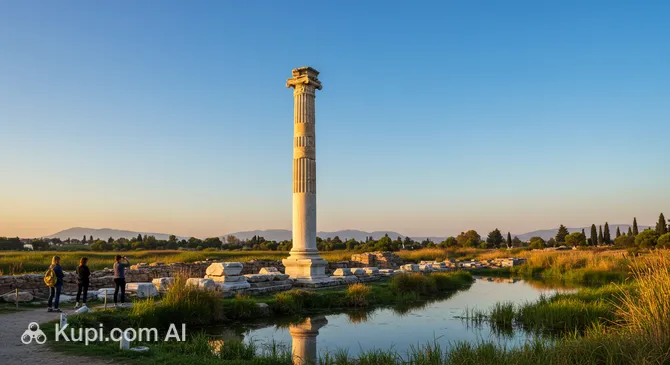
Temple of Artemis. Illustration.
Source: Kupi.com AI

Traveler photos:

For centuries, the Temple of Artemis was considered one of the most significant religious centers of the ancient world. Its history is full of drama: the temple was repeatedly destroyed by natural disasters and human actions, but each time it was rebuilt with even greater splendor. The earliest evidence of a sanctuary on this site, a so-called temenos, dates back to the Bronze Age, highlighting the antiquity and sanctity of the location.

According to ancient legends, particularly a hymn by the poet Callimachus, the founding of the temple was attributed to the legendary Amazons, adding even more mystery and charm to the site. Although only fragments of the foundation and one restored column remain today of its former magnificence, visiting the ruins of the Temple of Artemis allows you to touch great history and imagine the scale of this once-grandiose structure that left an indelible mark on world culture.

Contacts

The Temple of Artemis is an open-air historical site, so traditional contact details like a phone number or email address are generally not available. The ruins are located on the outskirts of the town of Selçuk, which is the starting point for reaching them. For the most up-to-date information on access, potential tours, or visiting hours, we recommend contacting local tourist information centers or consulting the official tourism resources of Turkey.

How to contactContact
AddressAtatürk, Park İçi Yolu No:12, 35920 Selçuk/İzmir, Türkiye
Phone number+90 232 892 60 10
Websitewww.selcuk.bel.tr

What to Do

The main reason people come to the Temple of Artemis is the chance to touch a legend and see the ruins of one of the most famous structures of antiquity. Although only one partially restored column and fragments of the massive foundation have survived to our day, the site still makes a powerful impression. Walking among the remains of the temple, visitors can try to reconstruct its former appearance in their imagination and feel the breath of centuries-old history.

The area around the ruins of the Temple of Artemis is an open-air archaeological zone where you can walk freely and take photographs. For those who want to understand the history of this unique site more deeply, information boards are usually installed nearby. They tell the story of the temple's construction, its significance in the ancient world, and the various historical twists and turns associated with it. This allows you not just to view the ruins but to learn more about the cult of Artemis of Ephesus and the sanctuary's importance to the ancient world.

Getting There

Getting to the legendary Temple of Artemis is quite simple, as its ruins are located in a highly accessible and popular tourist region of Turkey. The complex is situated on the outskirts of the town of Selçuk, in the Izmir province, not far from the famous resort of Kuşadası. If you are traveling through the country independently, Selçuk is easily reached by intercity buses from major cities like Izmir or the aforementioned Kuşadası. Bus travel in Turkey is well-developed, making this mode of transport both convenient and economical.

Once in Selçuk, you can reach the ruins of the Temple of Artemis in several ways. The simplest and most pleasant option for those who enjoy walking is to go on foot. The distance from the town center to the site is approximately 1–1.5 kilometers, so a leisurely stroll takes very little time and allows you to look around. Additionally, local public transport runs in Selçuk, which can also drop you off closer to the ruins. If you prefer comfort, taxis are always available.

Organized excursions are an excellent option for those who want to get maximum information without worrying about logistics. Many tour companies operating in the region include the Temple of Artemis in their programs, often combining it with other significant sights of ancient Ephesus nearby. This not only makes it easy to reach the site but also allows you to learn many interesting facts from a professional guide.

Nearest city: Selcuk

History & Facts

The history of the Temple of Artemis is a succession of grand constructions and tragic destructions. Back in the 7th century BC, an earlier temple existed on this site, which was unfortunately destroyed by a severe flood. However, this did not stop the ancient builders. Around 550 BC, a large-scale reconstruction began—essentially the erection of a new, even more majestic sanctuary. This ambitious project was led by the famous architect Chersiphron along with his son Metagenes. The construction of this wonder of engineering lasted nearly two centuries and was completed around 380 BC by the architects Demetrius and Paeonius.

A new chapter in the temple's history opened with a tragic event. In 356 BC, the Temple of Artemis was set on fire by Herostratus, who sought to immortalize his name in such a monstrous way. Legend has it that this sacrilege occurred on the very night Alexander the Great was born. Once the great commander came of age, he did not remain indifferent to the sanctuary's fate. In the early 3rd century BC, the temple was rebuilt, with Alexander the Great himself providing the funds for its restoration. The new structure was built according to the original design but raised on a higher foundation for better preservation and grandeur.

Unfortunately, this incarnation of the temple was not destined to stand forever. In 263 AD, the Temple of Artemis suffered a devastating raid by the Goths. Following this tragic event, a period of decline began: locals started carrying away the marble cladding, and the majestic columns gradually crumbled and sank into the marshy soil upon which the sanctuary was once built. Centuries later, in the 16th century, Ephesus—by then mostly in ruins—was conquered by the Turks. The new rulers did not restore the ancient city but founded a new town nearby: Selçuk. Thus, what was once one of the Wonders of the World, submerged in a swamp, ended up on the outskirts of a modern Turkish town, serving as a reminder of past glory.

Time Needed

When planning a visit to the ruins of the Temple of Artemis, keep in mind that exploring the site itself—where one of the Seven Wonders of the Ancient World once stood—requires relatively little time. To walk around the territory, examine the remaining foundation fragments and the famous restored column, and soak in the atmosphere of this historical site, 30 minutes to one hour is usually sufficient. This is enough time to take commemorative photos and imagine the structure's former grandeur.

However, if you want a more comprehensive understanding of the region's ancient heritage, you should consider visiting the Temple of Artemis as part of a longer excursion. The temple ruins are located in close proximity to the vast archaeological zone of ancient Ephesus, where other outstanding monuments are found. In this case, to fully explore all the main attractions of Ephesus, including the Temple of Artemis, it is recommended to set aside nearly a full day. This will allow you to leisurely explore every interesting corner of the ancient city and fully enjoy your journey into the past.

Working Hours

The Temple of Artemis in Selçuk consists of open-air ruins, so there are generally no strict opening hours like a museum. Access to the archaeological zone is usually open during daylight hours. Since it is an open site, visits are likely possible year-round; however, weather conditions can affect the comfort of your visit, especially in the summer heat or during rainy periods.

Advance ticket booking or registration to visit the ruins of the Temple of Artemis is usually not required, as it is a freely accessible area. Nevertheless, it is always recommended to check the most up-to-date information regarding possible access restrictions, events, or recommended visiting hours on the official tourism websites of Turkey or at local information centers immediately before your trip. This will help you plan your visit in the best possible way.

8:00 – 19:00

Nearby

Visiting the legendary Temple of Artemis is undoubtedly a highlight. However, to make your trip to Selçuk even more fulfilling and memorable, it is worth paying attention to other nearby attractions. Exploring the surroundings will allow you to dive deeper into the rich history and culture of this amazing region of Turkey.

Many interesting sites are within walking distance or a short distance from the temple, offering a variety of experiences—from other ancient ruins to monuments from later eras and cozy spots for relaxation. This is a great opportunity to broaden your horizons and see more than just a single, albeit world-famous, landmark.

NameDistance
Isa Bey Mosque0.3 km
Basilica of Saint John0.5 km
Old House Rest & Cafe0.6 km
Ateş Büfe0.7 km
Ayasuluk Fortress0.8 km
Ephesus Theatre2.1 km
Ephesus2.2 km

Have you reached the end of the page?

So the route has been studied inside and out