Support

Brick Breeden Fieldhouse

About

In the western part of the USA, on the Montana State University campus, stands an impressive structure that has become a symbol of the city of Bozeman. This is the Brick Breeden Fieldhouse—a multi-purpose indoor arena known for its unique architecture. At the time of its construction, it was recognized as the world's largest clear-span wooden structure, a feat that still inspires admiration from engineers and tourists alike.
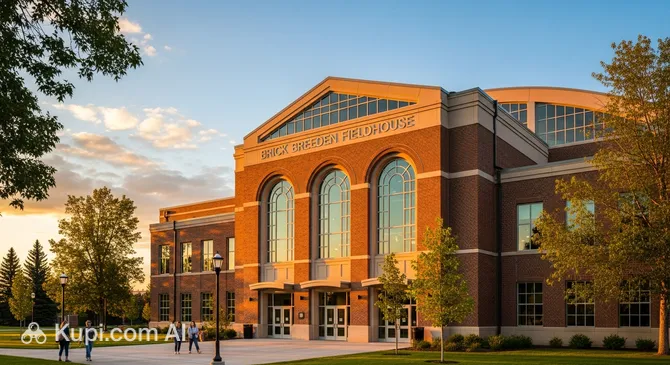
Brick Breeden Fieldhouse. Source: Kupi.com AI

Today, it is the home court for the Montana State Bobcats teams. The arena hosts thrilling basketball games, track and field competitions, and famous rodeo tournaments. It can accommodate over 8,000 spectators, creating an incredible atmosphere during major events. Thanks to its location at an elevation of about 1,500 meters above sea level, visiting this site also offers guests the bracing feel of Montana's mountain air.

In addition to athletic achievements, the building serves as an important cultural hub. It houses the Bill Ogle Hall of Fame, modern training centers, and the athletic department offices. The dome's versatile design allows the space to be easily transformed for world-class concerts, trade shows, and graduation ceremonies, making it the heart of the region's community life.

Contacts

For event schedules or ticket information, you can use the following contact details:

Address 1 Bobcat Cir, Bozeman, MT 59717, USA
Phone +1 406-994-2287
Official website brickbreeden.com

What to Do

The main reason to visit the Brick Breeden Fieldhouse is the unmistakable energy of college sports. Visitors can cheer on the university's basketball teams or witness dynamic track and field competitions. One of the most colorful events is the MSU Spring Rodeo, which annually draws thousands of fans of traditional cowboy competition. Additionally, the arena's schedule is regularly filled with concerts by popular artists, theatrical performances, and major trade shows.

History and architecture enthusiasts will find it interesting to explore the building's interior. Be sure to stop by the Bill Ogle Hall of Fame, which houses trophies and memorabilia detailing the state's athletic triumphs. Take note of the dome's engineering—the lack of central columns ensures an excellent view from any of the 8,000 seats. Following recent renovations, the arena is even more comfortable, featuring upgraded seating, improved acoustics, and a modern curtain system that can create an intimate atmosphere even for smaller events.

Getting There

The arena is located on the campus of Montana State University. Getting here from downtown Bozeman is quite easy: a drive along Main Street to the university gates takes only 5–10 minutes. There is ample parking on campus, which is often free for those attending major events.

If you prefer public transportation, use the Streamline bus network, which runs regularly to the university. Taxi services and Uber or Lyft are also active in the city. The drive from Bozeman Yellowstone International Airport (BZN) (formerly Gallatin Field), located 15 kilometers away, takes about 15–20 minutes. For those who enjoy walking, the trek from the city center is approximately 2–3 kilometers, which can be comfortably covered on foot or by bicycle.

History & Facts

The history of this structure began with the ambitious dream of architect Oswald Berg Jr. and college president Roland Renne. Initially, they planned to build an indoor football facility, but due to budget constraints, the project evolved into a multi-purpose arena. Opened in January 1957 at a cost of $1.6 million, it was at the time the world's largest clear-span wooden structure—its massive dome, over 90 meters in diameter, had no internal supports.

In 1981, the arena was named after John "Brick" Breeden, a standout player on the legendary 1929 "Golden Bobcats" team and later a successful coach and director. A few years later, the main floor was named Worthington Arena in honor of Max Worthington, another significant figure in the university's athletic history. Interestingly, in 1960, the stadium caught national attention by hosting an NBA middleweight title boxing match between Gene Fullmer and Joey Giardello.

Over the decades, the building has undergone several major upgrades. Modern flooring was installed in the 1980s, and a massive $13.2 million renovation in 1998 added a new entrance, elevators, and the Bill Ogle Hall of Fame. The most recent modernizations in 2013–2014 updated the seating and acoustic system, turning the aging arena into a state-of-the-art venue while preserving its unique historical character.

Time Needed

The time needed to visit the Brick Breeden Fieldhouse depends directly on the purpose of your visit. If you plan to attend a sports match, a concert, or the famous Spring Rodeo, you should budget 2 to 4 hours in your schedule. This allows enough time to pass through security, find your seats, and fully enjoy the event.

For those who simply want to see the architecture of the famous dome or visit the Hall of Fame, 30–60 minutes will be sufficient. Keep in mind that during major events, entry and parking times may increase, so it is best to arrive early.

Working Hours

The arena's administrative offices are typically open Monday through Friday from 9:00 AM to 5:00 PM and are closed on weekends. However, access to the stadium bowl itself depends entirely on the schedule of specific events.

Many games and concerts take place in the evenings or on weekends, so visitors are strongly encouraged to check the current event calendar on the official website in advance to plan their visit.

Nearby

A visit to the arena can be perfectly combined with a stroll through the university campus and surrounding areas. The vicinity offers guests both quiet natural spots and interesting cultural sites that help you better experience the college town atmosphere.

Attraction Type Distance (km)
MSU Duck Pond Spring Natural site 0.4
Heating Plant Industrial site 0.4
The Story Mansion and Story Park Historical building / Park 1.2
Rialto Theater / Venue 2
Revelry Gastronomy 2.1
Montana Ale Works Gastronomy 2.5
Bozeman Northern Pacific Station-1909 Historical station 3.4
Bozeman Cannery Historical site 3.4
Sidewinders American Grill Restaurant 4
Fort Ellis Historical Marker Historical marker 5.9

Reached the end of the page?

That means the route is fully explored