Support

California Surf Museum

About

Have you ever wondered how the legendary culture of ocean wave conquerors began? The California Surf Museum is a unique space in the USA entirely dedicated to the history, art, and spirit of surfing. Located in close proximity to the city of Carlsbad, this museum has been the region's premier repository of sports relics for over thirty years.
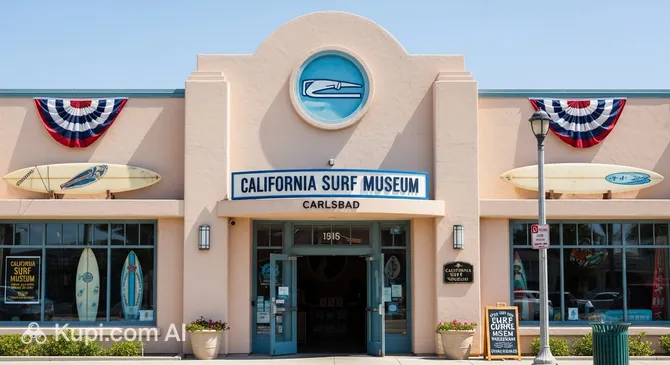
California Surf Museum. Source: Kupi.com AI

Founded in 1986, the museum has grown from a small collection into an international resource center. Today, it houses one of the most impressive surfboard collections in the world, reflecting the sport's evolution from ancient traditions to modern technologies. Each year, the museum welcomes thousands of guests, offering them not just a look at display cases, but a true immersion into the atmosphere of freedom and drive for which California is so famous.

The exposition includes both permanent collections and rotating thematic exhibitions focusing on various aspects of surf culture. Thanks to its location in the heart of Oceanside, the museum serves as a bridge between historical heritage and the vibrant modern life of the beach community.

Contacts

To contact the museum administration and for up-to-date information, you can use the following details:

Address312 Pier View Wy, Oceanside, CA 92054, USA
Phone+1 760-721-6876
Official Websitehttps://surfmuseum.org/

What to Do

Every visitor will find something captivating at the California Surf Museum. First, head to the surfboard hall: here you can see how shapes and materials have transformed over nearly a hundred years. The massive 1930s solid redwood boards, weighing dozens of kilograms, are particularly impressive—looking at them, you gain a profound respect for the athletes of the past.

One of the most emotionally powerful exhibits is Bethany Hamilton's actual surfboard. This is the very board she was riding off the coast of Kauai in 2003 when she was attacked by a tiger shark. The clear bite mark on the board serves as a silent reminder of the ocean's power and Bethany's incredible strength of spirit as she returned to professional surfing after her injury.

Beyond the boards, you can explore extensive photo archives and temporary exhibitions that tell the story of surfing's connection to ecology, fashion, and history. After touring the exhibits, stop by the gift shop for unique memorabilia, and then take a walk to the Oceanside Pier to see modern surfing history being written right now on the crests of the waves.

Getting There

The museum is located in the heart of Oceanside at 312 Pier View Way. If you are traveling by car, the most convenient route is via the I-5 highway, taking the Harbor Drive or Mission Avenue exits. There is ample parking available in the city center, and the building is just a few minutes' walk from the parking areas.

For those preferring public transportation, the train is an excellent option. The Oceanside Coaster station is located about a kilometer from the museum. Additionally, NCTD (Breeze) system buses stop within easy walking distance. The museum is only a couple of blocks away from the famous Oceanside Pier, making it a perfect final stop for a coastal stroll.

If you are arriving from San Diego International Airport (SAN), the trip by taxi or rental car will take approximately 45–60 minutes. For residents and guests of Carlsbad, getting there is even simpler—the drive north along the coast takes very little time.

History & Facts

Founded in 1986 in Encinitas, the California Surf Museum found its permanent home in Oceanside in 1991. Over decades of operation, it has evolved from a modest enthusiast collection into one of the world's richest repositories of artifacts related to wave-riding culture. It carefully preserves archives that chronicle every stage of the sport's development in the USA.

The history of surfing in California dates back to the late 19th century. Few realize that in 1885, three Hawaiian princes studying in San Mateo brought massive wooden boards to Santa Cruz and demonstrated their skills to the American public for the first time. This moment is considered the starting point for surfing's popularity on the continent. Later, in 1912, the legendary Duke Kahanamoku solidified surfing's status as a national passion.

The museum's exhibits vividly demonstrate technical progress: from hollow paddleboards to the lightweight foam models of the 1950s and the high-tech equipment of the 1990s. The museum reflects not just sporting achievements, but an entire cultural era, including the famous "beach parties" and the profound influence of surf music on California's youth.

Time Needed

To leisurely explore all the halls and delve into the history of the exhibits, the average visitor will need about 1 to 2 hours. The museum space is organized compactly and logically, allowing you to get the most out of the experience without feeling overwhelmed.

If you are a fan of design history or a professional surfer, you might want to spend a bit more time studying the rare archives and documentary footage. In any case, it is a wonderful place for an educational break between your beach activities.

Working Hours

The California Surf Museum is open to visitors daily, making it very convenient for travelers with any schedule. The museum operates from 10:00 AM to 4:00 PM, Monday through Sunday.

As the schedule may change slightly on holidays, we recommend checking the museum's official website for the most up-to-date information before your trip.

Nearby

A visit to the surf museum can be perfectly complemented by exploring other interesting spots in the vicinity. The region is famous for its theme parks and entertainment centers, most of which are within a 10-15 minute drive.

Below are some notable attractions to include in your itinerary:

NameDistance (km)
Escape To VR - Escape Rooms From The Multiverse5.4
Small water park9.7
LEGOLAND California Water Park9.8
LEGO Chima Wave Pool9.8
Make a boat water park9.8
Boomers Vista10
The Beginning10.1
SEA LIFE Aquarium10.1
LEGOLAND California10.2
Pumpkin & Polar Palooza11.2

Reached the end of the page?

That means the route is fully explored