Support

Colorado Springs Airport

About the Airport

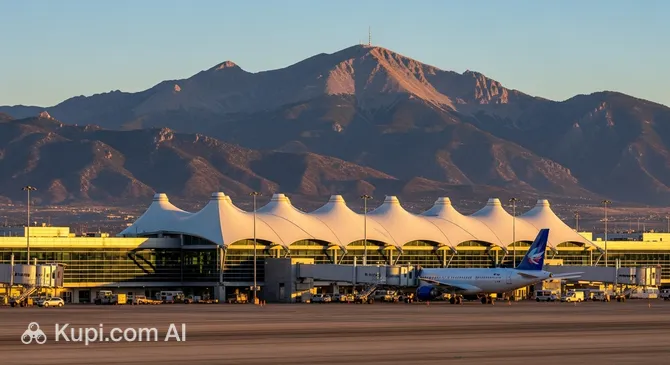
Colorado Springs Airport. Source: Kupi.com Binoculars

Colorado Springs Airport is a cosy and quiet alternative to major hubs, where the journey begins with a breathtaking panoramic view of the majestic Pikes Peak right from the terminal windows. This air gateway serves as the ideal entry point to the state's natural wonders, offering an atmosphere free from the hustle, endless queues, and stress typical of metropolises. Thanks to its convenient location and thoughtful logistics, tourists can find themselves in the heart of the Rocky Mountains almost immediately after landing, enjoying the spirit of the true Wild West from the very first minutes of their visit.

IATA Code COS
ICAO Code KCOS
City Colorado Springs
Distance to Centre approx. 11 km
Status Domestic
Annual Passengers approx. 2.2 million (2023 data)
Popular Airlines Southwest Airlines, United Airlines, Delta Air Lines
Schedule Online Flight Board

Key Advantages and Features

Colorado Springs Airport prides itself on its reputation as one of the most convenient in the region. Its main merit is compactness and speed of procedures. The path from the check-in counter to the boarding gate is intuitively clear and takes minimal time, while security zones operate efficiently, sparing travellers from tedious waiting.

The terminal's location is strategically advantageous for tourists: it is situated just a 20-minute drive from the city centre and the famous Garden of the Gods park. A unique feature of the airport is access to the "Terminal to Trail" programme: picturesque hiking and cycling routes begin right from the terminal, allowing guests to stretch their legs in the fresh mountain air immediately after their flight.

Inside the building, all conditions for comfortable waiting have been created. Passengers have access to fast free Wi-Fi and numerous charging stations for gadgets. But the main highlight of the waiting halls remains the panoramic windows, revealing arguably some of the most picturesque views of the runway against the backdrop of mountain ranges in all of North America.

Contact Information

  • Official Airport Website: FlyCOS.com — flight information, terminal maps, and news.
  • Help Desk: +1 (719) 550-1900 (Administration and general enquiries).
  • Address: 7770 Milton E. Proby Parkway, Colorado Springs, CO 80916, USA.
  • Email: For official enquiries, it is recommended to use the feedback form on the airport website.
  • Social Media: Current updates are available on pages on Facebook and Twitter (X).
  • Lost & Found:
    — Items left in the terminal or at security: +1 (719) 550-1987 (Airport Police).
    — Items left on board the aircraft: please contact your airline directly.
  • Customer Service: For questions regarding parking and accessibility, please contact the main number +1 (719) 550-1900.

How to Get to the Airport

Getting to Colorado Springs Airport or travelling from it to the city is much easier than in large metropolises. Thanks to the terminal's compactness and its proximity to major highways, the journey to the city centre (Downtown) usually takes just 15–20 minutes by car.

Car Rental
This is the most popular mode of transport for tourists planning to explore the Rocky Mountains. Rental company counters are located in the baggage claim area, and the cars themselves are within walking distance from the terminal exit — you will not have to wait for a shuttle to get to the rental car park. It is recommended to book a car in advance, especially during the high tourist season (summer and winter).

Taxis and Transfers
For those who prefer not to drive, taxi and ridesharing services (Uber, Lyft) are available around the clock. The pick-up zone is located right at the exit of the arrivals hall. A trip to the city centre will cost approximately 25–40 USD depending on the time of day and demand. Many hotels in the vicinity offer free shuttles for their guests — it is worth checking the availability of this service when booking your hotel.

Public Transport
A budget-friendly option is the buses of the Mountain Metropolitan Transit (MMT) city system. The airport is served by Route No. 37. The stop is located at the exit of the baggage claim area. However, it is worth noting that buses run at specific intervals and do not operate 24/7. This option is best suited for travellers with light luggage and plenty of time. There is currently no rail service or metro connecting the airport to the city.

Parking
The airport offers a convenient parking system with short-term and long-term zones located in immediate proximity to the terminal building. It is important to know that short-term parking is paid from the first few minutes (cost starts from 1 USD). For those meeting passengers who wish to avoid payment, a special free waiting area called the Cell Phone Lot is provided. Drivers can stay there in their car until the arriving passengers call and report that they are ready for pick-up at the terminal exit.

Alternative Airports Nearby
If you haven't found a convenient flight directly to Colorado Springs, you can consider flying into neighbouring cities. The nearest major hub is Denver International Airport (DEN), located 116.9 km away; direct shuttles run regularly from there to Colorado Springs.

For those planning a ski holiday or a trip deeper into the state, small regional airports may be convenient:

  • Aspen (ASE) — 193.4 km (popular among winter sports enthusiasts).
  • Gunnison Airport (GUC) — 196.6 km.
  • Eagle County Airport (EGE) — 212.8 km (convenient for trips to Vail).
  • Cheyenne (CYS) — 261.1 km (located in the neighbouring state of Wyoming).

Terminals and Map

Colorado Springs Airport (COS) is an example of ideal space organisation for travellers who value their time. Unlike huge, confusing hubs, everything here is extremely simple: the airport consists of one main terminal. This eliminates the need to use internal trains or shuttles to move between gates — everything is within walking distance inside a single building.

Terminal Layout and Levels

The terminal building is divided into two main levels, making navigation intuitively clear even for those arriving here for the first time:

  • Upper Level: This is the departure zone. Located here are the airline check-in counters (Ticketing), the security checkpoint (TSA Security Checkpoint), and the flight waiting area with boarding gates (Gates).
  • Lower Level: This is the arrival zone. Passengers descend here after exiting the aircraft to collect luggage (Baggage Claim) and find transport (car rental, taxi, or exit to the car park).

Departure Zone and Gates

After passing security on the upper level, you enter the "sterile area" — a single spacious concourse. The airport features 12 main boarding gates (Gates 1–12), located along one long corridor. It is impossible to get lost here: you simply walk straight and find the required number.

A feature of this zone is the large panoramic windows. Instead of blank walls, passengers can admire the runway and the mountain massif. Along the concourse, there are cafes, small shops with souvenirs and press, as well as comfortable seats with charging stations.

Check-in and Security

One of the main advantages of COS is speed. Thanks to the terminal's compactness, the path from the building entrance to your gate takes minimal time.

  • Check-in: Airline counters are located immediately at the entrance on the second floor. Queues here are rarely long, but during peak seasons (holidays, ski season) it is better to allow extra time.
  • Security: The screening point is centrally located. On average, the procedure takes 10–15 minutes. Nevertheless, the airport administration recommends arriving 90 minutes before departure to complete all formalities without rushing.

Arrival Zone and Baggage

Upon arrival, passengers walk through the jet bridge into the common corridor and descend via escalator to the lower level. The Baggage Claim hall is just a few steps from the escalator. The counters for car rental companies are also located here — you do not need to take a bus to a remote car park; cars are usually parked directly opposite the terminal exit.

Navigation Tips

Since the airport is small, you do not need complex maps. The main reference point is the floor level: if you are departing, keep to the upper level (the vehicle ramp also leads directly to the second floor). If you are meeting someone, you need the lower level. Lifts connecting both floors are provided for passengers with reduced mobility.

Airport History

The history of Colorado Springs Airport (COS) is a fascinating journey from a modest municipal airfield to the state's second most significant air hub. Over nearly a century of existence, it has experienced periods of rapid flourishing, set passenger traffic records, and adapted to the changing conditions of aviation, invariably remaining an important gateway to the Rocky Mountains.

Inception and Military Heritage

The official birth date of the airport is considered to be 1927, when city authorities allocated land for the construction of two small runways. At that time, aviation was just gaining momentum, and the facility serviced light postal and private aircraft. An important stage was the early 1940s: leading up to and during World War II, the airfield was used to train military pilots. In 1942, the facility was named Peterson Field in honour of Lieutenant Edward Peterson. This name is still borne by the adjacent Air Force base, with which the civil airport shares its runways.

The Jet Age and New Terminal

After the war, the civil sector began to develop actively. By the 1960s, it became obvious that the old infrastructure could not cope with the flow of tourists and business people. However, the real breakthrough happened at the end of the 20th century. A landmark event was the opening of the new passenger terminal in 1994. This modern building with 12 boarding gates replaced outdated structures and offered passengers the level of comfort for which the airport is renowned today. Architects focused on aesthetics: it was then that the famous panoramic windows with views of Pikes Peak appeared.

Takeoffs, Records, and Changes

The mid-1990s entered COS history as the "golden era". At this time, the airport became a hub for Western Pacific Airlines. Thanks to this, passenger traffic skyrocketed, reaching a historic maximum of 5 million passengers in 1996. The airport literally buzzed with activity, receiving flights from all over the country.

Unfortunately, following the airline's bankruptcy in 1997, transport volumes decreased, and the airport transitioned to the status of a calmer regional node. Nevertheless, this allowed the administration to focus on service quality, speed of procedures, and convenience for travellers, avoiding the chaos of overcrowded hubs.

Modern Stage

Recent years have been marked by a new cycle of development. In 2020–2021, the major low-cost carrier Southwest Airlines arrived at the airport, causing a significant increase in interest in flights via Colorado Springs and a reduction in ticket prices. In response to this, a large-scale modernisation of waiting areas was carried out, flooring was updated, and the navigation system was improved to meet modern standards.

Interesting Facts:

  • Runway Length: Due to the high altitude (the airport is located at about 1886 metres above sea level), the air here is thinner. This requires a longer take-off run for aircraft. Therefore, the runways at COS are very long — one of them reaches 4,115 metres, allowing it to accept even the heaviest aircraft.
  • Neighbours with Space: The airport shares the airfield with the Peterson Space Force Base. Passengers waiting for their flight can often observe the take-off and landing of military transport aircraft and special jets.
  • First Municipal: This was the first municipal airport in the state of Colorado, created specifically on the initiative of the city administration, rather than private individuals.
  • Solar Energy: As part of environmental initiatives, the airport actively uses solar panels to provide part of its energy needs, supporting the reputation of a "green" state.

Services and Amenities

Despite its compact size, Colorado Springs Airport (COS) offers passengers a decent level of comfort. There is no hustle of giant hubs here, but there is everything necessary to spend time pleasantly before departure. The main infrastructure is concentrated in the "clean zone" (after passing security), where travellers can relax while looking at the mountains.

Restaurants, Cafes, and Shops

Gastronomic points in the airport are selected to satisfy the needs of both rushing passengers and those with time for lunch. Most establishments are located along the central concourse between the gates:

  • Coffee Shops and Quick Bites: For morning flights, there are spots with hot coffee, fresh pastries, and "grab-and-go" sandwiches. This is an excellent option if you want to take food with you onto the plane.
  • Bars and Grills: In the departure zone, there are full-service restaurants where you can order burgers, pizza, and salads. Bars offering products from local Colorado breweries deserve mention — a way to experience local craft beverages before leaving the state.
  • Shops: The retail zone is represented by newsstands and souvenir shops. Here you can buy press, books, travel accessories (pillows, headphones), as well as clothing and gifts with Colorado and US Air Force symbols. There is no Duty-Free zone in the airport, as it primarily serves domestic flights.

Lounges and VIP Services

The main waiting area at the gates is very comfortable in itself thanks to panoramic windows and the absence of crowds. However, for those seeking privacy, a business lounge is available:

  • The Premier Lounge: Located next to Gate No. 6. This lounge offers a quiet atmosphere, complimentary snacks, beverages, high-speed internet, and comfortable workspaces. Access to the lounge can be purchased for a fee at the entrance or via a Priority Pass card (access conditions may change; it is recommended to check the programme's validity before visiting).

Connectivity and Finance

Staying connected at COS is easy and convenient. The airport provides:

  • Wi-Fi: Free and fast wireless internet from the FlyCOS network works throughout the terminal.
  • Charging Stations: Most seats in the waiting area at the gates are equipped with power sockets and USB ports. Special gadget charging stands are also available.
  • ATMs: Located both on the upper level (in the departure zone) and on the lower level (in the baggage claim area).
  • Currency Exchange: There are no full-service currency exchange points at the airport. International tourists are advised to arrange for US dollars in cash in advance or withdraw them from ATMs.

Passengers with Children

The airport is friendly to family travellers. For parents with infants, the following are provided:

  • Nursing Rooms: Special pods (Mamava pods) or dedicated rooms are installed in the departure zone where one can retreat for breastfeeding or expressing milk in a comfortable and private setting.
  • Family Restrooms: Spacious restrooms equipped with changing tables are available on both levels of the terminal.

Passengers with Reduced Mobility

The terminal fully complies with American accessibility standards (ADA). Services include:

  • Wheelchairs and Assistance: Assistance service must be requested in advance through your airline when booking your ticket.
  • Lifts and Ramps: All levels of the terminal are connected by spacious lifts.
  • Service Animal Areas: A special area for walking service dogs (Pet Relief Area) is located outside near the baggage claim area, and there is also a specially equipped room in the "sterile" departure zone.

Hotels and Rest

There are no capsule hotels directly inside the passenger terminal, but thanks to the airport's location within city limits, finding accommodation is not difficult:

  • Radisson Hotel Colorado Springs Airport: Located in immediate proximity to the terminal (virtually on the airport grounds). It can be reached in a couple of minutes.
  • Hotels Nearby: Within a 5–10 minute drive along the boulevard leading to the airport, there are many chain hotels (Hampton Inn, Holiday Inn, SpringHill Suites, etc.). Almost all of them provide a free shuttle (shuttle bus) to and from the terminal. Counters with direct phones to call shuttles are located in the baggage claim area.

Medical and Other Services

The airport does not have a full-service clinic or a pharmacy dispensing prescription medicines. However, in emergencies, first aid can be provided by security staff or airport police, who are trained in emergency response. Defibrillators (AED) are placed throughout the terminal. For business travellers, work desks with comfortable chairs are provided in the departure zone where laptops can be set up.

Where to Eat

The dining scene at Colorado Springs Airport (COS) reflects its general character: it is compact, cosy, and focused on local flavour. You will not find endless rows of fast food typical of giant hubs here, but you certainly won't go hungry. The main concept of dining in the terminal is quality over quantity, with an emphasis on local Colorado brands.

Important Note on Location:
Virtually all catering establishments are located in the "clean zone" (Airside), that is, after passing security screening. In the pre-check-in area (Landside), the choice is extremely limited and mainly consists of vending machines with drinks and snacks. Therefore, if you plan to have a full lunch, pass through TSA control first.

Restaurants and Cafes (Departure Zone)

All establishments are concentrated along the main concourse, between the boarding gates. It is impossible to get lost, as they are within direct line of sight of each other.

  • Bristol Brewing Company: The gem of the airport and the main attraction for passengers. This is a branch of a well-known local brewery located in Colorado Springs itself.
    What to try: You can order a glass of their signature Laughing Lab Scottish Ale or seasonal craft beverages. The kitchen menu features classic American dishes: juicy burgers, chicken sandwiches, fish and chips, and hearty breakfasts (eggs, bacon, toast).
    Format: A full-service restaurant with table service (Sit-down dining). Ideal if you have 40–60 minutes to spare.
  • Novo Coffee: A local Colorado coffee roaster. They brew excellent espresso and cappuccino, which significantly exceeds the quality of standard coffee from giant chains.
    Assortment: Fresh pastries (muffins, croissants), yoghurts, ready-made sandwiches, and wraps.
    Format: Quick service at the counter. The best choice for morning flights.
  • Pikes Peak Market / Food Court: A fast-food zone for those in a rush. Options like pizza, hot grilled sandwiches, and salads are usually presented here.
    Format: Grab-and-go or a quick bite at a table.

Dietary Requirements

Given the small size of the airport, there are no specialised vegan or halal-certified restaurants here, but suitable food can be found:

  • Vegetarians and Vegans: At Bristol Brewing Company, you can order a vegetarian burger (check for Impossible/Beyond Meat availability with the waiter) or large salads without meat. Coffee shops always have instant oatmeal and fruit.
  • Gluten-Free: Most sandwiches and burgers in the restaurant can be ordered "bunless" (lettuce wrap) or as a salad. Packaged gluten-free snacks (crisps, nuts, bars) are widely available at Hudson News press kiosks.
  • Halal and Kosher: Certified kitchens are absent. Passengers strictly observing these norms are recommended to limit themselves to vegetarian dishes or packaged products with appropriate labelling in shops.

Prices and Opening Hours

Pricing policy at COS corresponds to general American airport standards — expect a mark-up of 15–20% compared to city establishments.

  • Average Bill: Coffee and pastries will cost 8–12 USD. A full lunch with a drink in a restaurant will cost about 20–30 USD per person.
  • Operating Hours: Establishments open approximately an hour before the first departure (around 04:00–04:30 AM) and close after the departure of the last flight. However, the kitchen at Bristol Brewing Company may close slightly earlier than the bar, so for late departures, check kitchen hours immediately upon arrival.

Recommendations for Passengers

For a quick snack before boarding, ready-made wraps or salads in the fridges at Novo Coffee or the marketplace are ideal — this will take no more than 5 minutes.

If you wish to experience the atmosphere of Colorado one last time, set aside time for a full lunch at Bristol Brewing Company. A table by the window with a view of the mountains and a local beverage will be an excellent conclusion to your journey.

Travel Tips

Travelling through Colorado Springs Airport (COS) usually leaves only pleasant impressions thanks to its compactness and calm atmosphere. However, to ensure your departure or arrival goes flawlessly, it is worth considering several important nuances related to local specifics and US security rules.

Optimal Arrival Time

Although COS is famous for the absence of long queues typical of major hubs like Denver, it is not worth taking risks. The airport administration recommends arriving at the terminal 90 minutes before departure.

  • On ordinary days, passing registration and security takes about 15–20 minutes.
  • During peak periods (morning flights, holidays, and the height of the ski season), it is better to allow 2 hours, especially if you need to check in luggage or are travelling with ski equipment.

Check-in and Security (TSA)

The security zone is located on the upper level. The procedure is standard for the USA but proceeds faster and more calmly than in metropolises.

  • Documents: Keep your passport and boarding pass to hand. In the USA, identity verification requirements are very strict.
  • Footwear and Electronics: Be prepared to remove shoes, belts, and take laptops out of bags if you do not have a TSA PreCheck subscription.
  • TSA PreCheck: If you have this status, a dedicated expedited screening lane operates at COS, which saves a lot of time.

Seat Selection: Best Views

A flight to Colorado Springs is a real excursion. To not miss the breathtaking landscapes, be sure to book a window seat.

  • On Take-off: If you are flying north or east (most flights), choose a seat on the left side. This way you can enjoy the panorama of Pikes Peak and the Front Range ridge in all its glory.
  • On Landing: Views are magnificent from both sides, but the western side (mountain view) always wins over the plains view.

Hand Luggage: Important to Know

In addition to standard international rules, there is a nuance here regarding state legislation.

  • 3-1-1 Rule for Liquids: Liquids, gels, and aerosols must be in containers of no more than 100 ml (3.4 oz) and packed in a single transparent bag.
  • Marijuana: Despite recreational cannabis use being legal in the state of Colorado, the airport is under federal jurisdiction. Transporting marijuana into the airport territory and on aircraft is strictly prohibited. Violation of this rule can lead to serious legal problems.

Passengers with Connections

Colorado Springs is a small airport, and it is impossible to get lost here. If you have a connecting flight with the same airline (e.g., Southwest), you do not need to leave the "sterile area". Moving from one gate to another will take no more than 5 minutes on foot. Luggage in such cases is usually checked through to the final destination.

Customs Control

It is important to remember that COS is primarily a domestic airport. If you are flying from abroad (e.g., from Europe or Asia) with a transfer in a major US hub (Denver, Chicago, Dallas), you will pass passport and customs control at the first point of entry into the USA.

  • You will have to collect your luggage at the first airport, pass customs, and check it in again at the counter for transit passengers.
  • Upon arrival in Colorado Springs, no additional checks need to be passed — you simply collect your suitcase and exit to the city.

Tips for Economy and Comfort

  • Water: The air in Colorado is dry, and altitude adds to dehydration. Do not buy expensive bottled water. Take an empty reusable bottle with you and fill it for free at Hydration Stations after passing security.
  • Free Wi-Fi: Use the airport network for work or entertainment to avoid spending mobile data roaming allowance.
  • Transport: If you plan to use a taxi (Uber/Lyft), order the car once you have collected your luggage. Drivers are usually located nearby in a special car park and arrive in 2–3 minutes.

In Case of Flight Delay

Weather in the Rocky Mountains is unpredictable, especially in winter and spring (snowfalls, strong winds).

  • Watch the Boards: Download your airline's app for real-time notifications.
  • Do Not Panic: If a flight is delayed, COS is not a bad place to wait. Occupy a comfortable seat with charging by a panoramic window or visit the Bristol Brewing Company restaurant.
  • Hotels: If the flight is cancelled, contact airline staff. There are many hotels with free transfers near the airport where you can comfortably wait out bad weather.

Reached the end of the page?

That means the route is fully explored