Support

Mountain Village Airport

About the Airport

Mountain Village Airport (MOU) is not just a runway, but a true air harbour on the edge of the Alaskan wilderness. For this remote settlement, it serves as a vital artery connecting it to the rest of the world. Landing here marks the beginning of your adventure in one of the most authentic corners of the USA, where nature dictates the rules.

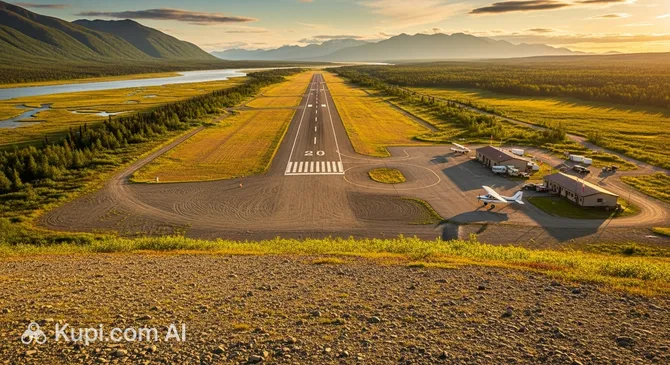
Mountain Village Airport. Source: Kupi.com Binoculars
IATA Code MOU
ICAO Code PAMO
City Mountain Village
Distance to centre ~ 1.5 km
Status Domestic
Annual Passengers ~ 4,000 (estimated)
Popular Airlines Grant Aviation, Ryan Air Services

The main feature of Mountain Village Airport is its key role in the life of the local community. It is a small but functional airport, serving primarily regional flights and acting as the main method for delivering mail, cargo, and passengers. There are no duty-free shops or huge lounges typical of major hubs here, but there is something more valuable — the spirit of real Alaska and the ability to quickly reach hard-to-access places. It is important to remember that the airport's operation depends heavily on weather conditions, so when planning your trip, it is worth allowing extra time for potential delays.

Contact Information

  • Official Airport Website: The airport does not have a separate website. Reference information is posted on the Alaska Department of Transportation & Public Facilities (DOT&PF) portal: dot.alaska.gov.
  • Inquiry Service Phone: +1 (907) 451-2200 (DOT&PF Northern Region Office, which manages the airport).
  • Airport Address: Mountain Village Airport, Mountain Village, AK 99632, USA.
  • Email: There is no direct email for the airport administration. It is recommended to use airline contacts for inquiries.
  • Airport Social Media: Official accounts are absent.
  • Lost Luggage Information: There is no lost and found counter at the airport. For issues regarding lost or damaged luggage, you must contact the airline that operated the flight directly.
  • Passenger Support Contacts: Passenger service and information are provided by the airlines:
    Grant Aviation: +1 (888) 359-4726
    Ryan Air: +1 (907) 562-2227

How to Get to the Airport

Mountain Village Airport (MOU) serves the settlement of the same name in the USA, located in a remote region of Alaska. It is important to understand that Mountain Village is not a large city, but a small settlement, and the transport infrastructure here has its own unique features. Familiar urban methods of transport, such as on-demand taxis, metro, or an extensive bus network, are absent here.

The distance from the central part of the village to the airport is minimal, and it can often be covered on foot in 10-15 minutes. The main modes of transport for locals and guests are ATVs (quad bikes) in the warmer months and snowmobiles in winter. If you are being met, it is likely that such vehicles will be used to transport your luggage. Public transport in the traditional sense does not operate here.

There are no official taxi services or car-sharing apps in Mountain Village. Transfers to/from the airport are usually organised by prior arrangement. It is recommended to contact your accommodation (e.g., hotel or lodge) or your host in advance to arrange a meeting. Sometimes locals may offer a ride for a small fee, but this is strictly an informal service.

Car rental is unavailable in Mountain Village, as the road network is limited to the boundaries of the settlement itself and does not connect to the state's main road system. Parking at the airport consists of a simple unguarded lot where residents leave their personal vehicles when meeting or seeing off passengers.

The main tip for travellers is to plan your transfer well in advance. Ensure someone meets you upon arrival, especially if you have a lot of luggage or are arriving in poor weather. Due to the remoteness and specific nature of the region, finding transport spontaneously on the spot can be extremely difficult. It is better to discuss the cost of the trip in advance, unless it is a complimentary service from your hosts.

Terminals and Map

Mountain Village Airport (MOU) is a small regional air hub, typical for remote Alaskan settlements. You will not find confusing mazes of corridors or multi-level buildings here. The airport infrastructure is as compact and functional as possible, making navigation intuitive even for those visiting for the first time.

The airport complex consists of one passenger terminal. This small building serves both departing and arriving passengers. The division into zones here is quite nominal: local airline check-in counters and the waiting area are located in a single space, creating an almost home-like atmosphere and making it impossible to get lost.

Departure and Arrival Zones are located in immediate proximity to each other. Boarding and disembarking are carried out in the standard manner for small aviation: passengers walk independently from the terminal building to the aircraft across the apron. There are no jet bridges or buses provided here, so the walk from the plane to the exit takes mere minutes.

Since the airport has only one terminal, the issue of transfers between terminals is not relevant. All necessary services are within walking distance inside a single room. This makes Mountain Village a very convenient point for travellers, as connections (if provided by your itinerary with a single airline) do not require long movements.

Terminal features are dictated by the harsh climatic conditions of the region. The building is heated and designed so that passengers can comfortably wait for their flight, sheltered from the wind and cold. The range of amenities here is basic: a waiting area with seats and, typically, counters for airline representatives (such as Grant Aviation or Ryan Air). There are no currency exchange points, large Duty Free shops, or restaurants in the terminal.

Check-in and security procedures at Mountain Village Airport are much faster than at major hubs. Queues here are a rarity. Nevertheless, it is recommended to arrive at the airport approximately 45–60 minutes before departure to calmly check in luggage and process documents. Please note that baggage weight requirements on small aircraft can be strict, and weighing takes some time.

Navigation recommendations are simple: upon arrival at the airport, head straight to your airline's counter. Since boarding takes place outdoors, be sure to keep warm clothing at hand, even if you are inside the terminal — the weather in Alaska can be unpredictable. Listen carefully to staff announcements, as visual information screens may be insufficient.

Airport History

The history of Mountain Village Airport (MOU) is inextricably linked to the development of bush aviation in Alaska and the need to ensure transport accessibility for remote settlements. Unlike major capital airports, it is difficult to name an exact date for a grand opening with a ribbon-cutting ceremony here. The air harbour formed evolutionarily, starting from the mid-20th century, when air transport became the sole reliable alternative to water travel along the Yukon River and travel by dog sled.

In the early stages of its existence, the runway was simply a levelled patch of ground used by brave polar pilots to deliver mail and medicines. Over the years, as the settlement of Mountain Village grew, the facility's infrastructure came under state management. An important stage of development was the airport's inclusion in the Alaska Department of Transportation & Public Facilities (DOT&PF) system, which guaranteed regular funding and maintenance of the strip.

Significant modernisations of the airport mainly concerned improving flight safety in harsh climatic conditions. Work was carried out to strengthen the gravel surface of the runway so that it could accept aircraft even during the muddy season. A modern lighting system was also installed, which became a critical step for ensuring round-the-clock airport operation and the ability to perform flights during the polar night.

There are no records of huge liners landing or world passenger traffic records in the airport's history, yet its achievements are measured in saved lives and delivered cargo. Mountain Village Airport has become a true "road of life" for local residents: it is through here that emergency medical evacuations to hospitals in Anchorage or Bethel are carried out. Every successful landing in a blizzard or strong crosswind here is considered a small feat by the pilots and ground crews.

An interesting fact from the airport's life is related to its geographical position. Unlike many other airfields in the region located in lowlands, Mountain Village is situated at the foot of hills, which creates special aerodynamic conditions. Pilots who have flown here for years know every peculiarity of the local air currents by heart, making the history of this place a history of high professionalism and the skill of local aviators.

Services and Facilities

Given the status of Mountain Village Airport (MOU) as a small regional hub in a remote part of Alaska, passengers should prepare in advance for a limited range of services. The infrastructure here is focused exclusively on basic transport needs, so services familiar to city dwellers are not available in the terminal.

Restaurants, cafes, and shops are absent from the airport grounds. There are no food outlets, coffee shops, or even vending machines with snacks and drinks. Travellers are strongly advised to take care of food and water in advance by purchasing everything necessary in the shops of Mountain Village itself before leaving for the airport. Souvenir stalls or Duty Free shops are also not to be found here.

Waiting Areas and Connectivity. The airport does not have separate business lounges or VIP zones. All passengers wait for their flight in the general small room of the terminal, where seats are installed. The availability of Wi-Fi is not guaranteed; internet connection quality depends on mobile operator coverage in this region. Charging stations for gadgets are not officially provided, so it is recommended to carry a fully charged power bank.

Financial and Medical Services. There are no ATMs, currency exchange points, or bank branches in the terminal building. Payment for additional services (e.g., for excess baggage) may often require cash, so it is worth withdrawing money in the village beforehand. There is no first aid post or pharmacy in the terminal; in emergencies, assistance is provided by emergency services called from the settlement.

Services for Passengers with Children. There are no specialised mother-and-child rooms or play areas at the airport. Considering the compactness of the room and potential wait times, parents should bring toys, books, and warm food for little ones. The restrooms in the terminal have only basic equipment.

Passengers with reduced mobility should take into account the specifics of small aviation. Although access to the terminal building itself is usually at ground level and causes no difficulties, boarding small aircraft is done directly from the apron via stairs. There are no special ambulifts here. It is recommended to notify the airline (Grant Aviation or Ryan Air) in advance of the need for assistance with boarding — staff in Alaska are traditionally very responsive and will provide the necessary support.

Accommodation and Business Services. There are no hotels, capsule hotels, or conference halls on the airport territory or in the immediate vicinity of the runway. The nearest accommodation options are located directly in the settlement of Mountain Village, which is a few minutes' drive away. As a rule, these are small guest houses or lodges with limited room capacity, which need to be booked well in advance.

Where to Eat

Restaurants and cafes in the generally accepted sense are absent at Mountain Village Airport (MOU). Passengers should note that this is a very small regional airport with one terminal serving as a waiting room. There are no dedicated food court zones, coffee shops, bars, or vending machines selling food and drinks. The infrastructure is entirely focused on transport tasks, not commercial services.

Recommendations for dining boil down to one main piece of advice: take care of food in advance. Given the lack of service on the airport premises (both landside and airside), the best solution for travellers is to eat a substantial meal before leaving Mountain Village or bring food with you. In the settlement itself, there is a local General Store where you can purchase snacks, pastries, canned goods, and drinks before heading to the airport.

Local cuisine and specialities suitable for travel are best sought from locals or in the village store. The region is famous for fishing, so if possible, it is worth buying smoked salmon or dried fish (yukola) — this is an excellent, nutritious, and compact snack that is convenient to take on the plane. However, remember that all products must be securely packed so that the smell does not disturb other passengers in the small aircraft cabin.

For passengers with specific dietary requirements (vegetarians, vegans, halal, gluten-free), the "bring your own" option is the only feasible one. Since meals are usually not provided on board small planes operating flights from Mountain Village (e.g., Grant Aviation or Ryan Air) — at most a bottle of water or crackers, and not always — you should not count on special meals. Prepare your own lunch box before arriving at the terminal.

Drinks and Water. There are no drinking fountains or options to buy bottled water in the terminal building. Travellers are strongly recommended to have a supply of water with them, especially if a transfer is ahead or waiting for a flight is prolonged due to weather conditions. Note that liquid restriction rules (like in major international TSA airports) may not exist on such small lines, or they are less strict, but it is better to clarify this with the carrier in advance.

Average price range and opening hours of catering establishments are not applicable here due to their absence. When planning your trip budget, use the prices in Mountain Village shops as a guide, which are generally higher than the US average due to the complex logistics of delivering goods to Alaska. Expect a basic set of snacks and water to cost more than in Anchorage or Fairbanks.

Tips for Travellers

When planning a departure from Mountain Village Airport, it is important to consider its specific nature as a small regional hub in Alaska. It is recommended to arrive at the airport 1–1.5 hours before your flight's departure. Although all procedures here are quite fast, this buffer time will help avoid rushing, especially considering that schedules may change due to weather conditions.

To save time, use online check-in for your flight via the airline's website or app. This will allow you to drop off luggage immediately upon arrival or, if you are travelling light, proceed to screening. Security control here is standard for the USA, but due to the low passenger flow, it is conducted promptly. Prepare your documents and electronic devices for inspection in advance.

Flights from Mountain Village are often operated on small aircraft, offering a unique opportunity to admire the landscapes. Ask for a window seat to enjoy breathtaking views of the endless tundra and the curves of the mighty Yukon River. Given the small capacity of the aircraft, it is better to book preferred seats in advance.

Hand luggage rules are standard: liquids in containers up to 100 ml must be packed in a transparent bag. However, please note that on small regional aircraft, stricter limits on weight and size of hand luggage may apply. Be sure to check this information with your airline before travelling.

If you have a connecting flight, clarify at baggage check-in whether it will be checked through to the final destination. It is important to allow a significant time buffer between connecting flights. Weather in Alaska is unpredictable, and delays in departures from remote settlements are not uncommon.

Mountain Village Airport serves exclusively domestic flights. Therefore, customs and passport control for passengers travelling within the USA are not required. This significantly simplifies and speeds up pre-flight formalities.

To save money, book tickets and luggage allowance online in advance — it may cost more at the airport. Bring an empty water bottle (it can be filled after security) and light snacks. When travelling to remote areas, always pack essentials, medication, and a change of underwear in your hand luggage in case of luggage delays.

In the event of a delay or flight cancellation, which often happens due to weather conditions, immediately contact an airline representative. They will offer options: waiting, rebooking, or other solutions according to the rules. Remain calm and be prepared for plans to change — this is an integral part of travelling in Alaska.
Reached the end of the page?

That means the route is fully explored