Support

Alamosa Municipal Airport

About the Airport

Alamosa Municipal Airport (ALS) is not just a runway in the picturesque San Luis Valley, but your personal gateway to the amazing natural wonders of southern Colorado. It is from here that the most convenient journey to the famous Great Sand Dunes National Park and other treasures of the region begins. This small but strategically important transport hub connects the remote valley with major cities, offering travellers a quick and comfortable start to their American adventures.
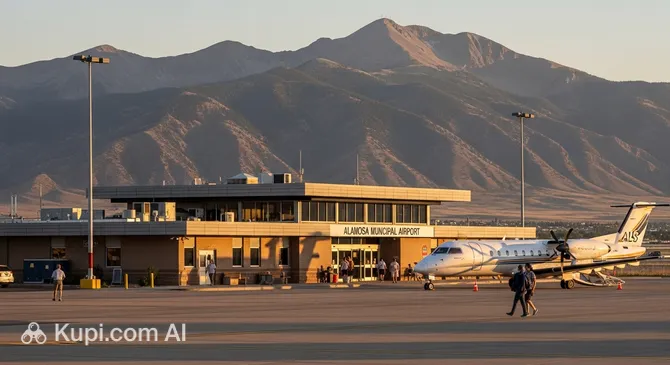
Alamosa Municipal Airport. Source: Kupi.com Binoculars
IATA Code ALS
ICAO Code KALS
City Alamosa
Distance to centre About 3 km
Status Domestic
Annual passengers Over 11,000 (according to 2022 data)
Popular Airlines Denver Air Connection

The main advantage of the airport is its compactness and convenience. There are no huge crowds or long queues here, which makes the check-in and boarding process as fast and carefree as possible. For travellers who value their time and comfort, this is the ideal choice. The airport is served under the Essential Air Service programme, which ensures reliable air connections for residents of the San Luis Valley with a major hub in Denver, opening access to the entire route network of the USA and the world.

Despite its modest size, the airport offers basic amenities, including parking and car rental services, which is especially important for those planning to explore the surroundings on their own. Its strategic location makes it a key starting point for visiting not only the Great Sand Dunes but also for trips to the San Juan Mountains or discovering the unique culture of northern New Mexico, located very close by.

Contact Information

  • Official Website: Detailed information about the airport can be found on the official website of the city of Alamosa in the section dedicated to San Luis Valley Regional Airport (ALS).
  • Help Desk Phone: For immediate enquiries, you can contact the airport administration at: +1 (719) 589-4848.
  • Airport Address: The airport is located at: 1300 State Ave, Alamosa, CO 81101, USA.
  • Email: A dedicated email address for general enquiries is usually not provided. It is recommended to use the phone for communication.
  • Social Media: Small regional airports often do not have active social media pages. The most reliable information is published on the city's official resources.
  • Lost Luggage Information: If your luggage was lost or damaged during the flight, you should immediately contact your airline's Lost and Found service. For items left in the terminal building, please contact the airport administration.
  • Passenger Support Contacts: For all questions related to booking, ticket changes, flight check-in, and special assistance, you must contact your airline directly.

How to Get to the Airport

Alamosa Municipal Airport (ALS) is located just a few kilometres from the city centre of Alamosa, making the journey there quick and convenient. There are several ways to get to the terminal, suitable for different categories of travellers.

Taxi and Transfer — the most popular and reliable option. The trip from the city centre takes on average 10-15 minutes. You can call a taxi by phone or via a mobile app, as well as book a private transfer in advance, which is especially convenient if you have a lot of luggage or are travelling in a group. The cost of the trip is low, but it is always better to check the fare with the operator before booking.

Car Rental — an excellent choice for those who value independence and plan to explore the picturesque surroundings and nature parks of the USA. Offices of several rental companies operate in Alamosa and directly at the airport. Having your own transport will allow you to move freely around the region without being tied to a schedule.

For travellers arriving in their own or rented cars, convenient parking is provided at the airport. Zones for both short-term and long-term parking are available, located within walking distance of the terminal. This is a safe way to leave your car during your absence.

It is worth noting that the public transport system in Alamosa is poorly developed, and there are no direct bus or rail routes to the airport. Therefore, tourists are advised to rely on taxis or car rentals for trips to the airport.

Terminals and Map

Alamosa Municipal Airport (ALS), also known as San Luis Valley Regional Airport, is a small regional airport, making its structure extremely simple and convenient for passengers. You will not find the confusing multi-level complexes characteristic of major air hubs here.

The airport has one passenger terminal, which serves both departing and arriving flights. It is a compact single-storey building where all key zones are located within walking distance of each other. Thanks to this, navigation through the terminal is intuitively clear, and getting lost here is practically impossible. From the entrance, you will immediately see the check-in counters, followed by the security screening area and a small waiting hall.

The departure and arrival zones are effectively parts of the same space. After check-in and passing security control, passengers enter a cosy boarding waiting area. For arriving passengers, the path is even shorter: from the aircraft, they are directed to the baggage claim area, which is located near the main entrance/exit of the terminal. Since there is only one terminal, there is no need for transfers between them.

The main feature of the terminal is its intimacy and functionality. There is no large variety of shops or dining outlets here, but there is everything necessary for a comfortable wait for your flight: seats, restrooms, and basic amenities. Completing all pre-flight formalities, including check-in and screening, usually takes a minimal amount of time. Unlike large airports, there are rarely long queues here. Nevertheless, it is recommended to arrive at the airport approximately 60-90 minutes before departure to go through all procedures without haste. This is a standard recommendation for domestic flights within the USA.

Airport History

The history of Alamosa Municipal Airport, also known as San Luis Valley Regional Airport (ALS), begins in the 1930s, when the first steps were taken to create aviation infrastructure in the region. The airport was officially opened in April 1940 and has played an important role in the transport system of the San Luis Valley from the very beginning. Its location at an altitude of over 2,300 metres above sea level makes it one of the highest-altitude airports in the USA, creating special conditions for aircraft take-offs and landings.

A key moment in the airport's history was the period of World War II. At that time, it was transferred to the control of the US Army Air Forces and used as a pilot training base under the name Alamosa Army Airfield. Here, cadets underwent initial flight training, mastering the basics of aircraft control. After the war ended, the airport was returned to civil use and resumed its operations as a municipal facility.

In the post-war years, the airport began to develop actively, serving both private aviation and commercial flights. For decades, it has been an important hub for regional carriers connecting Alamosa with Denver and other cities. One of the significant stages in its modernisation was a major reconstruction in 2005, when a new, modern terminal was built. This significantly improved the quality of passenger service and created more comfortable conditions for travellers.

Today, Alamosa Municipal Airport continues to be a vital transport facility for southern Colorado. It not only provides air connections for local residents and tourists coming to explore the Great Sand Dunes National Park and other attractions but also serves as a base for emergency services and aerial firefighting. Its rich history reflects the development of aviation in the USA and its unique role in the high-altitude region.

Services and Facilities

Alamosa Municipal Airport (ALS) is a small regional airport, so the range of services and amenities here corresponds to its compact size. Passengers are advised to plan their needs in advance, as many services common to major hubs are absent here.

Restaurants, Cafés, and Shops: There are no restaurants, cafés, or shops at the airport. The choice is limited to vending machines with drinks and snacks. It is recommended to eat and make purchases in the city of Alamosa before arriving for your flight.

Waiting Halls and Wi-Fi: There are no special VIP lounges at the airport. A general waiting hall is available for all passengers. Free Wi-Fi is provided, allowing you to stay connected. The number of power outlets for charging electronic devices may be limited, so it is better to arrive with charged gadgets.

Financial and Medical Services: There are no banks, ATMs, or currency exchange points in the terminal. All financial transactions should be carried out in the city. Medical services are limited to basic first aid and calling emergency services. There is no pharmacy or medical centre at the airport.

Services for Special Categories of Passengers: The airport is equipped to serve passengers with disabilities in accordance with standards. Accessible toilets and assistance with boarding are provided. However, it is extremely important to notify the airline in advance about the need for special assistance. There are no dedicated mother-and-child rooms or play areas for passengers with children.

Hotels and Business Services: There are no hotels, conference halls, or business centres on the airport territory. The nearest hotels and venues for business meetings are located in the city of Alamosa, a few minutes' drive from the airport.

Where to Eat

When planning a trip through Alamosa Municipal Airport (ALS), it is important to note that this is a very compact regional airport, and the choice of dining options on its premises is extremely limited. There are no full-service restaurants, cafés, or bars here.

For passengers wishing to have a quick snack, vending machines are installed in the terminal building. You can purchase a standard set of snacks, such as chips and sweets, as well as soft drinks. This is the only dining option available immediately before departure.

If you are counting on a full lunch or dinner, it is strongly recommended to do so before arriving at the airport. The city of Alamosa itself is just a few minutes' drive away and offers a much wider selection. There you will easily find restaurants serving American and Mexican cuisine, cosy coffee shops, and fast-food outlets. This is the best way to refresh yourself before a flight or relax after arrival.

Travel Tips

Travelling through Alamosa Municipal Airport, serving the city of Alamosa in the USA, usually goes smoothly thanks to its compact size. To avoid rushing, we recommend arriving at the airport approximately 90 minutes before your domestic flight departure. This time will be more than enough to complete all pre-flight formalities without unnecessary stress, as the queues here are significantly shorter than in major aviation hubs.

Flight check-in and security control procedures at the airport are standard. To speed up the process, check in for your flight online and save or print your boarding pass in advance. Keep your ID and boarding pass ready during screening. Remember that all electronic devices larger than a mobile phone must be placed in a separate tray for scanning.

Regarding hand luggage, the general rules of the Transportation Security Administration (TSA) apply here. Liquids, gels, and aerosols are allowed in containers of no more than 100 ml (3.4 oz) and must be packed in a single transparent zip-lock bag — this is the famous "3-1-1 rule". Sharp objects, such as knives, are strictly prohibited. To choose a comfortable seat on the plane, try to book it in advance: window seats will offer you magnificent views of the Rocky Mountains, while aisle seats provide more legroom and freedom of movement.

Most flights from Alamosa operate to major hubs, for example, to Denver, from where passengers continue their journey. If you have a connecting flight, ensure you have enough time between flights (at least 1.5–2 hours). It is important to clarify at check-in whether your luggage will be transferred automatically to the final destination. Since Alamosa airport serves only domestic flights, there is no customs or border control here.

To save time and money, use online check-in, book tickets several weeks before the trip, and compare taxi and parking prices. Do not hesitate to bring an empty water bottle, which can be filled after passing security control, and permitted snacks — this will help avoid unnecessary expenses while waiting for the flight.

In case of flight delay or cancellation, first contact your airline representative for up-to-date information and clarification of your rights to rebooking or compensation. The airport is small, so leisure opportunities are limited. In this case, it is useful to have a book, a charged power bank for gadgets, and pre-downloaded movies or podcasts with you.

Reached the end of the page?

That means the route is fully explored