Support

Denver International Airport

Airports in the city

About the Airport

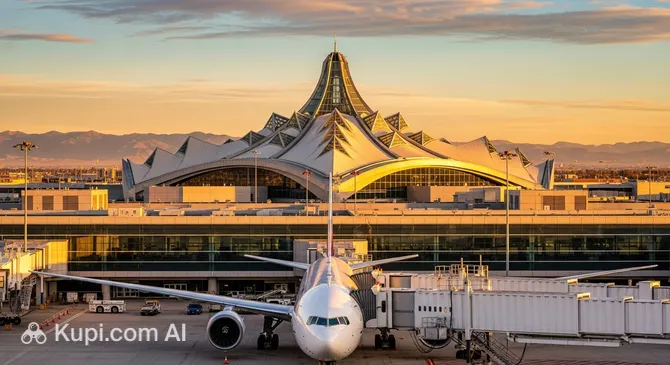
Denver International Airport. Source: Kupi.com Binoculars

Denver International Airport (DEN) is not just a vital transport hub, but a true architectural icon that cannot be confused with any other airport in the world. Its famous roof, designed as white peaked tents, resembles the snow-capped peaks of the Rocky Mountains, at the foot of which the city lies. This is an air harbour where the journey begins even before boarding the plane: here, futuristic design intertwines with legends and unique art objects, creating an atmosphere of mystery and grandeur.

IATA Code DEN
ICAO Code KDEN
City Denver
Distance to Centre ~40 km
Status International
Annual Passengers Over 82 million (2024)

Airport Features and Highlights:

Unique Architecture and Art. The Jeppesen Terminal, with its recognisable tented roof, is the airport's calling card. Inside and outside the complex sits an impressive collection of art, including the famous blue mustang statue, which locals call "Blucifer", and mysterious murals that have become the subject of numerous conspiracy theories.

Scale and Efficiency. Denver Airport is the largest in the USA by land area. Despite its gigantic size, it is renowned for thoughtful logistics: an automated underground train system runs between the terminal and concourses, allowing you to quickly reach your departure gate.

Connection with the City and Nature. The airport is located at a significant distance from the city bustle, which has allowed for the creation of a spacious and eco-friendly environment. You can reach the centre of Denver quickly and comfortably on the high-speed A Line train, which connects the terminal to the historic Union Station in just 37 minutes. Passengers also have access to free high-speed Wi-Fi and relaxation zones with mountain views.

Contact Information

Below you will find useful contacts for communicating with the administration and services of Denver International Airport (DEN).

  • Official Website: www.flydenver.com — the main source of up-to-date information on flights, parking, services, and airport rules.
  • Information Desk Phone: +1 (303) 342-2000 or (800) 247-2336. This is the main number for general enquiries.
  • Airport Address: 8500 Peña Blvd, Denver, CO 80249, USA.
  • Email: The airport does not provide a general email address for enquiries. It is recommended to use the special contact forms on the official website in the "Contact Us" section.
  • Social Media: Follow news and operational updates on the airport's official pages on Facebook, Instagram, and X (formerly Twitter), usually under the username @DENAirport.
  • Lost Luggage Information: For items lost on an aeroplane, please contact your airline directly. If items were left within the airport premises (except TSA screening zones), information can be found in the "Lost and Found" section on the official website.
  • Passenger Support Contacts: For assistance on-site, please approach the information desks in the terminal. You can also receive consultation by calling the main information service.

How to Get to the Airport

Reaching Denver International Airport (DEN), the main air hub of Denver and the entire region, can be done in several convenient ways. The choice depends on your budget, amount of luggage, and departure point in the city. The airport is located approximately 40 km northeast of the city centre, and the journey usually takes between 30 to 60 minutes.

The most popular and reliable method is the high-speed A Line train, operated by RTD. It directly connects Union Station in downtown Denver with the airport transit centre, located right at the main terminal. The trip takes only about 37 minutes, and trains depart every 15-30 minutes throughout the day. This is an excellent option to avoid traffic jams and accurately calculate travel time. Tickets can be purchased at station vending machines or via the mobile app.

If you are not in the centre, SkyRide buses, also operated by RTD, can be a convenient alternative. They ply several routes, connecting the airport with various districts and suburbs. This is a more budget-friendly, though slightly slower option compared to the train. It is best to check the current schedule and routes on the transport company's official website.

For those who value comfort and are travelling with a large amount of luggage, taxis and ride-hailing services such as Uber and Lyft are always available. Designated zones for passenger pick-up and drop-off are located on Level 5 (Departures) and Level 4 (Arrivals). The cost of the trip will be higher than public transport and may vary depending on demand and traffic conditions. You can also use shared-ride shuttles, which offer a compromise between price and convenience, delivering passengers to multiple addresses.

If you plan to travel around the USA by car, you can drive to the airport in your own or a rented vehicle. Peña Boulevard leads to the airport. There are numerous parking options on the premises: from economical long-term lots, from which free shuttles run to the terminal, to more expensive covered parking garages within walking distance of the check-in zones. Car rental centres are not located in the terminal itself but in a separate building, which is also regularly served by shuttles.

Terminals and Map

International Airport Denver (DEN) features a unique and efficient structure that distinguishes it from many other airports globally. Instead of several separate terminals, there is one main terminal named Jeppesen (Jeppesen Terminal) and three separate passenger concourses — A, B, and C, where the departure gates are located.

The Jeppesen Terminal, famous for its roof resembling the snow-capped peaks of the Rocky Mountains, serves as the central hub for all pre- and post-flight procedures. Here you will find check-in counters for all airlines, baggage drop-off points, as well as arrival and baggage claim zones. After passing security control in the main terminal, passengers proceed to their concourse.

To move between the Jeppesen Terminal and the concourses, an automated underground train (Automated Guideway Transit System) is used. It is a fast and convenient way to reach the necessary gates. The trip from the terminal to the furthest concourse, C, takes about 5-7 minutes. It is important to note that Concourse A can be reached not only by train but also via a pedestrian bridge directly from the main terminal — this is the only concourse with such an option.

Each concourse serves flights for specific airlines, which is important to consider when planning your route:

  • Concourse A is primarily used for international flights and by some major carriers, such as Frontier Airlines and Delta Air Lines.
  • Concourse B is the exclusive hub for United Airlines.
  • Concourse C serves flights for Southwest Airlines and a number of other carriers.

It is recommended to allow sufficient time for check-in and security control, especially during peak hours (early morning and holidays). The standard recommendation is to arrive at the airport at least 2 hours before departure for a domestic flight and 3 hours before an international one. Denver Airport is known for its efficiency, but large passenger flows can create queues.

Navigation Tip: Before your trip, be sure to check which airline is operating your flight and find out your concourse number (A, B, or C). After passing screening in the Jeppesen Terminal, head immediately to the train and get off at the correct station. Signs in the airport are very clear and will help you find your way without difficulty.

Airport History

Denver International Airport (DEN) is one of the most recognisable and modern aviation hubs in the world. Its history, though not spanning centuries, is full of ambitious projects, records, and even mysterious legends. Its opening marked a new chapter in the development of aviation in the USA and, in particular, the city of Denver.

The airport was officially opened on 28 February 1995, replacing the old Stapleton Airport, which could no longer cope with the growing passenger traffic and had no room for expansion. The construction of the new airport became one of the largest public projects in American history. Initially, the opening was planned for 1993 but was delayed due to serious problems with an innovative but extremely complex automated baggage handling system, which ultimately never worked at full capacity in its original form and was partially dismantled.

One of the most striking architectural features, which has become DEN's calling card, is its roof made of fibreglass with a Teflon coating. This white tented dome, resembling the snow-capped peaks of the Rocky Mountains, not only looks spectacular but also allows natural light in, reducing energy costs. Since its opening, the airport has constantly evolved: new runways have been added, including one of the longest in North America, terminals have been expanded, and new flight routes launched.

Among the interesting facts in the airport's history are the many conspiracy theories surrounding its construction. Unusual works of art, symbols on the floor, and a vast underground territory have spawned rumours of secret bases and connections with Freemasons. The airport administration treats these legends with humour and even uses them in its marketing campaigns. Another famous, but tragic symbol is the 9.8-metre statue of a blue mustang with glowing red eyes, unofficially nicknamed "Blucifer". Unfortunately, its creator, artist Luis Jiménez, died while working on the sculpture when a part of it fell on him.

Services and Amenities

International Airport Denver (DEN) offers passengers a full range of services and amenities, making the wait for a flight comfortable and productive. The airport infrastructure is thought out to the smallest detail to satisfy the needs of various categories of travellers, from business people to families with children.

Within the terminals, you will find a huge number of restaurants, cafés, and refreshment areas to suit any taste and budget — from fast food outlets to full-service restaurants where you can try dishes of local Colorado cuisine. For shopping lovers, numerous stores are open, including souvenir shops, boutiques of famous brands, and, of course, Duty Free shops with a wide assortment of goods.

Staying connected at Denver Airport is very simple. Free Wi-Fi is provided throughout the territory, and numerous charging stations for mobile devices are located in waiting areas near the departure gates. For business travellers, business centres and conference rooms are available for rent to hold meetings and negotiations; many of them are located in the hotel attached to the airport.

For those who prefer to wait for their flight in a more comfortable setting, premium lounges are available. Access is granted to business class passengers, airline loyalty card holders (e.g., United Club, Delta Sky Club, American Airlines Admirals Club), or for a separate fee. In VIP lounges, guests are offered snacks, beverages, press, and comfortable places to rest.

Financial matters are easily resolved at the airport: ATMs, bank branches, and currency exchange points are at your service. In case of unforeseen health situations, there are medical stations on the premises ready to provide first aid.

Denver Airport cares for passengers with special needs. For travellers with children, nursing rooms and special play areas are equipped. Passengers with limited mobility are provided with all necessary assistance, including escorts, ramps, and specially equipped restrooms, making the airport a fully accessible environment.

If you have a long layover or an early departure, you can stay at The Westin Denver International Airport hotel, which is connected to the main terminal. Additionally, there are many other hotels located in the immediate vicinity of the airport, served by free shuttles. This makes Denver Airport a convenient transit hub for travellers across the USA.

Where to Eat

Denver International Airport (DEN) offers a wide selection of establishments for every taste and budget. Whether you are looking for a quick snack before departure or prefer a leisurely full meal, you will easily find a suitable option. Restaurants, cafés, and refreshment areas are located in all three concourses (A, B, and C), as well as in the main Jeppesen Terminal.

For those wishing to enjoy a full lunch or dinner, it is worth paying attention to full-service restaurants located primarily in the "airside" zone, after passing security control. Here you can try dishes with local flair, such as steaks, bison burgers, or famous local beverages of Colorado. This is an excellent opportunity to relax while waiting for your flight. For connoisseurs of haute cuisine, premium establishments operate where the average bill will be higher.

If you are short on time, numerous cafés and fast-food points are at your service. Chain coffee shops, sandwich bars, pizzerias, and burger joints can be found in every corner of the airport. This is the ideal option to quickly drink a coffee, eat a salad, or take food with you on board. Such establishments exist both in the public area (landside) and after screening.

Denver Airport pays attention to passengers with special dietary needs. Many restaurants offer vegetarian, vegan, and gluten-free dishes, which are usually marked on the menu. Regarding prices, they vary from $10-15 for a quick snack to $40 and above for a main course in a restaurant. Most establishments open early in the morning and work until late evening, adjusting to the flight schedule, although some points with drinks and snacks are available around the clock.

Main Tip: The richest selection of restaurants awaits you after passing screening in Concourses A, B, and C. In the public zone before security control, the choice is more modest but sufficient for those meeting or seeing off passengers. In any case, you certainly won't go hungry at Denver Airport.

Tips for Travellers

Travelling through Denver International Airport can be comfortable and predictable if you plan all the details in advance. This major aviation hub has its own peculiarities, knowledge of which will help you save time, money, and nerves. Here are some useful tips for travellers.

Arrival Time and Check-in. Denver International Airport is one of the busiest in the world, so arrive early: 2 hours before a domestic flight departure and 3 hours before an international one. To save time, complete online check-in and print your boarding pass at home. Remember that after the check-in counter, you will have a trip on the automated train that will take you to departure gates A, B, or C, so allow an extra 10-15 minutes for this.

Passing Security Control. Prepare your passport and boarding pass in advance. All liquids in hand luggage must be in containers of no more than 100 ml and packed in a transparent bag. Laptops and other large electronics will likely need to be removed from your bag. To speed up the process, consider using TSA PreCheck or CLEAR programmes if you fly frequently within the USA.

Hand Luggage Tips. Besides standard restrictions on liquids, ensure there are no prohibited items in your hand luggage: sharp objects, flammable substances, or weapons. Medicines are best transported in original packaging with a prescription. To avoid paying for excess weight, weigh your luggage at home.

Transfers and Seat Selection. Denver is a major hub, so transfers here are not uncommon. Upon arrival, immediately check the information board for the gate number of your next flight — it may be in a different terminal. When choosing a seat on the plane, note that stunning views of the Rocky Mountains often open up from the left side during takeoff and the right side during landing.

Customs and Border Control. Arriving on an international flight, you will have to pass border and customs control. Be ready to answer questions about the purpose of your visit and present documents. Honestly declare all imported goods to avoid fines. Using Global Entry kiosks or the Mobile Passport Control app can significantly speed up the process.

Saving Time and Money. The most budget-friendly and fastest way to get to the city centre is the A-Line train, which departs directly from the airport to Denver. To avoid spending money on overpriced water, take an empty reusable bottle with you and fill it after passing security control at special stations.

In Case of Flight Delay. If your flight is delayed, do not despair. Denver Airport has many shops, restaurants, and even interesting art objects and exhibitions that will help pass the time. Follow flight status updates via your airline's mobile app and check with its representatives if you are entitled to compensation, such as food vouchers.

Reached the end of the page?

That means the route is fully explored