Support

Hyder

About

Hyder is a remarkable and secluded settlement tucked away among the dense forests and majestic mountains of Alaska. Often called the "friendliest ghost town," it is a place where life never truly stands still. Located right on the border with Canada, this unique corner of the USA attracts travelers with its pristine nature and the unmistakable atmosphere of the edge of the world.
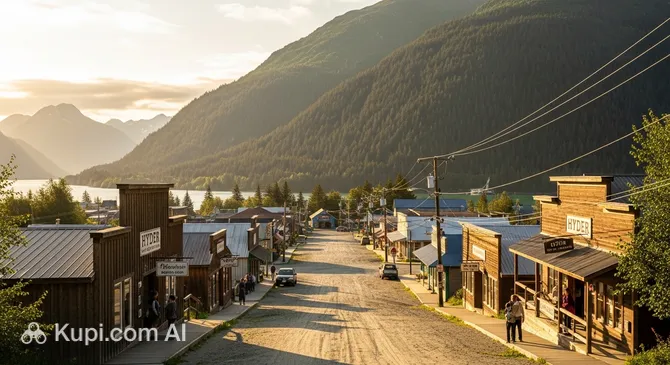
Hyder. Illustration.
Source: Kupi.com AI

The town's geographical location makes it a true phenomenon: it can only be reached by road through the Canadian town of Stewart, as Hyder has no land connections to the rest of Alaska. With a permanent population of only about 87 people, the town offers a rare opportunity to enjoy peace and quiet far from civilization. Hyder's fascinating history dates back to the early 20th century, when these lands were a hub for silver and gold mining, drawing adventurers from across the continent.

Hyder’s greatest treasures were created by nature itself. Travelers journey great distances to see the impressive Salmon Glacier—the fifth-largest glacier in Canada, which, paradoxically, is most easily accessed through this small American town. Another signature attraction is the Fish Creek wildlife observation site. During the salmon spawning season, it is one of the best places in the world to safely observe grizzly and black bears in their natural habitat.

A trip to Hyder is a chance to experience the raw, unfiltered beauty of the North. If you are looking for a place where mountains meet the sky and wilderness begins right at your doorstep, this tiny Alaskan town should definitely be on your itinerary.

Weather Overview

The climate of this secluded corner of Alaska can be described as cool and damp, which is typical for the state's coastal regions. When planning your trip, keep in mind that the weather here is changeable and requires careful preparation of your gear. To choose the ideal time for a trip to the glaciers and bears, we recommend checking the detailed monthly weather in Hyder in advance.

The summer season here is quite short and fresh. The warmest months are July and August, when the average temperature stays around 11.2°C, and on the clearest days, the air can warm up to 14.5°C. This is a comfortable time for hiking, though you shouldn't expect heat. Winters in Hyder are frosty but not extreme by Alaskan standards: in January and February, average figures range from -6.6°C to -7.7°C, while night temperatures can drop to -10°C.

A characteristic feature of the local climate is high humidity year-round. The number of days with precipitation varies from 17 to 24 per month, so waterproof clothing and reliable footwear are the main items in a traveler's suitcase. Expect a cool summer with frequent rain and snowy winters requiring warm, layered clothing.

Average monthly temperature

Average monthly precipitation

Interesting Facts

Beyond its breathtaking views and proximity to wildlife, Hyder hides many curious details that make it a true geographical and cultural phenomenon. Here are a few facts that will surprise even seasoned travelers:

  • Life by Canadian Rules. Although the town is officially part of the USA, daily life is organized in a unique way. Residents use Pacific Time (like in neighboring British Columbia) rather than Alaska Time, stores freely accept Canadian dollars, and for a long time, phone numbers were served by a Canadian area code.

  • No Inbound Border Control. This is one of the rarest places where you can enter American territory by road without stopping at customs. From the U.S. side, there is simply no border post due to the region's isolation; however, when returning to Canada, you must go through a document check.

  • The "Hyderization" Ritual. The town is famous for its unusual initiation tradition known as "Getting Hyderized." In local bars, brave souls are offered a shot of pure grain alcohol (or very strong spirits, around 75.5% ABV), after which they are presented with an official certificate confirming the tourist has passed the test.

  • A Town Without Police. Hyder has no permanent police station or sheriff. Due to its tiny population and remoteness, law and order are maintained by the residents themselves or, in emergencies, by law enforcement officers arriving by floatplane or water from other parts of Alaska.

How to Get There

A journey to this isolated corner of Alaska requires planning, as the town is not connected to the U.S. road network and is accessible by land only through Canada. You can find more about how to get to Hyder by studying various routes, but the main way to arrive remains a combination of a flight and a car trip.

There is no airport in Hyder itself, so tourists must use transport hubs in nearby cities and even the neighboring country. One of the most convenient options for those planning to rent a car is Northwest Regional Airport (YXT) in Terrace, Canada. It is located about 186 km from Hyder. The drive from there by taxi or rental car takes about 5 hours, traveling through the scenic highways of British Columbia.

The nearest American air hub is Ketchikan International Airport (IATA: KTN), located in Ketchikan. The distance to Hyder is about 123 km, but due to the lack of direct roads, the logistics are more complex and may involve ferry crossings or floatplanes. You might also consider Smithers Airport in Smithers (Canada), located 217 km away, from where the drive takes just over 5.5 hours.

For convenience, here is a summary of the main airports:

AirportPassenger trafficDistance
Ketchikan International Airport302 000123 km
Wrangell21 000158 km
Digby Island Airport60 914184 km
Northwest Regional Airport261 259186 km
Smithers Airport63 783218 km

If you prefer rail travel, keep in mind that there is no train station in Hyder itself. The closest access point for trains is the Prince Rupert Railway Station (IATA: XDW), located in the Canadian port city of Prince Rupert. The station is approximately 182 km from Hyder. Travelers arriving here by train (such as the VIA Rail touring train) will need to continue their journey by bus or car, which takes about 5 hours.

Information on the nearest train station is provided below:

StationPassenger trafficDistance
Prince Rupert Railway Station12 038182 km

Main Attractions

Small but colorful, Hyder—often referred to as "Alaska's friendliest ghost town"—boasts world-class attractions created by nature. Despite the tiny size of the settlement, it serves as the starting point for routes leading to some of North America's most spectacular landscapes. The primary draw of these parts is the chance to witness wildlife at arm's length.

The absolute magnet for tourists is the Fish Creek Wildlife Observation Site. It is one of the few places on the planet where you can safely watch grizzly and black bears feeding from a close distance. Specially equipped wooden boardwalks are built over the river, where salmon arrive to spawn from July to September. The sight of bears hunting surrounded by the ancient Tongass National Forest attracts photographers and nature lovers from all over the world. Bald eagles and river otters are also frequently spotted here.

Another magnificent location accessible from Hyder is the majestic Salmon Glacier. Although the glacier technically lies within Canadian territory, the most convenient road to reach it starts right in Hyder, Alaska. It is the fifth-largest glacier in Canada and the largest in the world accessible by a regular car. From the summit viewpoint, a breathtaking panorama opens up over the "river of ice" splitting into two flows—a sight that leaves a lasting impression due to its sheer scale and silence.

The path to the glacier follows the historic Granduc Road, which is an attraction in its own right. The roughly 40-kilometer gravel road winds through the mountains, offering views of cascading waterfalls, snow-capped peaks, and remnants of old mines that hark back to the gold rush of the early 20th century. Traveling this route is a true adventure, allowing you to feel the spirit of the pioneers and enjoy the rugged beauty of the northern mountains.

Local Cuisine

Hyder’s cuisine is a reflection of its rugged yet hospitable character. In this tiny settlement, you won't find refined fine-dining restaurants, but the local food is famous for its freshness, simplicity, and generous portions capable of satisfying a traveler after a long journey through the mountains. The gastronomic scene here is modest but authentic, closely tied to the bounty of the sea and pioneer traditions.

The main culinary hit that brings many across the border is the incredibly fresh seafood. You should definitely try the fried halibut or salmon caught in local waters. A legendary spot is a café set up in an old school bus (known among tourists as "The Bus"). Here they cook perhaps the best fish and chips in the region. The crispy crust, tender fillet, and homey atmosphere make this simple dish a true delicacy.

As for drinks, Hyder is world-famous for its specific bar culture. At the heart of it is the "Hyderization" ritual. In local establishments like the historic Glacier Inn bar, brave visitors are invited to drink a shot of pure grain alcohol (or the ultra-strong liqueur Everclear, which is 75.5% ABV). This is more of an attraction than a gastronomic pleasure, but for their courage, tourists receive a certificate. For those who prefer more traditional drinks, Alaskan Amber beer or hot coffee to ward off the northern dampness are always available.

The dining culture here is as casual as it gets. Tourists and locals eat side-by-side in a few small diners with wooden interiors, where the walls are often covered with signed dollar bills—a tradition dating back to the prospecting era. It is worth remembering that due to the town's isolation, many products are brought in from neighboring Canada, so in the shops and cafes of the USA here, you can find a surprising mix of American and Canadian goods.

Travel Tips

Hyder is a unique place where the borders between countries blur and nature dictates its own rules. To ensure your trip to this isolated corner of the USA goes smoothly and without surprises, we have prepared a list of important practical recommendations to help you avoid common mistakes.

  1. Clothing and Gear. The weather here dictates the conditions: even in summer, it often rains, and mornings can be chilly. Be sure to bring a high-quality raincoat, waterproof footwear, and a warm fleece (the layering principle works best here). If you plan to watch bears from the platform, don't forget a strong insect repellent—the gnats can be very persistent.

  2. Transport. There is no public transport, taxis, or services like Uber in Hyder. The only way to get around is by car. Since there are no car rentals in the town itself, you should rent a car in nearby Canadian cities (Terrace or Smithers). The village is very small and can be explored on foot, but reaching the Salmon Glacier or the Fish Creek observation site without a car will be extremely difficult.

  3. Finance and Currency. Hyder is unique in that Canadian dollars are readily accepted alongside American ones, often with change given in Canadian currency. Important: there are no banks or ATMs in town. The nearest ATM is across the border in Stewart, Canada. Cards are accepted in souvenir shops and hotels, but carrying a supply of cash (USD or CAD) is strongly recommended.

  4. Health and Safety. There is no hospital, pharmacy, or police station in town (in emergencies, help comes from Canada). The main danger is wild animals. Grizzly and black bears often walk right onto the town's streets. Always carry bear spray and know how to use it. Never leave food or trash outside.

  5. Communication and Connectivity. The official language is English. Be prepared for your phone to automatically connect to Canadian cell towers, which may result in roaming charges even if you have a U.S. SIM card. Wi-Fi is available in a few local establishments, but internet speeds often leave much to be desired, so download offline maps in advance.

  6. Local Etiquette. Hyder is a tiny community where everyone knows each other. It is customary to greet passersby and drivers (a simple wave of the hand). Locals are very friendly and appreciate it when tourists respect their privacy and do not enter private property to take photos of old buildings without permission.

  7. What to Avoid. The most critical mistake is arriving without a passport. Although entry into Hyder from Canada is open and not monitored by U.S. border guards, you will only be able to leave by passing through Canadian border control. Without documents, you will find yourself trapped in a dead-end town. Avoid traveling without a passport and valid visas (if required for Canada).

  8. Important Note on Time. Unlike the rest of Alaska, Hyder unofficially operates on Pacific Time (the same as neighboring British Columbia), not Alaska Time. Keep this in mind when planning shop hours, tours, or your departure so as not to get confused by time zones.

By preparing for these specifics, you can fully enjoy Hyder's wild beauty without being distracted by everyday inconveniences. This place rewards those who respect its rugged character with unforgettable impressions and a sense of true adventure.

Entertainment & Nightlife

Nightlife in Hyder is a unique experience that differs drastically from the typical understanding of entertainment in large cities. Here, you won't find neon signs for nightclubs, upscale lounges, or noisy discos that run until dawn. Evening leisure in this tiny settlement on the Canadian border centers around genuine conversation, old-fashioned hospitality, and a true frontier atmosphere. The entire "social scene" is localized along the main road, where the town's key establishments are located.

The center of gravity for all guests after dusk is the legendary Glacier Inn. This establishment is not just a bar, but a true museum of human stories. The interior is striking from the moment you walk in: the walls and ceiling are densely covered with signed dollar bills left by travelers from all over the world over many decades. The atmosphere here is extremely casual and relaxed; you might find bikers who have traveled thousands of miles sitting next to locals and nature-loving tourists. There is no dress code at all—fleece jackets and trekking boots are considered the most appropriate attire.

The Glacier Inn is also home to the famous ritual for which many stay in town overnight. The bar is known for its tradition of initiating visitors as "locals," where guests are invited to take a shot of high-proof alcohol (Everclear). Despite the strength of the drink, the environment always remains friendly and safe. Another point of interest, depending on the season, is the Sealaska Inn, where groups gather in the evenings to discuss the bears they saw during the day or simply play a game of pool. Music here comes from jukeboxes, and the style of communication feels like a meeting of old friends.

When planning an evening in Hyder, there are a few important practical points to consider:

  • Opening Hours: Life in the town settles down quite early. Bars may stay open until midnight or slightly later if there are patrons, but there are no 24-hour establishments.
  • Transport and Safety: There are no taxis or Ubers in Hyder. All movement is on foot or by rental car (provided you haven't been drinking). The town is very safe in terms of crime, but the main threat at night is bears. If returning to your hotel in the dark, be sure to carry a flashlight and stick to well-lit areas, as wild animals often wander onto the town's streets.
  • Payment: It is best to have cash on hand (both USD and CAD are accepted), as card terminals may experience interruptions due to unstable connections.

Daytime entertainment in Hyder is no less distinctive, though limited by the size of the settlement. There are no theaters or amusement parks in the traditional sense. The main "amusement park" is the surrounding wilderness. During daylight hours, tourists visit local gift shops like the Boundary Gallery, where you can buy local crafts, jade jewelry, and unique Alaska-themed gifts. Another popular activity is sending postcards from the local US Post Office—a postmark from such a remote location is considered a valuable souvenir for philatelists.

Parks & Museums

Hyder is a unique place where the concept of a "city park" is replaced by the endless expanses of the wild taiga, and museums move beyond buildings to become history in the open air. In this secluded corner of the USA, cultural heritage is inextricably linked to the rugged nature and the gold rush past, offering tourists an immersion into a true frontier atmosphere.

The main natural treasure surrounding the town is the Tongass National Forest. It is the largest national forest in the United States and the largest temperate rainforest on the planet, with Hyder located at its heart. There are no typical manicured walkways here; instead, travelers are greeted by centuries-old Sitka spruces, giant cedars, and thick carpets of moss. This space is perfect for those seeking solitude and wanting to feel the power of Alaska's pristine ecosystem.

The natural area around Fish Creek deserves special attention. While it is primarily known as a bear-watching spot, the area itself is a picturesque park with wooden boardwalks built over the water. A walk here allows you to enjoy views of the wetlands surrounded by high mountains and see the unique coastal flora, which changes colors from lush green in summer to golden in autumn.

Since Hyder is a tiny settlement, there are no large museum complexes; however, the Boundary Gallery fulfills the role of a cultural center. This place combines the functions of a shop and an art gallery, showcasing works by local artisans and craftsmen from neighboring Canada. Tourists can appreciate skillful wood carvings, unique jade jewelry, and professional wildlife photography that tells the story of life and the aesthetics of this rugged land better than any guidebook.

The town's most important architectural and historical monument is Storehouse No. 4. Built in 1896 under the direction of Captain D.D. Gaillard of the Corps of Engineers, this building holds the status of the oldest stone structure in all of Alaska. It originally served as a warehouse for the government commission engaged in boundary demarcation, and today this modest but sturdy structure stands as a silent witness to the era of Northern exploration.

For lovers of authentic experiences, simply take a walk along the Portland Canal at low tide. Old pilings and the remains of dock structures protruding from the water create an open-air museum atmosphere, recalling the times of bustling silver and gold mining. This "graveyard" of the industrial era gives Hyder that very ghost-town charm that so attracts photographers and adventurers.

Getting Around

Given Hyder's tiny size and isolated location, the most important fact for tourists to know is that the town has no public transport system whatsoever. There are no bus routes, trams, subways, or shuttles. The settlement's infrastructure is concentrated along one main road, and the modes of transportation common in large cities are simply not developed here due to the small population.

Since there is no municipal transport in Hyder, the issue of passes, transport cards, or mobile payment apps is irrelevant. You won't have to figure out fares, look for validators, or track schedules. The only logistics expenses within the region will be related to fuel for a car or a vehicle rental.

To fully explore the region, a personal or rental car is not just a convenience, but a necessity. Main attractions, such as the Fish Creek observation site and the Salmon Glacier, are located at a significant distance from the residential area (from 5 to 40 km), and reaching them on foot is extremely difficult. It is important to note that there are no car rental agencies in Hyder itself. You must rent a vehicle in advance in nearby Canadian towns (Stewart or Terrace) and cross the border in it.

Alternative modes of transport here are extremely limited. Popular ride-sharing services (Uber, Lyft) do not operate in this remote region. You can try to call a regular taxi from the neighboring Canadian town of Stewart, but you should check in advance if the driver is willing to cross the international border for a trip around Hyder. A bicycle can be a good option for wandering around the village itself, but a trip to the glacier will require serious physical fitness due to the steep mountain climbs.

Hyder's "downtown" itself is very compact and easily explored on foot. A walk from the border crossing to most shops, the post office, and bars takes only a few minutes. However, even when walking along the main street, keep safety in mind: wild animals are frequently encountered here, so pedestrians are advised to remain vigilant, especially at dusk.

Accommodation

When planning a stay in Hyder, it is important to remember that this is a tiny, isolated community with a population of fewer than 100 people. Accommodation choices here are extremely limited and characterized by rustic simplicity. There are no large hotel chains, luxury spa resorts, or modern-style hostels in town. The primary lodging options are small private hotels, lodges, and campgrounds offering basic comfort and an authentic frontier atmosphere.

The concept of "neighborhoods" in Hyder is informal, as the entire settlement's infrastructure is stretched along one main road. Most lodging options are located in close proximity to the Canadian border and within walking distance of local shops and bars. This is convenient for tourists, as any point in town can be reached in a few minutes, and the drive to the famous Fish Creek observation site takes very little time.

Key places to stay include the Glacier Inn. This establishment is known not only for its legendary bar but also for rooms catering to travelers who want to stay in the center of the action. Another significant accommodation option is the Sealaska Inn—a popular hotel offering tourists all the necessary amenities and historical character. For those seeking a more home-like setting, Kathy's Korner B&B is worth considering. For RV travelers, Eagle Shadow Campground is available; note that older guidebooks may refer to this place by its former name, Camp Run-A-Muck.

Because of the extremely limited number of rooms, booking accommodation in advance is critical. The period from July to September, when salmon spawn and bears appear, is considered peak season. During this time, vacancies can fill up several months before the arrival date. If you fail to book a place in Hyder, the only alternative is to look for a hotel in the neighboring Canadian town of Stewart, located just a few kilometers across the border.

The price range in Hyder can be described as mid-range, though costs may seem high relative to the level of service due to the region's remoteness and high demand. Bookings usually happen directly—via phone calls or simple owner websites—as many local properties are not listed on major international travel sites. Be prepared for the fact that some establishments close for the winter season.

Nearby Cities

For those looking to explore the surrounding area, Hyder serves as an excellent starting point for day trips to several interesting nearby locations:

Ketchikan is the nearest major settlement on the list, often called the "salmon capital of the world." The city is famous for its historic Creek Street, built on stilts over the water, and its impressive collection of totem poles in Saxman and Totem Bight parks, which introduce guests to the rich heritage of Alaska's indigenous peoples.

Juneau is a unique state capital that can only be reached by air or water, making a visit here a true adventure. The main magnets for tourists here are the accessible Mendenhall Glacier and the chance to observe humpback whales in their natural environment.

Sitka offers an immersion into the history of Russian America. Located on Baranof Island, this city attracts visitors with the architecture of St. Michael's Cathedral, the picturesque National Historical Park, and views of the majestic Mount Edgecumbe, which resembles Mount Fuji.

CityPopulationDistance
Stewart4874 km
Alice Arm59 km
Loring107 km
Yes Bay111 km
Bob Quinn Lake118 km

These nearby destinations provide a glimpse into the diverse culture and landscapes of the region.

Shopping & Souvenirs

Overview: Shopping in Hyder is an experience that perfectly matches the spirit of this tiny settlement: modest, authentic, and free from the hustle of big cities. Do not expect fashion boutiques or large chain stores here. The town's commercial sphere is primarily aimed at tourists looking for mementos and locals buying essentials. The main feature of local shopping is the opportunity to purchase unique souvenirs with Alaska symbols and the famous "Hyderization" slogan.

Main Shopping Districts/Streets: Given the town's size, the concept of a "shopping district" is very informal. All commercial activity is concentrated along the main road—International Street (which becomes Highway 37A). It is here, within walking distance of the border, that the few local shops, souvenir stalls, and the post office are located. A walk down this street takes very little time but allows you to peek into all the interesting points of sale.

Shopping Centers: There are no shopping centers, malls, or department stores in Hyder at all. This is a place for those who want to escape urbanization. For more extensive purchases, clothing, or electronics, locals and tourists must travel to the nearest large Canadian cities, such as Terrace or Smithers.

Markets: There are no traditional markets in the usual sense in town. However, during the summer season when the tourist flow increases, local artisans may display their work in small shops or galleries, such as the aforementioned Boundary Gallery. Here you can find handmade items that take the place of a flea market's assortment.

Souvenirs: The main trophy to take home from Hyder is anything related to the "Getting Hyderized" tradition. T-shirts, hats, stickers, and certificates confirming you took the famous shot at a local bar are incredibly popular. It is also worth looking for jade items (the region is rich in this stone), jewelry from local craftsmen, photo albums featuring bears and glaciers, and smoked salmon. Sending a postcard with the postmark of this isolated corner of the USA is also considered an excellent souvenir.

Opening Hours and Payment: Stores in Hyder operate with an eye on the tourist season (from May to September). During this time, they are open from morning to evening, often seven days a week. In winter, many locations close or operate on a very reduced schedule. A unique feature of payment is that both American and Canadian dollars are readily accepted here (often at a 1:1 rate for small amounts, though it is better to check). Credit cards are accepted in major souvenir shops, but cash is always preferred due to possible communication outages.

Tax-Free (if applicable): One of the pleasant bonuses of shopping in Hyder is the absence of sales tax, as the state of Alaska does not levy one at the state level, and Hyder itself has no local tax. This makes purchases here slightly more advantageous compared to neighboring Stewart, Canada, where British Columbia taxes are added to the price. There is no special Tax-Free refund system for tourists here, as the tax is non-existent to begin with.

Reached the end of the page?

That means the route is fully explored