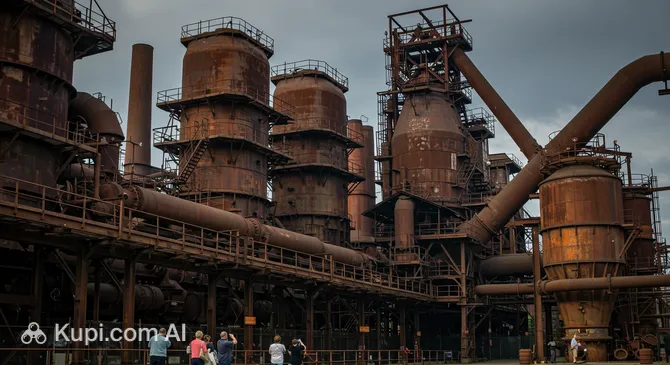
The Carrie Blast Furnaces National Historic Landmark is a majestic industrial complex located in Pittsburgh, USA. The site features the preserved Blast Furnaces No. 6 and No. 7, built in the early 20th century. These are the only surviving pre-World War II structures of their type in the region.
Carrie Blast Furnaces National Historic Landmark. Illustration.
Source: Kupi.com AI
Traveler photos:
This historic monument stands as a silent witness to America's industrial peak, when Pittsburgh was rightfully known as the steel heart of the world. Today, the complex operates as an open-air museum, allowing tourists to see the impressive industrial ruins that were once the center of the country's metal production.
A visit to this location offers a unique opportunity to feel the sheer scale of the industrial era. Giant metal structures and the raw aesthetics of the abandoned plant make the Carrie Blast Furnaces a must-see for history buffs and industrial tourism enthusiasts.
Contacts
To plan your visit to this industrial museum, it is recommended to check the official contact details in advance. You can contact the administration by phone or visit the official website for the current tour and event schedules.
At the site of the former steel mill, visitors can expect more than just a walk among old workshops; there is also a rich cultural program. One of the most surprising activities here is attending theatrical performances—for example, plays by Shakespeare. The unique contrast between classical art and the rugged industrial landscape creates an unforgettable atmosphere.
For fans of technology and architecture, the main interest will be the blast furnaces themselves, along with the massive conveyors and brick structures. Getting a close-up look at mechanisms of this scale, which once operated at full capacity, leaves a powerful impression. The industrial aesthetic of this place is truly captivating in its power and monumentality.
Photographers will find endless inspiration here: rusty metal structures, mysterious dark corridors, and the play of sunlight on weathered surfaces allow for stunning shots. This space is ideal for those seeking unusual visual imagery and wanting to capture the beauty of abandoned production.
Getting There
The easiest way to reach the historic landmark, located at 801 Carrie Furnace Blvd, is from downtown Pittsburgh by car or taxi. The trip takes about 15–20 minutes depending on traffic, and there is visitor parking available on-site.
If you plan to use public transport, you can take city buses heading toward Allegheny County. However, keep in mind that it may require a short walk through the industrial zone from the nearest stop to the museum entrance.
For maximum convenience, it is recommended to use navigation apps, as the access roads to old industrial sites can sometimes be less than obvious for tourists.
Nearest city: Pittsburgh
History & Facts
The history of this site is inextricably linked to the development of American heavy industry and the labor movement. In 1892, the land where the furnaces stand was the site of one of the most dramatic labor conflicts in US history. This event became a landmark milestone in the history of workers' struggle for their rights.
Blast Furnaces No. 6 and No. 7 in Pittsburgh were built in the early 20th century and remained in operation for many decades. They functioned until the 1970s, when metallurgical production in the region began to decline. Today, this complex is a unique example of industrial architecture, preserved in its original form since pre-war times.
The technology presented here demonstrates the evolution of metallurgy: from ancient smelting methods to the large-scale use of coke as fuel, which allowed Pittsburgh to become the steel-making capital of the world. The preservation of these giant structures allows modern generations to visually study the engineering achievements of the last century.
Time Needed
To leisurely explore the massive steel structures and fully immerse yourself in the atmosphere of the past, a typical visitor will need 2 to 3 hours. This is enough time to walk the grounds, take high-quality photos, and read the information stands.
If you plan to participate in a specialized tour or attend one of the cultural events, it is worth setting aside at least half a day. The scale of the site is impressive, and you may often find yourself wanting to stay longer to examine the smallest details of the machinery that once forged the country's industrial power.
Working Hours
Please note that access to the landmark grounds is limited and only available on certain days of the week. From Monday to Thursday, the complex is closed to visitors.
The schedule for the rest of the week is as follows: on Friday, the landmark is open from 10:00 AM to 2:00 PM, and on Saturday and Sunday, visitors are welcome from 9:00 AM to 3:00 PM. It is recommended to check tour times in advance, as they may not coincide with the general opening hours of the site.
Day
Working hours
Monday
Closed
Tuesday
Closed
Wednesday
Closed
Thursday
Closed
Friday
10:00 – 14:00
Saturday
9:00 – 15:00
Sunday
9:00 – 15:00
Nearby
Exploring the surroundings of the Carrie Blast Furnaces will allow you to dive deeper into the atmosphere of Pennsylvania and complement your industrial walk with vivid impressions. The Pittsburgh area offers a variety of leisure options, from extreme amusement parks to peaceful riverside recreation areas.
Many interesting locations are within a short drive, making this site an excellent starting point for a full day of adventure. Below are the nearby attractions worth visiting: