Support

San Diego International Airport

Airports in the city

About the Airport

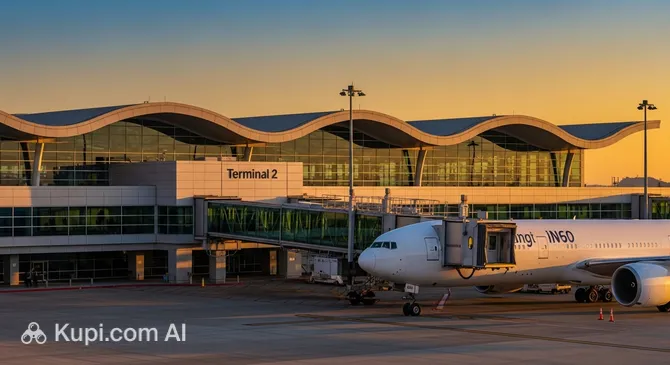
San Diego International Airport. Source: Kupi.com Binoculars
San Diego International Airport, often referred to by locals as Lindbergh Field, offers travelers one of the most cinematic welcomes in the world of aviation. The landing approach here is a true attraction: airliners descend right over the rooftops of downtown skyscrapers, creating a thrilling illusion for passengers of flying amidst city streets. This air hub is unique for its incredible efficiency—being the busiest single-runway airport in the USA, it seamlessly handles a dense flow of flights. Thanks to its location practically in the centre of the metropolis, tourists can find themselves on famous beaches or at their hotel just minutes after collecting their luggage.
IATA Code SAN
ICAO Code KSAN
City San Diego
Distance to Centre 5 km
Status International
Passengers per Year About 23 million (2023 statistics)

Airport Features and Advantages

The key advantage of San Diego Airport is its phenomenal proximity to the city. The terminals are located just 5 kilometres from the business centre, the historic Gaslamp Quarter, and the cruise port, sparing tourists from long transfers. For passenger convenience, free electric San Diego Flyer shuttles operate between the airport and the Old Town transit hub, allowing for quick connections to city trolley lines and trains.

The airport's infrastructure is constantly improving, reflecting the sunny and relaxed spirit of Southern California. The recently opened first phase of the renovated Terminal 1 has significantly enhanced comfort: spacious waiting halls, outdoor relaxation zones, and art installations have appeared here. The airport's gastronomic map deserves special attention—local brands are widely represented in the terminals, offering California cuisine and local beverages.

Despite the high intensity of flights and having only one runway, the airport is renowned for its organisation and clear navigation. Travelers should secure window seats in advance: views of San Diego Bay, Balboa Park, and the city hills during takeoff and landing are considered some of the most picturesque on the West Coast.

Contact Information

To obtain the most up-to-date information regarding flights, services, and regulations at San Diego International Airport, it is recommended to use official communication channels. Below are the main contact details.

  • Official Website: www.san.org — here you will find flight schedules, terminal maps, parking information, and much more.
  • Information Service Phone: +1 619 400 2404 (for calls from outside the USA)
  • Address: 3225 N Harbor Dr, San Diego, CA 92101, USA
  • Email: The airport uses a contact form on its official website for feedback. A direct email for general inquiries is not published.
  • Social Media:
  • Lost & Found Information: If you have lost an item in the terminal or on airport grounds, contact the Lost & Found service at +1 619 400 2140 or fill out the online form on the website. Important: for issues regarding lost or damaged luggage, you should contact your airline directly.
  • Passenger Support Contacts: For general questions and assistance at the airport, you may contact the main information service phone number.

How to Get to the Airport

San Diego International Airport (SAN) is located surprisingly close to the city centre, making the journey there quick and convenient. Travelers can choose from several modes of transport suitable for any budget and travel style.

The most economical way to get to the airport is by using public transport. The bus route ``MTS Route 992`` is specifically designed to connect the terminals with the centre of San Diego. The bus runs every 15-30 minutes and goes to the Santa Fe Depot station, where you can transfer to ``Amtrak`` and ``COASTER`` trains, as well as Trolley trams (Blue and Green lines). The trip to the centre takes only about 15–20 minutes and costs a few dollars, making this option the best choice for budget travelers.

For those who value comfort and speed, ``taxis and ridesharing services`` such as Uber and Lyft are always available. A car ride from the city centre will take 10–15 minutes, excluding traffic. This is a more expensive option, but it ensures "door-to-door" delivery. The airport has designated zones for picking up and dropping off passengers using these services. Additionally, shared-ride vans are available, which can be beneficial for groups or families with a large amount of luggage.

If you plan to actively travel around Southern California, ``car rental`` is your best choice. All major rental companies are represented in a unified Rental Car Center, to which free shuttles run around the clock from the terminals. For those arriving at the airport in their own vehicle, several parking options are provided: from hourly parking at the terminals to more budget-friendly long-term and economy parking lots located slightly further away. It is recommended to book a parking space online in advance to get the best price.

Terminals and Map

San Diego International Airport (SAN) has a simple and clear structure consisting of two main terminals — Terminal 1 and Terminal 2. Despite its compactness, the airport efficiently handles passenger flow, and navigating it poses no difficulties. Before traveling, always check which terminal your airline departs from, as they are clearly allocated.

Terminal 2 is the larger and more modern terminal, serving the majority of international flights and major American carriers such as Alaska, Delta, American Airlines, and United. It is divided into two parts: West and East, connected to each other. This terminal is famous for its spacious waiting lounges, a large selection of shops, cafes, and restaurants, as well as interesting art installations. The departure zone with check-in counters and security checkpoints is located on the upper level, while the arrival and baggage claim zone is on the lower level.

Terminal 1 is historically older and is currently undergoing massive reconstruction to create a modern and comfortable space. It primarily serves budget and some domestic airlines, including Southwest Airlines and Frontier. Despite the ongoing work, the terminal continues to function. Amenities here may be more limited compared to Terminal 2, so it is worth factoring this into your plans.

Movement between terminals is organised via free shuttle buses that run every 10-15 minutes. Stops are located at the entrance to each terminal. Although the terminals are within walking distance of each other, the walk can take about 15-20 minutes, so the shuttle is a more convenient option, especially if you have a lot of luggage. Inside each terminal, navigation is intuitive thanks to clear signage.

For check-in and security procedures, it is recommended to arrive at the airport at least 2 hours before a domestic flight and 3 hours before an international one. During peak hours, such as early morning or holidays, wait times at security control may increase, so it is better to add an extra buffer to this time. To avoid rushing, verify the location of your boarding gate in advance and enjoy a cup of coffee or a stroll through the shops.

Airport History

The history of San Diego International Airport (SAN) is inextricably linked with the golden age of aviation and one of its main heroes. Officially opened on August 16, 1928, the airfield was named "Lindbergh Field" in honour of the famous pilot Charles Lindbergh. This choice was not accidental: it was in San Diego that his plane, the "Spirit of St. Louis," was built, on which he made the first solo transatlantic flight in history. Thus, from its very foundation, the airport became a monument to one of the greatest achievements in aviation history.

In the first decades of its existence, the airport developed actively. By the 1930s, it was accepting the first regular passenger and mail flights, connecting the city with other parts of the USA. During World War II, the airfield played an important strategic role, being transferred for use by the US Army Air Corps and serving as a base for the assembly and ferrying of B-24 Liberator bombers, which were produced at the local Consolidated Aircraft plant.

With the advent of the jet age, a new chapter in the airport's development began. To meet the demands of the time and the growing passenger flow, the then-modern Terminal 1 was opened in 1967. Later, in 1979, Terminal 2 was added, which was then significantly expanded in 1998 to accommodate an increasing number of international flights. These stages of modernisation allowed the airport to maintain its significance for decades to come.

One of the most large-scale reconstructions in recent history was the "The Green Build" project, completed in 2013. Within the framework of this project, 10 new boarding gates were added to Terminal 2 and the infrastructure was significantly improved, with great attention paid to environmental standards. Today, San Diego International Airport holds an impressive record: it is the busiest commercial airport with a single runway in the USA and one of the busiest in the world. Its unique location in immediate proximity to the city centre makes the landing approach especially picturesque for passengers and requires high skill from pilots.

Services and Amenities

San Diego International Airport (SAN) offers passengers a wide spectrum of services, making the wait for a flight comfortable and productive. For those feeling hungry, the terminals host numerous cafes, lounges, and restaurants to suit any taste—from fast food outlets to establishments with full menus. Additionally, travelers have access to shops, including Duty Free, where one can purchase souvenirs, press, electronics, and travel essentials.

Free Wi-Fi operates throughout the airport territory, allowing you to stay connected or work while waiting for departure. For charging gadgets, a large number of power outlets and USB ports are conveniently located in relaxation zones and at boarding gates. For business travelers, business centres and conference rooms equipped with everything necessary for meetings are available.

For a more comfortable wait, the airport has several VIP lounges. Access to them is usually granted to business class passengers, airline loyalty program members, or for a separate fee. Here you can rest in silence, enjoy complimentary snacks and beverages, and utilise workspaces.

The airport infrastructure is fully adapted for passengers with special needs: there are ramps, elevators, and specially equipped restrooms. Travelers with children will appreciate the presence of mother and child rooms. In case of necessity, one can visit first aid stations. ATMs and currency exchange points are also located in the terminals.

If you have a long layover or an early flight, you will easily find a hotel in the immediate vicinity of the airport. Many of them offer free transfers to the terminals, making them a convenient choice for rest between flights.

Dining

San Diego International Airport (SAN), located in the USA, offers travelers a wide selection of establishments for every taste and budget. Whether you are looking for a quick coffee before departure or a full dinner with a view of the runway, you will find a suitable option here. Most restaurants and cafes are located in the zones after passing security control (airside) in both terminals.

The airport takes pride in representing the local gastronomic scene. In Terminal 2, you will find branches of famous San Diego establishments, such as Stone Brewing and Ballast Point Brewing Company, where you can experience the local flavors for which the city is known. Lovers of California cuisine should visit restaurants offering fresh fish tacos — the region's signature dish. Additionally, popular chains such as Starbucks, Peet's Coffee, and Einstein Bros. Bagels are present here.

For those in a hurry, numerous kiosks with sandwiches, salads, and pastries, as well as fast-food points, are ideal. This is an excellent option to take food on board with you. If you have time to relax, full-service restaurants are at your disposal. For example, at Phil's BBQ you can enjoy authentic barbecue, and at PGA TOUR Grill — healthier dishes. These establishments offer a comfortable atmosphere for awaiting your flight.

Many airport restaurants have options for passengers with specific dietary preferences. Vegetarian and gluten-free dishes are usually marked on the menu and are easily found in salad bars or establishments specialising in healthy eating. Finding vegan and Halal options may be more challenging, so it is recommended to study menus online in advance or clarify information on-site. Most establishments open early in the morning (around 5:00-6:00) and operate until the last flight departs, approximately until 22:00-23:00.

Prices at the airport are generally higher than in the city. A light snack or coffee will cost $10-15, while a full lunch in a mid-range restaurant will cost from $25-40 per person. Remember that the best selection of establishments is located after passing security. In the public zone (landside), the choice is usually limited to a few coffee shops and stores, so plan your time to eat within the secure departure zone.

Travel Tips

To ensure your journey from San Diego or to this sunny city is as comfortable as possible, use our tips for navigating San Diego International Airport.

Arrival Time: For domestic flights within the USA, it is recommended to arrive at the airport 2 hours before departure, and for international flights — at least 3 hours prior. Morning and evening peak hours can be particularly busy, so allow extra time for the journey and passing through controls.

Check-in and Security: Save time by checking in for your flight online 24 hours before departure. At the airport, be prepared for standard TSA screening procedures. Laptops and large electronics will need to be removed from your bag, and all liquids in carry-on luggage must be in containers of no more than 100 ml and packed in a single transparent bag.

Seat Selection: If possible, choose a window seat when landing or taking off from San Diego. The airport is located in immediate proximity to the city centre, and you may be treated to unforgettable views of downtown, the bay, and the famous Coronado Bridge.

Carry-on Luggage: In addition to liquid regulations, ensure that your carry-on luggage contains no prohibited items, such as sharp objects, flammable substances, or weapons. A full list is always available on the official Transportation Security Administration (TSA) website.

For Passengers with Transfers: This is a critically important point for San Diego Airport. Terminal 1 and Terminal 2 are not connected in the secure zone after screening. If you need to transfer from one terminal to the other, you will have to exit the security zone, use the free "Terminal Loop" shuttle bus, and pass through control again. Consider this when planning connections.

Customs Control: For travelers arriving on international flights, the process can be expedited. Members of the Global Entry program can use special kiosks. The Mobile Passport Control (MPC) app is also available, allowing you to fill in data electronically in advance.

Saving Time and Money: It is more cost-effective to book airport parking online in advance. To get to the city, use the free San Diego Flyer shuttle, which will take you to the Old Town Transit Center, a major transport hub. Bring an empty water bottle with you — after security screening, you can fill it at special water stations.

In Case of Flight Delay: If your flight is delayed, contact your airline's counter for current information and possible compensation (e.g., food vouchers). The airport offers free Wi-Fi, numerous cafes, and shops to brighten up the wait.

Reached the end of the page?

That means the route is fully explored