Support

Tijuana Airport

About the Airport

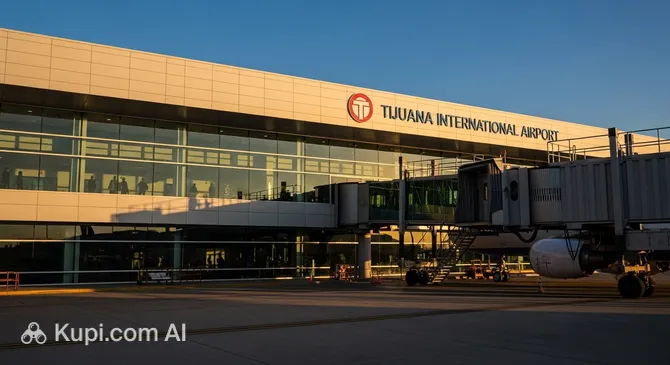
Tijuana Airport. Source: Kupi.com Binoculars

General Abelardo L. Rodríguez International Airport (IATA: TIJ) is not just an air gateway to northwestern Mexico, but a unique transport hub located right on the border with the USA. Its main feature is the direct pedestrian bridge Cross Border Xpress (CBX), which connects the airport terminal with the San Diego area in California. This allows travellers to cross the border between the two countries in a matter of minutes, bypassing busy land border crossings. The airport is the fifth busiest in Mexico and a key hub for many Mexican airlines.

IATA Code TIJ
ICAO Code MMTJ
City Tijuana
Distance to centre approx. 10 km
Status International
Annual passengers approx. 13.2 million (2023)
Popular Airlines Volaris, Viva Aerobus, Aeromexico
Schedule Online Flight Board "Tijuana Airport"

A key advantage of Tijuana Airport is its strategic location and innovative infrastructure. The Cross Border Xpress terminal, opened in 2015, radically changed the travel experience between Southern California and Mexico. Passengers with a valid boarding pass can purchase a ticket to cross the bridge and find themselves on the other side of the border in just 15-20 minutes, where check-in counters, US customs control, as well as car rental services and shuttles await them. This opportunity makes flights from Tijuana to numerous destinations within Mexico particularly attractive and budget-friendly for tourists from the USA. Furthermore, the airport is an important hub for low-cost carriers such as Volaris and Viva Aerobus, offering a wide network of routes at affordable prices.

Contact Information

  • Official Website: You can find up-to-date information on flights, services, and regulations on the official website of the management company Grupo Aeroportuario del Pacífico (GAP): www.aeropuertosgap.com.mx/es/tijuana.html.
  • Help Desk Phone: For immediate information, you can call: +52 (664) 607 8200.
  • Airport Address: Aeropuerto Internacional de Tijuana, Carretera Aeropuerto S/N, Col. Nueva Tijuana, Tijuana, Baja California, C.P. 22435, México.
  • Email: A direct email address for general inquiries is not published. It is recommended to use the feedback forms on the official website.
  • Social Media: Follow news and updates on the airport's official social media pages, for example, on Facebook.
  • Lost Luggage Information: In case of luggage loss on board the aircraft, you must first contact your airline's representative. For items left in the terminal building, please contact the airport's "Objetos Olvidados" (Lost and Found) service.
  • Passenger Support Contacts: For consultations and support regarding general inquiries, the main airport telephone number can be used.

How to Get to the Airport

Getting to Tijuana International Airport (TIJ) is quite simple, thanks to its convenient location and variety of transport options. The airport serves not only Tijuana and northern Mexico but is also a popular alternative for travellers from Southern California. Depending on your budget and preferences, you can choose one of several ways to reach the terminal.

Public Transport is the most budget-friendly option. City buses and shared taxis (known as colectivos) run throughout the city and have stops near the airport. This method is excellent for light travellers and those wishing to save money. However, please note that routes can be confusing, and buses may be overcrowded during peak hours. There is no direct express route from the city centre, so a transfer may be required.

Taxis and Ride-hailing Services, such as Uber or DiDi, are the most convenient and popular way to get to the airport. A trip from central districts, for example, Zona Río, will take approximately 20-30 minutes depending on traffic conditions. It is recommended to use official taxis or verified apps for safety and fair pricing. This is an ideal choice if you have a lot of luggage or are travelling in a group.

A unique feature of Tijuana Airport is the Cross Border Xpress (CBX). This is an enclosed pedestrian bridge that directly connects the airport terminal in Tijuana with its own terminal in San Diego, USA. This allows passengers to cross the border on foot, avoiding long queues at vehicle checkpoints. If you are flying from the USA or heading there, CBX is undoubtedly the fastest and most efficient way. Thanks to this, Tijuana Airport becomes a convenient gateway for residents of Southern California, offering an alternative to San Diego International Airport for flights within Mexico.

For those who value independence, representatives of many international and local car rental companies operate at the airport and in its vicinity. You can book a car online in advance and pick it up upon arrival or return it before departure. If you are arriving in your own vehicle, paid parking is provided on the airport territory, offering both short-term and long-term rates.

Terminals and Map

Tijuana Airport (TIJ) has a simple and clear structure, making it convenient for passengers. It consists of one main terminal and the unique cross-border crossing Cross Border Xpress (CBX), which connects the airport directly to US territory.

The main terminal serves all domestic and international flights. Its layout is quite simple: on the ground floor, there are check-in counters and the arrivals area with baggage claim, while the upper floor houses the security zone and boarding gates. Thanks to the linear design and clear signs in Spanish and English, navigating the terminal causes no difficulties. All services — from cafes and shops to currency exchange points — are located in easily accessible places.

A distinctive feature of the airport is the Cross Border Xpress (CBX) terminal. This is not a terminal in the traditional sense, but an enclosed pedestrian bridge about 120 metres long, which allows passengers with a valid boarding pass to cross the border between Mexico and the USA directly from the airport building, arriving at a special terminal in San Diego (California). This significantly saves time compared to passing through standard land border crossings. The entrance to the CBX bridge is located in the main part of the terminal and is well marked.

Departure and arrival zones are clearly separated. After passing security control, passengers enter a spacious departure lounge with numerous shops, a food court, and boarding gates. The arrival zone includes passport control, luggage belts, and customs inspection.

The time required to complete all formalities can vary. On average, you should allow about 1.5-2 hours for check-in and security on domestic flights, and at least 3 hours for international ones. If you plan to use the CBX crossing, add extra time for purchasing a ticket (if you haven't done so online) and passing through US migration control. During peak hours, queues can be longer, so it is always better to arrive with time to spare.

Airport History

The history of Tijuana International Airport, named after General Abelardo L. Rodríguez, begins in 1951. It was then officially opened to replace an older, smaller airfield and meet the growing needs of the city, which was developing rapidly due to its border location. From the very beginning, its location in immediate proximity to the US border defined its strategic importance.

A key moment in the airport's development was 1970, when a new terminal and control tower were built. This large-scale project significantly increased capacity and improved the quality of passenger service, laying the foundation for future growth. The airport became an important hub for domestic flights within Mexico, especially for residents of the state of Baja California.

The most iconic and unique event in the airport's recent history was the opening of the Cross Border Xpress (CBX) terminal in December 2015. This is the world's first cross-border pedestrian bridge directly connecting the terminal in Tijuana with a customs and migration control building in San Diego, USA. This innovation revolutionized travel, allowing passengers from the USA to reach the Mexican airport quickly and conveniently, bypassing busy land border crossings.

Over the past decades, the airport has been constantly modernized to cope with steadily increasing passenger traffic. Runways have been reconstructed, waiting lounges expanded, and new jet bridges added. Today, Tijuana Airport is one of the busiest in the country and stands as a bright example of successful international cooperation and an innovative approach to aviation infrastructure development.

Services and Amenities

Tijuana Airport offers passengers modern service and all necessary amenities for a comfortable wait for their flight. Regardless of the purpose of your trip, you will find a wide range of services here making your stay at the airport pleasant and convenient.

For those feeling hungry, the terminal has numerous restaurants and cafes: from fast food outlets to establishments serving authentic Mexican cuisine. Passengers also have access to Duty Free shops, souvenir stalls, and kiosks where you can purchase travel essentials, press, or gifts. To stay connected, take advantage of the free Wi-Fi, and special stations are located throughout the terminal for charging gadgets.

For a more comfortable wait, you can visit the VIP lounges, which offer a secluded atmosphere, snacks, beverages, and business services. Financial services are available at the airport, including ATMs and currency exchange points, where necessary transactions can be easily conducted. In case of illness, there is a medical unit ready to provide first aid.

The airport cares for all categories of travellers. Mother and child rooms are equipped for passengers with children. Travellers with reduced mobility are provided with special assistance, and the terminal infrastructure, including ramps and lifts, is fully adapted to their needs. Conference rooms may be available for business people, and for those who need to rest between flights, several hotels are located near the terminal, reachable on foot or by shuttle.

Where to Eat

At Tijuana International Airport (TIJ), passengers will find diverse dining options capable of satisfying any taste and budget. Whether you are looking for a quick snack before departure or a full dinner, there is plenty to choose from. Most establishments are concentrated in the main terminal, both in the public area and after passing security control.

In the landside area, accessible to all visitors, there is a food court with popular fast-food chains such as Burger King and Subway, as well as local coffee shops. This is a convenient place to have a bite if you arrived early or are meeting arrivals. Here you can have a coffee and eat a sandwich in a calm atmosphere before proceeding to boarding.

After passing security control (airside), the choice becomes even wider. Here you will find restaurants offering both international cuisine and authentic flavours of Mexico. This is your last opportunity to enjoy real tacos, quesadillas, or burritos before flying out. Additionally, there are several bars in the departure zone where you can relax with a beverage while waiting for your flight.

For those who want to eat quickly and inexpensively, snack kiosks or fast-food outlets are ideal. If you have time, we recommend visiting one of the à la carte restaurants. Prices at the airport are generally slightly higher than in the city but remain within reasonable limits. Many establishments try to include vegetarian and gluten-free options in the menu, however, choices for specific diets, such as Halal, may be limited.

Most cafes and restaurants operate from early morning until late at night, aligning with the flight schedule. Some establishments, especially coffee shops, may be open 24/7. Travelling through Tijuana Airport, you certainly won't go hungry and will be able to find an option to your liking, be it aromatic coffee with pastries or a hearty Mexican lunch.

Travel Tips

To ensure your journey through Tijuana Airport goes smoothly and without unnecessary stress, make use of our tips. A little planning will help you save time, money, and nerves, whether it's the start of your holiday in Mexico or a transit flight.

Arrival Time: We recommend arriving at the airport at least 2 hours before a domestic flight and 3-4 hours before an international one. If you plan to use the unique Cross Border Xpress (CBX) bridge to cross the border with the USA, allow extra time, as passing border control can take from 30 minutes to several hours during peak times.

Check-in and Security: The simplest way to save time is to complete online check-in for your flight. This will allow you to head straight to baggage drop or, if you are travelling light, to the security checkpoint. Keep your passport and boarding pass ready. In hand luggage, all liquids must be in containers up to 100 ml and packed in a transparent bag.

Seat Selection: If you want to admire the views, choose a window seat. If the ability to easily stand up and stretch your legs is important to you, your choice is an aisle seat. Seats at emergency exits usually offer more legroom, but airlines may charge an additional fee for them and have specific requirements for passengers.

Hand Luggage: Standard rules prohibit carrying sharp objects, flammable substances, and liquids in volumes greater than 100 ml per container. Be sure to check your airline's rules, as there may be additional restrictions on the weight and dimensions of hand luggage. Always keep valuables, documents, and medication with you.

For Transfer Passengers: Tijuana Airport is a convenient hub. If you have a connecting flight, check in advance whether you need to collect and re-check your luggage. A key feature is the Cross Border Xpress (CBX) bridge, which directly connects the terminal with US territory (San Diego). This is an ideal option for those flying from Mexico to the USA or vice versa.

Customs Control: When entering Mexico, you will need to fill out a customs declaration (often this can be done online in advance). Honestly declare all goods subject to duty. Random checks may also be conducted when departing the country.

Saving Time and Money: Book a taxi or transfer online in advance — this is often cheaper than taking a car on the spot. Take an empty reusable water bottle with you to fill it after passing security and avoid spending on drinks. Duty-Free prices are not always the lowest; compare them with the cost of goods in the city.

In Case of Flight Delay: First of all, contact your airline counter for information on the flight status and possible options (rebooking, provision of food or hotel). Find out about your rights as a passenger. If you have travel insurance, check if it covers cases of flight delays or cancellations.

Reached the end of the page?

That means the route is fully explored