Support

Thompson Falls

About

Thompson Falls is a picturesque spot hidden among the majestic mountains of Montana. This small town charms travelers with its peaceful atmosphere, pristine air, and incredible landscapes that reveal themselves from literally every street.

Located in the Clark Fork River valley in the northwestern USA, the town is surrounded by the dense Lolo and Kootenai National Forests. Thanks to a climate that is mild for this region, it is often called the "Banana Belt of Montana." With a population of only about 1,300 people, Thompson Falls maintains the coziness and genuine friendliness of a small community where you can take a break from the hustle and bustle of major metropolitan areas.
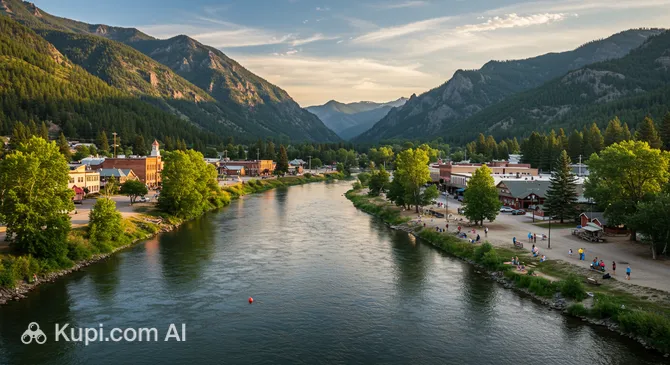
Thompson Falls. Illustration.
Source: Kupi.com AI

The town is named after the famous explorer and cartographer David Thompson, who established a trading post here in the early 19th century. The fascinating history of Thompson Falls is closely intertwined with the era of the Wild West exploration, logging, and the development of railroads, all of which are reflected in the architecture and local museums.

The main attraction for tourists is nature itself. Travelers come here to see the famous waterfalls (now home to a dam), stroll through the scenic Island Park located right in the middle of the river, and walk across the historic High Bridge. This area is considered a paradise for fishing enthusiasts, hikers, and wildlife observers, with deer and bighorn sheep frequently spotted nearby.

If you are looking for tranquility and a chance to experience the untouched nature of the American West, Thompson Falls is the perfect stop on your itinerary.

Weather Overview

The climate of this region features distinct seasonality, offering travelers different conditions for relaxation throughout the year. Summer here is truly comfortable: in July and August, daytime temperatures often reach 27–28°C, and precipitation is practically absent. This is the driest time of year, perfect for hiking and lakeside recreation.

Winter months bring cool weather and high humidity. In January and February, the average temperature stays around -4...-5°C, and can drop to -9°C at night. This period sees the highest number of days with precipitation—up to 18 per month—so warm and waterproof clothing is essential.

Spring and autumn are characterized by gradual temperature changes and regular rains, especially in May and November. To choose the best dates for your trip, we recommend checking the weather in Thompson Falls in advance of your visit. Generally, expect a warm sunny summer and a cool, damp winter.

Average monthly temperature

Average monthly precipitation

Interesting Facts

Thompson Falls holds many stories that make it special even among Montana's other picturesque towns. Here are a few facts to help you better understand this place and its unique character.

  • "The Star Gazer": Explorer David Thompson, for whom the town is named, was known among local tribes as "Koo-Koo-Sint." This translates to "The Star Gazer." He earned this respectful nickname for his habit of spending nights with a sextant, studying the stars to create incredibly accurate maps of this region.

  • The Evolution of the Falls: The town's name refers to natural waterfalls on the river, but the landscape looks different today. In the early 20th century, the Thompson Falls Dam was built on the site of the natural rapids. This structure, built directly on the rocky ledges, became an important part of the town's history and stands as an impressive industrial monument against the backdrop of wilderness.

  • History Behind Bars: One of the most colorful attractions is the Old Jail Museum. This historic museum is housed in the former county jail building. Here, travelers can learn about the harsh daily lives of early settlers, the development of logging, and the history of Sanders County, literally within the walls of an old dungeon.

  • An Oasis in the Middle of the River: A unique feature of the town's geography is Island Park. This is not just a recreation area, but an entire island in the middle of the Clark Fork River that has been converted into a park. It is connected to the town by a famous bridge and serves as the primary spot for walks, picnics, and observing local fauna.

How to Get There

Since Thompson Falls is located in a scenic but remote mountainous area, a direct flight to the town itself is not possible. Travel usually involves flying to one of the nearby major transportation hubs followed by a car trip. You can find out more details on how to get to Thompson Falls to plan your optimal route.

One of the closest options is Glacier Park International Airport (FCA), located in Kalispell. The distance to Thompson Falls is about 113 km. This is a popular regional airport that handles many flights. A trip from here by rental car or taxi will take approximately 2 hours, allowing you to enjoy the Montana views along the way.

Another convenient arrival point is Missoula Montana Airport (MSO), located in Missoula, about 121 km from Thompson Falls. This is a key regional transportation hub with moderate passenger traffic, offering a good selection of flights. The drive from the airport to downtown Thompson Falls also takes about 2 hours.

If you need more flight options, consider Spokane International Airport (GEG) in Spokane. This is a large airport located 165 km from your destination. Although the distance is greater, the wide choice of airlines can be an advantage. The journey by car or bus from Spokane takes approximately 2.5–3 hours.

For convenience, here is a summary of the main airports:

AirportPassenger trafficDistance
Glacier Park International Airport1.0 mln113 km
Missoula International Airport1.0 mln121 km
Pullman–Moscow Regional Airport150 000164 km
Spokane International Airport4.3 mln165 km
Lewiston-Nez Perce County Regional Airport82 000186 km

Main Attractions

Although Thompson Falls is a small town, it is rich in places where you can enjoy the beauty of Montana's wilderness and immerse yourself in the atmosphere of the past. The main attractions here are inextricably linked to the Clark Fork River and the region's historical heritage.

Island Park is perhaps the most beloved recreation spot for both locals and tourists. The park occupies an entire island in the middle of the river and offers excellent opportunities for leisurely walks. It features well-maintained trails, picnic areas, and cozy gazebos. Travelers appreciate this spot for the chance to see wildlife, including deer and various birds, in their natural habitat while still being within the town limits.

The island can be accessed via the famous High Bridge. This historic bridge, built in the early 20th century, is an important landmark in its own right. A walk across it allows you to appreciate the power of the river and take panoramic photos of the scenic gorge and the Thompson Falls Dam. It is an ideal viewpoint, especially at sunset when the sun slips behind the mountain peaks.

History buffs should visit the Old Jail Museum. The building, which served as the county jail for much of the 20th century, has preserved its authentic and somewhat austere atmosphere, including original jail cells. The museum's collection is rich in artifacts telling the story of early settlers, the development of the logging industry, and David Thompson himself. This site offers a deeper understanding of the history of the American West's frontier days.

For those willing to drive a bit further from the center, the Ross Creek Cedars Scenic Area is a must-see. This is a unique protected grove of giant western red cedars, some of which are over 500 years old, with diameters reaching up to 2.5 meters. Walking along the shaded paths among these ancient giants provides a fairy-tale feeling and a sense of complete unity with nature.

Local Cuisine

The cuisine of Thompson Falls reflects the generous nature of Montana and the traditions of the American West. You won't find pretentious fine-dining restaurants here, but you can enjoy honest, hearty, and incredibly delicious food that is perfect for recharging after long mountain hikes. Local establishments focus on fresh regional products and a homey atmosphere.

The main gastronomic symbol of the region is undoubtedly the huckleberry. This wild berry grows in the forests surrounding the town and serves as the base for many signature treats. Be sure to try the famous huckleberry pie, served warm, often with a scoop of vanilla ice cream. Also popular are jams, syrups, and thick huckleberry shakes, which can be found in almost any local cafe or roadside stand.

Meat lovers should look out for bison steaks or juicy bison burgers. Bison is considered leaner and slightly sweeter than beef, and they know how to prepare it perfectly in Montana. Given the town's location on the river, fresh rainbow trout—grilled or fried to a golden crust—frequently appears on menus as a simple yet exquisite dinner choice.

As for beverages, the drinking culture is closely tied to local production. Craft brewing flourishes in Montana, so you can always order a glass of quality local ale or lager brewed in the region at Thompson Falls bars and taverns. Among non-alcoholic drinks, freshly brewed coffee is popular—local coffee shops serve as morning meeting spots—as is refreshing homemade lemonade made with huckleberries.

The dining culture in the town is casual and cozy. Locals and tourists alike prefer eating in small family diners, pizzerias, and grill bars where owners often know their patrons by name. There is no strict dress code: you can comfortably walk into an establishment in hiking gear after fishing or trekking. In the summer, life hums on outdoor patios, and many travelers prefer taking food to go for a picnic in Island Park overlooking the river.

Travel Tips

Traveling to Thompson Falls is an immersion into Montana's world of wilderness and small-town charm. To ensure your vacation is as comfortable as possible and free of surprises, we have prepared a list of useful recommendations to help you plan your trip to this picturesque corner.

  1. Clothing and Gear: Mountain weather is changeable, so the principle of layering is your best friend. Even in summer, bring a fleece jacket and a windbreaker for cool evenings. Be sure to have comfortable, broken-in trekking shoes for walking the trails. Don't forget sunglasses and sunscreen—the mountain sun can be very intense.
  2. Transport: Public transport in town is practically non-existent, and distances to natural attractions can be significant. The most reliable option is renting a car. This will give you freedom of movement throughout the region. In the downtown area, you can get around on foot while enjoying the views, but a car is necessary for trips to the waterfalls or the forest.
  3. Finances: The primary currency is the US Dollar. Credit cards are accepted in most shops, hotels, and gas stations, but having some cash (small bills) is useful for small cafes or souvenir purchases. There are ATMs in town. Don't forget the tipping culture: it is customary to leave 15–20% of the check amount in restaurants.
  4. Health and Safety: Thompson Falls is surrounded by national forests home to wildlife, including bears. If you plan on hiking, be sure to buy bear spray and learn the rules of behavior when encountering predators. Pharmacies in town follow standard hours and close in the evening, so it's better to put together a personal first-aid kit with necessary medications in advance.
  5. Communication and Navigation: The main language is English. Mobile service and Wi-Fi are stable within town limits, but the signal may disappear as soon as you drive a bit further into the canyons or forest. We strongly recommend downloading offline maps of the area and routes to your smartphone beforehand so you don't get lost without internet.
  6. Local Etiquette: Residents of small Montana towns are famous for their friendliness. It is common to greet strangers on the street and especially on hiking trails—a nod or a simple "Hello" is appropriate. The pace of life here is measured, so do not rush service staff and be polite.
  7. What to Avoid: Strictly avoid entering private property without permission. In Montana, private property boundaries are often marked with purple paint on posts, fences, or trees—this is legally equivalent to a "No Trespassing" sign. Respect the privacy of local residents.
  8. Pro Tip: When planning your day, keep in mind that many shops and cafes in town may close quite early, especially on Sundays or during the low season. Check the hours of the places you're interested in ahead of time or stock up on dinner supplies if you plan on a late return from a walk.

Thompson Falls is a place where you can forget about the city bustle and restore your peace of mind. By following these simple tips, you can focus on the most important things: the beauty of the mountains, the sound of the Clark Fork River, and unforgettable impressions from your American adventure.

Entertainment & Nightlife

Nightlife in Thompson Falls perfectly matches the spirit of this secluded mountain town: you won't find noisy nightclubs with neon signs or glamorous lounges here. Instead, the town offers travelers cozy bars, authentic saloons, and atmospheric spots where you can spend the evening over a glass of craft beer while chatting with friendly locals.

The center of activity in the evening is Main Street and its surroundings. Here, life moves at a measured pace, and establishments feel more like meeting places for old friends than classic tourist spots. The dress code is as casual as it gets: jeans, a fleece jacket, and comfortable shoes are appropriate in any bar or restaurant.

For beer enthusiasts, a visit to Limberlost Brewing Company is a must. This is a small, family-owned brewery located in the heart of town. The interior is steeped in the region's logging history, featuring rough-hewn wood, antique tools, and a cozy, almost home-like atmosphere. They brew excellent Northwest-style ales using local ingredients. It's the perfect place to start your evening (keep in mind that the brewery usually closes quite early, around 8:00 PM).

If you're looking for a place that stays open late, head to the Wild Coyote Saloon. This colorful bar and restaurant is located slightly away from the center on Prospect Creek Road. The establishment is famous not only for its hearty steaks and seafood but also for local ghost legends—it's said that spirits of the past haunt the saloon's log walls. The bar often stays open until 2:00 AM, offering billiards, music, and a true Wild West atmosphere.

For a quieter evening with a beautiful view, Big Eddy's Deck Bar is a great choice. Its main feature is an outdoor terrace with a stunning view of the Clark Fork River. It's the best spot in town to catch the sunset with a cocktail in hand while watching the sun disappear behind the mountains. The menu is diverse, and the setting encourages long conversations.

Cultural enthusiasts should check out the Rex Theatre. This historic cinema, opened in the early 20th century, has been lovingly restored by local volunteers. It screens modern films and occasionally hosts live performances. Visiting the Rex is a chance to touch the town's history and spend an evening in the nostalgic setting of an old movie house.

Practical tips for tourists:

  • Operating Hours: Most establishments (except for saloons) close their kitchens by 8:00–9:00 PM. Plan your dinner in advance.
  • Transport: There are no ride-sharing services like Uber or Lyft in Thompson Falls. If you plan to consume alcohol, be sure to have a designated driver or choose accommodation within walking distance of the center.
  • Safety: The town itself is very safe for nighttime walks, and the crime rate is extremely low. However, the main danger at night is unlit roads and wildlife (deer) that frequently cross the roadway. Be extremely careful when driving after dark.

Parks & Museums

Beyond the popular tourist routes of downtown, Thompson Falls hides many corners where nature and history intertwine. If you have already seen the main sights, it's worth checking out the more secluded parks and unique viewpoints in the surrounding area.

For those seeking peace and contact with the wilderness, Thompson Falls State Park is an ideal choice. It is located just a few minutes' drive from the town, but the atmosphere is completely different from the center. It is a quiet forested area on the banks of the Clark Fork River, popular with fishing, kayaking, and birdwatching enthusiasts. Shaded pine groves provide cool relief in the summer heat, and the gentle shoreline is convenient for launching boats. It is rarely crowded here, allowing you to enjoy the sound of the wind in the treetops and the splash of water in total seclusion.

The Koo-Koo-Sint Bighorn Sheep Viewing Site, located east of the town, deserves special attention. This spot uniquely combines wildlife viewing opportunities with historical insight. The location is named after explorer David Thompson (whom the Native Americans called "Koo-Koo-Sint"—"The Star Gazer"). In fall and winter, you can often see herds of majestic bighorn sheep descending from the slopes. The site features information boards explaining both the biology of these animals and Thompson's expeditions, as he mapped these lands two centuries ago.

Fans of industrial landscapes and the power of water should visit Power Park. This small but picturesque recreation area is located in the immediate vicinity of the hydroelectric plant. From here, you get perhaps the most impressive view of the dam and the churning torrents of water plunging down, especially during the spring runoff. The park is equipped with picnic tables, making it a great spot for an outdoor lunch with a view of this early 20th-century engineering marvel that tamed the river.

The town and its surroundings can also be viewed as a sort of open-air museum. Numerous historical markers and commemorative signs are installed along the river and main roads. They tell of the Ice Age geology that shaped this landscape (including traces of the ancient Glacial Lake Missoula) and of the gold rush and logging days. Such a walk or drive turns into a fascinating quest through the pages of the USA's past, requiring no admission tickets.

Getting Around

Given the intimate character of Thompson Falls and its small population, it's important for travelers to know in advance that the usual system of urban public transportation is completely absent here. There are no subways, trams, trolleys, or a network of scheduled transit buses with fixed stops. This is a typical feature of small towns in the American heartland, where infrastructure is oriented exclusively toward private transportation.

The main and essentially only reliable means of transport for a tourist is a car. It is strongly recommended to rent a car immediately upon arrival at one of the region's major airports (in Missoula, Spokane, or Kalispell), as the selection of rental agencies in Thompson Falls itself may be extremely limited or non-existent. Having a car will give you the freedom to visit remote natural attractions, waterfalls, and forest trails that are otherwise impossible to reach.

As for taxis and ride-sharing, do not rely on them as your primary way of getting around. Popular international ride-hailing apps like Uber or Lyft work very inconsistently in this area, and most often are unavailable due to a lack of drivers. Local taxi services may exist, but they usually work by pre-order rather than on-demand, and their schedules may not be 24/7.

However, you may not need a car to explore the downtown area itself. Thompson Falls is very compact, and the main shops, cafes, historic buildings, and even the High Bridge are within walking distance of each other. A walk along Main Street is not only free but also allows you to better feel the slow-paced atmosphere of life in Montana.

An alternative to a car in the summer could be a bicycle. This is a great way to reach Island Park or ride along the scenic roads by the river. Bicycle rental shops are not always available in the town itself, so if you're traveling by car, it makes sense to bring bikes with you or rent them in a larger city along the way. Parking in Thompson Falls is almost entirely free and accessible, sparing tourists from having to figure out complex paid parking systems.

Accommodation

Accommodation in Thompson Falls is primarily about coziness and proximity to nature rather than the luxury of giant hotel chains. The town's hospitality infrastructure consists mainly of classic American motels, rustic lodges, and guest cabins. You won't find five-star hotels with concierges here, but you can easily find a clean room with a home-like atmosphere, wooden finishes, and mountain views that will serve as an excellent base for exploring the area.

Most lodging options are concentrated along the town's main artery, Highway 200 (Main Street), and directly on the banks of the Clark Fork River. Choosing accommodation by the water is considered the best option: many such motels and lodges feature their own green lawns, BBQ areas, and gazebos, allowing you to enjoy morning coffee or an evening sunset to the sound of the river without straying far from your room. This provides the perfect balance between access to town infrastructure and a sense of seclusion.

In addition to traditional hotels, the culture of camping and RV parks is highly developed in the region. This is a great option for those traveling by car who want to be as close to the forests and waterfalls as possible. Vacation rentals of private cabins are also gaining popularity, often equipped with full kitchens, which is convenient for families with children or groups of fishermen wanting to cook their own catch.

Booking Tip: Thompson Falls is a popular destination during the summer season (especially in July and August) and during the fall hunting season. Since the number of rooms in this small town is limited, it is strongly recommended to book your accommodation in advance—ideally several months before your trip. Trying to find a room on the day of arrival during the high season can be difficult.

The price range here varies from budget to mid-range. The cost of living is generally significantly lower than in Montana's major tourist centers, such as the Glacier National Park area. You can book a room through popular international online platforms, but keep in mind that many small family-run motels still value direct communication. A phone call or booking through the hotel's official website can sometimes provide better terms or access to rooms not listed on aggregators.

Nearby Cities

For those looking to explore the surrounding area, Thompson Falls serves as an excellent starting point for day trips to several interesting nearby locations:

Just a two-hour drive to the southeast is Missoula—Montana's cultural capital and a vibrant university town. It's a great place for a change of pace: here you can visit art museums, stroll through the historic center, browse unique bookstores, and enjoy a variety of cuisines in local restaurants. Missoula is also known for its brewing culture and scenic valley views.

Heading west, you will cross the state line into Coeur d'Alene, Idaho. This resort city, located on the shores of a magnificent lake, is perfect for summer recreation. Here, travelers can find boat tours, well-kept beaches, and the famous floating golf green. A walk along the waterfront and through the city center offers plenty of aesthetic pleasure.

For those seeking big-city entertainment, consider a trip to Spokane, Washington. This is the largest metropolis in the region, where you can spend a day shopping in malls, visit Riverfront Park with its impressive urban waterfalls, or attend a concert. Spokane offers a great contrast to the quiet and measured life of Thompson Falls.

CityPopulationDistance
Kalispell24 260101 km
Coeur d'Alene114 880109 km
Hayden15 316110 km
Rathdrum9 099119 km
Post Falls38 162122 km

These nearby destinations provide a glimpse into the diverse culture and landscapes of the region, from the high-mountain resorts of Idaho to the bustling streets of Washington and Montana.

Shopping & Souvenirs

Shopping in Thompson Falls is a relaxed and authentic activity, free from the hustle of massive malls. You won't find global brand boutiques here, but you can discover unique shops with local character, antique stores, and family-owned businesses where owners personally greet every customer. Purchases here are often combined with strolls, allowing you to take home a piece of the American heartland atmosphere.

Most of the town's commercial life is concentrated along Main Street, which is part of Highway 200. This is where the primary souvenir shops, home goods stores, and outdoor gear centers are located. While walking down this street, tourists can pop into cozy gift shops offering handmade items or visit hardware stores that often sell high-quality gear for active mountain recreation.

Due to the town's small size, there are no shopping centers in the traditional sense. The selection is limited to small local markets and specialized shops. If your goal is a large-scale shopping trip to visit brand-name clothing and electronics boutiques, it's better to plan a trip to nearby larger cities such as Missoula or Spokane.

During the summer season, the Thompson Falls Farmers Market becomes a center of attraction. It usually operates on Saturdays during the warmer months. This is the best place to buy fresh local produce, homemade baked goods, honey, and unique crafts from local artisans—ranging from wooden toys to handmade jewelry.

When choosing souvenirs, consider these items that best characterize the region:

  • Huckleberry Products: Jams, syrups, candies, tea, and even soap with the scent of this wild mountain berry—the most popular gift from Montana.
  • Antiques: There are several excellent antique shops in town where you can find household items from the frontier days, vintage books, and collectibles.
  • "Made in Montana" Products: Look for items with this logo. It could be pottery, leather goods, or wool products made by local craftsmen.
  • Fishing Gear: Given the popularity of fishing on the Clark Fork River, local shops offer an excellent selection of lures and flies, which make for useful souvenirs for anglers.

Most shops follow standard hours: from 9:00 or 10:00 AM to 5:00–6:00 PM. On Sundays, many small shops may be closed or have reduced hours. Credit cards (Visa, MasterCard) are accepted almost everywhere, but it is advisable to carry some cash for the farmers market or for small souvenir purchases.

A significant advantage for tourists is the state's tax policy. Montana has no sales tax. This means the price you see on the tag is the final price. This makes shopping in the USA specifically in this state particularly advantageous, as you don't have to pay extra percentages at the checkout or process tax refunds.

Reached the end of the page?

That means the route is fully explored