Support

Yosemite Village

About

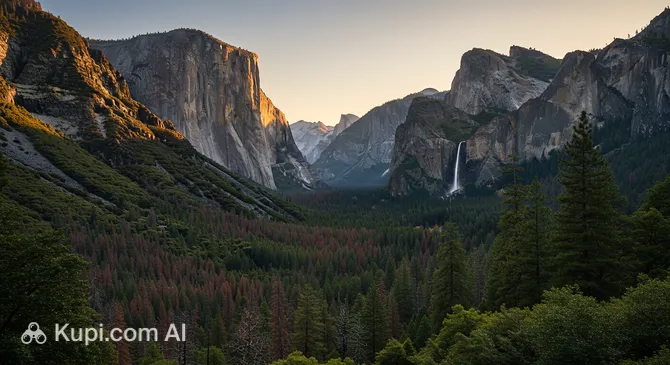
Yosemite Village is more than just a settlement; it is the true heart of the famous Yosemite National Park, located in the picturesque Yosemite Valley in California, USA. This location serves as the starting point for thousands of tourists seeking to explore the majestic granite cliffs, ancient sequoias, and breathtaking waterfalls of this unique corner of nature.
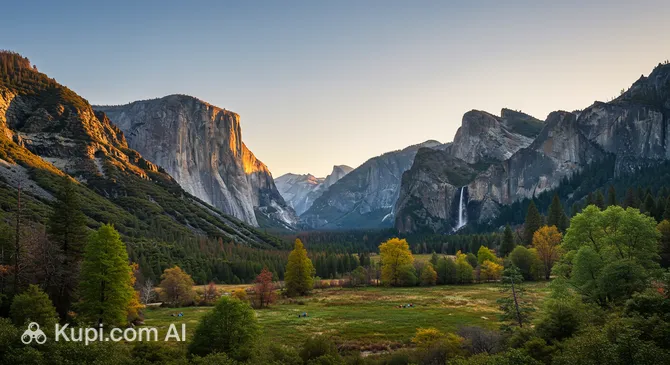
Yosemite Village. Illustration.
Source: Kupi.com AI

The climate in Yosemite Village is typical for the Sierra Nevada highlands: with warm, dry summers and snowy, cool winters, making it an attractive destination year-round, depending on your preferences. Although it is more of a service center than a city in the traditional sense, it offers everything necessary for a comfortable stay surrounded by wilderness.

The main magnets for visitors are, undoubtedly, the world-famous natural attractions located in the immediate vicinity. Among them are the grandiose Yosemite Falls, one of the tallest in North America, the monolithic El Capitan cliff, which challenges climbers from all over the world, and the iconic granite dome Half Dome. Additionally, Yosemite Village is a hub for numerous hiking trails of varying difficulty.

If you dream of immersing yourself in an atmosphere of untouched nature, seeing landscapes that take your breath away, and feeling the power of the American mountains, then a visit to Yosemite Village will be an unforgettable experience and the starting point of your adventure in one of the most beautiful national parks in the world.

You can find more interesting facts on the history of Yosemite Village page.
Weather Overview

The weather in Yosemite Village is characterized by significant seasonal changes, typical of mountain areas. Summer (June-August) is warm and predominantly dry, with average temperatures ranging from +14.6°C in June to +19.3°C in July, and maximum values reaching +26.5°C. Precipitation during this period is minimal, especially in July when there is virtually none. Winter (December-February), on the other hand, is cool and wetter: average temperatures hover around 0°C (from -0.5°C to +0.6°C), and precipitation is about 6 mm per month, often falling as snow. March can be quite wet (8 mm of precipitation, 15 rainy days). Overall, expect warm summers with very rare rain and cold, snowy winters. For more detailed planning of your visit and up-to-date information, please visit the Yosemite Village Climate page.

Average monthly temperature

Average monthly precipitation

Interesting Facts

Beyond the breathtaking landscapes and world-famous cliffs, Yosemite Village and its surroundings hold many surprising stories and lesser-known details. Here are just a few that will add flavor to your journey:

Glacier Point. Illustration.
Source: Kupi.com AI

Traveler photos:

  • Yosemite Village is not exactly a town in the traditional sense. Most of its "residents" are Yosemite National Park employees and seasonal workers, and the permanent population is very small. Essentially, it is a service center designed to provide comfort for the millions of tourists who visit the park.

  • The famous photographer Ansel Adams, whose black-and-white landscapes of Yosemite became iconic, had his gallery here. The Ansel Adams Gallery, located in the village, continues his legacy and was originally the studio of his father-in-law, artist Harry Cassie Best, opened back in 1902.

  • For many years, until 1968, an incredible man-made spectacle called the "Yosemite Firefall" was held from the top of Glacier Point. Burning embers and glowing bark were pushed off the cliff, creating the illusion of a fiery waterfall flowing into the valley. This impressive but unsafe tradition was ended due to ecological concerns and the massive influx of spectators.

  • The oldest building still in use in Yosemite Valley is the charming Yosemite Valley Chapel. This picturesque wooden chapel was built in 1879 and continues to hold services today, while also being a popular spot for weddings and quiet reflection amidst the majestic nature.

How to Get There

Planning a trip to the heart of the national park requires careful route selection, as there are no direct flights into the valley itself. To explore all available options and plan your perfect trip, we recommend reviewing the detailed information on the how to get to Yosemite Village page. Most tourists arrive through the airports of nearby major cities, continuing their journey by rental car or bus.

There is no airport in Yosemite Village itself, so travelers must use nearby aviation hubs. One of the most convenient options is Fresno Yosemite International Airport (FAT), located in the city of Fresno. It is approximately 108 km from Yosemite Village. This is the nearest major airport, and the drive from there by car or transfer takes about 2–2.5 hours, making it a popular choice for domestic flights.

If you are planning an international flight or want to combine your trip with a visit to Silicon Valley, you can choose San Jose Mineta International Airport (SJC) in San Jose. It is located significantly further away, about 211 km from Yosemite Village. The driving time is approximately 4 hours, but this airport offers a wide range of flights and serves as a major transport hub.

For clarity, here is a summary of the main airports convenient for reaching the park:

AirportPassenger trafficDistance
Mammoth Lakes Airport35 00068 km
Merced Municipal Airport15 00096 km
Fresno Yosemite International Airport2.7 mln108 km
Eastern Sierra Regional Airport20 000116 km
Stockton Airport127 000146 km

Regarding rail transport, there is no station directly in Yosemite Village. The nearest major Amtrak station is in the city of Merced, often called the "Gateway to Yosemite." San Joaquins line trains arrive here. From Merced station, tourists are picked up by comfortable YARTS (Yosemite Area Regional Transportation System) buses, which deliver passengers directly to the center of Yosemite Valley. This is a convenient and scenic way to reach the park without needing to rent a car.

It is also worth noting that many tourists prefer to reach Yosemite Village by personal or rental car. This provides freedom of movement, though you should keep in mind that mountain roads can be challenging, especially in winter when some passes (such as Tioga Pass from the Mammoth Lakes side) close due to snow.

Main Attractions

Yosemite Village serves as the starting point for discovering the incredible wonders of the namesake national park. Here are just a few key attractions that should definitely be included in your itinerary:

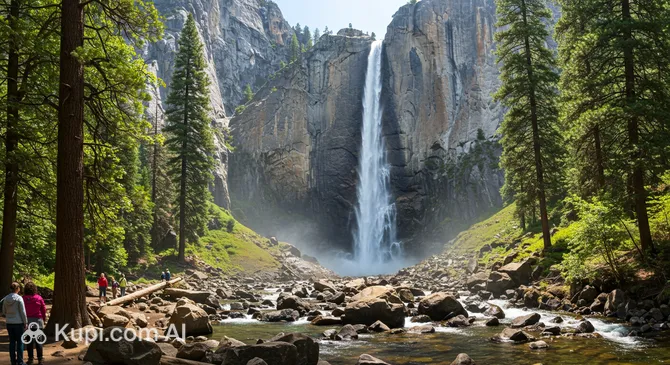
One of the main jewels of the park is undoubtedly the majestic Yosemite Falls. It is one of the highest waterfalls in North America, consisting of three impressive cascades. Its power and beauty are especially captivating in spring and early summer when the water flows are at their peak due to melting snow. Trails are laid out for tourists to the base of the Lower Fall, and more prepared travelers can access routes to the Upper Fall, which offers stunning views.

Yosemite Falls. Illustration.
Source: Kupi.com AI

Traveler photos:

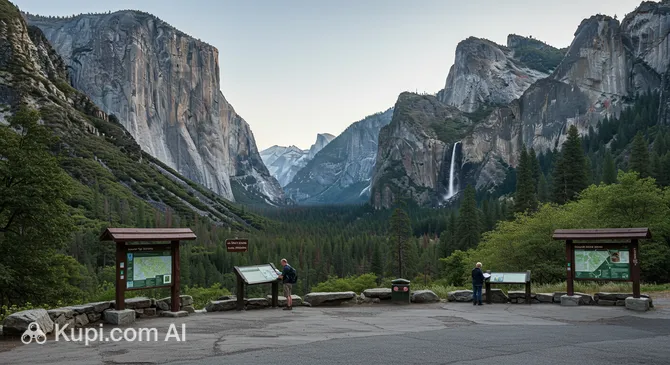
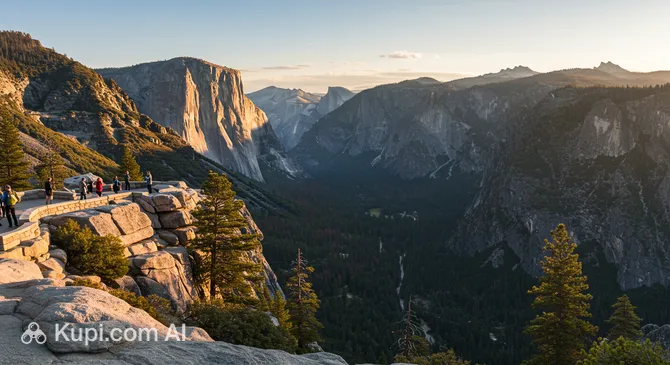
To enjoy a truly breathtaking panorama of Yosemite Valley, head to Glacier Point. This famous overlook offers an unforgettable view of park icons such as the Half Dome granite monolith, Yosemite Falls, as well as Vernal and Nevada Falls. It is an ideal spot for photographers, especially at sunrise or sunset. In summer, Glacier Point can be reached by car, while in winter, when Glacier Point Road is typically closed, it is accessible via skis or snowshoes.

Glacier Point. Illustration.
Source: Kupi.com AI

Traveler photos:

Another impressive water giant is Vernal Fall, located on the Merced River. It is famous for its emerald water and frequent rainbows that form in the mist at its base, especially on sunny days. The popular Mist Trail leads to the very top of the waterfall, allowing you to feel its power in close proximity. Be prepared to get wet from the spray, but the experience is well worth it!

Vernal Falls. Illustration.
Source: Kupi.com AI

Traveler photos:

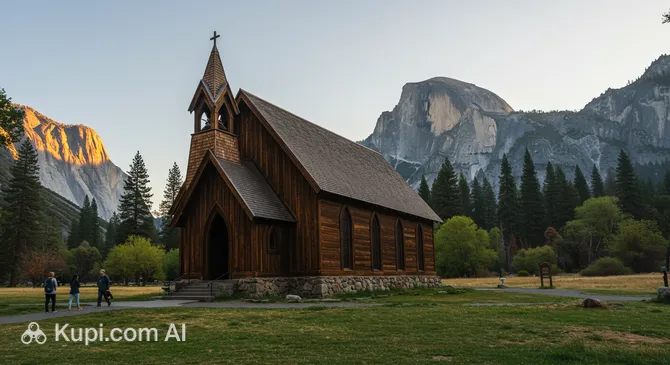
Nestled among the valley's natural wonders is the Yosemite Valley Chapel. This charming historic building, constructed in 1879, is the oldest standing structure in the valley and is listed on the National Register of Historic Places. The chapel offers a peaceful atmosphere for reflection against the backdrop of the majestic Yosemite Falls and still holds services today, while also being a popular venue for weddings.

Yosemite Valley Chapel. Illustration.
Source: Kupi.com AI

Traveler photos:

Local Cuisine

The gastronomic scene in Yosemite Village is primarily focused on active travelers exploring the beauty of the national park. You won't find fine dining Michelin-starred restaurants here, but you can enjoy a hearty and delicious meal before or after your hikes. The menu is based on classic American dishes prepared with an emphasis on satiety and simplicity, which is ideal for restoring energy in nature. Options are available for every taste and budget—from quick snacks to more substantial dinners in the lodges.

Be sure to try hearty dishes that will help replenish your energy after long walks. These could be classic American burgers, warming chili con carne, or various sandwiches and soups. Many establishments offer "to-go" options, which are very convenient for organizing a picnic against the backdrop of majestic landscapes. Local stores also sell everything you need for self-catering, including famous American hiking snacks like trail mix (a mixture of nuts and dried fruits).

As for drinks, in Yosemite Village you can find traditional non-alcoholic options like lemonades, juices, and hot chocolate (especially relevant in the cooler months), as well as something stronger. Given the location in the USA, specifically in California, it's worth paying attention to the local craft beer the state is famous for, as well as California wines. They make an excellent addition to dinner after a busy day.

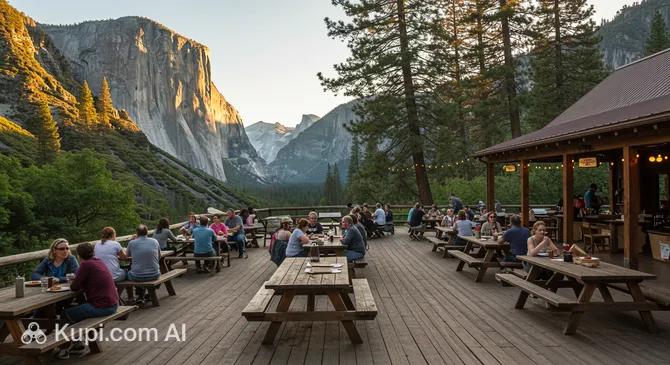
The food culture in Yosemite Village is centered around tourist convenience. You can eat in restaurants and cafes at hotels and lodges, such as the Yosemite Valley Lodge, or in more informal settings. For example, the Curry Village Pizza Deck is popular, where you can enjoy pizza outdoors. There are also food courts and small shops selling groceries and ready-made snacks. Many tourists prefer to have picnics, as there are plenty of picturesque spots for this in the park.

Curry Village Pizza Deck. Illustration.
Source: Kupi.com AI

Traveler photos:

Travel Tips

Planning a trip to the heart of one of the most famous national parks in the USA? To ensure your adventure in Yosemite Village goes smoothly and leaves only the best impressions, we have prepared some practical tips. They will help you prepare for the specifics of outdoor recreation and enjoy every moment in this amazing place!

  1. Clothing and Gear:

    Mountain weather is changeable. Bring layered clothing to adapt to temperature changes throughout the day—from cool mornings to warm days and back to cool evenings. Comfortable and sturdy shoes for walking on trails are a must, along with a waterproof jacket (especially in spring and autumn), a hat, sunglasses, and sunscreen. Don't forget insect repellent. If you plan to use electronics, check if you need an adapter (standard voltage in the USA is 120V).

  2. Transportation in the Valley:

    Inside Yosemite Valley, where Yosemite Village is located, it is best to get around using the park's free shuttle buses. They run on main routes and stop at key attractions and trailheads. Parking for personal cars is very limited, especially in peak season, so using the shuttle is highly recommended. Bicycles are also popular and can be rented. Taxis and services like Uber/Lyft are virtually non-existent here.

  3. Finances:

    The local currency is the US Dollar (USD). Credit and debit cards are accepted in most shops, restaurants, and lodges in Yosemite Village. ATMs are available, but their numbers are limited and they may not always be accessible. It is recommended to have some cash on hand. Tipping in the USA is a standard practice in restaurants (15-20% of the bill) and for other services. A rough daily budget (excluding accommodation and park entry fees) could be from $50-70 per person, depending on your dining and souvenir plans.

  4. Health and Safety:

    There is a medical clinic (Yosemite Medical Clinic) in Yosemite Village, but serious cases will require evacuation to hospitals outside the park. There is no pharmacy with a full range of medications here, so bring all necessary medications with you along with a basic first-aid kit. The most important thing is safety in nature: drink plenty of water, especially during hikes; do not approach wild animals and never feed them; store food in special bear-proof lockers or in your car (according to park rules). Let someone know your trekking plans.

  5. Communication:

    The primary language is English. Connectivity in Yosemite Village and throughout the park is very limited. Mobile signal and internet are only available in a few locations (e.g., near Yosemite Valley Lodge, Village Store), and the signal is often weak. Wi-Fi is also not available everywhere and may be paid or slow. It is recommended to download maps in advance for offline use. Buying a local SIM card for a short park visit might not be practical due to poor coverage.

  6. Local Etiquette and Park Rules:

    The main rule in the national park is "Leave No Trace." This means: take all your trash with you, do not pick plants, do not disturb animals, and stay on the marked trails. Observe quiet hours in campgrounds and lodges. Americans are generally friendly and open, but politeness and respect for nature and other visitors are always appreciated.

  7. What to Avoid:

    Strictly avoid feeding any wild animals, especially bears and squirrels. This is dangerous for both you and the animals, as they lose their fear of humans and can become aggressive. Also, do not leave food or scented items visible in your car or in your tent—this attracts bears. Underestimating route difficulty and the changeability of the weather can also be dangerous.

  8. Additional Tip:

    Book accommodation in advance! Places in lodges and campgrounds in and around Yosemite Village sell out many months, and sometimes a year, in advance, especially for the summer season and holidays. Also, check in advance if permits are required for some popular routes (for example, for hiking Half Dome).

We hope these tips help make your trip to Yosemite Village as comfortable and safe as possible. Enjoy the incredible beauty of this unique corner of nature!

Entertainment & Nightlife

When planning your evening leisure in Yosemite Village, it is important to remember that this is the heart of a national park, and the atmosphere reflects that. Instead of noisy nightclubs and bar districts, you will find opportunities here for quiet relaxation after an active day in nature, enjoying the silence and the starry sky. The nightlife here has its own special charm, centered around comfort and communion with nature.

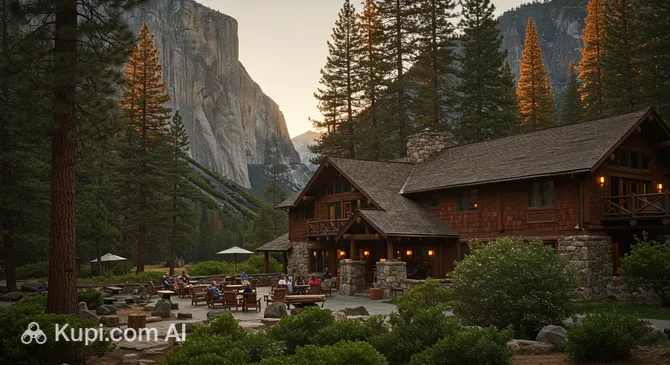
Main evening activities in Yosemite Village involve dining at one of the local establishments and spending time peacefully. For instance, the Yosemite Valley Lodge often has restaurants and perhaps lounge areas where you can relax with a drink. The atmosphere in such places is usually very casual, and the crowd consists of tourists and nature lovers. There is generally no special dress code; comfortable casual clothing is welcomed. Evenings here invite conversation, sharing impressions of the day's hikes, or simply contemplating the surrounding beauty.

Yosemite Valley Lodge. Illustration.
Source: Kupi.com AI

Traveler photos:

For a more informal dinner, you might consider places like the Curry Village Pizza Deck, where you can enjoy a meal outdoors if the weather permits. While these are not late-night venues in the traditional sense, they offer a pleasant setting to end the day. Many visitors also prefer to spend their evenings by a campfire in the campgrounds (where permitted and equipped) or simply stargazing, as the stars are exceptionally bright away from city lights.

Regarding practical tips, most restaurants and cafes in Yosemite Village close relatively early compared to city establishments, usually no later than 9:00 PM - 10:00 PM, so it is better to plan your dinner in advance. Public transport in the form of park shuttles also has a limited evening schedule, and night routes may be absent. Moving around on foot after dark requires caution due to wildlife and uneven terrain; be sure to carry a flashlight.

Evening safety in Yosemite Village is generally high within well-lit and developed areas like lodges and campgrounds. The main hazards are related to wildlife—always remember food storage rules to avoid attracting bears and never leave food unattended. Calling a taxi here is virtually impossible, so plan your movements around the shuttle schedule or use your own vehicle if you have one.

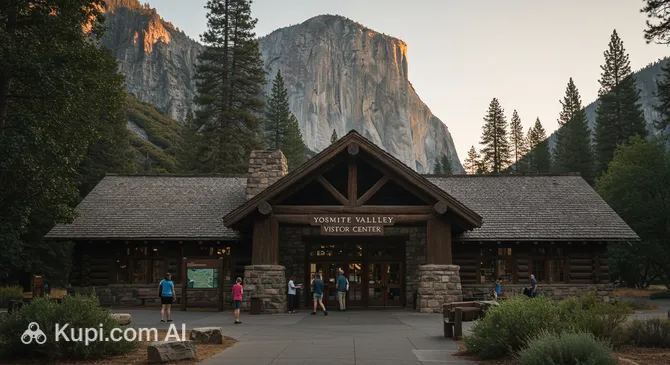
Daytime entertainment in Yosemite Village is entirely focused on exploring the park's natural wonders. You can visit the Yosemite Valley Visitor Center to learn more about the region's flora, fauna, and geology, or set off on one of the many hiking trails. Traditional theaters, urban-style museums, or amusement parks are not found here, as the main attraction is Yosemite's nature itself.

Yosemite Valley Visitor Center. Illustration.
Source: Kupi.com AI

Traveler photos:

Parks & Museums

Yosemite Village is not just a starting point for exploring natural wonders, but also a place where you can touch the history and culture of this unique corner of the USA. While there are no urban parks in the traditional sense, the entire Yosemite Valley is a vast natural park, and its cultural heritage is reflected in several interesting sites.

When talking about "parks" in Yosemite Village, we are, of course, referring to Yosemite Valley itself. Its flat floor with emerald meadows, such as El Capitan Meadow and Sentinel Meadow, and the winding Merced River, is ideal for leisurely strolls, picnics, and contemplating the majestic granite cliffs. One of the most accessible and popular green areas for walking is the trail leading to the base of the famous waterfall. We recommend walking the route from the Lower Yosemite Fall Trailhead—it's an easy walk that allows you to feel the power of this natural wonder up close and enjoy the cooling mist.

Lower Yosemite Fall Trailhead. Illustration.
Source: Kupi.com AI

Traveler photos:

Regarding cultural enrichment, there are several key locations in Yosemite Village. The heart of informative life is the Yosemite Valley Visitor Center. Here you will find exhaustive information about the park's geology, flora, fauna, and history. Adjacent to it is typically the Yosemite Museum, which features exhibits on the culture of the indigenous Miwok people, the history of the first settlers, and the establishment of the park. It is a great place to gain a deeper understanding of this territory's uniqueness.

For art lovers, The Ansel Adams Gallery is a must-visit. Here you can view and purchase works by the famous photographer whose black-and-white images of Yosemite became symbols of American wilderness, as well as works by other artists inspired by the park's beauty. The gallery has a long history and is an important cultural center of the valley.

Among the historical landmarks, the charming Yosemite Valley Chapel stands out. Built in 1879, it is the oldest standing building in the valley and is listed on the National Register of Historic Places. It is a quiet and peaceful place set against the backdrop of majestic cliffs, where services and wedding ceremonies are still held today.

For a deeper immersion into indigenous culture, visit the Indian Village of Ahwahnee, located behind the Yosemite Museum. This is a reconstructed settlement of the Miwok people, vividly demonstrating their lifestyle and traditions. Also, don't miss the opportunity to join one of the many ranger programs—these can be informative lectures, guided walks, or evening campfire talks that will add authentic experiences to your visit.

Getting Around

Getting around Yosemite Village and the surrounding Yosemite Valley is significantly different from transport systems in typical cities. There are no subways, trams, or trolleybuses here. The primary and most convenient way to move between key points, attractions, and lodges is the free shuttle bus system of Yosemite National Park. These buses are specifically designed to reduce car traffic and preserve the unique nature of the valley.

The main form of transport is the eco-friendly shuttles that run on several routes within Yosemite Valley. The primary route typically covers important locations such as Yosemite Village, the Yosemite Valley Lodge, campgrounds, the start of popular trails (for example, to Yosemite Falls), and the Yosemite Valley Visitor Center. Using these shuttles is absolutely free for all park visitors. No tickets, passes, or special cards are required—simply go to the stop and board the necessary bus.

Here are a few practical tips for tourists: Shuttle stops are clearly marked and located in strategically important places. Route maps and schedules can be found in the park's visitor centers, on the official Yosemite National Park website, and often at the stops themselves. Shuttles usually operate from early morning until late evening (approximately from 7:00 AM to 10:00 PM), but the schedule may change depending on the season, so always check the current information upon arrival. During peak season and in the middle of the day, buses can be crowded, so be prepared to wait a bit. There is no need to validate tickets, as the ride is free.

Besides shuttles, other ways to get around are popular in Yosemite Village and the valley. Many prefer walking, especially on the flat part of the valley where many convenient trails are laid out. Bicycle rentals are also in high demand—this is an excellent way to explore the surroundings at your own pace on dedicated bike paths. Bike rentals are available at several points, such as Curry Village or Yosemite Valley Lodge. Traveling by personal car is possible but highly discouraged for movements within the valley itself due to very limited parking spaces and frequent congestion, especially in the summer months. Using shuttles or a bicycle will allow you to avoid these issues and enjoy the views. Traditional taxi or ride-sharing services are virtually non-existent in Yosemite Village.

Accommodation

In Yosemite Village and its surroundings within Yosemite Valley, tourists are offered a unique selection of accommodation options harmoniously integrated into the natural landscape. The range includes budget-friendly options, such as campgrounds (which require booking far in advance) and simple tent cabins (for example, in the Curry Village area), as well as comfortable lodges and mid-range hotels offering all the necessary amenities for resting after an active day in the park. There are no luxury resorts in the traditional sense here; the focus is on connecting with nature, though some historic hotels offer a higher level of service and a unique atmosphere.

Most accommodation options are concentrated directly in Yosemite Valley, ensuring easy access to main attractions, trailheads, and service facilities. Popular areas to stay include the surroundings of Yosemite Village itself, where the Yosemite Valley Visitor Center is located, as well as locations like the aforementioned Curry Village and the Yosemite Valley Lodge area, which offers more hotel-like conditions. The choice of a specific spot depends on your preferences for comfort level and proximity to certain activities.

Among the well-known accommodation options offering a comfortable stay is the Yosemite Valley Lodge. This complex offers various room types, from standard to more spacious family rooms, and is located in close proximity to Yosemite Falls, making it a very convenient base for exploring the park. It also features restaurants and gift shops.

Key tip for anyone planning to stay in Yosemite Village: book your accommodation well in advance! Spaces in lodges, hotels, and especially campgrounds are snapped up many months, and sometimes a year ahead, especially if your trip falls during peak season (summer, holidays, weekends). The primary booking method is through the official website of the concessionaire managing accommodation in Yosemite National Park. Some options may be available through major online travel platforms, but the selection there is usually more limited.

The price range for accommodation in Yosemite Village varies from relatively budget (campground spots, if you manage to book one) to mid-range and above average (lodge and hotel rooms). The cost depends heavily on the season, day of the week, type of accommodation chosen, and comfort level. Regardless of your budget, early online booking is virtually the only way to guarantee a place to sleep in this incredibly popular and beautiful corner of the USA.

Nearby Cities

For those who want to explore the surrounding area, Yosemite Village serves as an excellent starting point for day trips to several interesting nearby locations:

CityPopulationDistance
Mariposa2 00044 km
Mammoth Lakes8 20056 km
Big Creek67 km
Chowchilla18 82691 km
Madera Acres10 10692 km

These nearby cities offer a chance to swap the majestic landscapes of Yosemite for an introduction to urban life and the culture of Central California. Fresno, as one of the region's largest cities, can offer museums and a more active urban environment. Merced and Modesto allow you to immerse yourself in the atmosphere of California's Central Valley with its agricultural traditions. Each trip will be an interesting addition to your itinerary.

Shopping & Souvenirs

Shopping in Yosemite Village is, first and foremost, an opportunity to purchase essential goods for your stay in the national park, as well as memorable souvenirs of your journey. Do not expect the same variety of stores here as in a large city, as the primary goal of a trip here is nature. Nevertheless, you will find everything necessary to make your vacation comfortable and to take a piece of Yosemite's magic home with you.

There are no traditional shopping streets or districts in Yosemite Village. Main retail outlets are concentrated in a few key locations. The largest selection of goods is typically found at the Village Store (the main store of the village), where you can find groceries, drinks, hiking gear, clothing, and souvenirs. Small souvenir shops and stores with outdoor gear can also be found at the large lodges, such as the Yosemite Valley Lodge, and near the Yosemite Valley Visitor Center.

You won't find large shopping centers or malls in Yosemite Village. The concept of this place does not involve large-scale shopping; all retail outlets are compact and oriented toward the needs of park visitors.

Traditional markets, whether food or flea markets, are not a characteristic feature of Yosemite Village. Occasionally, small craft fairs or sales exhibitions of local artists may be held, but these are exceptions rather than the rule. The main range of products is presented in permanent stores.

As for souvenirs, it is worth bringing something from Yosemite Village that will remind you of the park's majestic nature. Popular items include:

  • Clothing with Yosemite symbolism (T-shirts, hoodies, caps).
  • Items featuring images of famous views: Half Dome, El Capitan, Yosemite Falls.
  • Books about the nature, history, and geology of the park, and photo albums.
  • Maps and guidebooks.
  • Handmade items by local artisans, including Native American art (if available).
  • Magnets, postcards, keychains, and other small souvenir products.
  • Specialized hiking gear with the park logo.

Remember that purchasing souvenirs in the park is also a form of supporting its preservation.

Store hours in Yosemite Village usually coincide with the hours of tourist activity in the park. Most stores are open daily, typically from the morning (around 8:00 AM - 9:00 AM) until the evening (7:00 PM - 9:00 PM). During peak season, operating hours may be extended. Credit cards (Visa, MasterCard, American Express) are widely accepted, as are, of course, US dollars in cash. ATMs are available, but their number is limited.

A Tax-Free system for tourists on most goods purchased in Yosemite Village stores (as in the USA in general for such purchases) typically does not apply. Prices for goods are listed without sales tax, which is added to the cost at the checkout. The tax rate varies depending on the state and the type of product.

Reached the end of the page?

That means the route is fully explored