Support

Tanna

About

Tanna is widely regarded as one of the most captivating and diverse destinations in the South Pacific. Known for its raw energy and vibrant culture, this island in the Tafea Province offers travelers an experience that is both primitive and profound. It is a place where the earth rumbles with life and ancient traditions are proudly maintained, making it a standout location within the archipelago of Vanuatu.
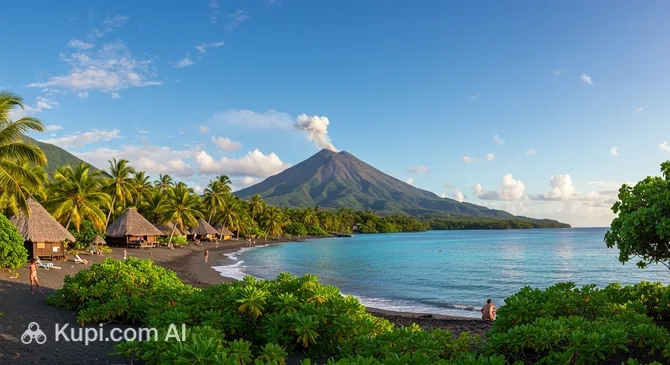
Tanna. Source: Kupi.Binoculars

Geographically, Tanna is characterized by its fertile volcanic soil, lush rainforests, and black sand beaches. The island enjoys a tropical climate, with warm temperatures year-round that support its dense vegetation and coffee plantations. While it is an island rather than a single urban center, its main hub, Lenakel, provides essential services, though the true charm lies in the remote villages and natural wonders scattered across the landscape.

The cultural heritage here is incredibly strong, with "kastom" (traditional custom) guiding daily life. Visitors intrigued by the past and local anthropology can dive deeper into the history of Tanna, which is famous for its unique "cargo cults" and the enduring legacy of the John Frum movement. This deep connection to ancestry and belief makes every interaction with the local people a memorable part of the journey.

The island's most iconic attraction is undoubtedly Mount Yasur, often cited as the world's most accessible active volcano. Tourists can walk right up to the rim to witness the spectacular display of lava and ash, especially mesmerizing at twilight. Beyond the fire, the water offers its own magic; the ethereal Blue Cave is a stunning sea grotto that requires a short underwater swim to enter, revealing a cavern bathed in natural blue light.

Whether you are trekking up a volcanic cone, swimming in crystal-clear waters, or meeting villagers who live much as their ancestors did, Tanna promises an adventure unlike any other. It is a must-visit destination for those seeking to connect with the powerful forces of nature and humanity.

Weather Overview

Travelers planning a trip to this volcanic island can expect a generally warm and humid climate, typical of the South Pacific. To help you pack appropriately for your specific travel dates, it is useful to review the detailed weather in Tanna before your departure. The island experiences distinct seasonal shifts that influence both temperature and rainfall frequency, ensuring that visitors can find a suitable time to visit regardless of their preferences.

The warmer season typically runs from November through April, where average temperatures range between 24.5°C and 26.4°C, with February often seeing highs around 28.5°C. This period is also the wettest, particularly in January and March, which can experience rain on up to 25 days of the month. In contrast, the cooler months from June to September offer fresher air, with average temperatures dipping to around 22°C and nightly lows near 20°C. August is generally the driest month, with precipitation occurring on only about 10 days, making it an excellent time for outdoor adventures.

Interesting Facts

Beyond the fiery glow of its volcano and the allure of its beaches, Tanna holds a treasure trove of cultural mysteries and natural oddities that surprise even the most seasoned travelers. The island is a place where modern history and ancient legend intertwine in truly unique ways.

  • The Prince Philip Movement: While the John Frum movement is well-known, another tribe in the village of Yaohnanen revered the late Prince Philip, Duke of Edinburgh, as a divine being. According to their ancient tales, a pale-skinned mountain spirit ventured across the seas to marry a powerful woman, a prophecy they believed was fulfilled by the Prince. The tribe famously exchanged gifts and letters with the Duke for decades.

  • Cinema Stars Who Had Never Seen a Movie: The internationally acclaimed film Tanna (2015) was shot entirely on location in the village of Yakel. Remarkably, the cast consisted of local tribespeople who had never watched a movie or acted before. Their authentic performance earned Vanuatu its first-ever Academy Award nomination for Best Foreign Language Film.

  • A Tree the Size of a Football Field: Hidden within the island's dense greenery is one of the world's largest banyan trees. Located near Leiarkia, this colossal organism is not just a single trunk but a labyrinth of aerial roots and branches that spans an area roughly equivalent to a soccer pitch, creating a natural cathedral that dwarfs its visitors.

  • The Toka Ceremony: Tanna hosts one of the most spectacular traditional festivals in the Pacific, known as the Nekowiar or Toka. This multi-day event brings together thousands of people from different villages to feast, dance, and exchange lavish gifts. It is a rare and vibrant display of unity and "kastom" that can sometimes lead to a truce between rival groups.

How to Get There

Reaching this volcanic island is an adventure in itself, typically involving a short domestic flight from the country's capital. While the journey requires a bit of planning, the reward is an untouched paradise waiting to be explored. To plan your journey in detail, you can read more about how to get to Tanna and the specific transport options available.

The primary gateway to the island is Tanna Airport (IATA: TAH), also known locally as Whitegrass Airport. Located directly on the island, it is approximately 15.6 km from the main centers of activity and accommodation. Travelers arriving here can expect a transfer time of roughly 45 minutes by taxi or shuttle bus to reach the heart of the area. This small regional hub handles around 60,000 passengers annually and offers stunning views of the coast upon approach.

Most international visitors will first land at Bauerfield Airport (IATA: VLI) in the city of Port Vila, which serves as the main entry point for Vanuatu. Situated about 229 km from Tanna, this airport connects the archipelago with major cities in Australia, New Zealand, and the Pacific. With an annual passenger traffic of approximately 470,000, it is a bustling hub where you will transfer to a domestic flight for the final leg of your trip to Tanna.

For clarity, here is a summary of the main airports:

Airport Name City Passenger Traffic Km from City
Bauerfield Airport Port Vila Medium 228.9
Lifou Airport Lifou Medium 261.7
Mare Airport Mare Small 257.6
Tanna Airport Tanna Small 15.6

Main Attractions

The attractions of Tanna are raw, powerful, and deeply connected to the earth, offering visitors a chance to step away from the modern world and into a landscape that feels prehistoric. From the rumble of an active volcano to the serenity of hidden sea caves, the island’s highlights are defined by their natural beauty and the enduring strength of local "kastom" culture.

Mount Yasur is the undisputed centerpiece of any trip to the island and is renowned as one of the world's most accessible active volcanoes. Located on the southeastern side, this geological wonder allows visitors to travel by 4WD across an otherworldly ash plain before hiking a short distance to the crater rim. Standing on the edge, especially at twilight, offers a mesmerizing and humbling experience as the volcano roars and shoots molten lava bombs into the sky, creating a natural fireworks display that has guided sailors for centuries.

For a completely different interaction with nature, the Blue Cave on the northwest coast offers a magical aquatic adventure. Accessible primarily by boat, this large sea grotto is carved into the limestone cliffs and is famous for the ethereal turquoise light that filters through a hole in the cave roof. To enter, visitors must swim briefly underwater (or wait for low tide), emerging into a spacious, cathedral-like chamber where the water glows with an intense blue hue, making it a perfect spot for swimming and photography.

To understand the human side of the island, a visit to a Custom Village, such as Yakel or Lowinio, is essential. These communities have chosen to reject many aspects of modern life, preferring to live according to traditional values and practices. Visitors are welcomed to witness daily life that has remained largely unchanged for generations, including traditional architecture, food preparation, and the rhythmic chanting and stomping of customary dances. It is an immersive cultural exchange that provides deep insight into the island's spirit.

On the eastern tip of the island lies Port Resolution, a historic bay named by Captain James Cook in 1774. This scenic area offers a striking contrast to the black volcanic sands found elsewhere, featuring picturesque white sand beaches and crystal-clear waters. One of the unique features here is the presence of natural hot springs bubbling up on the beach and in the shallow water, allowing travelers to relax in nature's own spa while looking out over the bay where yachts often anchor.

Local Cuisine

The culinary landscape of Tanna is deeply rooted in the island's fertile volcanic soil and the surrounding ocean, offering a "farm-to-table" experience that is as authentic as it gets. The food here is organic by default, relying heavily on root vegetables, fresh tropical fruits, and the daily catch from the sea. For visitors, dining on the island is less about fancy restaurants and more about savoring hearty, traditional flavors prepared with centuries-old methods.

No trip to the island is complete without trying Laplap, the national dish of Vanuatu which holds a special place in the local diet. This heavy, pudding-like meal is made by grating root crops such as taro, yam, or manioc, mixing them with coconut cream, and sometimes adding pieces of pork, chicken, or fish. The mixture is wrapped in banana leaves and slow-cooked in an underground earth oven filled with hot stones, resulting in a savory and filling comfort food. Another must-try is Simboro, which consists of grated root vegetables rolled in island cabbage (bele) and boiled in coconut milk, offering a lighter but equally delicious alternative.

Seafood lovers will find plenty to enjoy, as the coastal villages provide a steady supply of fresh fish. Poulet fish (Vanuatu snapper) is a local delicacy known for its chicken-like texture and sweet flavor, often grilled simply or served in a curry. Deep-sea lobster is also frequently available on the menus of lodges and resorts, providing a luxurious meal at a fraction of the price found in many other parts of the world.

When it comes to beverages, the island is famous for its potent Kava. Unlike the social drinking culture in Port Vila, drinking kava on Tanna is a more traditional and often solemn affair, typically taking place at twilight in a "Nakamal" (a meeting place). It is a non-alcoholic, psychoactive beverage made from the root of the pepper plant, known for its sedative and relaxing effects. For a refreshing non-alcoholic option, fresh coconut water is available everywhere, often cut straight from the tree. Travelers can also enjoy Tusker, the locally brewed beer of Vanuatu, which is widely available at resorts.

Dining options outside of the main accommodations are limited, so most tourists eat breakfast and dinner at their resort or guesthouse, where chefs often blend local ingredients with international styles. For a taste of local life, visiting the market in Lenakel is highly recommended. Here, you can buy peanuts, cooked taro, and an abundance of sweet, ripe fruits like papayas, pineapples, and bananas directly from the women who grew them, making for a perfect midday snack while exploring the island.

Travel Tips

Traveling to Tanna is a step into the wild, so a bit of preparation goes a long way to ensure your adventure is comfortable and respectful of local traditions. Here is some practical advice to help you navigate the island's rugged terrain and unique customs with ease.

  1. Clothing and Gear: Pack light, breathable fabrics for the humid days, but bring a windbreaker or warm layer for the visits to Mount Yasur, as it can get chilly and windy on the rim. Sturdy closed-toe shoes or hiking boots are essential for walking on rough volcanic ash. If you plan to visit local villages, dress modestly by covering your shoulders and knees.
  2. Transportation: There is no standard public transport system like buses or metros here. Getting around is almost exclusively done by 4WD utility vehicles due to the unpaved and bumpy roads. It is best to arrange airport transfers and tours through your accommodation, as hailing a ride on the street is not really an option.
  3. Finances: Cash is absolute king on Tanna. While a few major resorts may accept credit cards, village entry fees, markets, and small shops deal strictly in Vanuatu Vatu (VUV). There is a bank and ATM in the main town of Lenakel, but they can be unreliable; it is highly recommended to withdraw sufficient cash in Port Vila before you arrive.
  4. Health and Safety: Medical facilities are limited to a small hospital in Lenakel, so bring a comprehensive first-aid kit and any personal medications. Mosquito repellent is a must, as malaria is present. When visiting the volcano, consider bringing a scarf or mask to protect your nose and mouth from sulphur fumes and ash.
  5. Communication: English and French are spoken by those in the tourism industry, but the daily language is Bislama. Locals appreciate it if you learn a few phrases like "Halo" (Hello) or "Tangkyu" (Thank you). Mobile coverage is available via Digicel and Vodafone but can be spotty in remote areas; do not rely on finding high-speed Wi-Fi everywhere.
  6. Local Etiquette: The island is governed by strong "kastom" (traditional custom). Always ask for permission before taking photos of people, their children, or their homes. If you are invited to a kava bar (Nakamal), observe the quiet atmosphere and follow the lead of your host, as this is a respectful ritual.
  7. What to Avoid: Do not walk around villages or public areas in swimwear or skimpy clothing; this is considered disrespectful and should be reserved strictly for the beach or resort pool. Additionally, never ignore the safety guides or cross the marked perimeters at the volcano—the danger is real and conditions change rapidly.
  8. Power and Lighting: Many accommodations rely on solar power or generators that may be switched off late at night. A reliable headlamp or flashlight is an invaluable item to pack, not only for your room but also for navigating the dark paths back from the volcano tour.

With these tips in mind, you are ready to embrace the raw beauty and warm hospitality that define this unique island. Respect the local culture, pack your sense of adventure, and you will surely have a safe and unforgettable journey in Tanna.

Entertainment & Nightlife

Entertainment and nightlife in Tanna are defined not by neon lights and thumping bass, but by the tranquility of the South Pacific and the rich traditions of island life. Travelers looking for bustling club districts or all-night dance parties will not find them here. Instead, the evening atmosphere is intimate and relaxed, centered almost entirely around resort bars and the culturally significant kava bars known as "Nakamals." The pace is slow, allowing visitors to unwind under a canopy of stars that shine with an intensity rarely seen in more developed regions.

For most tourists, the "nightlife" takes place within the comfortable confines of the island's main accommodations. White Grass Ocean Resort is a popular venue where guests gather at the bar to watch the sunset over the ocean, enjoying cocktails and imported wines in a sophisticated yet casual setting. Similarly, the restaurant and bar at Tanna Evergreen Resort offer a lively social hub where travelers swap stories of their volcano treks over cold Tusker beers. These venues usually close relatively early, around 9:00 PM or 10:00 PM, reflecting the island's early-to-rise lifestyle.

The most authentic form of local nightlife is found in the Nakamals. These are traditional meeting places where men (and increasingly women in some areas, though strict custom varies) gather at dusk to drink kava. Unlike the social bars in the West, a Nakamal is often a quiet, dimly lit place where people speak in whispers to respect the soothing effects of the drink. It is a profound cultural experience rather than a party. If you wish to visit one, it is best to go with a local guide or a staff member from your resort who can introduce you to the etiquette and ensure you visit a welcoming spot near Lenakel.

Practicalities for a night out in Tanna are straightforward but strict. There is no public nightlife transport or taxi service that roams the streets at night. If you plan to visit a venue outside your accommodation, you must arrange a return transfer with your hotel or a private driver in advance. Walking between villages or resorts at night is not recommended due to the lack of street lighting and the uneven terrain; always carry a torch or headlamp. The dress code is universally casual—shorts and sandals are acceptable everywhere—though modest dress is appreciated in villages.

As for daytime entertainment, Tanna does not feature cinemas, shopping malls, or amusement parks. The island itself is the attraction. The "theaters" here are the ceremonial grounds where traditional dances take place, and the "museums" are the living custom villages like Yakel. For a bustle of activity, the market in Lenakel offers a vibrant atmosphere during the day, but like the rest of the island, it winds down as the sun sets, giving way to the peaceful, fire-lit evenings that make Tanna so unique.

Parks & Museums

Unlike cosmopolitan cities brimming with manicured gardens and enclosed galleries, Tanna itself is one vast, breathing natural reserve and a living museum. The island does not rely on formal institutions to display its heritage or nature; instead, its "parks" are wild volcanic beaches and coral bays, while its "museums" are the active villages where ancient traditions are preserved and practiced daily.

Louniel Beach stands out as one of the island's most dramatic natural areas. Located on the northeast coast, this sweeping stretch of coastline is famous for its jet-black volcanic sand, which contrasts sharply with the deep blue of the Pacific Ocean and the lush green cliffs that border it. It is a raw and powerful landscape that offers a different experience from the tranquil white sands found elsewhere. For tourists, it is an excellent spot for photography and witnessing the island's volcanic origins up close, though the surf here can be strong, making it more suitable for walking and picnicking than casual swimming.

Another significant natural area is Shark Bay, situated on the northern side of the island. As the name suggests, this bay is a protected marine sanctuary where visitors can observe reef sharks in their natural habitat. The water here is calm and shallow, often allowing people to wade in and see the sharks swimming around their ankles. It serves as a natural aquarium, offering a safe and thrilling interaction with marine life without the need for diving gear. The surrounding area offers stunning views of the coast, making it a peaceful retreat for nature lovers.

In terms of cultural preservation, the John Frum Village at Sulphur Bay functions as a unique historical site. This community is the heart of the John Frum movement, a "cargo cult" that emerged during World War II. Visitors can witness the ceremonial grounds where the red cross flag is raised and where Friday night dances take place. It offers a fascinating glimpse into a specific chapter of the island's history where local beliefs merged with the influence of American military presence. It is not a museum in the traditional sense, but it is the primary place to learn about this anthropological phenomenon directly from the people who live it.

For those interested in local craftsmanship and daily culture, the Lenakel Market acts as the island's gallery of life. While it is a functioning market rather than an exhibition space, it is the best place to see the artistry of local women, particularly in their weaving of baskets and mats from pandanus leaves. The market displays the vibrant produce of the island's fertile soil, from taro to exotic fruits, arranged with care. A visit here provides a sensory connection to the local lifestyle and offers a chance to purchase authentic, handmade souvenirs that carry the story of the maker.

Finally, the concept of the "Living Museum" is best embodied by the traditional Kastom villages scattered across the interior. Unlike static displays behind glass, communities here maintain their ancestral architecture, dress, and social structures as a conscious choice. Visiting these areas allows tourists to step back in time and observe history in motion, from fire-making demonstrations to traditional medicine, making the entire village an educational venue for understanding the resilience of Melanesian culture.

Insider Tip: When exploring natural areas, keep an eye out for "Namele" leaves (palm fronds) tied to trees or posts. In local custom, these serve as "Tabu" signs, indicating that an area is prohibited or restricted due to land disputes or sacred significance. Respecting these silent markers is crucial for maintaining good relations with the local communities.

Getting Around

Travelers arriving in Tanna should adjust their expectations regarding public transportation, as the system here is vastly different from that of a modern metropolis. There are no subways, trams, trains, or large municipal buses operating on the island. Instead, the local transport network is informal and adapted to the rugged terrain, consisting primarily of privately owned minibuses and 4WD utility trucks (utes) that function as shared taxis.

The most common form of "public" transport is the utility truck. Locals and adventurous tourists often ride in the open cargo bed at the back, which is fitted with bench seats. These vehicles ply the main road between the airport, the town of Lenakel, and various villages. While minibuses are also available, they are less frequent and struggle with the unpaved roads leading to remote areas. To catch a ride, you simply stand by the roadside and wave down a vehicle; if they have space and are heading your way, they will stop.

Payment is strictly a cash-only affair. There are no travel passes, smart cards, or mobile apps for transport on the island. You must pay the driver directly in the local currency (Vatu). Fares are generally fixed for locals traveling between specific villages and Lenakel, but tourists are often charged a slightly higher rate. It is crucial to carry small change, as drivers rarely have large amounts of cash on hand. Prices are relatively low for short hops but can increase significantly for longer, chartered journeys.

For tourists, the most practical advice is to arrange transport through your accommodation or a tour operator, especially for long distances or airport transfers. While "public" trucks are an option, they run on irregular schedules and usually stop operating by late afternoon or sunset. There are no designated bus stops; getting on and off is done on demand. If you choose to ride in the back of a ute, hold on tight, as the roads can be extremely bumpy and dusty.

Alternatives to these shared vehicles are limited. "Taxis" exist and can be identified by a "T" on their license plate (while public transport vehicles often start with "B"), but they do not roam the streets looking for fares like in a city. They must usually be booked in advance. Car rentals are technically possible but are expensive and often come with a driver due to the challenging road conditions. Walking is feasible within the small center of Lenakel, but for visiting attractions like the volcano or the Blue Cave, securing a private transfer or joining a guided tour is the only reliable option.

Accommodation

Where to Stay:

Tanna offers a distinct range of accommodation that caters to two very different types of travelers: those seeking tropical comfort and those looking for rugged adventure. The options generally fall into two categories: comfortable, oceanfront resorts located near the airport and the main town, and basic, traditional bungalows or "treehouses" situated deep in the jungle near the active volcano. There are no high-rise international hotel chains here; instead, the hospitality is boutique, eco-friendly, and often family-run.

For visitors prioritizing convenience and amenities, the West Coast near the airport and the town of Lenakel is the most popular area to stay. This region hosts the island's premier accommodations, offering reliable electricity, Wi-Fi, and organized tours. It is an ideal base for families and those who want to relax by the ocean after a day of exploring. Notable establishments in this area include the well-regarded White Grass Ocean Resort and Tanna Evergreen Resort, both of which provide a blend of modern comfort and island charm, serving as excellent hubs for island excursions.

On the other hand, adventurous souls often choose to stay on the East Coast or in the highlands near Mount Yasur. Accommodation here is simple and immersive, often consisting of thatched-roof bungalows or treehouses built directly into the forest canopy. Staying in this area offers the unique experience of falling asleep to the rumble of the volcano and waking up to views of the ash plain. Facilities are typically basic, with shared bathrooms and limited electricity, but the proximity to the crater entrance is unbeatable for those planning multiple visits to the rim.

When planning your stay, a crucial booking tip is to arrange your airport transfers in advance with your host. Tanna is a remote island with no public taxi rank at the airport, and the drive to the volcano side can take over an hour on rough roads. Knowing your transport is sorted ensures a smooth arrival. Additionally, during the peak travel months of July and August, accommodation capacity can fill up quickly, so securing your room well ahead of time is highly recommended.

The price range varies significantly depending on the location and level of comfort. The coastal resorts typically fall into the mid-range to upper-mid-range price bracket and can usually be booked via major online travel platforms. In contrast, the village bungalows and treehouses near the volcano are budget-friendly options. While some of these smaller lodgings are listed online, many rely on direct contact or cash payments upon arrival, so it is wise to carry sufficient local currency if you plan to stay "off the grid."

Nearby Cities

While Tanna is an island destination known for its remote and natural atmosphere, it is anchored by its own administrative hub, Isangel. Located just 9 km from the island's geographic center, Isangel serves as the capital of the Tafea Province. It is the primary spot for local commerce, housing the main market, administrative offices, and essential services, offering visitors a glimpse into the daily bustle of island life away from the resorts.

The most significant urban connection for travelers is Port Vila, the capital of Vanuatu, situated approximately 225 km to the north on the island of Efate. As the main international gateway, it is the city from which almost all visitors arrive. Further north in the archipelago lies Luganville, the country's second-largest city on the island of Espiritu Santo. Although it is about 500 km away, it is a key destination for those exploring the wider region, particularly famous for its world-class diving sites.

The following table provides an overview of the nearest cities and towns, including their distance from Tanna and population size, to help you understand the island's location within the archipelago.

City Population Distance (km)
Isangel 1,200 9
Port Vila 51,437 225
Luganville 18,062 500
Maewo 3,600 501
Big Bay 1,500 524

Shopping & Souvenirs

Shopping in Tanna is a far cry from the commercialized retail experiences found in major cities. There are no shopping malls, department stores, or designer boutiques here. Instead, commerce is conducted in open-air markets and small roadside stalls, offering a genuine connection to the island's culture and agriculture. For visitors, this means the opportunity to purchase authentic, locally made goods directly from the artisans and farmers who produce them.

One of the most sought-after souvenirs is Tanna Coffee. Grown in the island's nutrient-rich volcanic soil, this coffee is celebrated for its rich, smooth flavor and organic production methods. You can find roasted beans or ground coffee packaged in local shops and sometimes at the airport, making it a perfect gift to take home. Additionally, the island produces high-quality spices, including vanilla and turmeric, which are often sold in simple packaging at village stalls.

For traditional handicrafts, the Lenakel Market is the central hub of activity. Here, local women display intricate woven items made from pandanus leaves and coconut fibers. Popular purchases include:

  • Baskets and Bags: Durable and beautifully patterned, often used by locals for carrying produce.
  • Mats: Finely woven floor mats that play a significant role in local custom and ceremonies.
  • Wood Carvings: Small sculptures depicting local figures, canoes, or marine life, crafted from native timber.

When shopping in Vanuatu, and specifically on Tanna, it is essential to carry cash in Vanuatu Vatu (VUV), as credit cards are rarely accepted outside of major resorts. Unlike in some other travel destinations, bargaining is not a standard practice here. Prices are usually fixed and fair; trying to negotiate can be seen as disrespectful. The markets are generally most active in the early morning, particularly on Mondays, Wednesdays, and Fridays, when fresh produce and goods are brought in from the surrounding villages.

Reached the end of the page?

That means the route is fully explored