Support

Simón Bolívar Birthplace House

About

In the heart of the Venezuelan capital lies a place whose name is inextricably linked to the history of an entire continent. The Simón Bolívar Birthplace Museum is more than just an old mansion; it is a sacred relic for every inhabitant of the region. It was here in 1783 that "The Liberator" was born—the great revolutionary who became the national hero that Venezuela is so proud of.
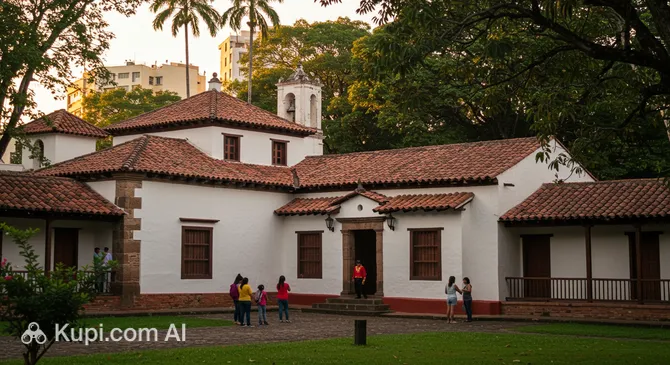
Simón Bolívar Birthplace House
Simón Bolívar Birthplace House. Иллюстрация. Источник: Kupi.com AI

This historical landmark, located in the city of Caracas, is a magnificent example of colonial architecture. Today, the building has been converted into a museum dedicated to the life and legacy of Bolívar, making it one of the country's most significant cultural sites. The authentic atmosphere of the 18th century allows guests to literally touch the past.

The museum attracts travelers from all over the world not only for its architectural beauty but also for its deep symbolism. For many, a visit to this house becomes the starting point for exploring Latin America's long and complex journey toward independence.

Contacts

To clarify details before your visit or to organize group tours, you can refer to the following contact information:

How to contactContact
Addressesquinas de San Jacinto, a Traposos Av. Universidad, Caracas 1012, Distrito Capital, Venezuela

What to Do

Within the museum walls, visitors will find unique artifacts. The halls display Simón Bolívar’s personal belongings: from everyday clothing to the combat weapons that accompanied him on his numerous campaigns. A special place in the collection is held by authentic documents, medals, and banners reflecting the triumphant moments of the struggle for freedom.

Walking through the living quarters, guests can see the original interiors and household items of the Bolívar family. The carefully preserved setting allows one to imagine the life of a noble family during the colonial period. Every decorative element, from furniture to kitchenware, helps recreate the historical context of that era.

For a deeper dive into history, we recommend joining one of the themed tours. Guides provide detailed accounts of Bolívar's childhood, his ideals, and the events that shaped him as a revolutionary leader. This is an excellent opportunity to learn facts rarely found in standard guidebooks.

Getting There

The Simón Bolívar Birthplace Museum is conveniently located in the historical center, making it easily accessible for most travelers. The fastest way to get here from other districts is to use the metro. The nearest station is just a few minutes' walk from the museum, allowing you to avoid city traffic jams.

If you prefer a more comfortable option, you can use taxi services or popular ride-hailing apps. The trip from the city's central squares will take very little time.

For those who want to fully immerse themselves in the atmosphere of the colonial past, a walk is the ideal option. The area around the museum is filled with ancient architecture, so the path to the "Liberator’s" home through the old town will be an interesting part of the excursion in itself.

Ближайший город: Caracas

History & Facts

The mansion that houses the exhibition today was built in the 18th century. At that time, the building belonged to the Bolívar family, considered one of the most noble and wealthy in the city. It was within these walls on July 24, 1783, that a boy was born whose name would soon be known to the entire world.

By the early 20th century, the house was in poor condition; however, the authorities recognized its immense historical value. The building underwent a large-scale restoration, successfully preserving and restoring the spirit of that era. Thanks to the meticulous work of architects and historians, today we can see the house almost exactly as it was during the lives of its famous inhabitants.

Today, the Simón Bolívar Birthplace Museum is recognized as a national monument. It is not just a building, but a symbol of the fight for freedom and independence—a place of power visited annually by thousands of people to pay tribute to the man who changed the map of Latin America.

Time Needed

To leisurely explore all the rooms, study archival documents, and examine the interior details, visitors usually need 1 to 2 hours. This is quite enough time to soak in the atmosphere of the house and get acquainted with the main exhibition.

If you plan to visit as part of an organized guided tour, your stay may be slightly longer, as the historical context of each room deserves individual attention. In any case, a visit to the museum will easily fit into the schedule of even the busiest tourist day.

Working Hours

Before planning your visit, be sure to check the museum's current operating schedule. Please note that there is a break in the middle of the day:

  • Monday: Closed
  • Tuesday – Saturday: 08:00 – 12:00, 13:30 – 17:30
  • Sunday: 10:00 – 15:30

The museum is closed on Mondays, so it is better to plan your visit for the middle of the week or the weekend, keeping the lunch break on weekdays in mind.

DayWorking hours
ПонедельникЗакрыто
Вторник8:00 – 12:00, 1:30 – 17:30
Среда8:00 – 12:00, 1:30 – 17:30
Четверг8:00 – 12:00, 1:30 – 17:30
Пятница8:00 – 12:00, 1:30 – 17:30
Суббота8:00 – 12:00, 1:30 – 17:30
Воскресенье10:00 – 15:30

Nearby

The museum's location in the city's historical core allows tourists to create a rich full-day itinerary. Exploring the surrounding area will help you better feel the contrasts of the metropolis, where old colonial streets sit side by side with modern entertainment centers.

Nearby, you will find many leisure spots, amusement parks, and themed zones that will be of interest to both adults and children. Below is a list of some attractions located nearby:

NameDistance
Bolívar Square0.2 km
Carlos Cruz-Diez Museum of Print and Design0.7 km
National Pantheon of Venezuela0.9 km
House of Dr. José Gregorio Hernández1.1 km
Sambil La Candelaria1.2 km
National Art Gallery1.2 km
Museum of Contemporary Art of Caracas1.6 km

Reached the end of the page?

That means the route is fully explored