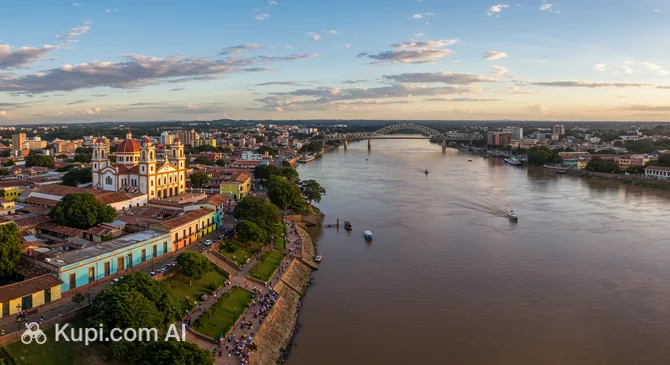
Ciudad Bolívar is a picturesque city situated on the banks of the great Orinoco River in the heart of Venezuela. Its unique atmosphere blends the spirit of its colonial past with the dynamism of a modern industrial hub. As the capital of Bolívar State, the city serves as a vital river port and an administrative center for the region.
Ciudad Bolivar. Illustration.
Source: Kupi.com AI
Geographically, the city stretches along the right bank of the Orinoco, approximately 330 kilometers from its mouth. With a population of about 338,000, it is the second-largest city in the state after Ciudad Guayana. The climate here is tropical, which defines the lush vegetation characteristic of these latitudes and consistently warm weather throughout the year.
For tourists, the city is primarily attractive for its beautifully preserved historical center, where the heritage of the past comes alive in vibrant house facades and cozy squares. Ciudad Bolívar is also known as an important center for gold, diamond, and iron ore mining, which gives it a distinct industrial charm. Visit this city to experience the authentic life of the Venezuelan provinces and see the famous suspension bridge.
Weather Overview
Ciudad Bolívar is characterized by a typical tropical climate with high humidity and consistently high temperatures throughout the year. Typically, the thermometer fluctuates between 23°C and 34°C. The hottest months are March and April, when daytime highs can reach 36°C, and nighttime cooling brings only slight relief.
Precipitation is unevenly distributed: the wet season begins in May and lasts until October, peaking in June and July. During this period, intense downpours are possible, though they are often followed by clear skies. If you are planning a trip, it's worth noting that the weather in Ciudad Bolívar is suitable for vacations year-round, but the period from November to April is considered the most comfortable for long excursions.
Average monthly temperature
Average monthly precipitation
Interesting Facts
Ciudad Bolívar holds many fascinating stories and records that make it an important point on the map of South America.
It was here, on February 15, 1819, that Simon Bolivar delivered his famous "Angostura Address" and was proclaimed president of Gran Colombia.
Until the 1840s, the city was named Angostura, which translates from Spanish as "the narrowing" — it is at this point that the Orinoco River is at its narrowest.
The city is home to the famous Angostura Bridge; at the time of its opening in 1967, it was the longest suspension bridge in all of Latin America.
Ciudad Bolívar serves as the main gateway and starting point for expeditions to Angel Falls — the highest waterfall in the world, located in the Guiana Highlands.
How to Get There
Getting to this region can be done in several ways, although the city is somewhat remote from the nation's capital. You can study the routes and travel options to Ciudad Bolívar in advance, choosing the most convenient mode of transport — from a flight to a scenic bus ride.
The city's main air gateway is Ciudad Bolívar — Tomás de Heres Airport (IATA: CBL). It is located near the center and primarily serves domestic flights, connecting the region with Caracas. The flight from the capital takes only about an hour, which is significantly more comfortable than the overland route.
For those who prefer ground transport, intercity buses run regularly from neighboring cities and Caracas. The journey from the capital covers about 450 kilometers and takes between 6 to 8 hours. The city is also an important river port on the Orinoco, allowing for transport by water, though this method is more often used for cargo than for regular passenger routes.
Main Attractions
The historic heart of Ciudad Bolívar is centered around Plaza Bolívar. This area is steeped in colonial charm, home to the 19th-century Cathedral and the Governor's Palace. Strolling through these well-kept streets, you can feel the atmosphere of old Spain, thanks to the colorful facades and traditional architecture.
One of the most significant landmarks is the San Isidro House, an 18th-century estate converted into a museum. This site is famous because Simon Bolivar himself stayed here. Visitors can explore the colonial interiors and walk through the adjacent picturesque park, which preserves memories of the liberation movement and the lifestyle of that era.
The engineering symbol of the city is the Angostura Bridge over the Orinoco River, built in 1967. This majestic structure offers breathtaking views of the river and the surrounding landscape. The Museum of Modern Art is also worth a visit, featuring works by renowned sculptors and highlighting the city's status as an important cultural center in the region.
Local Cuisine
The gastronomy of Ciudad Bolívar is a vibrant blend of traditional Venezuelan recipes and local products sourced from the Orinoco River. Be sure to try dishes made from freshly caught river fish, which are prepared in various ways: from charcoal grilling to rich, aromatic soups.
Local cuisine is unimaginable without the classic arepas — cornmeal cakes with a variety of fillings. Also very popular is pabellón criollo, consisting of rice, black beans, succulent shredded beef, and fried plantains. These hearty dishes perfectly reflect the spirit of regional cooking.
Among drinks, locals prefer freshly squeezed tropical fruit juices and strong, aromatic coffee. Traditional chicha — a thick and nutritious rice or corn-based drink — makes an excellent addition to lunch. Most cozy cafes are concentrated in the historic center, offering guests a meal surrounded by colonial monuments.
Travel Tips
A trip to Ciudad Bolívar will be a pleasant and safe adventure if you familiarize yourself with a few practical recommendations from experienced travelers beforehand.
Clothing and Essentials: Choose light clothing made from natural fabrics, as the city is constantly hot and humid. Don't forget comfortable shoes for walking the cobbled streets of the center and high-quality sunscreen.
Transport: It is most convenient to move around the city by taxi. The historic center is compact enough for walking tours during daylight hours, which will allow you to see the architecture more closely.
Finances: It is recommended to carry a sufficient supply of cash, as electronic payments may not be available in all establishments, and ATMs sometimes experience outages.
Health and Safety: The tourist zone around Plaza Bolívar is considered safe; however, you should avoid visiting remote industrial areas and the outskirts, especially after dark.
Communication: The primary language is Spanish. Knowing basic phrases will help in communication, as English is mainly spoken by staff in large hotels.
Local Etiquette: The city's residents are friendly and open to conversation. A standard polite greeting will always help establish contact with locals.
What to Avoid: Do not display valuables and expensive equipment in crowded places outside of protected historical zones.
Additional Tip: Visit museums in the first half of the day before the temperature reaches its peak, and enjoy the shade of the palms in the squares after lunch.
Following these simple rules will make your stay in Ciudad Bolívar as comfortable and truly memorable as possible.
Entertainment & Nightlife
Ciudad Bolívar is primarily a quiet administrative and industrial center, so a boisterous nightlife is not its dominant feature. Most evening activity is concentrated in the historic district, where you can find cozy cafes and small restaurants offering a peaceful retreat in a colonial setting near the main squares.
For those looking for vibrant nightclubs or large-scale entertainment complexes, locals often recommend heading to nearby Ciudad Guayana. Nonetheless, sunset walks along the Orinoco riverfront are equally enjoyable, allowing you to savor the tranquility and views of the illuminated Angostura Bridge.
Daytime entertainment in the city includes visiting the Museum of Modern Art, exploring historic squares, and relaxing in small parks. The city's atmosphere encourages a thoughtful study of architecture and history, making it an ideal destination for travelers who appreciate cultural and educational leisure.
Parks & Museums
The museum map of Ciudad Bolívar is closely linked to its heroic past. A key site is the San Isidro House, which now houses a museum of colonial life. Here, you can not only learn about 18th-century daily life but also see the personal belongings of Simon Bolivar. Complementing the historical picture is the Museum of Modern Art, which surprises visitors with its collection of sculptures and original works by regional artists.
Regarding green spaces, the park at the San Isidro estate is considered the most picturesque. Although the city does not have an extensive network of parks, its streets in the central part are well-landscaped, and numerous palm-filled squares create cozy islands for relaxation. A walk to the Orinoco promenade also offers a sense of proximity to nature, revealing panoramas of one of South America's greatest rivers.
For history buffs, the Cathedral and the Governor's Palace are also of interest, as they are architectural exhibits in their own right. These sites allow you to feel the scale of the historical legacy that the city has carefully preserved over the centuries.
Getting Around
The transport system in Ciudad Bolívar primarily consists of a network of bus routes and taxis. Due to the compactness of the historic center, many interesting tourist sites are within walking distance, making walking the simplest and most pleasant way to get acquainted with the colonial architecture and local life.
For travel over longer distances, such as to the airport or industrial zones, it is best to use taxi services. It is recommended to agree on the fare in advance. City buses run regularly, connecting residential neighborhoods with the center and the river port, though it's worth noting they can be quite crowded during peak hours.
The river port is an important part of the transport infrastructure, although it is mainly focused on freight. Nevertheless, the Orinoco River remains a key transport artery for the region. The roads linking the city with neighboring states are maintained in working condition, ensuring stable connections with other major centers in the country.
Accommodation
Accommodation options in Ciudad Bolívar are primarily geared toward travelers passing through the city or business visitors. The most popular hotels are those located in close proximity to the airport and in the historic center, providing easy access to key landmarks.
In the colonial part of the city, you can find small guest houses and apartments that allow for full immersion in the local atmosphere. While there are no luxury five-star world-class resorts here, the available mid-range and budget hotels offer quite decent and comfortable living conditions.
It is recommended to book accommodation in advance, especially if your visit coincides with important regional events. When searching for suitable options, pay attention to reviews regarding the safety of the area and the availability of amenities such as air conditioning, which is critical in the hot tropical climate.
Nearby Cities
Ciudad Bolívar is an excellent starting point for exploring the eastern part of Venezuela and the resource-rich Bolívar State. Its location on the banks of the Orinoco makes it easy to plan trips to neighboring cities, each possessing its own unique industrial or natural character.
One of the most popular travel destinations is Ciudad Guayana — the state's largest city and a powerful industrial hub. The bus journey there takes about 2–3 hours. It is also worth noting the town of Ciudad Piar, known for its proximity to major iron ore deposits and the picturesque landscapes of the Guiana Highlands.
Exploring the surroundings will give you a more complete picture of the region's diversity, where the raw power of industrial giants coexists with the pristine beauty of wild nature and the mysterious flat-topped mountains known as tepuis.
Shopping & Souvenirs
Shopping in Ciudad Bolívar is traditional and practical in nature. The main retail outlets are concentrated around Plaza Bolívar and the adjacent streets of the historic center. You won't find massive, ultra-modern megamalls here, but you can enjoy the atmosphere of authentic shops and small markets.
Local markets offer a wide range of everyday goods as well as folk handicrafts. Tourists should look for souvenirs featuring Simon Bolivar, who is a national hero and the symbol of the city. Leather goods and woven accessories created by local artisans are also popular.
Shops typically operate from morning until evening, with a break for siesta during the hottest midday hours. Payments are most often made in cash, as the infrastructure is largely geared toward local residents. Bring back some local coffee or traditional Venezuelan sweets from Ciudad Bolívar to keep a piece of this sunny and hospitable region with you.