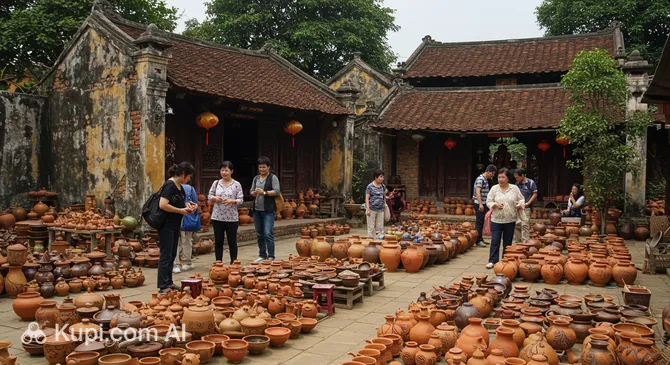
Have you ever wondered where the famous Vietnamese porcelain is born? Bat Trang Pottery Village is not just a craft settlement, but a true living open-air museum located in the suburbs of Hanoi. For centuries, this location in Vietnam has remained the primary center for producing high-quality ceramics, renowned for their unique style and handcrafted artistry.
Bat Trang Pottery Village. Illustration.
Source: Kupi.com AI
Traveler photos:
Today, the village is home to about 5,000 people, most of whom are hereditary artisans. Everything is produced here: from delicate tea sets and decorative vases to monumental items for Buddhist temples. Walking through the narrow streets, you will see how ancient traditions harmoniously coexist with modern techniques, and how old kilns continue to breathe life into new clay masterpieces.
Bat Trang draws travelers with its authentic atmosphere. It is a place where you can not only witness the porcelain-making process from scratch but also feel the deep connection of the Vietnamese people to their cultural heritage. The village is recognized as a leading ceramics brand in Asia, making it a must-visit for anyone wanting to see the real, non-touristy face of the region.
Contacts
When planning a visit to Bat Trang Village, it is helpful to have up-to-date contact information at hand. Although it is a living settlement of artisans, the main visitor center and ticket offices have official communication channels for details on masterclasses and group tours.
Below are the main contact details to help you find your way on-site or get in touch with representatives of the village's tourism sector:
The main draw for visitors in Bat Trang is the opportunity to try your hand at being a potter. Workshops operate at almost every turn, where experienced artisans will help you sit down at the potter's wheel. You can mold a bowl or a vase with your own hands and then paint it with traditional patterns. It is a fascinating process that captivates both children and adults alike.
Be sure to visit the local ceramics market. It is a true labyrinth of hundreds of stalls where shelves are overflowing with items of incredible beauty: from tiny souvenir figurines to magnificent floor vases. Prices here are significantly lower than in shops in the city center, and the selection is simply mind-boggling. It is the perfect place to find unique gifts for loved ones.
Beyond creativity and shopping, it is worth simply wandering through the old quarters of the village. Pay attention to the architecture: ancient houses and the Mother Goddess Temple, built at the end of the 16th century, have been preserved here. If you are looking for something exotic, you can book a short buffalo-drawn cart ride — this allows you to see the surroundings at a leisurely pace and take colorful photos of rural life.
Getting There
Bat Trang Village is located just 13–15 kilometers northeast of Hanoi city center, on the left bank of the Red River. Getting here is quite easy, and the most comfortable option is to order a taxi or use the Grab app. A trip from the Old Quarter will take about 30–40 minutes depending on traffic.
For budget-conscious travelers, public transport is a great alternative. Buses #47A and #47B run from the capital's center to the Gia Lâm district, from where you can reach the village by local motorcycle taxi (xe ôm) or on foot. The entire bus journey takes about an hour and offers a glimpse into the everyday life of the suburbs.
If you prefer active travel, Bat Trang can be reached by rented bicycle or motorcycle. The route passes through picturesque agricultural lands, which adds a special local flavor to the trip. Many travel agencies also offer organized tours with transfers included directly from your hotel doorstep.
Nearest city: Hanoi
History & Facts
The history of this remarkable place spans over a thousand years. The first pottery workshops appeared here as early as the 10th–11th centuries when five famous artisan families decided to settle on the left bank of the Red River. The location was chosen for a reason: it sat upon rich deposits of white clay, and its proximity to waterways allowed goods to be easily transported to the ancient capital of Thang Long.
Between the 15th and 17th centuries, Bat Trang Village experienced its golden age. Thanks to its strategic location between trade centers, local ceramics became famous far beyond the country's borders. The work of Vietnamese masters was highly valued in Japan, China, and Southeast Asian countries. Each era brought its own unique firing and painting techniques, which were carefully passed down from father to son.
Despite periods of decline due to trade restrictions in the 18th and 19th centuries, the village's traditions never faded. Following the economic reforms of 1986, the craft received a new impulse: artisans began combining ancient secrets with modern technology. Today, Bat Trang is a unique example of continuous generational succession, where even modern pieces carry the spirit of a thousand-year history.
Time Needed
To explore the village at a leisurely pace, visit the workshops, and pick out souvenirs, it is best to set aside 4 to 6 hours for your trip. This is plenty of time to soak up the atmosphere and get to know the local way of life. If you plan to travel independently from the city center, allow about an extra hour for travel each way.
Those who are more serious and want to participate in a pottery masterclass should plan for a full day. The process of molding, painting, and the subsequent firing of the piece can take several hours. Many tourists prefer to arrive in the morning, have lunch at one of the local cafes, and dedicate the afternoon to shopping at the famous ceramics market.
Working Hours
Bat Trang Village operates as a working craft center and is open to visitors daily. The main workshops, exhibition halls, and the famous ceramics market welcome guests according to the following schedule:
Monday — Sunday: 8:30 AM to 6:00 PM.
Keep in mind that most artisans start work early in the morning, so the best time to visit is during the first half of the day. If you plan to take part in a long masterclass or want to catch the firing process, it is recommended to arrive before lunch.
8:30 – 18:00
Nearby
A visit to the pottery village can be complemented by a stroll through interesting spots in the surrounding area. The district is developing rapidly, offering tourists both modern amusement parks and areas for quiet outdoor relaxation.
Exploring nearby locations will allow you to see Hanoi from different perspectives: from traditional craft quarters to world-class large-scale recreational complexes.