Support

Alexandre Yersin Museum

About

In the heart of the sunny coastal city of Nha Trang lies a unique place dedicated to the memory of a great man. The Alexandre Yersin Museum is more than just an exhibition; it is a tribute to the outstanding Swiss-French scientist, bacteriologist, and physician who chose Vietnam as his second home. Located in a historic building next to the Pasteur Institute, the museum occupies a small but artifact-rich area.
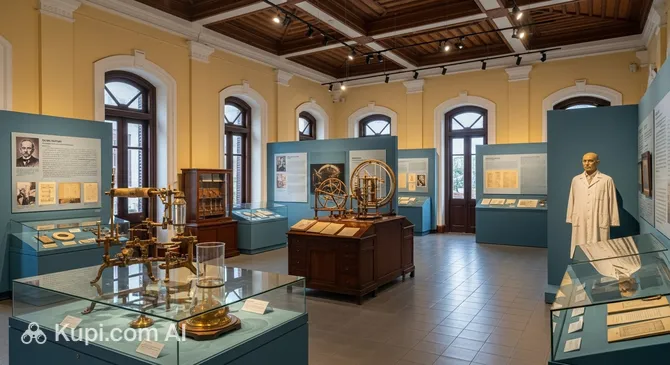
Alexandre Yersin Museum
Alexandre Yersin Museum. Иллюстрация. Источник: Kupi.com AI

The exhibition opened in 1997 and currently holds the status of a national historical and cultural monument. At the center of the museum, the layout of the room where Yersin lived in a fishing village has been recreated. Visitors can see the scientist's personal belongings: from vintage watches and a camera to his extensive library of over 1,200 books. This intimate space offers a glimpse into the life of a genius who made a breakthrough in the fight against the plague.

Of particular value are the unique photographs of Vietnam's ethnic groups from the late 19th century and vintage scientific instruments. The museum preserves an atmosphere of research passion and humanism, serving as a reminder of the enormous contribution Yersin made to the development of medicine and agriculture in the region.

Contacts

To clarify visit details, you can use the official contact information. It is recommended to write down the address in Vietnamese for taxi drivers.

How to contactContact
Address10 Trần Phú, Vạn Thạnh, Nha Trang, Khánh Hòa 650000, Вьетнам
Phone+84 258 3829 540

What to Do

A visit to this place allows for a fascinating journey back in time. You can study laboratory equipment from the late 19th century in detail: microscopes, astronomical instruments, and tools used by the scientist himself are on display. Of particular interest is Yersin's library, which houses his scientific works and notes made during numerous expeditions.

Be sure to check out the interactive elements of the exhibition. You can watch a short documentary film about Alexandre Yersin's life, see unique slides, and even experience a 3D camera from that era. The reconstructed model of the scientist's modest home helps visitors better understand his character and dedication to science.

In addition to scientific artifacts, you can experience life in old Vietnam through Yersin's lens. The collection of photographs of local tribes and landscapes provides an idea of what the region was like more than a century ago. For those who want to take home a memory of their visit, there is a souvenir shop at the museum selling themed postcards, stamps, and keychains.

Many tourists appreciate this spot for the chance to take a break from the beach and spend time in a peaceful, air-conditioned setting. It is an ideal space for reflecting on how one person, through their work and compassion, was able to change the lives of millions of people in Southeast Asia.

Getting There

Finding this building is easy, as it is located on one of the city's main thoroughfares — the coastal Trần Phú street. The museum is in the northern part of the central embankment, directly within the Pasteur Institute building complex. If you are staying in the center of Nha Trang, a walk along the sea will take about 10–15 minutes.

For those who prefer transport, the most convenient option is a taxi or the Grab mobile app. A ride from most tourist areas of the city will take no more than 5 minutes. You can also use city buses that run along the coast.

If you are arriving from Cam Ranh Airport, the journey will take about 40–50 minutes by car. Entry to the museum is from the main road, and there is motorbike parking available nearby. Don't forget to stop by the ticket office before entering to purchase your admission ticket.

Ближайший город: Nha Trang

History & Facts

The history of this place is inextricably linked with the name of Alexandre Yersin, a Swiss-French bacteriologist who arrived in Vietnam in 1889. His contribution to world science cannot be overstated: it was he who discovered the bubonic plague pathogen in 1894, which was later named in his honor — Yersinia pestis. In 1895, the scientist founded a branch of the Pasteur Institute in Nha Trang, which became a vital medical center for the region.

Yersin lived here for over 50 years and developed a deep love for the local land. He was not only a doctor but also a passionate explorer: it was at his recommendation that the mountain resort of Da Lat was founded on the Lang Biang Plateau. Local residents called him "Ông Năm" (Mr. Fifth) and held him in high regard for his modesty and for providing free treatment to poor fishermen and children at his residence in Con village.

The museum itself was officially opened in 1997 on the second floor of the house where the scientist worked. The building is recognized as a national historical and cultural monument of Vietnam. It houses documents confirming his role in founding Hanoi Medical University and introducing rubber and quinine trees to the country's agriculture.

Yersin passed away in March 1943 and, according to his wishes, was buried on the outskirts of the city. His grave in Suoi Dau remains a place of pilgrimage for those who want to pay tribute to the "benefactor of humanity," whose humanism and scientific genius bridged two cultures.

Time Needed

Exploring the museum's exhibition usually takes 45 minutes to 1.5 hours. Although the exhibition area is about 100 square meters, the abundance of small details, vintage instruments, and photographs encourages visitors to linger at each display.

If you plan to watch the documentary about Alexandre Yersin or study his correspondence and scientific works in detail, it's better to set aside about 2 hours. This will allow you to enjoy the quiet, academic atmosphere of the place without rushing, providing a sharp contrast to the resort's busy streets.

Working Hours

The museum welcomes visitors during the work week, though it's important to keep the traditional lunch break in mind. Monday — Friday: 7:30 AM to 11:30 AM and 2:00 PM to 5:00 PM. On Saturday, the museum is open only in the morning — from 7:30 AM to 11:30 AM. Sunday is a day off.

Since the schedule may change on public holidays, it is recommended to check for up-to-date information on-site or through official resources before planning your visit.

DayWorking hours
понедельник07:30–11:30, 14:00–17:00
вторник07:30–11:30, 14:00–17:00
среда07:30–11:30, 14:00–17:00
четверг07:30–11:30, 14:00–17:00
пятница07:30–11:30, 14:00–17:00
субботаЗакрыто
воскресеньеЗакрыто

Nearby

Exploring the area around the museum is a great opportunity to complement your cultural itinerary with interesting walks. Nearby, you'll find both quiet parks and modern entertainment centers that allow you to see the city from different perspectives.

After immersing yourself in scientific history, you can head to the beach or visit the famous aquariums and amusement parks located within easy reach. Here are some interesting places nearby:

NameDistance
Sigma Shisha & Cocktail Lounge0.3 km
Gold Coast Shopping Mall0.3 km
Nha Trang Italian Restaurant0.5 km
Alpaca Homestyle Cafe1.1 km
Agarwood Tower1.2 km
Crocodile House & Multishop1.3 km
Moc Seafood Restaurant1.4 km

Reached the end of the page?

That means the route is fully explored