Support

Beit Sahour

About

Beit Sahour is a charming town nestled comfortably on the picturesque hills east of Bethlehem, in the heart of the West Bank. It is a place where every corner breathes history and ancient traditions, and the streets are steeped in an atmosphere of Eastern hospitality.

Surrounded by green valleys and olive groves, Beit Sahour offers its guests a chance to enjoy a leisurely pace of life. The town is home to approximately 13,281 people. Despite its close ties to neighboring Bethlehem, with which it effectively forms a single urban area, Beit Sahour has managed to preserve its unique identity and special charm.
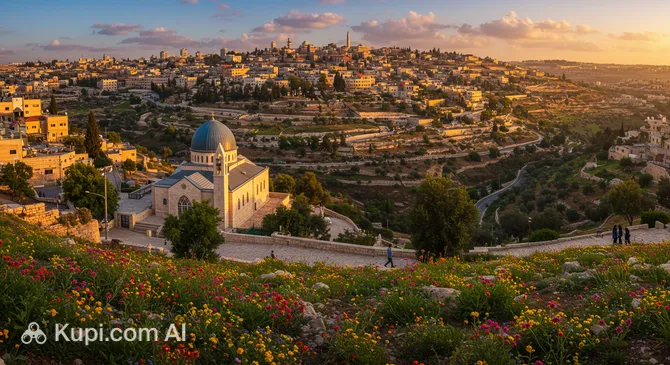
Beit Sahour. Illustration.
Source: Kupi.com AI

The town is primarily known for its profound religious significance, as it is here, according to tradition, that the Shepherds' Field is located, where angels announced the birth of Jesus. Additionally, Beit Sahour is famous for its ancient churches, which attract pilgrims and tourists from all over the world. Narrow, winding streets and traditional architecture add a unique character to the town, creating a sense of traveling back in time.

Visiting Beit Sahour is a wonderful opportunity to immerse yourself in the atmosphere of the authentic Middle East, get to know the rich culture of the region, and enjoy the sincere hospitality of the local residents. This town will undoubtedly become a bright and memorable point in your journey, offering authentic experiences and spiritual enrichment.

You can find more interesting facts on the history of Beit Sahour page.

Weather Overview

The climate in Beit Sahour will please you with warmth for most of the year. Summer here is hot and sunny; from June to September, temperatures often rise above 30-33°C, and rain is very rare. Winter, from December to February, is quite mild, with average temperatures around 12-15°C. Light precipitation is possible during this time of year, bringing freshness. Spring and autumn are the ideal times for a visit due to the comfortable weather.

For more detailed planning of your trip, we recommend checking the detailed forecast: Beit Sahour Climate.

Average monthly temperature

Average monthly precipitation

Interesting Facts

In addition to its worldwide fame as a site of biblical events, Beit Sahour hides many surprising details and stories that make it even more appealing to travelers. Here are just a few of them:

  • It is no coincidence that Beit Sahour is called the "Village of the Shepherds"—it is here, according to biblical tradition, that angels first announced the birth of Jesus Christ to the shepherds. Today, this site, known as the Shepherds’ Field, is one of the main centers of pilgrimage.

  • One of the town's architectural gems is the Chapel of the Angels. It was designed by the famous Italian architect Antonio Barluzzi, the author of many iconic structures in the Holy Land. The chapel is famous for its graceful forms, as well as unique frescoes and mosaics decorating its interiors.

  • The territory around Beit Sahour has been associated for centuries with various biblical characters, such as David, Jacob, and Rachel. Some surrounding fields even bear the folk name "Fields of the Mother of God." Interestingly, in the early 20th century, part of the land in this area was acquired by the Russian spiritual mission, which left its mark on the town's history.

  • Beit Sahour is not only a place with a rich history but also a town with living craft traditions. Here you can visit art studios, pottery workshops, and souvenir shops where local masters happily share the secrets of their art. In the evenings, the town comes alive: music drifts from cafes, and occasionally creative evenings and workshops are held.

How to Get There

When planning a trip to this historical town, it is important to think about logistics in advance, as there is no direct air connection. The main flow of tourists arrives through major international transport hubs in neighboring cities and countries, then continues by road. You can find all ways to get to the city on our dedicated page with detailed routes.

There is no airport in Beit Sahour itself, so travelers find it most convenient to use the air hubs of neighboring regions. The most popular option is Ben Gurion Airport (TLV), located in Tel Aviv. This is the largest international hub in the region, receiving flights from all over the world. It is located approximately 48 km from Beit Sahour. A trip by taxi or transfer will take about 1 hour and 30 minutes, depending on traffic and passing checkpoints.

An alternative option could be Queen Alia International Airport (AMM), located in Amman, Jordan. The distance to Beit Sahour is about 73 km. Net driving time is approximately 2 hours and 10 minutes, but it is worth considering that this route includes crossing a state border (via the Allenby/King Hussein Bridge), which can significantly increase total travel time.

For clarity, here is summary information on the main airports used to reach the region:

AirportPassenger trafficDistance
Ben Gurion International Airport21.1 mln48 km
Queen Alia International Airport9.2 mln73 km
Haifa Airport275 000124 km
Gurayat Airport99 403197 km
Ramon Airport1.8 mln220 km

Regarding rail connections, there are currently no active train stations in Beit Sahour or its immediate vicinity that tourists could use for direct access to the town. The railway network in this region does not cover the direction to Bethlehem and Beit Sahour.

Since trains do not run directly to the town, the primary method of travel after arriving at the airport remains road transport. Most often, travelers reach Beit Sahour via Jerusalem or Bethlehem, using shared taxis (servees), private transfers, or rental cars. A bus ride from Jerusalem to neighboring Bethlehem, followed by a short taxi ride to Beit Sahour, is one of the most common and budget-friendly options.

Main Attractions

Beit Sahour, a small town with a rich history, attracts pilgrims and tourists from all over the world with its shrines and unique atmosphere. Located near Bethlehem, it is closely linked to the events of the Nativity and offers several iconic sites to visit, allowing for a deeper dive into biblical history and local culture.

One of the most revered and famous sites is the Shepherds' Field. According to Christian tradition, it was here that angels announced the birth of Jesus Christ to the shepherds. Today, two main complexes are located on this site: the Catholic and the Greek Orthodox, each with its own churches, chapels, and archaeological finds reminiscent of biblical times. A visit to the Shepherds' Field allows you to touch ancient history and experience the special spiritual atmosphere of this holy place.

Within the Catholic Shepherds' Field, the Chapel of the Angels (also known as the "Gloria in Excelsis Deo" Chapel) particularly stands out. It was designed by the famous architect Antonio Barluzzi in the mid-20th century. Its dome, resembling a shepherd's tent, and its interior, decorated with expressive mosaics depicting the scenes of the Annunciation to the shepherds, attract many visitors. This site is an important stop for pilgrims and admirers of church architecture.

No less significant is the Greek Orthodox Monastery of the Shepherds' Field, also known as Deir Al-Rawat. This complex offers its own perspective on the sacred events. It features an underground church built in a cave that, according to tradition, was used by the shepherds during the time of the Nativity. The monastery preserves ancient traditions and serves as an important spiritual center for Orthodox believers.

Beyond religious shrines, Beit Sahour is interesting for its Old Town with traditional stone architecture and narrow, winding streets that preserve the spirit of past centuries. The town is also widely known as a center for olive wood carving. Numerous craft workshops and shops offer unique handmade souvenirs—from small crosses and Nativity scenes to complex biblical tableaus created by local masters. Visiting these workshops is a wonderful opportunity to learn about an ancient art and take home a memorable keepsake.

Local Cuisine

The culinary traditions of Beit Sahour are a true feast of flavor, dominated by authentic Middle Eastern cuisine. It is distinguished by rich aromas, the use of the freshest local ingredients, and soulful, generous presentation. The town's gastronomic scene attracts tourists with the opportunity to dive into a world of traditional recipes passed down from generation to generation.

Be sure to try musakhan—a mouth-watering flatbread topped with tender chicken, plenty of caramelized onions, aromatic sumac, and high-quality olive oil. It is said that every family in Beit Sahour has its own secret recipe for this dish. No less popular is maqluba—a hearty and beautiful dish that is an "upside-down" cake of rice, meat (usually chicken or lamb), and fried vegetables such as eggplant, cauliflower, or potatoes. It is impressively flipped onto a large platter before serving, creating an appetizing tower of fragrant ingredients.

For dessert, you should definitely order knafeh. This is a delicious Eastern sweet made from thin vermicelli or semolina, special cheese (most often Nabulsi), soaked in sugar syrup, and sprinkled with crushed pistachios. Among beverages, strong Arabic coffee, often served with cardamom, is traditionally popular. Freshly squeezed juices and refreshing yogurt-based drinks like ayran are also common.

The food culture in Beit Sahour is diverse. Locals and tourists can enjoy meals in cozy family restaurants or by sampling street food. A special pleasure is visiting local farmers' markets, where you can find fresh fruits, olives, homemade cheeses, and a rich selection of aromatic spices. Gastronomic festivals and family celebrations often take place in the town, where you can try seasonal delicacies and get to know local culinary traditions better in an atmosphere of genuine Eastern hospitality.

Travel Tips

Welcome to Beit Sahour! To make your trip to this historic town as comfortable and memorable as possible, we have prepared some practical tips. They will help you better navigate the area and avoid potential inconveniences.

  1. Clothing and Essentials:

    The climate in Beit Sahour is Mediterranean, with hot, dry summers and mild, wetter winters. In summer, bring light, breathable clothing made of natural fabrics, a hat, sunglasses, and sunscreen. In winter, layered clothing will be useful, including a sweater or fleece, and a light jacket, possibly a raincoat. Comfortable shoes are extremely important for walking around the town and its surroundings. When visiting churches, monasteries, and other religious sites (such as the Shepherds' Field), a dress code must be observed: clothing should cover shoulders and knees. Women may need a scarf to cover their head in some churches. Don't forget a universal power adapter for your electronics.

  2. Transport:

    Within Beit Sahour itself, given its size, it is convenient to get around on foot. For trips to neighboring cities like Bethlehem or Jerusalem, you can use shared taxis (known as "servees")—this is an affordable and common way to travel. Regular taxis are also available; it is recommended to agree on the fare in advance or ensure the driver turns on the meter (if there is one). Car rental is possible, but keep in mind that parking in the center can be difficult and streets can be narrow. Public transport in the form of city buses is not very developed.

  3. Finance:

    The main currency is the New Israeli Shekel (ILS). In some tourist areas, US dollars (USD) or Jordanian dinars (JOD) may be accepted, but it's better to have local currency for daily expenses. You can exchange money at banks or licensed exchange offices. Credit and debit cards are accepted in hotels, large restaurants, and some shops, but cash is always useful, especially in markets and small establishments. ATMs are available, but check your bank's cash withdrawal conditions and potential fees. Tips are usually 10-15% in restaurants if service is not included; it's also customary to leave small amounts for hotel maids and guides.

  4. Health and Safety:

    Beit Sahour is generally considered safe for tourists. There are pharmacies in town, but not all are open 24/7. It is recommended to carry a basic first-aid kit. Medical care is available at local clinics; serious cases may require visiting hospitals in larger cities. Be sure to take out travel medical insurance before your trip. Observe standard precautions: watch your belongings, especially in crowded places, and avoid walking in poorly lit areas after dark. Stay informed about the current situation in the region and follow the recommendations of local authorities or your embassy.

  5. Communication:

    The official language is Arabic (Palestinian dialect). In the tourism sector, hotels, and restaurants, many people speak English. Learning a few basic phrases in Arabic, such as "shukran" (thank you), "marhaba" (hello), and "assalamu alaikum" (peace be upon you—a more formal greeting), will be helpful and appreciated by locals. A local SIM card for mobile calls and internet can be purchased upon arrival. Wi-Fi is available in most hotels and many cafes.

  6. Local Etiquette:

    Locals are generally hospitable and friendly. Greetings usually involve a handshake (use your right hand). It is important to show respect for local traditions and customs. Dress modestly, especially outside tourist zones and when visiting religious sites. Always ask for permission before taking photos of people. If you are invited for tea or coffee, it is a sign of hospitality, and it would be polite to accept if time permits.

  7. What to Avoid:

    Try to avoid getting involved in discussions on sensitive political topics unless your interlocutor initiates the conversation and you feel comfortable. Also, refrain from photographing military installations, security personnel, or checkpoints.

  8. Special Tip:

    Beit Sahour is inextricably linked to the biblical story of the Shepherds' Field, where, according to tradition, angels announced the birth of Jesus to the shepherds. Visiting this site is a key experience for many travelers. If your trip falls during the Christmas period, you will be able to immerse yourself in a special holiday atmosphere, though there will be more tourists at this time. Also, take note of the local artisan products, especially the famous olive wood carvings—a wonderful authentic souvenir.

We hope these tips help you plan an unforgettable trip to Beit Sahour. We wish you bright impressions and a pleasant stay in this amazing corner of the world!

Entertainment & Nightlife

Evening Beit Sahour offers an atmosphere of tranquility and cultural relaxation rather than noisy parties until dawn. You won't find districts here with numerous nightclubs or ultra-modern bars. Instead, the town invites you to enjoy leisurely walks, soulful conversations in cozy cafes, and an introduction to traditional cuisine in hospitable local restaurants.

If you are looking for vibrant nightclubs, specialized bars with loud music, or large concert venues, Beit Sahour may not fully meet those expectations. When checking the available lists of town attractions for 2-3 specific establishments fitting the description of active nightlife (e.g., bars or well-known nightclubs), none could be highlighted. The charm of evening Beit Sahour lies in its numerous small, authentic family-run cafes and restaurants, especially in the old part of town. It is here that you can immerse yourself in the local flavor, try Palestinian dishes, and spend time in pleasant company. We recommend looking for places popular with locals or simply strolling along the central streets—you are sure to find something to your taste.

Main evening activity is concentrated on the central streets of Beit Sahour, where most restaurants and cafes are located. The atmosphere here is generally very hospitable and relaxed, attracting both locals and tourists. There are usually no strict dress code requirements—comfort is valued. Most establishments are open until approximately 10:00 PM - 11:00 PM, allowing for a relaxed dinner. The approximate cost of dinner in a mid-range restaurant will be 15-30 USD per person, while a cup of aromatic coffee or traditional tea in a cafe will cost 2-5 USD. Prices may vary, so it is a good idea to check the menu.

For getting around the town in the evening, it is most convenient to use a taxi. It is recommended to agree on the fare in advance. Beit Sahour is generally considered a safe town for evening walks, especially in the central and well-lit areas. However, as elsewhere, it is worth taking standard precautions and keeping an eye on your belongings.

During the day, Beit Sahour also offers interesting leisure options. Guests can visit iconic historical and religious sites, such as the Shepherds' Field. It's also worth stopping by local craft workshops to learn about traditional trades or simply wandering through the picturesque streets, soaking up the atmosphere of this ancient town. Museums telling the history and culture of the region can also be part of your daytime itinerary.

Parks & Museums

Beit Sahour, a town with a rich history and deep traditions, offers its guests not only an introduction to important shrines but also an opportunity to touch the local culture. Although Beit Sahour is not famous for extensive urban parks in the traditional sense, its surroundings and certain corners of the town itself provide a sense of peace and connection with nature.

The surroundings of Beit Sahour are characterized by picturesque hills covered with ancient olive groves, which have been an integral part of the local landscape and a source of life for centuries. These natural areas offer opportunities for leisurely walks, during which you can enjoy the views and get acquainted with the traditional rural way of life. Within the town itself, you can find small, well-kept squares and quiet courtyards at churches where you can rest in the shade and catch your breath.

The cultural heritage of Beit Sahour is inextricably linked with its biblical significance, and this is what draws many visitors here. The main site that pilgrims and tourists seek to visit is, without a doubt, the Shepherds' Field. There are two main revered sites: the Catholic one, known as Siyar el-Ghanam, where the famous Chapel of the Angels, designed by architect Antonio Barluzzi, is located; and the Greek Orthodox one, called Deir er-Rawat, with its ancient underground church. These places are not just religious shrines but also important historical monuments. Here you can see ancient ruins and grottos that are believed to hold the memory of the events described in the Gospel. A visit to the Shepherds' Field allows for a deeper appreciation of the history and spiritual atmosphere of these sites.

In addition to its famous shrines, Beit Sahour is renowned for its long-standing craft traditions, especially skillful olive wood carving. Numerous workshops and souvenir shops operate in the town, where you can find unique handmade items—from small, elegant figurines and crosses to complex biblical compositions and decorative panels. Visiting such a workshop can be a true cultural discovery: here you can not only purchase a memorable souvenir but also observe the fascinating process of creating these works of art, and sometimes even chat with the masters themselves. Some of these workshops are essentially small galleries showcasing the best examples of this ancient and respected craft.

For a more authentic experience of Beit Sahour, be sure to stroll through its old streets. Here you can see traditional stone buildings characteristic of this region and feel the leisurely pace of life in this ancient town. Also, don't miss the chance to peek into local small bakeries where fragrant bread is baked, or into shops offering traditional sweets and products—this will add bright and tasty impressions to your trip.

Getting Around

Public transport in Beit Sahour is primarily represented by shared taxis, known as "servees," and to a lesser extent, local buses. Given the town's size, there are no subways, trams, or trolleybuses here. These modes of transport connect various parts of the town and provide connections to neighboring settlements, including Bethlehem.

The fare payment system is quite simple. Generally, payment is made in cash directly to the driver when entering or exiting the "servees" or bus. The fare on "servees" along specific routes is usually fixed. It is recommended to carry small bills and coins of the local currency for convenience. Specialized travel cards or mobile apps for fare payment are typically not available in Beit Sahour.

Shared taxi "servees" run along established routes and can be hailed with a wave of the hand at any permitted location or at unofficial stops. Buses also follow their own routes but may have more clearly marked stops. Public transport usually operates most intensively during the day, from morning until evening. On Fridays and holidays, the number of trips may be reduced. To clarify specific routes and schedules, it is best to check on-site or ask local residents.

An alternative to public transport is private taxis. They offer a more comfortable and faster way to get around, especially if you are traveling on an individual route or with luggage. The cost of a taxi ride is significantly higher, and it is recommended to agree on the fare with the driver before starting the trip. Given the compactness of Beit Sahour, many interesting sites and districts are quite accessible for walking.

There are no unique historical types of transport, such as an old metro or cable cars, in Beit Sahour. The transport system here is functional and typical for towns of this size in the region, focused on the basic mobility needs of residents and visitors.

Accommodation

When planning a trip to Beit Sahour, travelers will find various accommodation options to suit any preference and budget. The town offers cozy guesthouses and small family-run hotels for authentic immersion, as well as more traditional hotels. For those who value independence and space, apartments are also available for rent. Specific hotel examples, if found in the provided data with the category 'hotel' or 'resort_hotel', will be integrated into this section with appropriate links to make the information more specific.

Many hotels and apartments are conveniently located near key attractions in Beit Sahour or in areas with developed transport infrastructure, making it easier to explore the town and its surroundings. Central areas generally have more offers and services, but wonderful places to stay can also be found in quieter parts of the town, promoting a deeper immersion into the local atmosphere.

Beit Sahour has a sufficient selection of hotels and guesthouses capable of satisfying various traveler needs. To ensure the best conditions and prices, especially if the trip falls during the peak tourist season or during local festivals, it is highly recommended to take care of booking well in advance. Early booking not only often helps save money but also gives you the opportunity to choose a room with the best view or additional amenities.

The price range for accommodation in Beit Sahour is quite wide: from budget options for savvy travelers to mid-range hotels offering increased comfort and service. You can book accommodation using popular international online platforms that provide a large selection and allow you to compare prices. Additionally, in some cases, direct contact with the management of the chosen hotel or guesthouse is possible via their official websites or by email.

Nearby Cities

For those who want to explore the surroundings, Beit Sahour serves as an excellent starting point for day trips to several interesting nearby locations.

Among them, Hebron stands out, one of the oldest cities in the world, known for its Cave of the Patriarchs and historical center; Yattir, which offers a look at the traditional way of life in the region and its agricultural landscapes; and Nablus, famous for its bustling old town, traditional soap factories, and delicious knafeh.

CityPopulationDistance
Bethlehem28 5913 km
Beit Jala13 4844 km
Jerusalem919 4388 km
Abu Dis12 6048 km
Beit Ummar19 89215 km

These nearby destinations provide a more complete picture of the diverse culture, history, and landscapes of the region.

Shopping & Souvenirs

Beit Sahour, known for its Christian shrines, offers unique shopping opportunities, especially for those seeking authentic souvenirs and products from local artisans. The town is famous for its handicraft goods, particularly olive wood and mother-of-pearl items that reflect the region's rich cultural and religious history. You won't find huge shopping malls here, but you can immerse yourself in the atmosphere of traditional shops and workshops.

Main shopping activity in Beit Sahour is concentrated along the town's central streets, especially near tourist and religious sites like the Shepherds' Field. Small shops and workshops can be found while strolling through the town's main arteries, where locals also do their daily shopping.

There are no large modern shopping centers in Beit Sahour in the traditional sense. Shopping here is more intimate, focused on small family-run stores and craft shops. For a wider selection of shopping complexes, you can head to neighboring Bethlehem or Jerusalem.

While Beit Sahour may not have one large central market like some other cities, you may encounter small grocery stalls and spontaneous market points selling fresh fruits, vegetables, and local delicacies. The main focus in trade is on souvenir products, which are often sold in shops at churches or in specialized souvenir stores.

From Beit Sahour, it is worth bringing back olive wood products—these can be figurines, crosses, Nativity scenes, or kitchen utensils. Also popular are mother-of-pearl items, handmade ceramics, embroidery, and traditional Palestinian scarves (kuffiyehs). Don't forget local products: olive oil, dates, spices, and sweets. These souvenirs will be a wonderful reminder of your trip.

Shops in Beit Sahour are usually open from the morning (around 9:00-10:00 AM) until the evening (6:00-7:00 PM); many may close for a lunch break in the middle of the day. On Friday and Sunday (depending on the owner's religious affiliation), working hours may be reduced or shops may be closed. The primary currency is the New Israeli Shekel (NIS). In tourist areas and larger shops, US dollars or Euros may be accepted, but the exchange rate might not be the most favorable. Credit cards are not accepted everywhere, so it is recommended to have a sufficient amount of cash, especially for purchases in small shops and markets.

The Tax Free refund system in Beit Sahour is generally not common in the way it is in major international tourist centers. It is recommended to check for the possibility of a tax refund directly in large stores if you are making significant purchases, but you shouldn't rely on it too much.

Reached the end of the page?

That means the route is fully explored