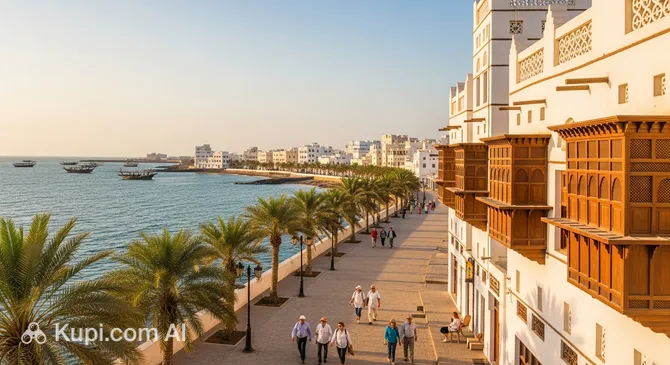
Al Hudaydah is a dynamic port city stretching across the western coast of Yemen along the azure waters of the Red Sea. As the administrative center of the governorate of the same name, the city serves as the country's most vital maritime gateway, through which major trade flows pass. Its atmosphere is permeated with a salty breeze and the business bustle characteristic of major transport hubs connecting the region with the rest of the world.
The city's geographical location, 220 kilometers from the capital Sana'a, has determined its strategic importance for centuries. The population of Al Hudaydah is over half a million people, most of whom are involved in port activities and commerce. The architectural appearance of the city is a curious blend of modern functional concrete and traditional buildings made of local stone, reflecting the coastal character of the urban landscape.
Al Hudaydah. Illustration.
Source: Kupi.com AI
The rich history of the city's development is inextricably linked to the interests of the great powers of the past, including the Ottoman Empire and Great Britain, who valued this port as a key point on maritime routes. Among the notable sites, the old quarter with its historical gates and numerous mosques, which emphasize the regional cultural continuity, is worth highlighting.
Although the city is primarily an industrial and logistical center, it may be of interest to travelers seeking to see the real, non-touristy Yemen. We invite you to get to know this "window to the world" and experience the unique rhythm of life in one of the main ports of the Red Sea.
Weather Overview
The climate in Al Hudaydah is characterized as hot desert, due to its geographical location on the Red Sea coast. Travelers should be prepared for high temperatures throughout the year. Even in winter, in January, the average temperature is a comfortable 25.5°C, with daily highs often reaching 28-30°C, and precipitation is minimal during this period.
The summer months, especially July and August, bring intense heat — the thermometer often rises above 35°C, and high humidity due to the sea's proximity makes the air feel even heavier. Rain in Al Hudaydah is a rare occurrence; the most precipitation falls in August and October, but even then, it is short-lived. You can learn more about Al Hudaydah's climate to choose the most suitable time for your visit.
For a comfortable stay in the city, it is recommended to plan your trip for the period from November to March, when the heat subsides and the most pleasant weather sets in. During this time of year, a light sea breeze blows, and the number of dry days allows for spending more time outdoors exploring the architecture and life of this port hub.
Average monthly temperature
Average monthly precipitation
Interesting Facts
The first official mention of Al Hudaydah in written sources dates back to the mid-15th century, although settlements existed in this area much earlier.
Between the 13th and 15th centuries, the city held the highest status and even served as the state capital, emphasizing its historical significance.
Al Hudaydah is a major educational center: the city has 53 religious schools and is home to one of the oldest universities in the Arab world.
The city's religious life is very vibrant — there are 29 mosques located here at once, many of which are architectural monuments.
The rapid growth of the city as a key trading port began in the 18th century, turning it into one of the most important economic hubs on the Red Sea.
How to Get There
Al Hudaydah is one of the most accessible cities in Yemen thanks to its role as a major port. Primary communication with other regions is carried out via roads. You can find detailed information about routes connecting the city with major centers such as Sana'a and Taiz. The road network allows reaching the coast in a few hours; however, tourists should always check the current road situation with local carriers in advance.
The city is home to Hodeidah International Airport (IATA: HOD), which has historically served both domestic and international flights. The airport is located in close proximity to the city, making transfers to the center quick and convenient. However, airport operations may currently be limited, so travelers are advised to check current flight schedules before planning their trip.
Railway communication in this region is currently not developed, so buses, shared taxis, and private cars remain the main modes of transport. The city's port is used primarily for commercial freight, but its infrastructure remains a key element defining all transport logistics in the area.
Main Attractions
Although Al Hudaydah is primarily known as a commercial hub, it has preserved interesting sites worth seeing. One of the most recognizable architectural monuments is the Bab al-Mushrif Gate, located in the old town quarter. This massive structure serves as a reminder of the times when the city required serious fortifications and is an excellent starting point for a walk through the historical district.
The religious architecture of the city is represented by majestic structures, most notably the Al-Saleh Mosque and the Alaswadi Mosque. These spiritual centers not only fulfill their direct function but also adorn the cityscapes with their minarets and traditional finishes. Visiting these places allows for a better understanding of the cultural and religious way of life of the local residents.
For those who want to dive into the city's daily life, The New Khat Market is a must-visit. This is not just a market but a true social center where trade and the exchange of news bustle. Additionally, the Al-waha Resort is located on the coast, offering recreation by the water, which makes it a popular spot for both locals and the occasional visitors looking for a bit of comfort and sea air.
Local Cuisine
The cuisine of Al Hudaydah is a true feast for seafood lovers. Proximity to the Red Sea directly influences the local menu: you can always taste the freshest fish, grilled over charcoal with an abundance of fragrant Yemeni spices. Traditional cooking methods preserve the succulence of the food, and the use of local herbs gives the dishes a unique, incomparable flavor.
One of the popular establishments to get acquainted with local gastronomy is Tehamah Food. It serves classic dishes from the coastal region that reflect the city's trade heritage. Be sure to try the fish with a side of rice or the traditional flatbreads, which are baked in special ovens and served hot with any meal.
The dining culture in the city is closely linked to markets and small street cafes. This is where you can feel the true spirit of Al Hudaydah while watching the bustle of the port city. Among drinks, strong sweet tea and traditional coffee are particularly popular. Although restaurants here may look modest, the hospitality and authenticity of the flavors make a meal in this city an unforgettable experience.
Travel Tips
A trip to Al Hudaydah requires careful preparation, but these tips will help make your journey more comfortable and safe.
Clothing: Choose light items made of natural fabrics to better handle the heat, but remember modesty. In public places and near mosques, both men and women are advised to cover their shoulders and knees. Sunglasses and a head covering are mandatory.
Transport: The best way to get around is by taxi. Always agree on the fare before you get into the car. For travel between cities, it is better to use the services of trusted carriers.
Finance: The official currency is the Yemeni Rial (YER). Always carry a sufficient supply of cash with you, as cards are rarely accepted, and ATMs may be unavailable.
Health: Drink only bottled water. Always have a basic first-aid kit and sunscreen with you. If necessary, contact major city clinics.
Communication: The primary language is Arabic. English is not widely spoken, so learn a few basic phrases in Arabic for greetings and simple requests. Purchasing a local SIM card is possible at specialized points.
Etiquette: Yemenis are hospitable people. Greet with your right hand and always show respect for local traditions and elders. Always ask for permission before photographing people.
What to avoid: Do not visit port terminals and industrial zones at night. Try not to discuss political topics with strangers and avoid participating in large crowds.
Safety: Before your trip, be sure to check the current safety status in the region and register with your country's consulate.
Following these simple rules will help you focus on exploring this unique port city and ensure you have only positive impressions from your visit.
Entertainment & Nightlife
Nightlife in Al Hudaydah differs significantly from Western standards and has a more quiet, traditional character. Since the city is focused on port activities, there are virtually no loud clubs or bars. Evening activity is mainly concentrated in small cafes and teahouses, where locals gather after a day's work to discuss business over a cup of strong coffee or tea.
The lights illuminating key sites after dark give the city a special atmosphere. A walk near the Al-Saleh Mosque or along the port terminals allows you to see Al Hudaydah from a more romantic and calm perspective. Most entertainment is family-oriented, and public spaces become places for leisurely strolls by city residents.
For those looking for a more intensive cultural program, the daytime can be spent walking through old quarters or visiting local markets. If you require theaters or large entertainment centers, you might consider a trip to Sana'a. Nevertheless, Al Hudaydah captivates with its authenticity and lack of artificial tourist gloss, offering an honest look at the life of a modern Yemeni port.
Parks & Museums
Green zones in Al Hudaydah are a rare phenomenon, dictated by the hot desert climate and the industrial nature of the city. Instead of classic parks, you can find natural coastal landscapes here, including mangroves that stretch along the Red Sea coast. These natural corners serve as an important part of the ecosystem and offer a distinctive contrast to the bustle of the commercial port.
While there are no major world-class museums in the city itself, its history is literally in the air of the old quarters. Lovers of panoramic views and nature should look to the surrounding areas, such as the Wadi Dahr viewpoint (though it is at a distance), which allows you to appreciate the scale and rugged beauty of the Yemeni landscape. The main "open-air museum" here is the port zone itself and the ancient architecture of the mosques.
For those seeking cultural enlightenment, the best option is interacting with local residents and visiting religious schools, which are keepers of centuries-old traditions. The lack of a developed system of parks and galleries in Al Hudaydah is more than compensated for by the authenticity of its streets and the opportunity to see the life of an important transport hub from the inside.
Getting Around
The public transport system in Al Hudaydah is as simple as possible and oriented toward the needs of the local population. The main means of getting around the city are shared minibuses. They do not have a fixed schedule in the usual sense, but they ply the main city arteries, connecting residential areas with the port zone and markets. Fare is paid in cash to the driver, and the price is usually very affordable.
Taxis are the most convenient and fastest way for a tourist to get around. In Al Hudaydah, taxis can be easily caught on the street; however, you should always agree on the cost of the trip in advance, as meters are rarely used. Taxis allow you to reach any point in the city in comfort, which is especially important in the hot coastal climate.
There are no alternative forms of transport such as subways or trams in the city. Walking is possible within the historical center, but due to high daytime temperatures, it can be exhausting. For long-distance trips or travel to neighboring cities, it is recommended to use intercity bus services or hire a private driver, which will provide greater flexibility and safety for your route.
Accommodation
The choice of accommodation options in Al Hudaydah is specific and largely oriented toward business travelers and specialists associated with the port and trade sectors. It is difficult to find classic tourist hostels here; however, the city offers several mid-range hotels and residential complexes providing a basic level of comfort.
One of the most well-known places to stay is the Al-waha Resort, which stands out against the urban backdrop due to its location and leisure orientation. It is a good option for those who want to spend time in a more relaxed, resort-style setting. In the central districts, you can also find hotels that are most often used for short-term business trips.
When planning a trip, it is important to consider that the city's housing stock primarily consists of private houses and apartments for local workers. It is recommended to book accommodation in advance through available online services or by recommendation from local partners. Be sure to check current reviews to ensure the service level meets your expectations, as the tourist infrastructure here is still in the process of formation.
Nearby Cities
Al Hudaydah serves as a convenient base for exploring coastal areas and nearby settlements, each with its own unique character. Although the city is an industrial center, its surroundings hide interesting historical and natural corners accessible via day trips.
Just a few dozen kilometers away is Bajil, a small town often visited on the way inland. Also worth noting is Bayt al-Faqih, known for its traditional markets and crafts. For those who prefer sea trips, an interesting destination is Kamaran Island, which offers a completely different, more secluded atmosphere compared to the noisy port.
City
Population
Distance
Bajil
46 005
45 km
Bayt al-Faqih
41 652
48 km
Az Zaydiyah
16 246
60 km
Al Jabin
—
67 km
Kamaran Island
—
74 km
Traveling outside the city allows you to see picturesque coastal bays, such as Hamidiya, and touch history at the Saila ruins. Exploring the surroundings of Al Hudaydah is a great way to diversify your trip and better understand the diversity of landscapes and cultural traditions of coastal Yemen.
Shopping & Souvenirs
Shopping in Al Hudaydah is primarily about experiencing its commercial spirit. The city does not have huge modern malls, but it offers a unique experience of visiting local markets. The main commercial center of attraction is The New Khat Market, where you can find not only the famous khat but also many other goods necessary for daily life.
Thanks to its port status, the city's markets present a wide range of spices, fabrics, and leather goods. These goods are often brought by sea and are of high quality. Walking through the market stalls allows you to purchase authentic Yemeni products that will be a great reminder of your trip. There are no typical souvenir shops here, so every purchase is a real item of local life.
Shops are usually open from morning until late evening with a break for afternoon rest. Payment is most often made in cash in local currency, so it is worth taking care of money exchange in advance. Trade in Al Hudaydah is not just a buying process, but part of the local culture of communication, where friendliness and the ability to conduct a dialogue are valued above all else.