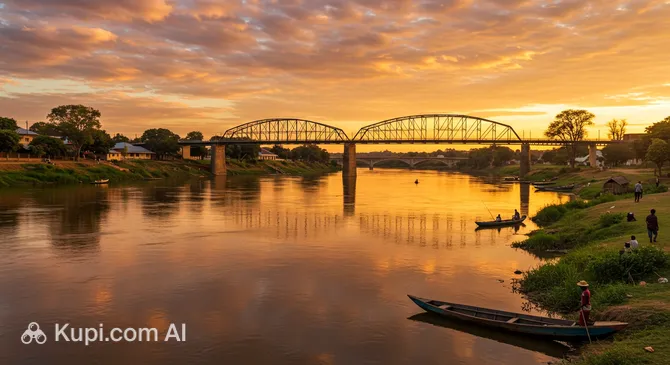
Kafue is an important industrial and transport hub in Zambia, located in the Lusaka Province. The city lies on the northern bank of the Kafue River, serving as a southern gateway to the country's central plateau. Although the town is not a traditional tourist center, it possesses a unique atmosphere of a working settlement where the regional economic life pulses.
Geographically, the city is situated just 44 kilometers south of the capital, making it a strategically significant logistics point. With a population of approximately 219,000, Kafue is the second most important city in its region. Its historical heritage is inextricably linked to the development of rail transport and industrial production, which continues to define the character of the city streets today.
Kafue. Illustration.
Source: Kupi.com AI
For the traveler, this city can be interesting as a starting point for exploring the southern provinces or as a place to witness the real, unadorned life of modern Zambia. The proximity to the river and surrounding hills creates a pleasant natural contrast to the industrial landscapes, inviting visitors to get a closer look at this dynamic region.
Weather Overview
A tropical climate prevails in Kafue, with distinct seasonal variations typical for the central part of the country. The hottest period is October, when average temperatures can reach 32°C. During this time, nature stands still waiting for the rains, and the air becomes dry and hot.
The rainy season usually begins in November and lasts until March, peaking in January. During this period, the city's climate is characterized by high humidity and heavy rainfall (up to 270 mm per month), which turns the surrounding bush into lush green thickets. Temperatures remain comfortable, hovering around 23-25°C during the day.
The most favorable time for travelers is considered to be the period from May to August. This is the dry and cool winter when rain is practically non-existent and daytime temperatures stay around 20-23°C. Nights at this time can be quite cold (down to 11°C), so tourists are advised to bring warm clothing for evening walks.
Average monthly temperature
Average monthly precipitation
Interesting Facts
Railway Giant: Kafue is one of the country's key railway hubs, connecting the northern and southern regions, which historically determined its industrial growth.
Natural Shield: The city is well-positioned between hills and the river at an altitude of over 1,000 meters above sea level, protecting its residential areas from annual seasonal flooding.
The River's Namesake: The city's name is identical to one of Zambia's largest rivers—the Kafue—which serves as the primary source of water and life for the entire region.
Southern Gateway: In Zambian transport logistics, Kafue is officially considered the "southern gateway" to the central plateau, where the capital Lusaka is located.
How to Get There
Getting to Kafue is easy thanks to its proximity to the capital of Zambia. The main transport flow comes from Lusaka, which is only 44 kilometers away. This distance is easily covered by car or public transport along a well-maintained highway; the trip usually takes between 45 minutes to an hour, making the city accessible even for short visits.
Since Kafue is an important railway hub, trains regularly pass through it, connecting the central part of the country with the southern provinces. This is a convenient and budget-friendly way to travel, allowing you to see Zambia's picturesque rural landscapes from the carriage window. Major rail routes make a mandatory stop here.
Station
Passenger traffic
Distance
Lusaka Central Train Station
1
40 km
For those who prefer air travel, the nearest major aviation hub is Kenneth Kaunda International Airport in Lusaka. From there, you can arrange a transfer to Kafue or use taxi services. More detailed information on how to get to this region can be found in specialized transport directories.
While Kafue itself is primarily an industrial and residential center, the surrounding region offers incredible opportunities for nature enthusiasts. The main magnet for travelers remains Kafue National Park, located about 200 kilometers west of the city. It is one of the largest game reserves in Africa, spanning over 22,000 square kilometers.
In the park itself, tourists can witness a stunning variety of wildlife, from majestic elephants and lions to rare cheetahs and numerous herds of antelope. The northern part of the park is famous for the Busanga Plains, where dramatic predator hunts unfold on the open plains during the dry season, making it a dream destination for photographers.
The Kafue River itself, which flows through the city and the national park of the same name, is a major attraction. Boat trips allow for close-up observations of hippos and crocodiles, as well as a vast array of water birds. This is the perfect spot for those wishing to experience the spirit of authentic, untouched Africa far from the well-trodden tourist paths.
Local Cuisine
The gastronomic character of Kafue is closely linked to Zambian traditions and its proximity to the vast river. The staple of the diet here is nshima—a thick porridge made from cornmeal, served with almost every meal. Nshima is always accompanied by "relishes" (side dishes): stewed greens, beans, meat, or flavorful sauces.
Fish holds a special place on the local menu. Thanks to the fishing industry on the Kafue River, you can always try freshly caught tilapia or bream, grilled or served as a rich stew. Fish dishes are considered the city's signature, and they are best found in small local eateries or at food markets.
The food culture in the city is quite simple: locals prefer to dine in small snack bars or buy food from street vendors. Try the roasted maize or local fruits, which are always in abundance here. Popular drinks include homemade ginger beer (non-alcoholic) and traditional beverages based on corn or tree roots, which have a unique flavor.
Travel Tips
A trip to Kafue will be a pleasant experience if you consider a few practical points characteristic of this industrial region of Zambia.
Clothing and Essentials: Choose light clothing made of natural fabrics for hot days and be sure to bring a warm sweater for cool evenings. If you plan a safari, opt for neutral colors (beige, khaki) and don't forget comfortable closed-toe shoes.
Transport: To get around the city, it's best to use a taxi, which can be called through your hotel. If you decide to rent a car, remember that Zambia has left-hand traffic.
Finance: The official currency is the Zambian Kwacha. There are ATMs in the city, but they don't always work with foreign cards, so it's better to have a supply of cash exchanged in Lusaka.
Health: Zambia is a malaria risk zone, so consult a doctor about prophylaxis. Always drink only bottled water and use insect repellent.
Communication: English is the official language and is widely spoken. Locals will be very pleased if you learn a few greetings in Bemba or Nyanja.
Local Etiquette: Greetings are very important—always say hello to people before asking for something. It is better to stick to a conservative style of dress, especially when visiting official institutions.
What to Avoid: Do not photograph bridges, government buildings, or military installations—this can lead to legal issues. It is also not recommended to walk alone in industrial zones after sunset.
Connectivity: Buy a local SIM card (e.g., Airtel or MTN) immediately upon arrival in Lusaka or in the center of Kafue, as Wi-Fi in smaller hotels can be unstable.
Following these simple rules will help you focus on the beauties of Zambia and make your stay in Kafue comfortable and safe.
Entertainment & Nightlife
Since Kafue is primarily an industrial center, a vibrant nightlife is not well-developed here. Most entertainment for locals is centered around small bars and pubs where workers relax after their shifts. For those seeking full-scale nightclubs, discos, and fine dining, the best option is a short trip to the nearby capital, where life hums until dawn.
Daytime leisure in the city often involves riverside walks or visits to local markets that reflect the daily rhythm of the residents. While there are no major theaters or entertainment centers, the proximity to nature allows for excellent picnics or fishing on the banks of the Kafue River, which is a popular pastime among the local population.
The primary "entertainment" adventure for visitors remains organized safari tours. Most activities, such as bush walks or water excursions, are oriented toward visiting the adjacent natural zones and the national park, where one can fully immerse themselves in the atmosphere of the wild continent accompanied by professional guides.
Parks & Museums
In Kafue itself, you won't find major art galleries or historical museums, as the city was built around industrial facilities. However, the railway and old industrial buildings serve as an open-air museum of sorts, which may interest fans of industrial aesthetics and African developmental history.
The primary natural treasure of the region is undoubtedly Kafue National Park. This grand expanse of wilderness replaces any urban parks. Here, you can see rare ecosystems, such as the flooded grasslands of the Busanga Plains and dense miombo woodlands, which are home to thousands of species of animals and plants.
For those who prefer more peaceful walks, the river's shoreline within the city and its outskirts offers picturesque views, especially during sunset. These are natural recreation areas where you can enjoy the silence and observe local birds, making the lack of classical city squares almost unnoticeable to the traveler.
Getting Around
The transport system in Kafue reflects its status as an industrial hub. The main means of transport for locals are minibuses (combis), which connect various city districts and provide regular service to Lusaka. This is an affordable way to get around, though it requires getting used to the cramped conditions and the lack of a strict schedule.
The railway remains a vital part of the urban infrastructure. Trains passing through Kafue station connect the city with the south and north of the country. For tourists, this can be an interesting alternative to buses, especially if traveling long distances. Fares are usually paid in cash at station ticket offices or directly to the driver in minibuses.
Taxis are also available in the city and are the most comfortable option for trips after dark or when carrying luggage. It is always better to agree on the price beforehand, as meters are rarely used. Bicycle rentals are not developed here, but many locals use bikes as their primary mode of transport, which is something to keep in mind when walking along the roads.
Accommodation
Accommodation options in Kafue are mainly geared towards business travelers and specialists visiting the city for industrial purposes. You can find small hotels, guest houses, and apartments offering basic amenities and home comforts. Room rates in the city are generally lower than in the capital, making it attractive for budget-conscious tourists.
For those visiting for the wildlife, specialized safari lodges are the ideal choice. These are located outside the city limits, closer to the national park or along the riverbanks. Such establishments offer a unique experience of living surrounded by the African bush with high levels of service, often including excursions and meals in the price.
If you plan to visit during the peak season (May to October), it is recommended to book lodges in advance, as this is the most popular time for wildlife viewing. Within the city itself, finding a vacant room in a mid-range hotel is usually possible without a prior reservation, based on local booking service offers.
Nearby Cities
Thanks to its location on a key transport artery, Kafue serves as an excellent starting point for exploring the surroundings and visiting neighboring towns. Proximity to the capital and other important centers makes it easy to plan day trips and discover the diverse life in this part of the country.
Just 41 kilometers to the north is Lusaka—the dynamic capital, where you can visit museums, galleries, and modern shopping malls. In the opposite direction lies Mazabuka, known for its endless sugarcane plantations. It is also worth visiting the border town of Chirundu, where you can see the famous bridge over the Zambezi and experience the atmosphere of the border with Zimbabwe.
Exploring nearby settlements will help you better understand the culture and economy of the region. Each of these destinations is accessible by car or regular bus, making your holiday more rich and varied.
Shopping & Souvenirs
Shopping in Kafue is primarily practical and focused on local markets. These are the best places to experience the true flavor of Zambia. At the markets, you can purchase fresh produce, fish, and traditional chitenge fabrics with bright African patterns, which make excellent gifts or can be used to create unique clothing.
The city lacks giant malls with global brands, so tourists usually head to the shopping centers of Lusaka for serious purchases and electronics. Nevertheless, there are several supermarkets and small trading rows in Kafue where you can buy everything needed for your journey, including sunscreen and water.
As souvenirs from this region, it is worth bringing back wood carvings, woven baskets, or copper jewelry—Zambia is famous for its copper reserves, and local artisans create amazing things from this metal. Remember that bargaining is common at local markets, and payments are most often made in cash using the local currency.