Support

Gjirokaster

About

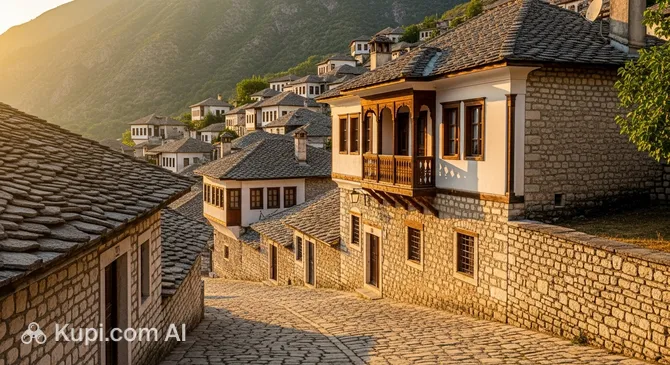
Gjirokastër is a true gem of southern Albania, nestled comfortably on the slopes of the mountains, about 80 kilometers from the border with Greece. The city is spread across several hills, so walks here turn into an exciting adventure with constant ascents and descents. It is often called the "Stone City" or the "City of a Thousand Steps" due to its unique houses built of gray stone with roofs made of stone slabs, which give the streets a special medieval atmosphere and make Gjirokastër recognizable all over the world.
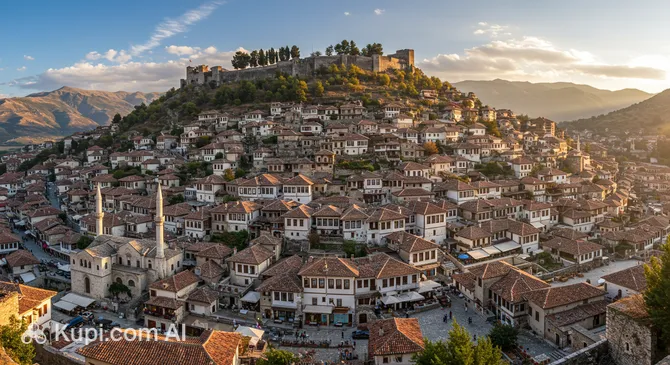
Gjirokaster. Illustration.
Source: Kupi.com AI

With a population of about 23,000 people, Gjirokastër remains a compact and very authentic place where every corner is steeped in history. The city is the administrative center of the county of the same name and, most importantly for travelers, its historic center is listed as a UNESCO World Heritage site. This recognition highlights its exceptional cultural and architectural value.

Key attractions, besides the unique architecture itself, are the majestic Gjirokastër Fortress, which dominates the city and offers breathtaking panoramic views, as well as the Ethnographic Museum, located in the house where former Albanian leader Enver Hoxha was born, and the Old Bazaar with its characteristic shops. Narrow cobbled streets, traditional tower houses (kulla), and numerous observation decks make a walk through the city unforgettable.

The atmosphere here is truly special: it feels as if time slows down, and every stone, bridge, or market square keeps its centuries-old secrets. Gjirokastër is an ideal place for those who love leisurely walks, immersion in history, ancient architecture, and cozy cafes with mountain views. A visit to this city will give you vivid impressions of its original culture, picturesque landscapes, and genuine Balkan hospitality.

You can find more interesting facts on the history of Gjirokastër page
Weather Overview

The weather in Gjirokastër is characterized by warm, relatively dry summers and cool, wetter winters. In the summer months, especially July and August, the average air temperature is around 23.4°C, with maximum values reaching 28.8°C, and precipitation is minimal. In winter, for example, in January, the average temperature drops to 4.4°C, and the number of rainy days and precipitation (about 7-8 mm per month) increases significantly.

Expect a warm summer with little rainfall and cool, rainier winters. Spring and autumn are transitional seasons with moderate temperatures and changeable weather. For detailed information about weather conditions for each month, including data on temperature, precipitation, and the number of sunny days, we recommend visiting the Gjirokastër Climate page.

Average monthly temperature

Average monthly precipitation

Interesting Facts

Beyond its famous landmarks, Gjirokastër hides many amazing stories and facts that make this city even more attractive for curious travelers. Here are just a few of them:

Gjirokastër Castle. Illustration.
Source: Kupi.com AI

Traveler photos:

  • An Impregnable Citadel: The majestic Gjirokastër Fortress, crowning the city's highest hill, boasts over a thousand years of history, with roots in the 9th-10th centuries. It has survived many eras and reconstructions and today is one of the largest and best-preserved fortresses in Albania.

  • City of a Thousand Steps: Due to its unique architecture with stone houses featuring characteristic towers and the almost complete absence of straight streets, the Old Town of Gjirokastër is often called an "open-air museum" and the "City of a Thousand Steps." A walk through its cobbled streets is a true immersion into history.

  • The Literary Heart of Albania: Gjirokastër is the birthplace of Ismail Kadare, one of the most famous and internationally recognized Albanian writers, a laureate of numerous international literary prizes. His house-museum in the city is an important cultural site and attracts literature enthusiasts.

  • Ottoman Heritage in Stone: The city has preserved striking examples of Ottoman architecture, among which the Zekate House stands out. This impressive structure with a rich history and luxurious interior clearly demonstrates the lifestyle of wealthy families of that time.

How to Get There

You can reach this picturesque corner in the south of the country in various ways, but you should take into account the mountainous terrain and the lack of its own airport in the city. To plan the perfect route, we recommend studying all ways to get to the city, but travelers most often choose a combined option: a flight to one of the major international hubs followed by a trip by bus or rented car.

There is no airport in Gjirokastër itself, but you can fly into Tirana International Airport (IATA: TIA), located in the capital of Albania, Tirana. This is the country's main air hub, receiving flights from all over the world. The distance to Gjirokastër is about 153 km, and the trip by taxi or bus will take approximately 4 hours 10 minutes. This is one of the most reliable routes as it does not require crossing additional national borders.

An alternative option is to fly via Greece. For example, Corfu International Airport (IATA: CFU) on the island of Corfu is only 56.5 km away in a straight line. The journey from there takes about 1 hour 45 minutes (not including the ferry crossing). You can also consider Ioannina National Airport (IATA: IOA) in the Greek city of Ioannina, located 72.4 km away. A car trip from there will take approximately 2 hours 10 minutes.

For convenience, here is a summary of the main airports:

AirportPassenger trafficDistance
Ioannis Kapodistrias Airport4.1 mln57 km
Ioannina Airport134 01172 km
Aristoteles Airport4 301105 km
Ohrid Airport265 896132 km
Aktion Airport773 587139 km

Railway communication in this region of the Balkans is practically irrelevant for international tourists due to the lack of direct lines. There is no train station in Gjirokastër itself. The nearest major hubs are located across the sea in Italy or in Greece. For example, you can arrive at Bari Centrale station (IATA: BAU) in the city of Bari, which is about 300 km from Gjirokastër (across the Adriatic Sea). From there, a ferry crossing to the Albanian coast is required, followed by a bus transfer.

Another option is Thessaloniki Railway Station in Greece, located 245 km away. However, due to complex logistics and the duration of the journey, trains are rarely used by tourists as a primary way to reach Gjirokastër directly.

Below is information about the nearest major railway stations:

StationPassenger trafficDistance
Durres Railway Station2 000149 km
Brindisi Railway Station2.5 mln197 km
Thessaloniki Railway Station245 km
Bari Centrale Station14 mln300 km

Main Attractions

Gjirokastër, known as the "City of a Thousand Steps" or the "Stone City," enchants visitors with its unique Ottoman architecture and rich history. Among its many interesting spots, several key attractions stand out as must-visits.

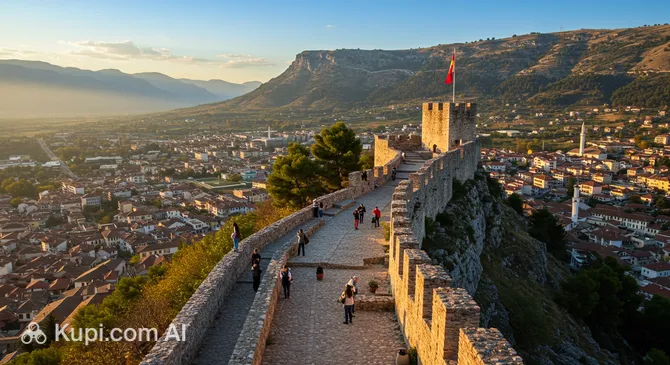
Gjirokastër Castle. Illustration.
Source: Kupi.com AI

Traveler photos:

The majestic Gjirokastër Fortress dominates the city, serving as its heart and primary historical jewel. It is one of the largest fortification structures in the Balkans, with history dating back to the 12th century. Inside the fortress, you can see old cannons, visit the Military Museum which tells the story of Albania's history, and enjoy breathtaking panoramic views of the city and the Drino River valley. The fortress is also known as the venue for the National Folklore Festival.

Gjirokastra Old Town. Illustration.
Source: Kupi.com AI

Traveler photos:

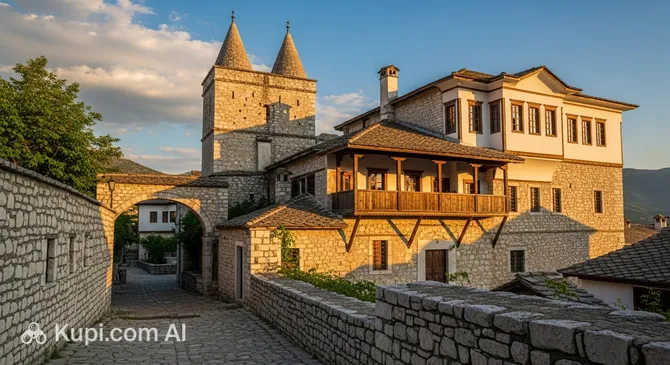
An integral part of a visit to Gjirokastër is a walk through the Old Town of Gjirokastër, which is a UNESCO World Heritage site. Its narrow cobbled streets climbing steeply up the hillsides and characteristic tower houses with stone roofs create a unique atmosphere. You can wander here for hours, discovering cozy cafes, souvenir shops, and admiring the unique architecture that has preserved the spirit of past centuries.

Zekate House. Illustration.
Source: Kupi.com AI

Traveler photos:

One of the most striking examples of traditional Ottoman architecture is the Zekate House. This impressive three-story fortress-house, built in the early 19th century, belonged to a wealthy family. Visitors can explore its many rooms decorated with carved wooden ceilings, frescoes, and traditional furniture to get an idea of the lifestyle of affluent citizens of that time. The upper floors offer a magnificent view of the city.

Skenduli House. Illustration.
Source: Kupi.com AI

Traveler photos:

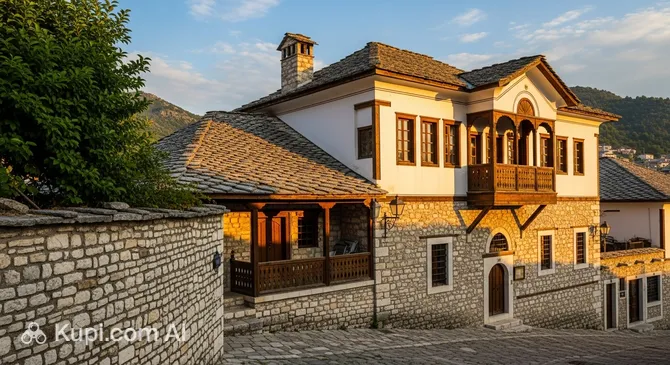
Another iconic house-museum is the Skenduli House, built in the early 18th century and perfectly preserved to this day. This house also demonstrates the architecture typical of Gjirokastër, with defensive elements and rich interior decoration. A tour of the house allows you to immerse yourself in the atmosphere of the past and learn more about the family traditions and the way of life of the local residents.

Local Cuisine

The gastronomy of Gjirokastër is a fascinating journey that combines the best traditions of Balkan and Mediterranean cuisine. You must try "Pasha Qofte"—juicy meatball soup flavored with aromatic spices and fresh herbs. Equally popular are various "pita" or "byrek"—savory pies with fillings for every taste, from cheese and spinach to meat. These dishes are hallmarks of local culinary traditions.

In addition to the main courses, while in Gjirokastër you should enjoy the taste of homemade cheeses, aromatic olive oil, and freshly baked bread, which can often be found directly at local markets. Among the drinks, traditional raki stands out, made here from grapes or other fruits. To finish a meal or accompany a cup of coffee or tea, try the sweet "gliko"—fruit preserved in syrup, a true local delicacy.

Urat Traditional Restaurant. Illustration.
Source: Kupi.com AI

Traveler photos:

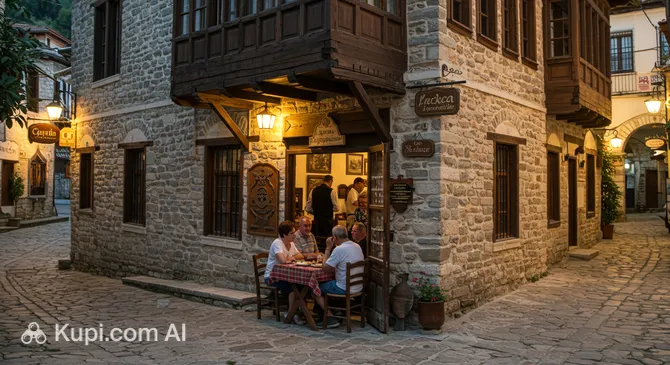
The food culture in Gjirokastër is diverse. Locals and tourists can enjoy authentic dishes in traditional restaurants, such as Traditional Restaurant Urat. Life is bustling at the old bazaar, where you can taste street food: fresh flatbreads, appetizing fried cheese, fragrant sausages, and seasonal vegetables. Visiting local markets is not just a gastronomic experience but also a cultural one, allowing you to feel the true spirit of the city. Overall, the culinary scene in Gjirokastër is characterized by a commitment to fresh local products and the preservation of ancient recipes, making every meal special.

Travel Tips

Welcome to Gjirokastër, the amazing "City of a Thousand Steps"! To ensure your journey to this historical corner of Albania goes smoothly and leaves only pleasant impressions, we have prepared some practical tips for you.

  1. Clothing and Essentials: The climate in Gjirokastër is Mediterranean, with hot, dry summers and mild, wet winters. In summer, bring light, breathable clothing, sunscreen, a hat, and sunglasses. In spring and autumn, layered clothing and a light jacket will come in handy. In winter, bring warmer clothes and a raincoat. A key point—comfortable shoes with non-slip soles are essential, as the city is located on hills and the streets are paved with stone. Don't forget a travel adapter (types C and F are used in Albania). When visiting mosques or churches, choose modest clothing that covers shoulders and knees.

  2. City Transport: The historic center of Gjirokastër is best explored on foot, but be prepared for ascents and descents. Public transport consists of local buses (furgons), which can be useful for moving to more distant areas, but their schedule is not always predictable. Taxis are available; it's better to agree on the price in advance or make sure the meter is on. Renting a car can be convenient for trips to the surroundings, but parking in the old city is limited and can be difficult.

  3. Finances: The official currency is the Albanian Lek (ALL). Although some tourist spots may accept Euros, it is recommended to have Lek for small purchases and market transactions. You can exchange currency at banks or exchange offices (kambim valuator). Credit and debit cards are accepted in most hotels, large restaurants, and some shops, but it's always useful to have cash. ATMs are quite common. A rough daily budget (excluding accommodation) could be 30-50 Euros. Tipping is appreciated but not mandatory; usually, it's 5-10% of the bill in a restaurant for good service or rounding up the amount.

  4. Health and Safety: Pharmacies (farmaci) are available in the city, but they might not be open 24/7, so it's better to bring necessary medications with you. Medical care for tourists is available at the local hospital and private clinics; travel insurance is highly recommended. Gjirokastër is generally a safe city. Follow usual precautions: keep an eye on your belongings in crowded places and avoid poorly lit streets at night if you are alone. The Old Town is well-patrolled.

  5. Communication: The official language is Albanian. In tourist areas, hotels, and restaurants, many people speak English, and Italian is also common. Learn a few basic phrases in Albanian, such as: "Përshëndetje" (Hello), "Faleminderit" (Thank you), "Po" (Yes), "Jo" (No). A local SIM card can be purchased from Vodafone or One Albania. Wi-Fi is available in most hotels, cafes, and restaurants.

  6. Local Etiquette: Albanians are known for their hospitality. A greeting usually includes a handshake. Direct eye contact is valued. Behave modestly in public places. When visiting local homes or religious sites, dress conservatively. Showing respect for local traditions will always be appreciated.

  7. What to Avoid: Try to avoid engaging in discussions on sensitive political topics, especially those concerning Balkan history, unless you know your interlocutor well. Also, avoid photographing people without their permission, especially the older generation.

  8. Gjirokastër's Special Feature – The Terrain: Remember that Gjirokastër is a "fortress-city" spread across steep slopes. Expect many climbs and descents on cobblestones. Wear your most comfortable shoes and be ready for physical activity, which is rewarded by stunning views and atmosphere!

We hope these tips help you better prepare for your trip and enjoy every moment in unique and welcoming Gjirokastër. Have a great trip!

Entertainment & Nightlife

In the evening and at night, Gjirokastër enchants with its special atmosphere, distinct from the hustle and bustle of big metropolises. There are no noisy night clubs on every corner, but there are many cozy spots where you can enjoy your time after sunset, taking in the historical character of the city. Nightlife is mainly centered in the Old Bazaar (Pazar i Vjetër) area, where the ancient stone streets come to life after dark.

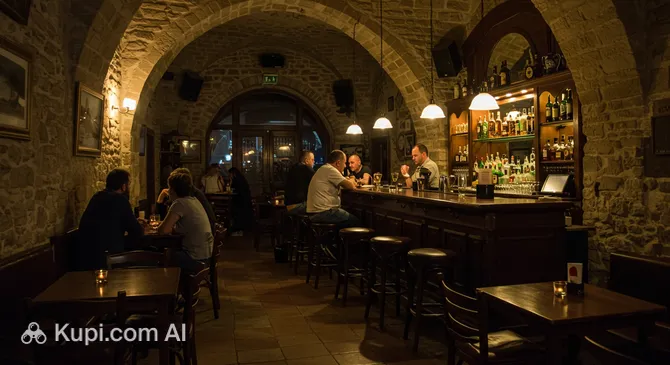
The heart of evening entertainment in Gjirokastër is undoubtedly its historic center. Here, among restored Ottoman houses, you'll find numerous cafes, traditional restaurants, and bars. The atmosphere is relaxed and friendly, perfect for long conversations over a glass of local wine or raki. The crowd is usually mixed—locals and tourists alike, all captivated by the magic of the "Stone City." The dress code in most establishments is casual; formalities are unnecessary here. Bars and restaurants are usually open until late evening, with some working past midnight, especially during the tourist season.

Among the popular places for evening relaxation, several atmospheric bars stand out. For instance, Hangover Cocktail Bar offers a good selection of drinks in a modern setting. Another establishment worth visiting is Komiteti Bar, known for its authentic atmosphere and local flavor. For a dinner with national dishes, you might consider Traditional Restaurant Urat, which serves delicious Albanian cuisine. There are few classic night clubs here; the focus is on a calmer and more atmospheric experience.

Hangover Cocktail Bar. Illustration.
Source: Kupi.com AI

Traveler photos:

The best time to visit bars and restaurants in Gjirokastër is late evening, when the daytime heat subsides and the city is enveloped in a pleasant coolness. Prices in these establishments are generally moderate, especially compared to large European cities. You can get around the city center at night on foot if your accommodation is nearby. Otherwise, you can always use a taxi; they can be found at stands or you can ask the restaurant or hotel staff to call one for you.

Gjirokastër is generally considered a safe city, and walking along the lit streets of the Old Bazaar in the evening usually causes no concern. Nevertheless, it is always worth following standard safety precautions, especially in less crowded areas. You can call a taxi by phone or through an app, if available, or seek help from the staff at your hotel or restaurant.

During the day, Gjirokastër offers a rich cultural program. You should definitely visit the majestic Gjirokastër Fortress, which offers stunning views of the city and its surroundings. Also interesting to explore are the traditional Ottoman house-museums, such as Zekate House or Skenduli House, providing a glimpse into the past of this unique city. A stroll through the streets of the Old Town of Gjirokastër is a fascinating activity in itself, revealing many picturesque corners.

Parks & Museums

Gjirokastër, Albania's "Stone City," invites travelers to immerse themselves not only in its rich history, reflected in its unique architecture, but also to enjoy the cultural treasures housed in its museums. Although the city is primarily famous for its stone buildings, its surroundings and certain corners offer opportunities to connect with nature and culture.

In the heart of Gjirokastër, it is difficult to find large classic parks, as the city is densely built up with historical buildings. However, the territory around the majestic Gjirokastër Fortress offers spaces with breathtaking panoramic views of the city and the surrounding Drino River valley. This is a great place for walks and photography—a kind of natural observation platform. For those seeking a deeper connection with nature, the outskirts of the city are rich in picturesque landscapes ideal for hiking.

Gjirokastër Castle. Illustration.
Source: Kupi.com AI

Traveler photos:

The main magnet for history and culture lovers is the Gjirokastër Fortress itself. It is not just a fortification but also the site of the National Museum of Armaments, which chronicles Albania's military history. Visitors can spend hours exploring its walls, towers, and underground passages, feeling the spirit of the past. The mighty walls of the fortress and its strategic location on the hill make it a dominant feature of the city skyline and a must-visit for any tourist.

To get acquainted with the daily life of wealthy families from the Ottoman period, be sure to visit the traditional house-museums. Zekate House is one of the most impressive examples of such architecture. Built in 1811-1812, its multi-story structure with characteristic fortified lower floors and richly decorated upper living quarters, carved wooden ceilings, and painted walls gives a vivid picture of the region's life and traditions. It is a true portal to the past, allowing you to touch history.

Zekate House. Illustration.
Source: Kupi.com AI

Traveler photos:

Another iconic site is the Skenduli House, a beautifully preserved traditional home built in the early 18th century and expanded in 1827. It is also open to visitors and is one of the best examples of Ottoman architecture in the city. A tour of this house, often led by the descendants of the owners themselves, is filled with interesting stories and allows you to see authentic interiors, household items, and understand the organization of family life at that time.

Skenduli House. Illustration.
Source: Kupi.com AI

Traveler photos:

The entire Old Town of Gjirokastër, included in the UNESCO World Heritage list, is essentially an open-air museum. Its narrow cobbled streets, unique tower houses (kulla) with stone roofs, and ancient bazaar create a unique atmosphere. A walk through the Old Town is a fascinating journey through time in itself, where every stone breathes history.

Gjirokastra Old Town. Illustration.
Source: Kupi.com AI

Traveler photos:

To fully feel the atmosphere of Gjirokastër, don't be afraid to turn off the main tourist routes into the quiet alleys of the Old Town—you can discover amazing architectural details and lesser-known corners there. Also, stop by the local bazaar not just for souvenirs, but to observe the daily life of the townspeople and perhaps try some local delicacies.

Getting Around

Getting around Gjirokastër, a city with a rich history, has its own unique characteristics. While the historic center is perfect for walking, other options exist for longer trips and exploring the surroundings. Public transport here is mainly represented by buses and minibuses (furgons), which are the primary way to get around for locals and an economical option for tourists.

Buses and minibuses (furgons): This is the most common form of public transport in Gjirokastër. They run along the city's main streets and connect it with surrounding settlements. There may not be a strict schedule like in major European cities; furgons often depart when full. Fare payment is usually made in cash directly to the driver upon boarding. It is recommended to have small bills of the local currency (Lek) with you, as the fare is typically low—a symbolic amount—but it's best to check the exact price with the driver or locals. Other payment methods are extremely rare, so cash is the most reliable option.

Taxis: Taxis in Gjirokastër are available and can be a convenient option for short-distance trips, especially if you are traveling with luggage or want to reach a place not served by public transport. It is recommended to agree on the fare in advance or ensure the driver turns on the meter, if available. Rates are generally moderate, but it's always better to clarify this point before the trip begins.

Walking: The historic center of Gjirokastër, with its cobbled streets and steep climbs, is best explored on foot. This allows you to soak in the old city atmosphere and observe all the architectural details. Keep in mind that some streets can be quite steep, so comfortable shoes are a must.

Car Rental: If you plan to explore the surroundings of Gjirokastër and travel through the region more freely, you might consider renting a car. Local rental agencies may be available in the city. This will give you flexibility in planning routes and visiting remote attractions.

Bike Rental and Carsharing: Specialized bike rental points or carsharing services may not be as widespread in Gjirokastër as in larger cities. However, some guesthouses or hotels may offer bikes for rent to their guests. For longer trips and greater autonomy, renting a car remains a more preferable option.

Practical Tips: * Allocate enough time to explore the old part of the city on foot, as transport access is limited there due to narrow streets. * Don't hesitate to ask for directions or clarify a route with locals—they are generally friendly and ready to help. * Keep in mind that buses and furgons may not stick to a strict schedule, so allow extra time for waiting, especially if you plan to travel between cities.

Accommodation

In Gjirokastër, you will find a variety of accommodation options capable of satisfying the needs of both budget travelers and those looking for more comfortable conditions. The city offers a wide choice: from cozy guesthouses and hostels to mid-range hotels and apartments available for rent. Many guesthouses are located in beautifully restored traditional stone houses, allowing for a deeper immersion into the atmosphere of this historic city.

The most popular area for tourists to stay is undoubtedly the Old Town of Gjirokastër. Staying here provides easy access to the main attractions, such as the majestic Gjirokastër Fortress, numerous museums including the Zekate House, and authentic restaurants. Living in this part of the city allows you to feel its unique spirit and enjoy strolls along the cobbled streets.

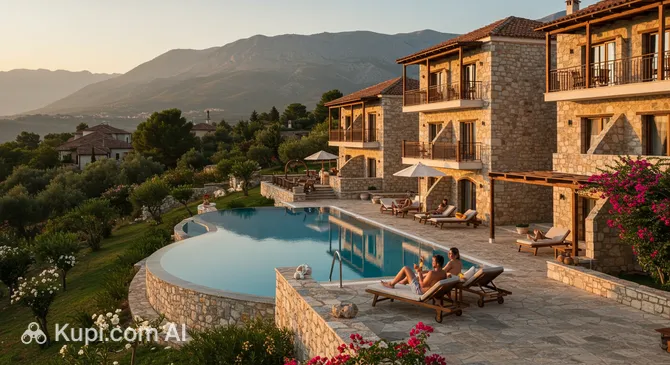
Kerculla Resort. Illustration.
Source: Kupi.com AI

Traveler photos:

Among the accommodation options, you can highlight, for example, Kerculla Resort, which offers a comfortable stay. Overall, the price range varies from budget options to mid-range and higher-class hotels. You can book accommodation either through popular online platforms or by contacting the hotels or guesthouse owners directly.

To guarantee the best choice and prices, especially during the peak tourist season (usually the summer months), it is recommended to book your accommodation in advance. This will allow you to choose the most suitable option according to your preferences and budget, ensuring a comfortable stay in this amazing city.

Nearby Cities

For those who want to explore the surrounding area, Gjirokastër serves as an excellent starting point for day trips to several interesting nearby places:

CityPopulationDistance
Permet5 94525 km
Saranda41 00025 km
Tepelene4 34226 km
Corovode4 05148 km
Erseke3 74654 km

These nearby destinations provide a glimpse into the diverse culture and landscapes of the region. For example, a trip to Saranda, located just 25 km away, will delight you with the picturesque beaches of the Ionian Sea and proximity to the famous Butrint Archaeological Park, a UNESCO World Heritage site. Another interesting option is Vlorë, located about 70 km away. This city holds great historical significance for Albania, as it was here that the country's independence was proclaimed; additionally, Vlorë offers beautiful beaches and a promenade for walks.

Shopping & Souvenirs

Shopping in Gjirokastër is an immersion into the atmosphere of traditional crafts and unique local goods. The city is not famous for large modern shopping centers, but it offers charming opportunities to buy authentic souvenirs and handmade products, especially in its historical part.

The main place for shopping in Gjirokastër is undoubtedly the Old Town of Gjirokastër, a UNESCO World Heritage site. It is here, along the narrow cobbled streets, that numerous shops and workshops are concentrated. Special attention should be paid to the Old Bazaar (Pazari i Vjetër) area, which has been the heart of trade for centuries.

Gjirokastra Old Town. Illustration.
Source: Kupi.com AI

Traveler photos:

There are no large modern shopping centers in the usual sense in Gjirokastër. Shopping here is more intimate and traditional, focused on unique local products rather than global brands.

The city's main market is the aforementioned Old Bazaar in the Old Town of Gjirokastër. This is not just a market, but a historical site where you can find everything: from traditional Albanian souvenirs and local artisan products to antiques and fresh food. Here you can buy handmade carpets, carved wooden items, traditional clothing, silver jewelry, and ceramics.

Souvenirs to bring back from Gjirokastër include:

  • Handmade crafts: Items made of carved wood and stone, traditional embroidery, and lace are especially prized.
  • Traditional clothing and elements: For example, felt caps (qeleshe) or richly decorated vests.
  • Albanian carpets (qilim): often featuring geometric patterns.
  • Local delicacies: olive oil, mountain honey, herbal teas, local cheese, and of course, raki.
  • Fortress-themed souvenirs: Magnets, plates, and postcards featuring views of the Gjirokastër Fortress.

Shops in Gjirokastër, especially in tourist zones, are usually open from the morning (around 9:00-10:00) until the evening (19:00-21:00), especially during the tourist season. Some small shops may close for a lunch break (siesta). The primary currency is the Albanian Lek (ALL). In most souvenir shops and at the market, cash payment is preferred, although some larger stores and hotels may accept bank cards.

Regarding Tax Free, Albania is not a member of the European Union. The possibility of a value-added tax (VAT) refund for tourists from non-EU countries may exist for certain goods and when making purchases over a certain amount. It is recommended to clarify this information directly in the stores where you shop and keep your receipts.

Reached the end of the page?

That means the route is fully explored