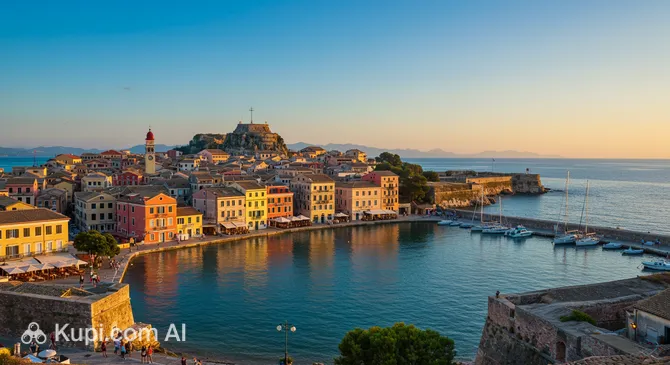
Corfu, also known as Kerkyra, is one of the most captivating destinations in the Ionian Sea. Located off the northwestern coast of Greece, this island city is renowned for its cosmopolitan atmosphere, lush landscapes, and vibrant cultural heritage. With a population of approximately 25,000, the city serves as a lively hub that perfectly blends traditional Greek hospitality with a distinct European flair.
The city's strategic location has made it a crossroads of civilizations for centuries. As you wander through the narrow, cobblestoned streets known as "kantounia," you can truly immerse yourself in the rich history of Corfu. The architecture here is a unique testament to its past, heavily influenced by Venetian, French, and British rule, setting it apart from the classic Cycladic style found elsewhere in the country.
Corfu. Illustration.
Source: Kupi.com AI
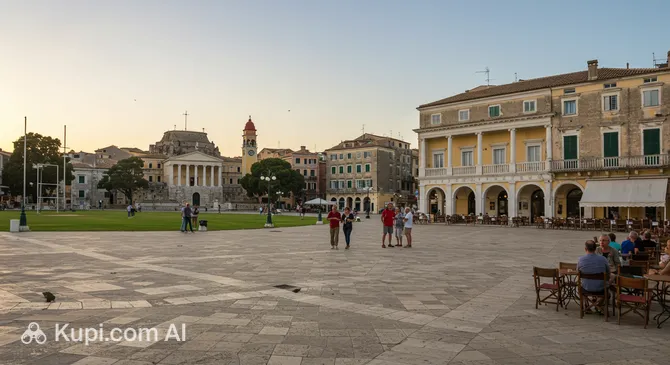
Travelers are drawn to the Old Town, a UNESCO World Heritage site guarded by two imposing fortresses that offer panoramic views of the sea. Key attractions include the elegant Liston promenade, inspired by the Rue de Rivoli in Paris, and the spacious Spianada Square, which is one of the largest in Europe. Beyond the city center, the island offers stunning emerald beaches and the magnificent Achilleion Palace, a monument to imperial grandeur.
Whether you are a history enthusiast, a nature lover, or simply seeking a relaxing getaway, Corfu offers an unforgettable experience. Its romantic ambiance and scenic beauty make it an ideal destination for your next Mediterranean adventure.
Weather Overview
The island enjoys a classic Mediterranean climate, making it a year-round destination with distinct seasonal charms. To help you pack the right gear for your trip, you can consult the detailed guide on the weather in Corfu.
Summers are generally warm and sunny, perfect for enjoying the coastline. August is typically the hottest month, with average temperatures reaching 26.1°C, while July is the driest, seeing virtually no precipitation and only about 2 wet days. Conversely, the winter season is mild but significantly wetter. January brings the coolest temperatures, averaging around 10.6°C, and months like November and December can experience up to 15 days of rain.
Spring and autumn offer a pleasant balance, with May and September providing comfortable average temperatures between 18.4°C and 23.0°C. Overall, you can expect hot, dry summers ideal for beach holidays and mild, rainy winters that bring out the island's lush greenery.
Average monthly temperature
Average monthly precipitation
Interesting Facts
Beyond the sun-drenched beaches and Venetian architecture, Corfu holds many fascinating secrets that often escape the casual visitor. The island's unique history has cultivated a distinct identity, full of surprising traditions and royal connections that set it apart from the rest of Greece.
Spianada Square. Illustration.
Source: Kupi.com AI
Traveler photos:
A British Sporting Legacy: Unlike the rest of the country where football reigns supreme, Corfu has a deep love for cricket. This tradition dates back to the British protectorate era, and you can still watch local teams play matches on the vast greens of Spianada Square, right in the heart of the city.
A Royal Birthplace: The island is the birthplace of Prince Philip, the late Duke of Edinburgh. He was born at the villa of Mon Repos, which is now part of the Museum of Palaiopolis – Mon Repos, surrounded by extensive gardens and archaeological treasures.
Cinematic Fame: The island's dramatic scenery served as a backdrop for the James Bond movie For Your Eyes Only. Several locations were featured, including the majestic Old Fortress of Corfu, which played a starring role in the film's climax.
The Kumquat Connection: While Greece is famous for olives and grapes, Corfu is the only place in the country that extensively cultivates kumquats. Introduced by an English botanist in the 19th century, this small citrus fruit is now the basis for the island's signature liqueurs and sweets.
Smashing Traditions: Easter in Corfu is celebrated with a unique and noisy custom called "Botides." On Holy Saturday morning, residents throw large clay pots filled with water from their balconies, smashing them onto the streets below to symbolize the purging of evil and the welcoming of spring.
How to Get There
Reaching this Ionian gem is quite convenient, primarily due to its well-connected international airport. For a complete overview of travel options, including ferries and buses, you can read more about how to get to Corfu. The island is a popular destination, and during the summer season, connections are frequent and varied.
The most direct route is flying into Ioannis Kapodistrias Airport (CFU), located right on the island. It is situated just 2.6 km from the city center, making the transfer incredibly quick. A taxi or bus ride typically takes only about 15 to 20 minutes, depending on traffic. This is a major hub welcoming millions of visitors annually, offering connections to many European cities.
Alternatively, you can fly into Ioannina Airport (IOA) in the city of Ioannina, which is approximately 77.7 km away on the mainland. From there, you would need to travel to the coast and take a ferry to reach the island. Another option is Aktion Airport (PVK) in Preveza, located about 106.4 km away, also requiring a combination of road transport and a ferry crossing.
For clarity, here is a summary of the main airports:
The city of Corfu does not have a railway station, as it is an island. However, adventurous travelers can arrive at Thessaloniki Railway Station in Thessaloniki, mainland Greece. It is roughly 280.2 km away, and from there, you would need to take a long-distance bus to the port of Igoumenitsa and then a ferry to Corfu. Another unique option is the Brindisi Railway Station in Brindisi, Italy (approx. 202.8 km away across the sea), where you can catch a direct ferry across the Adriatic to Corfu.
Below is a list of the nearest major railway hubs that can serve as a starting point for a multi-leg journey:
The city is a treasure trove of historical landmarks and scenic beauty, reflecting its Venetian, French, and British influences. From imposing fortifications to elegant promenades, the sights here offer a journey through time and culture.
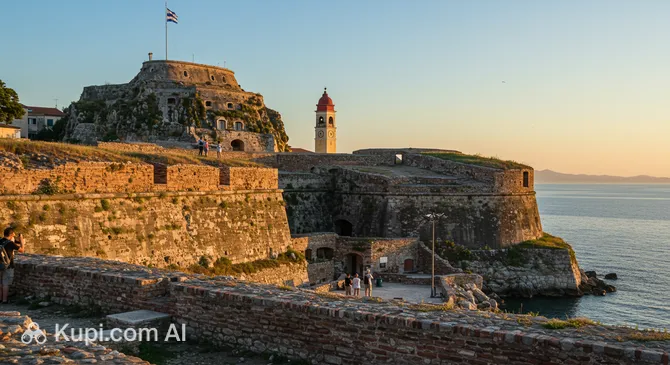
Dominating the eastern edge of the city is the Old Fortress of Corfu. Built on a rocky peninsula and separated from the town by a man-made moat known as the Contrafossa, this Venetian masterpiece is a must-visit for its historical significance and stunning vistas. You can wander through its ancient battlements, visit the Doric-style Church of St. George, and climb to the highest point for a breathtaking panoramic view of the Old Town and the Ionian Sea.
Old Fortress of Corfu. Illustration.
Source: Kupi.com AI
Traveler photos:
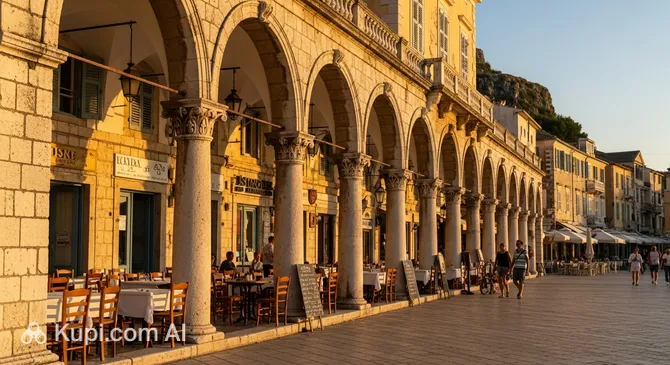
For a quintessential Corfiot experience, a stroll along the Liston is essential. Designed during the French occupation and modeled after the Rue de Rivoli in Paris, this elegant promenade features impressive arched arcades lined with bustling cafes. It is the social heart of the city, perfect for enjoying a coffee while watching cricket matches on the adjacent green or simply soaking in the cosmopolitan atmosphere.
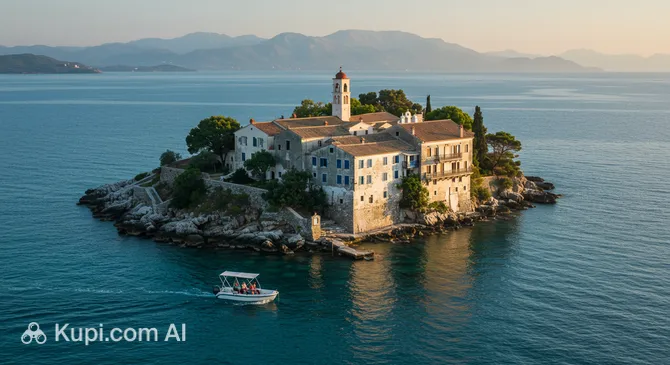
One of the most iconic and photographed locations is the Monastery of Panagia Vlacherna. Situated just south of the city, this small, whitewashed 17th-century chapel sits on a tiny islet connected to the mainland by a narrow pedestrian bridge. It offers a serene and picturesque setting, serving as the gateway to the famous Mouse Island (Pontikonisi) visible in the background, and is a favorite spot for watching planes land at the nearby airport.
Monastery of Panagia Vlacherna. Illustration.
Source: Kupi.com AI
Traveler photos:
Culture lovers will find the Corfu Museum of Asian Art to be a unique highlight. Housed in the majestic Palace of St. Michael and St. George, a splendid example of British Neoclassical architecture, it is the only museum in Greece dedicated exclusively to Asian art. The collection includes thousands of artifacts from China, Japan, and Central Asia, offering a fascinating cultural contrast to the island's Greek heritage.
Standing guard over the western side of the town is the New Fortress. Constructed by the Venetians to bolster the city's defenses, this massive structure features a complex network of underground galleries and high stone walls. It is less crowded than the Old Fortress but provides equally spectacular views over the terracotta rooftops of the city and the harbor, making it a rewarding exploration for history enthusiasts.
Local Cuisine
Corfu's gastronomy is a delicious reflection of its history, particularly the 400 years of Venetian rule. Unlike the rest of Greece, where simple grilled flavors often dominate, Corfiot cuisine is defined by rich spices, wine-based sauces, and sophisticated cooking techniques. The food here is aromatic and hearty, offering a unique flavor profile that blends Greek traditions with Italian finesse.
When it comes to main courses, you simply must try Pastitsada. Regarded as the island's signature dish, it typically consists of rooster or beef slow-cooked in a tomato sauce infused with exotic spices like cinnamon, cloves, and nutmeg, served over thick pasta. Another local favorite is Sofrito, a tender veal dish cooked in a white wine sauce with plenty of garlic, parsley, and vinegar. Seafood lovers should look for Bourdeto, a spicy fish stew made with scorpion fish and red pepper, which perfectly captures the island's maritime spirit.
To accompany your meal, sample the local wines, but save room for the island's distinctive beverages. The British protectorate left a lasting legacy in the form of Tsitsibira, a refreshing, non-alcoholic ginger beer that is still brewed locally and is perfect for a hot summer day. For a digestive, nothing beats the famous Kumquat liqueur. Made from the small citrus fruit that grows abundantly on the island, it comes in a bright orange, sweet version or a clear, stronger variety, and is a staple of Corfiot hospitality.
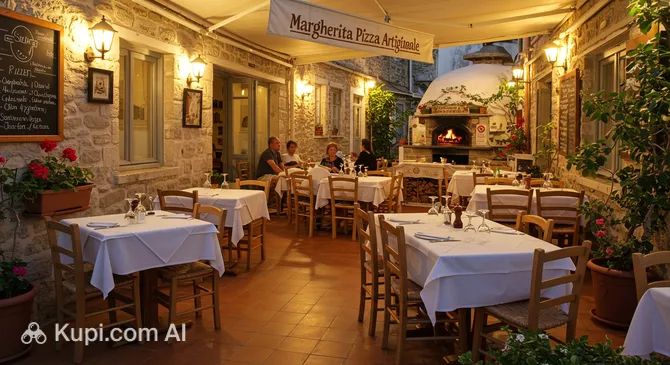
Margherita Pizza Artigianale. Illustration.
Source: Kupi.com AI
Traveler photos:
The dining culture in Corfu is relaxed and social, revolving around long meals in the open air. You will find everything from traditional tavernas hidden in the narrow kantounia of the Old Town to modern eateries along the waterfront. For a taste of the island's Italian-influenced culinary scene, you might visit Margherita Pizza Artigianale, where the connection to neighboring Italy is celebrated through high-quality ingredients. Whether you choose a bustling restaurant near the Spianada or a quiet spot by the sea, the atmosphere is always welcoming.
Travel Tips
Welcome to Corfu, where the Venetian charm meets Greek hospitality! To ensure your visit to this emerald island is as relaxing and trouble-free as possible, here are some essential practical tips to keep in mind before you pack your bags.
Clothing and Footwear: If you are visiting in summer, light, breathable fabrics and a sun hat are must-haves to handle the heat. However, the Old Town's famous kantounia (narrow streets) are paved with cobblestones, so leave the high heels at home and opt for comfortable flat walking shoes. Also, remember to pack a scarf or shawl; while beachwear is fine by the sea, you must cover your shoulders and knees when visiting religious sites like the Monastery of Panagia Vlacherna.
Getting Around: Public transport is reliable and color-coded: use the Blue Buses for trips within Corfu Town and its immediate suburbs, and the Green Buses for longer journeys to remote beaches and villages. Taxis are available, but it is wise to confirm the fare estimate before getting in. While renting a car offers freedom, be aware that parking around the Old Town is extremely limited and can be challenging.
Money Matters: The official currency is the Euro (€). While credit and debit cards are widely accepted in hotels, supermarkets, and most restaurants in the city, smaller tavernas and local shops in villages often prefer cash. ATMs are plentiful, but carrying some small bills is recommended. Tipping is not mandatory but is customary; rounding up the bill or leaving a 5-10% tip for good service is greatly appreciated.
Health and Water: Pharmacies are marked with a green cross and are easy to find in the city; they can provide advice for minor ailments. In terms of water, while the tap water is technically safe for hygiene, it has a high mineral content that many visitors find unpalatable. It is generally better to stick to bottled water for drinking.
Staying Connected: English is widely spoken throughout the island, especially in service sectors, so you will have no trouble communicating. However, locals love it when you try a few Greek words—a simple "Kalimera" (Good morning) or "Efcharisto" (Thank you) goes a long way. Wi-Fi is standard in almost all cafes and hotels, and EU residents can use their home mobile data plans without roaming charges.
Plumbing Etiquette: This is perhaps the most important rule for first-time visitors to Greece. Due to narrow sewage pipes, you should never flush toilet paper down the toilet. Instead, place it in the small bin provided next to the toilet. It is a strict local norm that prevents serious plumbing issues.
Respect the Siesta: Life in Corfu follows a relaxed Mediterranean rhythm. Many smaller shops and businesses may close in the afternoon, typically between 2:00 PM and 5:00 PM, for a midday rest, reopening in the evening. Plan your shopping or errands for the morning or late afternoon to avoid disappointment.
Mosquito Protection: The island's lush vegetation is beautiful, but it also attracts mosquitoes, particularly during summer evenings. It is a good idea to pack a reliable insect repellent or buy one locally to ensure your outdoor dinners remain comfortable.
By keeping these simple tips in mind, you will be able to navigate the island like a local and focus on what truly matters: soaking up the sun, history, and incredible culture. Have a wonderful trip to Corfu!
Entertainment & Nightlife
The nightlife in Corfu offers a sophisticated and vibrant alternative to the wild party scenes found in some of the island's coastal resorts. In the city itself, the evening entertainment is centered around socializing, enjoying excellent music, and soaking in the romantic atmosphere of the illuminated historic architecture. The vibe here is generally more laid-back and cosmopolitan, catering to a crowd that enjoys long dinners followed by cocktails in stylish settings.
The heart of the evening action is undoubtedly the famous Liston promenade. As the sun sets, this elegant arcade fills with locals and tourists alike who gather to enjoy an aperitif and engage in people-watching. It is the perfect starting point for a night out, buzzing with energy and lined with upscale cafeterias that transform into lively bars as the night progresses. Just a short walk away, the narrow streets of the Old Town hide numerous smaller, more intimate venues.
Liston. Illustration.
Source: Kupi.com AI
Traveler photos:
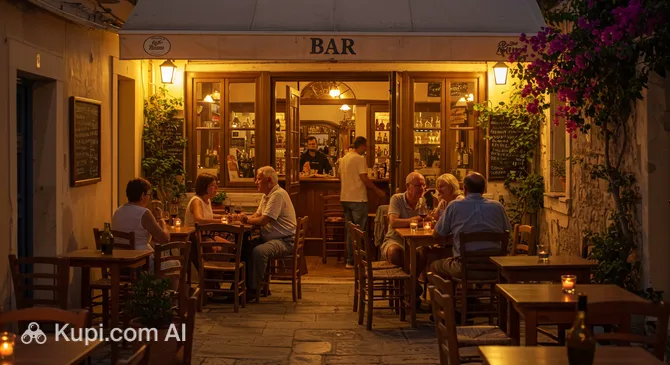
For those seeking specific spots to enjoy a drink, the city has plenty of characterful options. One popular choice is the Old Buoy, a bar known for its friendly atmosphere and classic pub feel, making it a great place to unwind. If you prefer a more artistic and relaxed setting, the Arthaus Cafe Wine Bar offers an excellent selection of local and international wines, often accompanied by mellow music that allows for easy conversation.
Arthaus Cafe Wine Bar. Illustration.
Source: Kupi.com AI
Traveler photos:
While the Old Town is famous for its bars and lounges, those looking for late-night clubbing often head towards the Emporiko district, located just a few kilometers from the city center. Here, you will find larger clubs that host DJs and stay open until the early hours of the morning. In the city, the dress code is typically "smart casual"—Corfiots like to dress up for their evening strolls, so you might feel out of place in beachwear.
Regarding practicalities, the nightlife in Corfu starts late. Dinner is usually eaten around 9:00 PM or 10:00 PM, and bars start to fill up shortly after. The city is very safe for night walks, even in the labyrinthine alleyways. However, if you need to travel back to your accommodation late at night, it is best to use the official blue taxis. You can find them at designated ranks, such as the one at Spianada Square, or call for a radio taxi.
During the daylight hours, the entertainment landscape shifts towards cultural and family-friendly activities. The city boasts remarkable museums and theaters, but for a unique adventure on the water, you might consider a trip on the Black Rose Pirate Ship. This themed cruise is a favorite for families and groups, offering a fun way to explore the coastline before the sun goes down and the city lights turn on.
Parks & Museums
While the turquoise waters and Venetian fortresses often steal the spotlight, the city also boasts a collection of serene green spaces and world-class museums that preserve its multifaceted heritage. From lush gardens that once hosted royalty to galleries showcasing ancient treasures, exploring these sites offers a deeper understanding of the island's rich cultural tapestry.
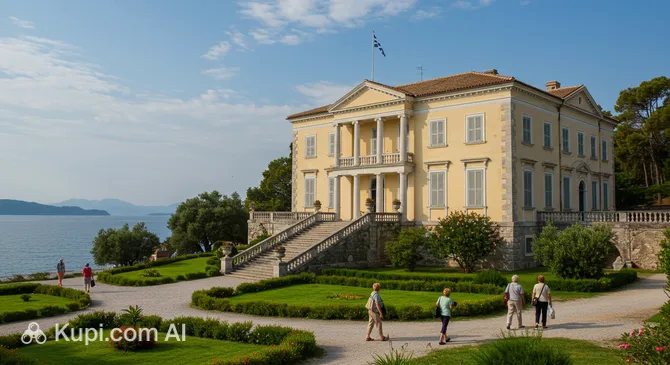
For a refreshing escape into nature mixed with history, the Museum of Palaiopolis – Mon Repos is an absolute must. Located just a short distance from the city center, this neoclassical estate is surrounded by a sprawling, verdant park filled with ancient ruins and exotic plants. It is famously known as the birthplace of Prince Philip, Duke of Edinburgh. Visitors can walk through the shaded paths of the gardens, which lead down to the sea, offering a perfect blend of botanical beauty and archaeological discovery.
Museum of Palaiopolis – Mon Repos. Illustration.
Source: Kupi.com AI
Traveler photos:
In the heart of the city lies Spianada Square, which is much more than just a paved plaza. The northern part of this vast area is covered in lawns and trees, providing a cool respite during hot summer days. Within this green oasis stands the Maitland Monument, an elegant neoclassical rotunda built in honor of Sir Thomas Maitland. It is a popular spot for locals to sit and relax, and the surrounding greenery makes it a picturesque location for a leisurely stroll.
Another lovely spot for a walk by the sea is the area around the Anemomilos Windmill in the Garitsa Bay. This historic windmill serves as a charming landmark at the end of a long promenade. The path along the bay offers stunning views of the Old Fortress across the water and is a favorite route for evening jogs or sunset walks, away from the bustle of the immediate town center.
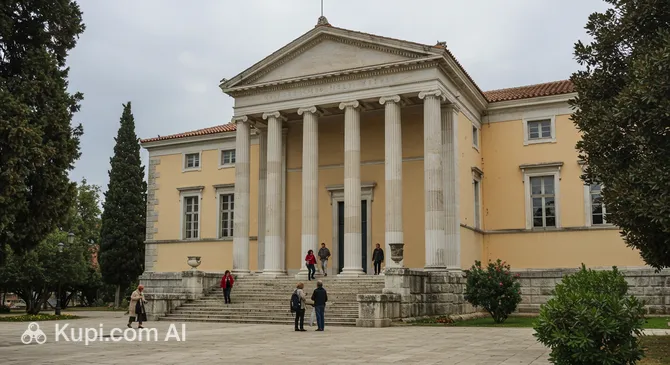
To dive into the island's ancient past, you should visit the Archaeological Museum of Corfu. Recently renovated, it houses an impressive collection of artifacts from the ancient city of Corcyra and the rest of the island. The museum's crown jewel is the colossal Gorgon Pediment from the Temple of Artemis, depicting the mythical Medusa. It is considered one of the finest examples of Archaic Greek sculpture and is a highlight for any history enthusiast.
Archaeological Museum of Corfu. Illustration.
Source: Kupi.com AI
Traveler photos:
For a more immersive look at local life in the 19th century, the Casa Parlante Museum offers a unique "living history" experience. Located in a historic mansion in the Old Town, this museum uses animated figures and authentic decor to recreate the daily routine of a noble family. It provides a fascinating and entertaining insight into the social history of the island, making you feel as if you have stepped back in time.
Art lovers will appreciate the Byzantine Museum of Antivouniotissa. Housed in the 15th-century Church of the Virgin Mary Antivouniotissa, the museum displays a significant collection of post-Byzantine icons and religious heirlooms. The setting itself, with its painted ceiling and stone walls, enhances the experience, showcasing the deep spiritual and artistic traditions of the region.
Beyond the main museums, the city holds other historical gems like Patounis' Soap Factory. This is one of the oldest surviving soap factories in Greece, operating since 1891. It is a living monument to the island's industrial history, where you can see traditional soap-making techniques that have remained unchanged for over a century. Nearby, you might also spot the Douglas Obelisk, another tribute to the British protectorate era, adding to the list of monuments that dot the cityscape.
For a truly unique experience, head to the Kanoni peninsula to find the Corfu Airport Plane Spotting Point. A narrow pedestrian bridge spans the lagoon here, placing you directly under the flight path of landing aircraft. It is a thrilling spot where planes fly incredibly low over your head, offering one of the most exciting photo opportunities on the island.
Getting Around
The public transport system in Corfu is straightforward and relies almost exclusively on a comprehensive bus network, as there are no metros, trams, or trains on the island. For tourists staying in or near the city, the most important service is the Corfu City Bus, easily recognizable by its blue color. These "Blue Buses" connect the city center (San Rocco Square) with the airport, the port, and nearby suburbs and attractions such as Kanoni, Achilleion, and Benitses. For destinations further afield across the island, you would use the "Green Buses" (KTEL), which are long-distance coaches departing from a dedicated terminal near the port.
The payment system is traditional and user-friendly. Tickets for the Blue Buses are zone-based, typically divided into Zone A (city and immediate suburbs) and Zone B (slightly further destinations). You can purchase single-journey tickets, but for visitors planning multiple trips, a day pass is often a more economical choice. Prices are quite affordable, generally starting around €1.10 for a standard city zone ticket if bought in advance.
To avoid paying a surcharge, it is highly recommended to buy your tickets before boarding. You can find them at automated vending machines located at major stops, at special ticket kiosks, or in many local convenience stores and newsstands. If you are in a rush, you can purchase a ticket from the driver, but be prepared to pay a slightly higher fare. Once on board, you must validate your ticket immediately using the machines provided to avoid fines. The buses typically run from early morning, around 6:00 AM, until late evening, with frequency varying depending on the season and the route.
While the bus network is efficient, many travelers choose alternatives for greater flexibility. Taxis are widely available and can be hailed on the street, found at designated ranks like the one at Spianada Square, or booked via phone. They are metered, but it is always a good idea to ask for an estimated fare for longer trips. Car, scooter, and ATV rentals are also extremely popular for exploring the island's hidden coves. However, be aware that traffic in Corfu Town can be heavy, and finding a parking spot near the historic center is notoriously difficult, especially in summer.
Although there is no historic metro, the city does offer a charming "special" mode of transport for sightseeing. A small tourist train, often referred to as the "train on wheels," departs near Spianada Square. It offers a leisurely, open-air tour around the Old Town's perimeter and along the coastal road to the Garitsa Bay, providing a nostalgic and relaxing way to see the major landmarks without walking in the heat.
Accommodation
Corfu offers a diverse array of accommodation options that cater to every type of traveler and budget. Whether you are looking for the historic charm of a boutique hotel in the heart of the city, the luxury of a sprawling seaside resort, or the independence of a self-catering apartment, you will find something to suit your needs. The island's hospitality sector is well-developed, ensuring a comfortable stay regardless of your preference.
For those who wish to be in the center of the action, staying in the Old Town is the most popular choice. Here, you are within walking distance of major museums, the Liston promenade, and the vibrant nightlife. However, if you prefer a quieter environment with sea views, the areas of Garitsa Bay or Kanoni are excellent alternatives, offering a more relaxed pace while still being close to the city center. Travelers seeking a pure beach holiday often opt for the coastal suburbs, where larger resorts provide direct access to the water.
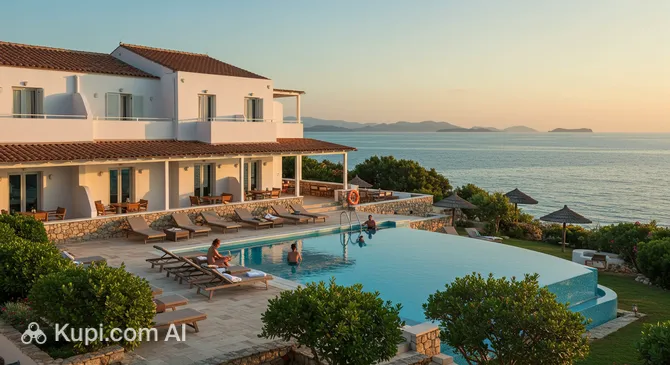
If you are looking for a comprehensive resort experience near the city, you might consider the Kerkyra Blue Hotel & Spa. Establishments of this caliber typically offer extensive amenities, including swimming pools, spa treatments, and on-site dining, making them perfect for families or couples seeking relaxation without venturing too far.
Kerkyra Blue Hotel & Spa. Illustration.
Source: Kupi.com AI
Traveler photos:
Prices can vary significantly depending on the season and the type of lodging. During the peak summer months of July and August, demand is incredibly high, and rates for even budget accommodations can rise. Therefore, a crucial tip for visiting Corfu is to book your room well in advance—often several months ahead—to secure the best deals and availability. Most bookings can be easily made through major online platforms, though contacting smaller, family-run apartments directly can sometimes yield a better price or a more personalized experience.
Nearby Cities
For those looking to explore the surroundings, Corfu serves as an excellent base for day trips to several interesting nearby locations. While the island itself has much to offer, the proximity to the Greek mainland and smaller islets allows travelers to easily broaden their experience of the region.
One of the most culturally rich destinations within reach is Ioannina, the capital of Epirus. Located on the shores of Lake Pamvotis, this city offers a distinct atmosphere with its imposing castle, Ottoman-era architecture, and silversmithing heritage. A visit here often includes a boat ride to the lake's small island, which is inhabited and famous for its monasteries and local delicacies, providing a fascinating contrast to the coastal vibe of Corfu.
Another popular option for a day trip is the picturesque town of Parga, situated on the mainland coast. Known for its colorful houses stacked on a hillside and a Venetian castle overlooking the bay, it feels like a vibrant painting come to life. Additionally, the small islands of Paxos and Antipaxos, located just south of Corfu, are celebrated for their breathtaking turquoise waters and sea caves, making them a top choice for swimming and boat excursions.
These nearby destinations offer a glimpse into the diverse culture and landscapes of the region, ranging from historic mountain cities to idyllic coastal retreats.
Shopping & Souvenirs
Shopping in Corfu is a delightful experience that combines the charm of a historic Venetian city with a vibrant modern marketplace. Unlike many other destinations dominated by large commercial centers, the shopping scene here is intimate and atmospheric, centered primarily in the winding alleyways of the Old Town. Visitors can expect to find a wide range of products, from high-end jewelry and designer fashion to unique local crafts that reflect the island's rich cultural heritage.
The heart of the city's retail activity beats along two main pedestrian arteries: Nikiforou Theotoki Street and Voulgareos Street. These bustling thoroughfares, along with the maze of narrow "kantounia" that branch off them, are lined with innumerable boutiques, souvenir stands, and leather goods shops. As you wander through these stone-paved lanes, you will find everything from handmade leather sandals and ceramic art to gold and silver jewelry, for which the island has a long-standing reputation.
It is important to note that Corfu does not have the massive, American-style shopping malls found in some major European capitals. Instead, the city prides itself on independent retailers and small department stores. This absence of giant complexes preserves the traditional character of the town, encouraging visitors to explore family-run businesses where the service is personal and welcoming.
For a taste of authentic local life, the Central Market near the New Fortress is a must-visit. This lively market is where the locals go to buy fresh produce, including locally caught fish, regional cheeses, and seasonal fruits. While it is primarily a food market, it offers a sensory explosion of colors and smells that provides a stark contrast to the polished tourist shops in the center.
When it comes to souvenirs, the island offers several signature products that make for perfect gifts. The most iconic is undoubtedly the kumquat, a small citrus fruit introduced by the British. You can buy it in every conceivable form: as a bright orange liqueur, candied fruit, marmalade, or even in perfumes. Olive wood carvings and embroidered linens are also popular choices.
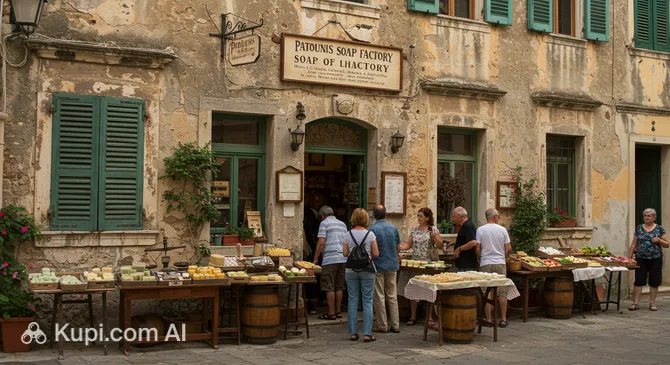
Another historic local product is traditional olive oil soap. For a truly authentic purchase, you can visit Patounis' Soap Factory. This historic establishment is not just a museum but a functioning shop where you can buy pure, chemical-free soap made using methods that have been passed down for generations. It is a unique slice of Corfiot history that you can take home with you.
Patounis' Soap Factory. Illustration.
Source: Kupi.com AI
Traveler photos:
Store opening hours in Corfu generally follow the traditional Greek schedule. Shops typically open around 9:00 AM and close around 2:00 PM or 3:00 PM. On Tuesdays, Thursdays, and Fridays, many reopen in the evening from 5:30 PM to 9:00 PM. However, in the busy tourist areas of the Old Town, many shops, especially those selling souvenirs, stay open all day, seven days a week, during the summer season.
Payment methods are modern and convenient, with credit and debit cards accepted in almost all shops in the city. However, carrying some cash is advisable for small purchases at kiosks or the open-air market. For visitors from outside the European Union, tax-free shopping is available at participating stores. Look for the "Tax Free" signage in the window, and be sure to ask for the necessary forms at the checkout to claim your VAT refund at the airport.