Support

Plaza de Mayo

About

Plaza de Mayo is not just the main square of Buenos Aires, but the true historical and cultural heart of Argentina. This very place is considered the starting point from which the development of the modern city began. Today, it is the center of the capital's political and social life, hosting national celebrations and important public events.
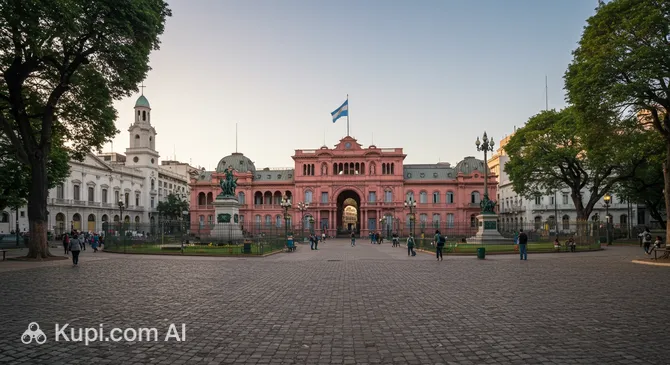
Plaza de Mayo. Illustration.
Source: Kupi.com AI

Traveler photos:

The square's architectural ensemble is impressive in its grandeur. Key buildings of the country are located here: the famous Casa Rosada—the pink residence of the President of Argentina, the old city hall Cabildo, which now houses a museum, and the majestic Metropolitan Cathedral. Each of these buildings is an important witness to the nation's history.

The May Pyramid stands in the center of the square—the country's first patriotic monument, erected in 1811. It was created to mark the anniversary of the May Revolution of 1810, which began the struggle for Argentina's independence. Visiting Plaza de Mayo is an opportunity to touch key moments of Argentine history and feel the dynamic spirit of one of South America's most vibrant cities.

Contacts

Plaza de Mayo is an open public space accessible for visiting at any time. As it is the city's central square, it does not have a single contact center. The most convenient way to get here is by using Buenos Aires public transport. Located right on the square is the namesake Plaza de Mayo metro station (Line A), and many city buses also stop here, making it easy to reach from any point in the capital.

How to contactContact
AddressAv. Hipólito Yrigoyen s/n, C1087 Cdad. Autónoma de Buenos Aires, Argentina
Websitewww.turismo.buenosaires.gob.ar

What to Do

Visiting Plaza de Mayo is a chance to immerse yourself in the heart of Buenos Aires and feel its multifaceted character. Stroll through this historical space, admiring the colonial and neoclassical architecture surrounding the square. It's the perfect place to take memorable photos with the famous Casa Rosada in the background or at the foot of the May Pyramid. After your walk, you can relax in one of the nearby cafes, enjoying the local atmosphere, or browse the souvenir shops for unique gifts.

The square often becomes the center of cultural life, hosting various city festivals, concerts, and festive events. Tourists can join an organized tour to learn more about the history of this iconic site or visit the museum in the old Cabildo town hall. Alternatively, you can simply choose a bench in the shade of the trees and watch the city's leisurely life while enjoying the unique atmosphere of old Buenos Aires.

Getting There

Thanks to its location in the historical and political heart of Buenos Aires, getting to Plaza de Mayo is quite easy. The most convenient and fastest way is by metro (Subte). The terminus of Line A, Plaza de Mayo, is located right on the square, making it accessible from many parts of the city. Additionally, numerous city buses (colectivos) stop in the immediate vicinity, so you can easily find a suitable route.

If you prefer walking and are in the central part of the city, the walk to the square is quite pleasant. For example, a walk from the major Retiro railway station will take no more than 15–20 minutes. This is a wonderful opportunity to enjoy the sights and architecture of the capital. Of course, you can always use a taxi, which will take you quickly and comfortably to the very heart of the Argentine capital.

It is also worth noting that Plaza de Mayo is a mandatory stop on most city sightseeing tours. If you decide to join one of the tourist routes, you most likely won't have to plan the journey yourself — a guide will lead you to this iconic site while sharing its rich history.

Nearest city: Buenos Aires

History & Facts

The history of Plaza de Mayo is inextricably linked to the birth of the Argentine nation. Founded as early as 1580, it initially served as the main center of young Buenos Aires. However, the square gained its fateful significance in 1810 when it became the epicenter of the May Revolution. These events marked the beginning of Argentina's long journey toward independence from Spanish rule and forever inscribed the square in the country's history.

In honor of the first anniversary of the revolutionary events, the country's first patriotic monument, the May Pyramid, was erected in the center of the square in 1811. That was when the square received its modern name. A few years later, in 1816, Argentina's independence was solemnly proclaimed here, cementing its status as the heart of the nation. Initially, the pyramid was a modest brick structure, but over time its appearance changed, and today it stands as a majestic monument topped with a statue of Liberty.

Throughout the centuries, Plaza de Mayo has been not only a political arena but also a center of social life. In different eras, trade fairs were held here, bullfights were organized, and grand official ceremonies took place. An important moment in the square's history was the solemn adoption of the Argentine Constitution in 1854. Gradually, essential government buildings rose around the square, forming the majestic architectural ensemble that travelers can see today.

Time Needed

For a brief introduction to Plaza de Mayo and its key attractions, it is recommended to set aside 1 to 2 hours. This is enough time to take a leisurely stroll, take photos with the famous Casa Rosada, the Metropolitan Cathedral, and the May Pyramid, and feel the historical atmosphere of this iconic spot in Buenos Aires. During this time, you will be able to get a general idea of the square and its significance for Argentina.

If you plan a deeper immersion, you should schedule more time. For instance, visiting museums located right on the square, such as the historical museum in the Cabildo building or the museum inside the Casa Rosada presidential palace, can take an additional hour each. If your visit includes a guided walking tour, which lasts about two hours, or if you want to relax in one of the nearby cafes, it's better to allocate half a day for exploring the square and its surroundings.

Working Hours

Since Plaza de Mayo is the central public space of Buenos Aires, it is open to visitors 24 hours a day, all year round. You can come here at any time of the day or night to enjoy its atmosphere and views. Entry to the square itself is free, and no advance booking is required.

However, it is worth noting that access to buildings located on the square, such as the Casa Rosada presidential palace and the Cabildo history museum, operates on their own schedules. For example, tours of Casa Rosada are usually held on Saturdays and require prior registration on the official website. The Cabildo Museum also has specific opening hours. To avoid disappointment, it is recommended to check the official websites of these Argentina attractions for the latest information on opening hours and visiting conditions before your visit.

Nearby

Visiting Plaza de Mayo is, without a doubt, one of the key experiences of a trip to Buenos Aires. However, to truly soak up the spirit of this amazing city and make your journey even more fulfilling, it is worth paying attention to the attractions located nearby. Exploring the surrounding area will allow you to see more than just the famous historic center and discover new, equally interesting facets of the Argentine capital.

Often just a few steps from the main square lie true gems: from impressive architectural monuments and cultural centers to cozy parks and authentic establishments. Each such find will add bright colors to your trip, providing new knowledge and emotions, turning an ordinary excursion into a fascinating exploration of the city.

NameDistance
La Pampa National Park0.8 km
Obelisk of Buenos Aires1 km
Teatro Colón1.3 km
Güerrín Pizzeria1.3 km
Paseo La Plaza1.7 km
El Molino Confectionery1.8 km
Teatro Picadero2 km

Have you reached the end of the page?

So the route has been studied inside and out