Support

La Carreta Monument

About

The La Carreta Monument (La Carreta) is a famous bronze sculpture located in the picturesque Parque Batlle in the city of Montevideo, Uruguay. This impressive monumental work of art was created by the talented Uruguayan sculptor José Belloni, with work spanning from 1929 to 1934. The sculpture is one of the most recognizable and significant landmarks in the capital.
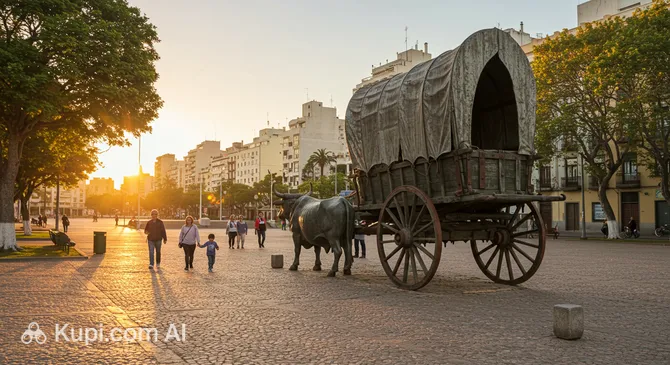
La Carreta Monument. Illustration.
Source: Kupi.com AI

Traveler photos:

The composition depicts a traditional settler's cart pulled by oxen with striking realism. "La Carreta" was more than just a vehicle on two massive three-meter wheels that once served as the primary mode of travel across the South American pampas. The sculptor meticulously captured the drama and hardship of the moment: oxen, exhausted from fatigue and thirst, pull a cart that appears to be stuck on a difficult journey, symbolizing the incredible efforts of the pioneers.

The La Carreta Monument is more than just a tribute to the past; it is a powerful symbol of Uruguay's history and an eternal monument to the hardships, perseverance, and courage faced by the first settlers who developed these lands. Visiting this monument allows you to connect more deeply with the nation's spirit and reflect on the price of progress and human resilience. This site certainly leaves a strong impression and invites contemplation.

Contacts

The La Carreta monument is a public monument, and as such, does not have direct contact details for visitors. If you need additional information about your visit, it is recommended to contact the Montevideo tourist information center or the administration of Parque Batlle, where the monument is located. You can reach Parque Batlle, where the monument stands, by public transport or taxi from the city center.

How to contactContact
Address4R4V+XW2, Avenida Dr. Lorenzo Merola, 11600 Montevideo, Departamento de Montevideo, Uruguay
Phone number+598 1950 2003
Websitemunicipioch.montevideo.gub.uy

What to Do

When visiting the La Carreta Monument in Montevideo, your primary activity will be examining this impressive bronze sculpture in detail. It is a great opportunity to appreciate the craftsmanship of sculptor José Belloni and take memorable photos of this iconic work of art, which symbolizes the first settlers and their difficult way of life. Standing near the monument, it is easy to imagine the hardships and resilience of the pioneers who explored the expanses of South America in their ox-drawn carts.

The main thing to do here is, of course, to contemplate the monument itself. You can walk around the sculptural group from all sides, paying attention to the details of the figures and the overall composition. The monument conveys a sense of movement and the burdens of the journey, which makes one think about history and land development. Often, there are small souvenir stands near the monument where you can buy something to remember your visit to Montevideo and Uruguay.

Since the La Carreta Monument is located within the large Parque Batlle, it is convenient to combine your visit with a walk through the park. Nearby is another major attraction — the famous Centenario Stadium, which is a historic monument of world football and the site of the first-ever World Cup. Thus, a visit to "The Cart" can be part of a longer and more enriching tour of the Uruguayan capital's iconic landmarks.

Getting There

The La Carreta monument is located in one of Montevideo's largest green spaces, Parque Batlle. This is a central part of the city, making the monument quite accessible. You can reach it in several ways, depending on your preferences and available time.

One of the most convenient and common methods is public transport. Numerous Montevideo bus routes pass through major city thoroughfares, such as Avenida 18 de Julio and Avenida Agraciada, and have stops near Parque Batlle. This is an economical option that also allows you to see the city on your way to the attraction.

Additionally, you can always reach the La Carreta monument by taxi, which is easy to find anywhere in the city, or by rental car if you prefer to plan your own route. For those who want to see as much as possible in a short time, there are organized city tours that often include a visit to Parque Batlle and its famous landmarks, including La Carreta and the Centenario Stadium.

Nearest city: Montevideo

History & Facts

The La Carreta monument in Montevideo is not just a sculpture, but an expressive symbol of Uruguayan history and a tribute to the early settlers. Created by the talented Uruguayan sculptor José Belloni between 1929 and 1934, the monument captures a scene full of drama and perseverance in bronze. It reflects the hard work and challenges faced by the pioneers who settled the expanses of modern-day Uruguay, serving as a reminder of their contribution to the country's development.

The central element of the composition is "la carreta" itself — a traditional Uruguayan ox-drawn cart. During the colonial period, such carts were practically the only means of transport in the vast pampas. The design was simple yet functional: two enormous, often ungreased wheels up to three meters in diameter, connected by an axle made of durable orange wood, and a body covered in leather for protection against the elements. It is said that the creaking of these wheels could be heard for kilometers, becoming a hallmark of the settlement of new lands. The monument immortalizes this humble yet vital transport, without which the history of the region's settlement is unimaginable.

Interestingly, José Belloni, the creator of "La Carreta," also produced another famous sculptural group in Montevideo — "La Diligencia" ("The Stagecoach"), unveiled in 1953. This work depicts a stagecoach stuck in a swamp, being pulled with great difficulty by five horses under the driver's urging, while a rider ahead points the way. Both sculptures, "La Carreta" and "La Diligencia," reflect not only Belloni's skill but also his deep understanding of national history and his desire to capture key moments and symbols of Uruguay's past for future generations. Even today, carts like the "la carreta" can occasionally be seen, making the monument an even more vivid reminder of the past.

Time Needed

An average visitor typically doesn't need much time to see the La Carreta Monument in Montevideo. Generally, allocating about 30-40 minutes is sufficient. This is enough time to closely examine all the details of the expressive sculptural composition, take commemorative photos, and soak in the atmosphere of this iconic site.

It is worth noting that "La Carreta" is part of a larger space — Parque Batlle. If you plan not only to see the monument itself but also to visit other interesting sites in the park, such as the famous Centenario Stadium or other monuments, it is better to set aside a few hours for your walk. This way, you can enjoy all the attractions of the park area without rushing and get a more complete picture of Montevideo's cultural heritage.

Working Hours

The La Carreta Monument is located in the public Parque Batlle in Montevideo, and as such, it does not have strict individual operating hours like a museum or gallery. Access to this impressive monument is generally open to everyone during the opening hours of the park itself.

Since Parque Batlle is a public space, the monument is expected to be available for viewing during daylight hours year-round. No special booking or ticket purchase is required to visit the La Carreta Monument, as it is a freely accessible outdoor site. However, it is always a good idea to check the current opening hours of Parque Batlle on Montevideo's official tourist portals or upon arrival to avoid any potential inconvenience related to park events or temporary restrictions.

Open 24 hours

Nearby

Visiting the La Carreta Monument in Montevideo is a wonderful opportunity to experience the history and culture of Uruguay. However, to make your journey even more enriching and memorable, it is worth taking the time to explore the surroundings of this iconic landmark. Often, it is during such walks that you discover unexpected and interesting spots that help you better understand the spirit of the city.

Several other notable sites are located near the La Carreta Monument that may interest you. Below is a list of some of them, including distances, so you can plan your route effectively.

NameDistance
Acuaworld Aquarium1.1 km
Grand Lodge of Freemasonry of Uruguay1.3 km
Villa Dolores Zoo1.3 km
Montevideo Music Box1.4 km
New Era Shopping Center1.9 km
Gourmand2.3 km
Parque Rodó Children's Park2.4 km

Have you reached the end of the page?

So the route has been studied inside and out