Support

Centennial Park

About

Parque Centenario is one of the largest and most beloved green oases in Buenos Aires, located in the geographical center of the city in the Caballito district. Designed by the famous French landscape architect Carlos Thays, the park was opened in 1910 to commemorate the centenary of the May Revolution in Argentina, which gave the park its name. Its distinctive feature is its circular shape, making it recognizable and convenient for walking. It is not just a park but an important center for recreation, culture, and sports, popular with both locals and tourists alike.

The heart of the park is a large, picturesque lake with fountains, where swans and ducks live. Around it are well-maintained paths, shady groves, and open lawns ideal for a picnic or quiet relaxation. The park is highly popular with those who enjoy an active lifestyle: it features running tracks, sports areas, and a skate park. It is a wonderful place to take a break from the city bustle and observe the daily life of the Argentine capital.
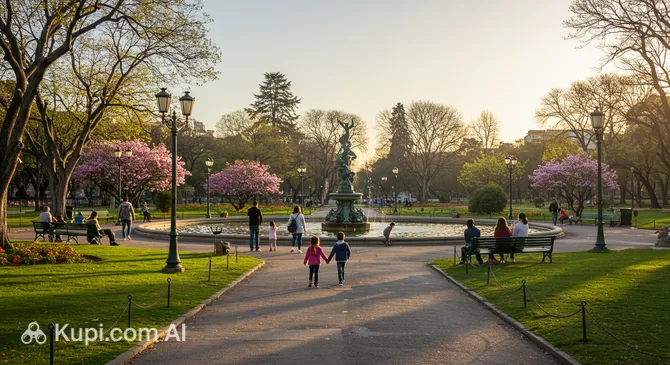
Centennial Park. Illustration.
Source: Kupi.com AI

Traveler photos:

Parque Centenario is not only about nature but also about culture. The Bernardino Rivadavia Natural Sciences Argentine Museum, one of the most important in Latin America, is located on its grounds. There is also an amphitheater where open-air concerts and performances are held during the warmer months. On weekends, the park comes alive with a large fair where you can find crafts, antiques, books, and souvenirs, making it a great place to search for unique purchases.

Contacts

Since Parque Centenario is a public city space, it does not have a dedicated phone number or email for inquiries. The most up-to-date information regarding opening hours, as well as events and concerts in the amphitheater, can be found on the official tourism portal of the Buenos Aires government.

Getting to the park, located in the Caballito neighborhood, is quite simple. You can reach it by metro (Subte) using lines A or B. Additionally, numerous city buses (Colectivo) stop near the park, including routes 15, 105, 119, 145, and 146, making it easily accessible from anywhere in the city.

How to contactContact
AddressAv. Díaz Vélez 4859, C1405DCD Cdad. Autónoma de Buenos Aires, Argentina
Websitewww.buenosaires.gob.ar

What to Do

Every visitor will find something to do in Parque Centenario. It is the perfect place for a leisurely stroll through shady alleys or a cozy picnic on one of the many green lawns. The centerpiece of the park is a picturesque pond with fountains, which has become home to many waterfowl and turtles. Watching them is a favorite pastime for both children and adults, providing a respite from the city's hustle and bustle.

Parque Centenario is not just nature, but a true hub of cultural life. It is regularly bustling with street concerts, art exhibitions, book fairs, and craft markets. This is a great opportunity to get acquainted with the work of local artists and musicians, as well as to purchase unique souvenirs. On weekends, various family events are often organized here, making the park especially attractive to visitors of all ages.

For those who prefer active recreation, the park provides specially equipped areas for sports. Additionally, you can often find groups practicing yoga and fitness in the fresh air on the lawns. For young visitors, there are modern and safe playgrounds where they can have fun. Thus, the park offers a harmonious combination of opportunities for relaxation, cultural enrichment, and physical activity.

Getting There

Parque Centenario is ideally located in the geographical center of Buenos Aires, making it easily accessible from all parts of the city. One of the easiest and fastest ways to get here is by public transport. The "Ángel Gallardo" metro station (Line B) is within walking distance of the park entrance. Furthermore, numerous city bus routes (colectivos) pass in the immediate vicinity, so reaching the park is effortless.

If you are traveling by car, major city arteries such as Avenida Díaz Vélez and Avenida Patricias Argentinas lead to the park. There are parking areas nearby where you can leave your vehicle. Thanks to its central location, Parque Centenario is also a pleasant walk from the neighboring colorful districts of Almagro and Villa Crespo, allowing you to better experience the daily life of the Argentine capital.

Nearest city: Buenos Aires

History & Facts

The history of Parque Centenario is closely linked to a significant date in Argentina's history. Its creation was timed to coincide with the centennial celebrations of the May Revolution of 1810, which is reflected in its name—"Centenario" means "centenary" in Spanish. The park was officially opened in 1910 on a site that was previously a wasteland. The project was designed by the prominent Franco-Argentine landscape architect Carlos Thays, who gifted Buenos Aires many of its famous green spaces.

Since its founding, the park has been constantly developing and transforming. The original circular design with a lake at the center proved so successful that Centenario quickly became a favorite recreational spot for city residents. Throughout the 20th century, the park was renovated several times: new sculptures, fountains, and sports grounds appeared. Interestingly, an amphitheater for 10,000 spectators was opened in the park in 1953, but unfortunately, it burned down a few years later. Later, in the 1980s, a picturesque artificial lake was created in its place, which remains a main attraction for visitors today.

There is a curious theory that the park's famous circular design is not accidental. According to this theory, Carlos Thays was inspired by the Argentine national emblem, and the boulevards surrounding the park were meant to symbolize the laurel wreaths on it. Today, besides its recreational function, the park plays an important cultural role. The Bernardino Rivadavia Natural Sciences Argentine Museum is located on its grounds, and the modern amphitheater continues the tradition of open-air concerts. Additionally, the weekly craft and antique fair has become an integral part of park life, attracting both locals and tourists.

Time Needed

To fully experience Parque Centenario, it is recommended to set aside two to four hours. This will be enough time to leisurely stroll along its famous circular paths, relax by the picturesque pond watching the swans and ducks, and fully feel the calm and relaxed atmosphere of this green oasis in the heart of Buenos Aires.

The duration of your visit may vary depending on your plans. If you just want a quick walk, one hour is enough. However, if your visit falls on a weekend, allow extra time to visit the vibrant craft fair, where you can find unique souvenirs. Additionally, the Museum of Natural Sciences is located within the park, and touring its collection can take another couple of hours. If you plan to attend a concert at the amphitheater, your visit will last until evening.

Working Hours

Parque Centenario is open to visitors year-round and is a wonderful place to relax in any season. Entry to the park is free. As a rule, it is open daily from early morning until late evening. According to official information, opening hours may vary: in winter, the park is open from 8:00 AM to 8:00 PM, and in summer from 8:00 AM to 10:00 PM. Some sources indicate opening hours from 6:00 AM to 10:30 PM.

No prior registration or ticket booking is required for a standard walk in the park. However, keep in mind that hours may change depending on the season, weather conditions, or special events and festivals held in the amphitheater. Therefore, it is recommended to check for up-to-date information on the official tourism portal of Buenos Aires before your visit.

8:00 – 20:00

Nearby

Visiting Parque Centenario is a wonderful opportunity to experience the green heart of Buenos Aires, but you shouldn't limit yourself to the park alone. Exploring the park's surroundings will allow you to dive deeper into the city's multifaceted atmosphere and discover other interesting spots located nearby. A walk through the adjacent streets can turn into a fascinating mini-journey full of unexpected finds.

The Caballito neighborhood and surrounding blocks offer many options for continuing your day. Just a few kilometers from the park, you will find bustling squares, famous cultural sites, and cozy green corners. Getting to know them will enrich your experience and show how diverse Buenos Aires can be beyond the main tourist routes.

NameDistance
Aeropark3.1 km
Teatro Picadero3.8 km
El Molino Confectionery4 km
Paseo La Plaza4.1 km
National Museum of Decorative Arts4.1 km
Museum of Latin American Art of Buenos Aires4.4 km
Güerrín Pizzeria4.5 km

Have you reached the end of the page?

So the route has been studied inside and out