Support

Museo del Origami

About

Imagine a world where a simple sheet of paper transforms into a complex engineering and artistic creation. This is the Origami Museum — a unique cultural space located in the charming city of Colonia del Sacramento. It is South America's first specialized museum entirely dedicated to the ancient and timeless art of paper folding.
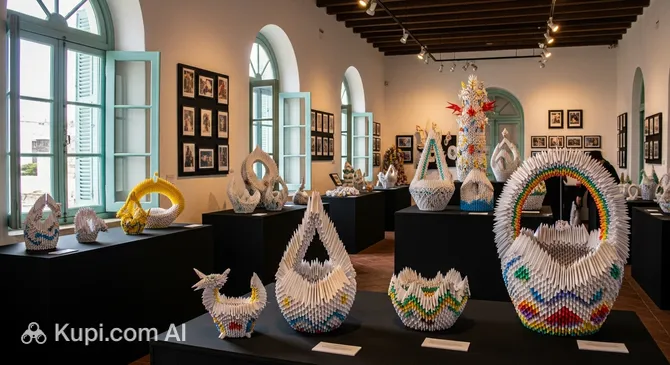
Origami Museum
Origami Museum. Иллюстрация. Источник: Kupi.com AI

Founded in 2019 in the historic region of Uruguay, the museum invites visitors to see origami not just as a childhood hobby, but as a serious art form and science. Exhibits trace paper's journey from traditional Eastern techniques to modern applications in space exploration, medicine, and textile design.

In addition to an impressive collection of work, the museum houses a rich archive and library dedicated to the history of this craft. This place harmoniously combines the atmosphere of a UNESCO heritage site with an innovative perspective on the possibilities of human hands, making it a must-visit for all fans of art and technology.

Contacts

For those planning a visit and wishing to check current exhibition details, below is the essential contact information. The museum is active on social media, where you can find inspiring works and announcements of upcoming workshops.

How to contactContact
AddressItuzaingó 131, 70000 Col. del Sacramento, Departamento de Colonia, Уругвай
Phone+598 96 962 326
Websitewww.museodelorigami.org

What to Do

Inside the museum's galleries, visitors will encounter works by world-renowned masters. You can see original creations by Bernie Peyton, Rebecca Gieseking, and Chen Xiao, whose pieces are staggeringly complex. The exhibitions are designed to showcase the connection between art, mathematics, and design, while QR codes at the displays provide access to additional videos and interactive materials.

For those looking to go from observation to action, the museum offers a variety of workshops and origami courses for all skill levels. It is a great opportunity to create your first figure under professional guidance. Documentary screenings revealing the secrets of this meditative art are also held here.

Don't forget to stop by the museum shop, a true paradise for creative enthusiasts. It sells high-quality kami and washi paper, as well as books, kits, and designer souvenirs. If you are interested in theory, the museum library offers access to rare editions and historical documents upon prior request.

Getting There

Finding the Origami Museum is easy, as it is located at Ituzaingó 131, in the heart of the historic quarter, a UNESCO World Heritage site. The most pleasant way to get here is a walk, which takes only 10–15 minutes from the port or the main bus terminal.

If you are coming from Argentina, it is most convenient to take a ferry from Buenos Aires, which takes about an hour. Comfortable buses run regularly from Montevideo to Colonia (travel time is about 3 hours). Within the city itself, vehicle traffic in the historic district is limited, so walking through the cobbled streets is the best option.

Ближайший город: Colonia del Sacramento

History & Facts

The history of this unique site began in 2019, when it opened its doors as the first museum of its kind on the entire American continent. One of the institution's most valuable assets is the archive of Gershon Legman — a prominent researcher often called the first historian of origami. His letters and documents trace the path of paper crafting from ancient traditions to the present day.

In just a few years, the museum has become a vital part of the region's cultural life, receiving the prestigious Uruguay Country Brand status in 2022 and joining the country's National Museum System. Its collection is regularly updated with award-winning masterpieces, such as the Joisel Award. In 2022, the institution itself was honored with the Temko Innovation Award for its contribution to the development of the art.

The museum serves not only as an exhibition space but also as a research center, demonstrating how paper-folding principles are applied in mathematics and robotics. Visits by high-ranking guests, including the Japanese Ambassador, underscore the museum's role as an important bridge between Eastern and Western cultures in the heart of Latin America.

Time Needed

To thoughtfully explore the exhibits and soak in the atmosphere, a typical visitor needs about 1–2 hours. This is enough time to tour all the halls, look through historical documents, and browse the specialized shop.

If you plan to participate in a workshop or wish to work with library materials (by appointment), you should set aside half a day. Despite the building's compact size, the wealth of small details and interactive materials often causes guests to linger at the displays longer than initially planned.

Working Hours

When planning your visit, keep in mind that the museum follows a specific schedule. From Tuesday to Friday, the doors are open from 3:00 PM to 6:00 PM. On weekends — Saturday and Sunday — there is a two-shift schedule: from 11:00 AM to 1:00 PM and from 3:00 PM to 7:00 PM.

Monday is usually a closing day, but during holiday periods, the museum may operate on the weekend schedule. Visitors are encouraged to check the official website before traveling, as hours may be adjusted on days when special training courses are held.

DayWorking hours
понедельник11:00–13:00, 15:00–18:00
вторник11:00–13:00, 15:00–18:00
среда15:00–18:00
четверг15:00–18:00
пятница15:00–18:00
суббота11:00–13:00, 15:00–18:00
воскресенье11:00–13:00, 15:00–18:00

Nearby

Exploring the museum's surroundings will allow you to fully experience the city's colonial charm. A walk through the historic streets and squares, located just steps away, is a perfect complement to visiting the paper exhibition.

NameDistance
Historic Quarter of Colonia del Sacramento0.1 km
Resto-Morriña0.1 km
Historic Quarter of Colonia0.2 km
Basilica of the Blessed Sacrament0.2 km
San Miguel Bastion0.2 km
El Buen Suspiro0.2 km
Colonia del Sacramento Aquarium0.3 km

Reached the end of the page?

That means the route is fully explored