Support

Gateway of the Citadel

About

The Gateway of the Citadel (Puerta de la Ciudadela) is an iconic historical and architectural monument located in the heart of Montevideo, the capital of Uruguay. This majestic gate is a surviving fragment of the city's former fortress walls and holds a place of honor on Plaza Independencia. It serves as the symbolic entrance to the charming Old City (Ciudad Vieja), inviting visitors to immerse themselves in its historical atmosphere.
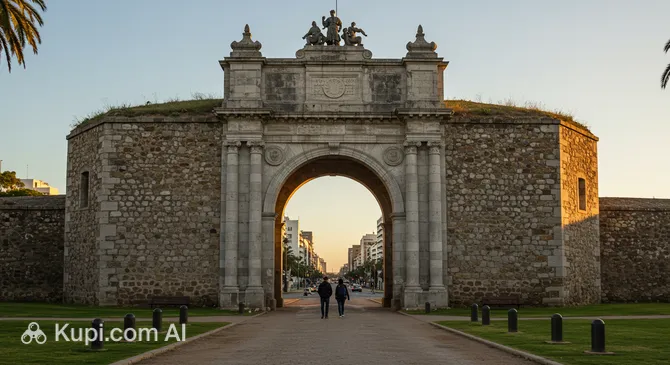
Gateway of the Citadel. Illustration.
Source: Kupi.com AI

Traveler photos:

Constructed from massive stone, the Gateway of the Citadel is the oldest structure on Plaza Independencia. Its powerful arch and austere appearance serve as a vivid reminder of the city's colonial past and its rich history. It is not just a passage, but a true portal through time, connecting modern Montevideo with its origins.

Today, the Gateway of the Citadel is one of the most recognizable and photographed landmarks in Montevideo. The famous Sarandí pedestrian street begins here, leading travelers deeper into the historical center. It is a popular meeting spot for both tourists and locals who wish to touch the city's history and capture memorable photos.

Contacts

Since the Gateway of the Citadel is a freely accessible historical monument, there is usually no specific contact information. To plan your visit and obtain more information about the attractions of Montevideo, we recommend contacting local tourist information centers or visiting the official tourism portals of the city and Uruguay.

Finding the Gateway of the Citadel is very easy: it is located on the central Plaza Independencia and serves as the symbolic entrance to the Old City.

How to contactContact
AddressSarandí 700, 11000 Montevideo, Departamento de Montevideo, Uruguay
Phone number+598 1950 1401

What to Do

Visiting the Gateway of the Citadel is a wonderful opportunity to connect with the history of Montevideo. Walking through this ancient arch, you will literally feel as if you have been transported to the past, experiencing the atmosphere of the Old City. Naturally, it is an ideal place to take souvenir photos against the backdrop of one of the main symbols of the Uruguayan capital. The act of passing through the gate itself becomes a symbolic step into the historical heart of the city.

The Gateway of the Citadel serves not only as an attraction in its own right but also as a starting point for further exploration. Right from the gate, fascinating walking tours of the Old City (Ciudad Vieja) begin. For example, the famous Sarandí Street, which starts at the gate, will lead you to iconic sites such as Plaza Constitución and the Metropolitan Cathedral. Along the way, you will also discover many cozy cafes, interesting museums, and art galleries.

In this way, the Gateway of the Citadel is more than just an architectural monument; it is the key to understanding Montevideo. This is where your introduction to the rich culture, historical architecture, and unique atmosphere of the capital of Uruguay begins. Don't miss the chance to start your journey through the city from this very spot.

Getting There

Reaching the Gateway of the Citadel is effortless, as it is located in the heart of Montevideo on the famous Plaza Independencia. This location is one of the city's main transport and tourist hubs, making it easily accessible from any part of the capital.

The simplest way is to take a taxi, which will quickly bring you directly to the square. Many city bus routes also pass through Plaza Independencia. If you are staying in the central part of Montevideo, a pleasant walk to the Gateway of the Citadel is an excellent way to get to know the city.

If you are arriving in Montevideo by train or intercity bus, the main urban transport routes lead from the railway station and the main bus terminal to Plaza Independencia. This makes the Gateway of the Citadel easily accessible to all travelers, regardless of their mode of transport.

For those who prefer exploring on foot, the Gateway of the Citadel serves as a magnificent starting point. From here, it is convenient to begin walking through the historical quarters of the Old City and to other famous landmarks, such as the Solis Theatre and the Salvo Palace, which are within walking distance.

Nearest city: Montevideo

History & Facts

The Gateway of the Citadel (Puerta de la Ciudadela) preserves centuries of Montevideo's history. It is the last remaining fragment of the massive fortress walls that Spanish conquistadors began building in 1726, almost from the moment the city was founded. The primary purpose of this citadel was to protect the young settlement from frequent raids by pirates and smugglers, as well as to maintain strategic control over the entrance to the vast Rio de la Plata bay. These walls were a silent witness to the city's first decades of life.

Over time, and with Uruguay gaining independence, the defensive function of the walls lost its primary importance. In 1829, it was decided to demolish most of the fortifications to give Montevideo room to grow and develop. However, the Gateway of the Citadel was preserved as a valuable historical symbol, a reminder of the colonial past and the city's early steps. This act of preservation highlighted a deep respect for the nation's history and roots.

After the main fortifications were demolished, a bustling market emerged on the site of the former citadel, and the city began to expand rapidly beyond its old boundaries. The Gateway of the Citadel thus transformed into a symbolic bridge connecting the colonial era with the modern day. It has not only survived as a relic but has also become an integral part of the cityscape—an iconic landmark that residents of Montevideo proudly show to guests, embodying the link between eras and the continuity of generations.

Time Needed

To see the Gateway of the Citadel itself and take a few souvenir photos, you will need very little time—usually 15-30 minutes is sufficient. Within this short period, you can appreciate the architecture of this historical monument, walk beneath its arch, and feel the atmosphere of old Montevideo.

However, the Gateway of the Citadel often serves as just the starting point for a longer journey. If you plan to not only see the gate but also continue exploring the Old City (Ciudad Vieja), which it symbolically leads into, you should set aside 1-2 hours. This will allow you to take a leisurely stroll through the adjacent streets, such as the famous Sarandí, and visit other nearby attractions.

Thus, the total time you spend at the Gateway of the Citadel and its surroundings will depend on your plans and interests. A quick look at the monument itself takes no more than half an hour, while a deeper immersion into the historical center of Montevideo, starting from the gate, may require several hours of your time.

Working Hours

The Gateway of the Citadel in Montevideo is a unique attraction that is accessible at any time. As an open-air historical monument, it is open to all visitors 24 hours a day, year-round. You can come here early in the morning to enjoy the quiet, or late in the evening when the gate is beautifully illuminated, creating a special atmosphere.

Thanks to its 24/7 accessibility, visiting the Gateway of the Citadel does not require any advance booking or tickets. You can simply include it in your Montevideo itinerary at any time that is convenient for you. This makes it an ideal spot for a spontaneous visit and an essential part of any walk through the city's historical center.

Open 24 hours

Nearby

Visiting the Gateway of the Citadel is undoubtedly a landmark event for any guest of Montevideo. However, to truly soak up the atmosphere of this historical site and the city as a whole, it is worth taking the time to explore its surroundings. Often, it is the nearby attractions, charming streets, and lively squares that help complete the picture and significantly enrich your travel experience.

A variety of interesting sites are concentrated around the Gateway of the Citadel, all located in the immediate vicinity, allowing you to dive deeper into the rich history and culture of Uruguay's capital. Below is a list of some of them, along with approximate distances, so you can easily plan your route:

NameDistance
Artigas Mausoleum0.1 km
Salvo Palace0.2 km
Andes 1972 Museum0.2 km
Palacio Taranco0.7 km
Carnival Museum1 km
Bar Brecha1.2 km
Museum of Art History1.3 km

Have you reached the end of the page?

So the route has been studied inside and out