Support

Lezama Park

About

Lezama Park is one of the most famous and historically significant parks in Buenos Aires, located in the colorful San Telmo neighborhood. It is not just a green space but a true oasis where the history of Argentina intertwines with natural beauty. The park attracts both locals and tourists with its unique atmosphere and rich cultural heritage, serving as a traditional place for relaxation.
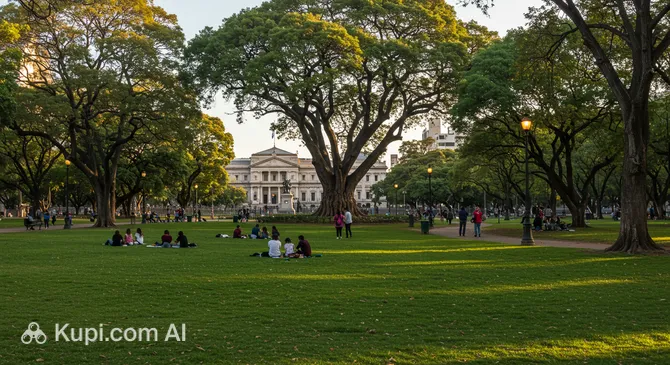
Lezama Park. Illustration.
Source: Kupi.com AI

Traveler photos:

The park's territory is characterized by a picturesque hilly terrain that creates cozy spots for relaxation. Here, you can stroll along shady paths, enjoying the view of ancient trees, many of which were planted back in the 19th century. The green lawns and a unique canyon—a remnant of the old riverbed—are ideal for leisurely walks and picnics, allowing you to escape the city's hustle and bustle.

In addition to its natural appeal, the park is an important cultural center. The National Historical Museum is located on its grounds in the former Lezama family mansion, where you can delve deeper into the country's past. The park also features monuments dedicated to the city's founders and other key events, making it an integral part of Buenos Aires' cultural heritage.

Contacts

Lezama Park is a public space open to everyone. Since the park itself does not have a central contact service, you can use the following information for the National Historical Museum located on its grounds to inquire about events or museum operations.

How to contactContact
AddressAv. Brasil, C1143 Cdad. Autónoma de Buenos Aires, Argentina
Websitewww.turismo.buenosaires.gob.ar

What to Do

Everyone will find something to enjoy at Lezama Park, whether it's a leisurely walk or cultural enrichment. You can stroll through the well-maintained shady paths, relax on a bench in the shade of century-old trees, or have a picnic on one of the green lawns. On weekends, the park comes alive with street markets selling souvenirs, as well as art exhibitions and concerts in the local amphitheater. The hilly part of the park offers picturesque views of the surrounding area, including the historic La Boca neighborhood.

One of the park's main gems is the National Historical Museum, housed in the former Lezama family mansion. Here, you can immerse yourself in the rich history of Argentina by exploring an extensive collection of exhibits. Additionally, many monuments are located throughout the park, most notably the monument to the founder of Buenos Aires, Pedro de Mendoza, making your walk educational as well. After a busy day, you can relax in one of the famous historic cafes nearby, such as "El Hipopótamo" or "Bar Británico," and enjoy the atmosphere of the old city.

Getting There

Lezama Park is conveniently located in the colorful San Telmo neighborhood in southern central Buenos Aires, making it easily accessible for visitors. The park stretches along major streets like Defensa and Brasil, which serve as landmarks. Thanks to its location, getting here from anywhere in the city is quite simple.

One of the most convenient ways to reach the park is by public transport. Numerous city buses (colectivos) pass in the immediate vicinity. Specifically, you can use routes 10, 22, 29, and others, with stops just steps from the entrance. Additionally, you can always take a taxi or use ride-sharing apps, which provide a quick and comfortable journey directly to the park.

If you are in central San Telmo, a pleasant stroll to Lezama Park is a great option. This neighborhood is famous for its historic architecture, cobbled streets, and cozy cafes, turning your walk to the park into a fascinating self-guided tour. The walk allows you to better feel the authentic atmosphere of old Buenos Aires and enjoy the sights of one of its most picturesque corners.

Nearest city: Buenos Aires

History & Facts

Lezama Park is not just a scenic spot, but a place whose history is inextricably linked to the founding of Buenos Aires itself. According to some historians, it was on this land in 1536 that the conquistador Pedro de Mendoza established the first settlement, which eventually grew into the modern capital of Argentina. Although the exact location remains a subject of debate today, this fact gives the park a special historical aura, turning a walk along its paths into a journey to the very roots of the city.

In the 19th century, this territory passed into private hands. In 1857, it was purchased by the wealthy landowner José Gregorio Lezama, who decided to create a magnificent private garden here. To realize his dream, he hired the Belgian landscape architect Charles Vereecke, who helped transform the estate into an exquisite park with a botanical focus. After Lezama's death, his widow, Ángela Álzaga, sold the estate to the city in 1894 with one important condition: it had to become a public park named after her husband.

The city authorities kept their promise, and the famous French architect Carlos Thays, the creator of many iconic parks in Buenos Aires, was invited to design the new public space. In 1896, he presented his project, and the park area was soon expanded. A landmark event was the 1897 opening of the National Historical Museum in the former Lezama family mansion, which remains one of the park's main cultural gems to this day, attracting history lovers from all over the world.

Time Needed

When planning a visit to Lezama Park, it is worth considering how much time you are willing to spend exploring it. For a full experience, including a leisurely stroll through its picturesque paths and a visit to the National Historical Museum, it is recommended to set aside at least 2–3 hours. This will be enough time to see the main monuments, relax on a bench, and fully enjoy the historical atmosphere of this iconic spot in Buenos Aires.

If you are short on time, a quick walk through the park will take about one hour. During this time, you can see the famous monument to the city's founder, Pedro de Mendoza, stroll through the hilly part of the park, and take a few photos. However, to truly feel the charm of this place, it is best not to rush. For a deeper immersion into the history of Argentina, it is worth planning a visit to the National Historical Museum, located within the park. Exploring its exhibits can take an additional 1-2 hours, depending on your interest.

Thus, a visit to Lezama Park can be either a short break from the hustle and bustle of the city or a rich half-day cultural program. Given that entry to the park itself is free and it is open 24/7, you can easily fit it into your itinerary at any convenient time. A full tour of the park and the museum will give you the most complete picture of this unique corner of Buenos Aires.

Working Hours

Lezama Park in Buenos Aires is a public space, and one of its main features is its accessibility at all times. It is open to the public 24 hours a day, year-round, allowing guests and residents of the city to enjoy its beauty at any convenient moment, whether for a morning run or an evening stroll. Entry to the park is free, and no prior reservation is required for your visit.

However, please note that the National Historical Museum, located within the park, operates on its own schedule. Generally, it is open from Wednesday to Sunday and on public holidays, but hours may vary depending on the season. Before visiting the museum, it is highly recommended to check current information on its official website or by calling their contact number to ensure your visit is as comfortable as possible.

Open 24 hours

Nearby

Visiting Lezama Park is a wonderful opportunity to explore not only the park itself but also its surroundings. Located in the historic San Telmo district, it is surrounded by many interesting places that will enrich your experience of Buenos Aires. A walk through the nearby streets will allow you to dive deeper into the colorful atmosphere of the old city and discover other iconic landmarks of the capital of Argentina.

Just a few kilometers from the park, you can find both modern entertainment centers and significant historical and cultural sites. Exploring the nearby attractions will help you create a more complete and rich itinerary, turning your visit to the park into a real mini-journey through the southern part of the city.

NameDistance
Plaza de Mayo2 km
La Pampa National Park2 km
Obelisk of Buenos Aires2.8 km
El Molino Confectionery2.8 km
Güerrín Pizzeria2.9 km
Paseo La Plaza3.1 km
Teatro Colón3.1 km

Have you reached the end of the page?

So the route has been studied inside and out