Support

Plaza Cagancha

About

Plaza de Cagancha, also known as Plaza Libertad (Liberty Square), is one of the most iconic and lively places in Montevideo, the capital of Uruguay. Located on the city's main avenue, Avenue 18 de Julio, this square is considered not just a tourist attraction, but the official geographical center of the entire country. It is from here, from "kilometer zero," that all of Uruguay's national roads are measured.
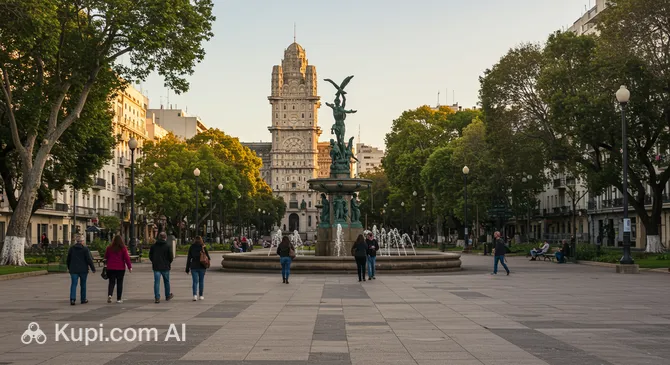
Plaza Cagancha. Illustration.
Source: Kupi.com AI

Traveler photos:

In the very heart of the square stands the Column of Peace (Columna de la Paz) — a monument erected on February 20, 1867. It is topped by a bronze female figure symbolizing peace, created by the talented Italian sculptor Giuseppe Livi. The monument was built to commemorate the end of the civil war and has since been the main decoration of the square. It stands 17 meters tall and weighs 9 tons.

The square was laid out in 1836 according to the design of architect Carlo Zucchi as the central space of the "New City," which was built outside the old colonial fortifications. Today, it is not only a historical site but also a popular space for locals and tourists to relax. Significant buildings like the Palacio Piria, where the Supreme Court sits, and the Ateneo de Montevideo cultural center are located around the square. It is an ideal place to feel the rhythm of the Uruguayan capital, relax in the shade of trees, and admire the architecture.

Contacts

Since Plaza de Cagancha is a public space, it does not have a specific phone number or email address for contact. However, reaching it is very easy. The square is located on the city's main thoroughfare, Avenue 18 de Julio, and serves as "kilometer zero" for the entire country, making it easily recognizable. Numerous city bus routes pass directly through the square or stop within walking distance, so you can easily arrive here from any point in Montevideo.

How to contactContact
Address3RV5+PC5, Av. 18 de Julio, 11100 Montevideo, Departamento de Montevideo, Uruguay

What to Do

A visit to Plaza de Cagancha is a wonderful opportunity to immerse yourself in the unhurried rhythm of the Uruguayan capital and feel its vibrant atmosphere. Here, you can comfortably relax in the shade of trees while enjoying views of the 19th-century architectural ensemble. The central element that invariably draws the eyes of tourists is the Column of Peace — a monumental column with a bronze statue that symbolizes peace and holds great historical value for the country. It is the perfect place to sit on a bench, watch city life, and take beautiful souvenir photos.

Thanks to its location on Montevideo's main avenue — Avenue 18 de Julio — the square serves as a magnificent starting point for further exploration of the city. From here, it is convenient to begin a walking tour of the historical center, exploring colonial architecture and visiting local shops and craft markets. A walk along the avenue itself is also a pleasure, allowing you to discover other attractions of Uruguay's capital and fully experience its unique character.

Getting There

Plaza de Cagancha is located in the heart of Montevideo, on its main transport and commercial artery — Avenue 18 de Julio. Such a central location makes it one of the most accessible attractions in the capital of Uruguay. Getting here is easy from any part of the city, as the square is an important landmark and transport hub.

The most convenient and budget-friendly way to reach the square is by public transport. Practically all major bus routes in the city pass along Avenue 18 de Julio, so you can catch any of them in your area and be sure to reach your destination. Public transport stops are located in the immediate vicinity of the square, making the trip as comfortable as possible.

If you prefer a faster and more private way to travel, taxis or popular ride-sharing services are at your disposal. A trip from the central districts will take only a few minutes. Additionally, if you are already in the center of Montevideo and exploring other sights, walking to Plaza de Cagancha on foot is an excellent choice. This will allow you to leisurely enjoy the architecture and the lively atmosphere of the city's main avenue.

Nearest city: Montevideo

History & Facts

The history of the square is inextricably linked to the growth and development of the capital of Uruguay. The decision to create it was made in 1829, just four years after the declaration of independence. At that time, authorities decided to demolish the old city fortifications and expand Montevideo, starting the construction of the "New City" (Ciudad Nueva), of which the new square was to become the center.

It received its name in honor of a landmark event for the country — the Battle of Cagancha. This battle took place on December 29, 1839, during the civil war in Uruguay. Troops under the command of General Fructuoso Rivera won a decisive victory over the forces that had invaded from Buenos Aires. Thus, the name of the square immortalized an important moment in the history of the formation of Uruguayan statehood.

At the beginning of the 20th century, the famous French landscape architect Carlos Thays contributed to the appearance of the square, working on its improvement and landscaping, giving it the well-kept look that can be seen today. Interestingly, the square also has a second, more modern name: it is also named after Enrique Tarigo, who served as the Vice President of Uruguay from 1985 to 1990.

Time Needed

For a simple introduction to Plaza de Cagancha, 30 minutes to one hour is usually enough. This is plenty of time to take a leisurely stroll through its territory, admire the central monument — the Column of Peace, take a few souvenir photos, and just sit on a bench watching the life of the Uruguayan capital. The square is not very large, so it can be easily explored in a short time, experiencing its calm and pleasant atmosphere.

If you plan a more detailed exploration, it is worth allocating about 1-2 hours. During this time, you can not only see the square itself but also more closely study the architecture of the surrounding buildings, such as the Palacio Piria or the Ateneo de Montevideo cultural center. Additionally, street vendors and craft markets are often located nearby, where you can find unique souvenirs. Such a leisurely approach will allow for a deeper immersion into the historical and cultural context of this iconic place in Uruguay.

Working Hours

Plaza de Cagancha is a public space, so it is open to visitors 24/7, all year round. You do not need to worry about opening hours, buying tickets, or making advance reservations — access to the square is completely free at any time. You can come here to relax, enjoy the architecture, or simply observe city life whenever it is convenient for you.

While formally the square is accessible 24/7, for a tourist visit, photos, and a comfortable walk, it is best to choose daylight hours. At this time, you can fully appreciate the beauty of the Column of Peace and the surrounding buildings, as well as feel the lively atmosphere of Montevideo's main avenue. At the same time, it is worth noting that in the evening, especially during holiday seasons, the square takes on a special charm thanks to its illumination.

Open 24 hours

Nearby

Visiting Plaza de Cagancha is an excellent start for getting to know Montevideo, but to truly feel the city, it is worth exploring its surroundings. The square's central location makes it an ideal starting point for walking tours, allowing you to discover many other interesting places located just a few steps away.

A walk through the surrounding streets will enrich your experience, showing the full diversity of the capital of Uruguay: from monumental architecture and historical monuments to cozy bars and cultural centers. In just a few minutes, you can reach iconic landmarks, each of which tells its own part of the city's history.

NameDistance
Bar Brecha0.4 km
Museum of Art History0.4 km
Salvo Palace0.7 km
Sumo Brew Pub0.7 km
Artigas Mausoleum0.8 km
Gateway of the Citadel0.9 km
Andes 1972 Museum1 km

Have you reached the end of the page?

So the route has been studied inside and out