Support

Italia Square

About

Plaza Italia is one of the busiest and most iconic locations in Buenos Aires, the capital of Argentina. Located in the colorful Palermo district, it is a major transport hub where important city arteries such as Santa Fe and Sarmiento Avenues intersect. This is a place where life is constantly buzzing and is a convenient starting point for exploring the city's numerous attractions.
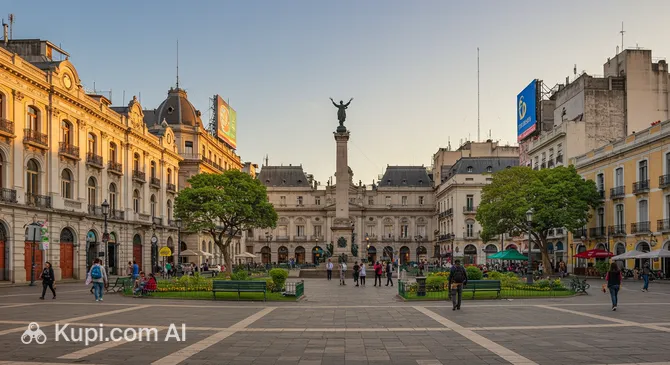
Italia Square. Illustration.
Source: Kupi.com AI

Traveler photos:

In the heart of the square stands a majestic monument—an equestrian statue of Giuseppe Garibaldi, the famous Italian hero who fought for his country's independence. The monument was created by Italian sculptor Eugenio Maccagnani and gifted to the city by the Italian community, symbolizing the close bond between the two cultures. The statue was officially unveiled on June 19, 1904, and has since been the central element of the square.

Plaza Italia also holds great significance in the history of urban transport. It was from here that Buenos Aires' first electric tram departed. A beautiful mosaic located in the northeastern part of the square is dedicated to this event. Additionally, there is an original column from the Roman Forum, gifted by the municipality of Rome, which is over 2,000 years old. Today, it is not just a historical site but a point of attraction surrounded by the Botanical Garden, the La Rural exhibition center, and other interesting landmarks.

Contacts

Since Plaza Italia is a public space, it is open to visitors 24/7 and does not have specific contact details. Getting there is very easy, as it is one of Buenos Aires' main transport hubs. Directly beneath the square is the "Plaza Italia" metro station (Line D), and numerous city bus routes also stop here.

How to contactContact
AddressBuenos Aires, C1425 Buenos Aires, Argentina
Websitewww.buenosaires.gob.ar

What to Do

Visiting Plaza Italia is primarily an opportunity to touch the history and culture of Buenos Aires. The main reason people come here is to see the impressive equestrian statue of Giuseppe Garibaldi up close. This monument, gifted by the Italian community, symbolizes the close ties between Argentina and Italy. Visitors can walk around the monument, studying its details and taking commemorative photos against the backdrop of one of the Palermo district's most famous symbols.

Besides the central monument, the square has other interesting details for the observant tourist. Be sure to find the mosaic in the northeastern part of the square dedicated to a landmark event—the launch of the city's first electric tram on April 22, 1897. It is a small but important touch to the history of Buenos Aires. A walk across the square turns into a kind of mini-excursion where every element has its own meaning.

Plaza Italia also serves as an excellent starting point for further exploration. Due to its prime location, it is a convenient place to begin a stroll through the famous Palermo neighborhood, known for its extensive parks, museums, cozy cafes, and shops. After seeing the square, you can immediately head to the Botanical Garden or the La Rural exhibition center, which are within walking distance, or simply catch one of the many buses to continue your discovery of this multifaceted city.

Getting There

Plaza Italia is one of the busiest transport hubs in Buenos Aires, so getting there from any point in the city is effortless. It is located in the popular Palermo neighborhood at the intersection of key city thoroughfares such as Santa Fe, Sarmiento, and Las Heras Avenues. This location makes the square easily accessible by both public transport and taxi.

The most convenient and fastest way to reach your destination is by metro (Subte). The "Plaza Italia" station, which belongs to Line D, is located directly under the square. Additionally, many city bus routes (colectivos) pass through this transport hub, allowing you to reach it from almost any neighborhood in the capital. Historically, this site has always been important for the city's transport system: it was from here that the first electric tram departed in 1897.

If you prefer comfort, you can take a taxi or order a car through popular apps. Any driver in the city knows exactly where Plaza Italia is, as it is a well-known landmark. A trip from central areas, such as Plaza de Mayo, will take about 15-20 minutes depending on traffic. Thanks to its location near the Botanical Garden and the La Rural exhibition center, the square is an ideal starting point for exploring Palermo's attractions.

Nearest city: Buenos Aires

History & Facts

The history of Plaza Italia began in the late 19th century when its development started in 1898. Interestingly, it originally bore a different name—Plaza Portones. It received its current and world-famous name in 1909 by municipal decree. This gesture was a tribute to the massive Italian community, which at that time was the largest in Argentina, highlighting the deep cultural ties between the two countries.

The central figure of the square is the monument to Giuseppe Garibaldi. Although the foundation stone was laid as early as 1898, the grand opening of the monument took place on June 19, 1904. The majestic statue was created by the famous Italian sculptor Eugenio Maccagnani. This monument, gifted to the city by the Italian community, is not just a decoration but a symbol of the Argentine people's gratitude to the Italian hero and the entire Italian diaspora.

Plaza Italia played a key role in the development of Buenos Aires' urban transport. It was from here on April 22, 1897, that the first electric tram set off on its maiden voyage, marking a true revolution for the city at that time. This important historical moment is commemorated today by a special mosaic located in the northeastern part of the square—another detail telling the fascinating history of this place.

Time Needed

For most travelers, exploring Plaza Italia itself and its key features takes about 1-2 hours. This is quite enough time to leisurely walk through its territory, closely examine the majestic monument to Giuseppe Garibaldi, find the interesting mosaic depicting the history of the city's first electric tram, and simply observe the bustling life of one of Buenos Aires' main transport hubs.

However, many tourists spend much more time here, using the square as a jumping-off point for exploring the vast and trendy Palermo district. If you plan to visit the adjacent Botanical Garden, Eco-park, or go for a walk through Palermo's famous parks and streets after seeing the square, you should set aside at least half a day for such an excursion. Thus, the square itself is an attraction for a relatively quick visit, but its surroundings offer hours of entertainment.

Working Hours

Since Plaza Italia is a public urban space, it is open to visitors 24 hours a day, year-round. No tickets or advance bookings are required to enter the square—access is completely free for everyone at any time. You can come here to relax, admire the monument, or simply watch the city life go by.

Although the square is accessible 24/7, for a tourist visit, it is recommended to choose daytime hours, approximately from 8:00 AM to 10:00 PM. During these hours, it is at its most lively and safe, nearby establishments are open, and daylight allows you to fully appreciate the beauty of the Giuseppe Garibaldi monument and the architecture of the surrounding buildings. The square also has its charm in the evening, but for a first visit and to see the details, daytime is best.

Nearby

Plaza Italia is not just a vital transport hub, but also an excellent starting point for exploring one of Buenos Aires' greenest and most interesting districts—Palermo. Exploring the area around the square will allow you to dive deeper into the city's atmosphere, discovering picturesque parks, cultural centers, and unique attractions located within walking distance.

A stroll around the surroundings will enrich your impressions and showcase the multifaceted nature of the Argentine capital. From here, it is easy to reach many iconic sites that will make your trip truly unforgettable. Below is a list of nearby attractions that are definitely worth including in your itinerary.

NameDistance
Galileo Galilei Planetarium1.5 km
Museum of Latin American Art of Buenos Aires1.7 km
National Museum of Decorative Arts1.8 km
Mandarine Park & Tent2.5 km
National Museum of Fine Arts2.6 km
Teatro Picadero3.6 km
Hotel Buenos Aires3.7 km

Have you reached the end of the page?

So the route has been studied inside and out