Support

Japanese Garden

About

The Japanese Garden in Buenos Aires is a wonderful corner of tranquility and Asian aesthetics located in the bustling Palermo district. This public park, an important part of Argentina's cultural heritage, is recognized as the largest Japanese garden outside of Japan. It is not just a park area, but a true example of traditional Japanese landscape art, where every element—from the stones to the plants—strives to create perfect harmony and balance.
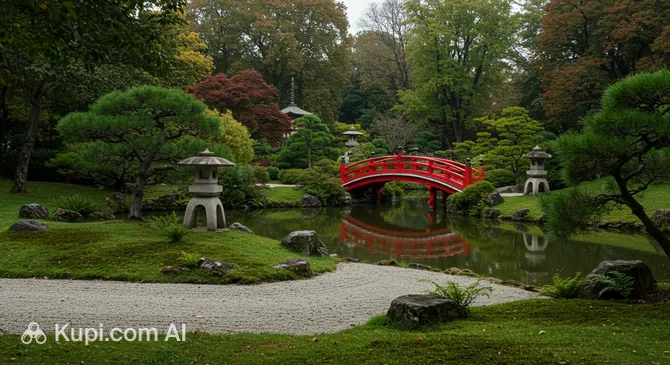
Japanese Garden. Illustration.
Source: Kupi.com AI

Traveler photos:

Central to the garden's composition is a picturesque pond where numerous koi carp swim gracefully. In the middle of the pond lies an island, connected to the shore by elegant bridges, one of which—a curved red bridge—symbolizes the crossing into the divine world. On the garden grounds, you will also find traditional Japanese structures, stone lanterns, sculptures, and even a small waterfall harmoniously integrated into the landscape.

A walk through the garden allows you to discover the variety of flora characteristic of Japan. Here you can see blooming cherry blossoms (sakura), azaleas, Japanese maples, and well-tended bonsai. In addition to its natural beauty, the complex houses a cultural center that hosts exhibitions and workshops, as well as a tea house and a Japanese restaurant. The Japanese Garden in Buenos Aires is considered one of the city's cleanest and most well-maintained parks, highlighting its special atmosphere and deep respect for Japanese culture.

Contacts

For the most up-to-date information on opening hours, special events, or other inquiries, you can contact the administration of the Japanese Garden. All current details are published on the official website.

How to contactContact
AddressAv. Casares 3450, C1425EWN C1425EWN, Cdad. Autónoma de Buenos Aires, Argentina
Phone number+54 11 2257-2130
Websitejardinjapones.org.ar

What to Do

Visiting the Japanese Garden offers many peaceful and interesting activities. The main one is a leisurely stroll along picturesque paths that lead through a carefully designed landscape. You can admire traditional elements of Japanese design: stone lanterns, sculptures, and well-maintained plants. A particular delight is watching the large pond where colorful koi carp swim. Visitors can buy special food and feed the fish, which is one of the garden's most popular activities.

For lovers of beautiful views and photography, the Japanese Garden is a real find. The central island, connected to the shore by two bridges, offers magnificent angles for photos. One of the bridges, bright red and curved, is especially popular with visitors. While strolling on the island, you can enjoy the sounds of a small waterfall, which creates an atmosphere of peace and harmony. It is the perfect place to take a break from the city bustle and immerse yourself in a contemplative mood.

Beyond natural beauty, the garden also offers gastronomic experiences. There is a Japanese restaurant on the grounds where you can sample traditional Japanese dishes. A walk through the garden, designed according to strict traditional canons, allows you to deeply feel the spirit of harmony and balance inherent in Japanese culture. Many visitors note that this park is so beautiful and well-kept that it rivals the best gardens in Japan itself, making it a must-see on any tourist's itinerary.

Getting There

Getting to the Japanese Garden in Buenos Aires is quite simple, as it is located in one of the city's most famous and prestigious neighborhoods—Palermo, within the vast Tres de Febrero Park. Thanks to this convenient location, the garden is an easily accessible attraction for both locals and tourists alike. The Palermo district is well-known, and finding your way to the garden will be no trouble at all.

The most convenient and economical way to reach the Japanese Garden is by public transport. The Palermo area is excellently served by numerous bus routes (colectivos) and subway lines (Subte). For example, you can take buses No. 102, 57, 67, or 130, which stop in the immediate vicinity of the park. While taking the subway is also possible, the nearest station will likely require about a 20-minute walk.

For those who prefer comfort and speed, a taxi or popular ride-sharing apps are excellent options. A trip from central Buenos Aires to the Japanese Garden is fast and won't take much time. Additionally, a visit to the garden can easily be combined with a stroll through other iconic Palermo landmarks, such as the Rose Garden or the Botanical Garden, which are located nearby.

Nearest city: Buenos Aires

History & Facts

The history of the Japanese Garden in Buenos Aires is inextricably linked to the friendship between Argentina and Japan. It was laid out in Tres de Febrero Park in 1967 specifically for the visit of the then-Crown Prince Akihito and his wife, Michiko. The initiative for creating this corner of harmony came from the city's large Japanese community, and the official opening took place on May 15, 1967. Thus, from the very beginning, the garden became a symbol of the warm relationship between the two countries.

Since its founding, the garden has hosted high-ranking guests on several occasions, emphasizing its special status. Members of the Japanese Imperial Family have visited several times. In 1991, Prince Takamado and Princess Hisako visited. Thirty years after their first visit, in 1997, the garden once again welcomed Akihito and Michiko, but this time as the Emperor and Empress of Japan. In 1998, the attraction was visited by Prince Akishino and Princess Kiko.

The creation of the Japanese Garden was a significant milestone in the cultural life of the capital. In a city traditionally dominated by European influences—Italian, Spanish, and French—it represents a unique example of Eastern aesthetics in South America. This is not just a park, but a living testament to the multifaceted nature of Buenos Aires, where traditions from around the world are harmoniously intertwined. Managed by the Japanese-Argentine Cultural Foundation, the garden serves as an important cultural center and a favorite leisure spot where one can immerse themselves in an atmosphere of peace and serenity.

Time Needed

To fully experience the Japanese Garden and its peaceful atmosphere, it is recommended to set aside one to two hours. This time is quite sufficient to leisurely stroll through all the picturesque paths, see the central pond with koi carp, visit the island with its small waterfall, and admire the traditional Japanese buildings, bridges, and sculptures. Such a walk will allow you to fully enjoy the harmony and beauty of this place without any rush.

Of course, the duration of your visit may change depending on your plans. If you wish not only to tour the garden but also to sample Japanese cuisine at the local restaurant, you should budget additional time. Visiting the restaurant or participating in one of the cultural events occasionally held on the grounds can easily increase your stay to three hours or more. However, for a standard tour and to get a vivid impression of the garden itself, two hours will be more than enough.

Working Hours

The Japanese Garden in Buenos Aires is open to visitors year-round, allowing you to enjoy its beauty in any season. The park is open daily from 10:00 AM to 6:45 PM, including weekends and holidays. It is important to note that the ticket offices close slightly earlier, at 6:00 PM, while visitors are allowed to remain on the grounds until 6:45 PM. These hours are subject to change, so it is advisable to check the official website before your visit.

Generally, no advance booking is required for individual visits; tickets can be purchased directly at the entrance gate on the day of your visit. However, if you plan to visit as part of a large group or attend special events such as festivals or workshops, pre-registration may be necessary. Due to potential changes, especially during peak tourist seasons or holidays, it is recommended to verify current entry rules and opening hours on the garden's official resources.

10:00 – 19:00

Nearby

A visit to the Japanese Garden is an immersion into an atmosphere of harmony and tranquility, but to make your journey through Buenos Aires even more fulfilling, it is worth exploring its surroundings. The garden is located in the prestigious and attraction-rich Palermo district, which is a "city within a city" in its own right. A walk through this area will allow you to discover many other interesting places within walking distance.

Exploring nearby attractions will enrich your experience and show the many facets of the capital of Argentina. Just a few minutes' walk from the peaceful landscapes of the Japanese Garden, world-class museums, a planetarium, other parks, and iconic city landmarks await you. Below is a list of places you can easily include in your itinerary.

NameDistance
Museum of Latin American Art of Buenos Aires0.5 km
Galileo Galilei Planetarium0.6 km
National Museum of Decorative Arts1.1 km
Mandarine Park & Tent1.2 km
National Museum of Fine Arts1.7 km
Hotel Buenos Aires2.9 km
Teatro Picadero3.5 km

Have you reached the end of the page?

So the route has been studied inside and out