Support

Floralis Genérica

About

Floralis Genérica is one of the most iconic and stunning attractions in Buenos Aires, having become a true artistic symbol of the capital of Argentina. This giant sculpture is not just a monument but an engineering marvel, harmoniously integrated into the urban landscape and filled with deep meaning.

The main feature of this metallic flower is its dynamism. The massive stainless steel petals, reaching 23 meters in height, open every morning to face the sun and close at sunset, mimicking the life cycle of a real plant. This mechanism symbolizes eternal rebirth and hope. The total weight of the structure is 18 tons, making it not only an elegant but also an incredibly large-scale work of art.
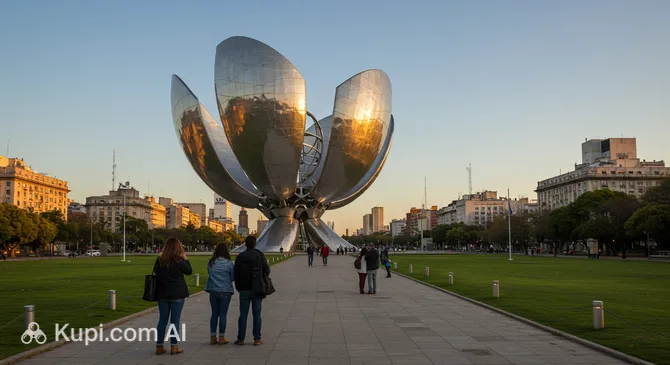
Floralis Genérica. Illustration.
Source: Kupi.com AI

Traveler photos:

The sculpture is situated in the center of a reflecting pool, which not only protects it but also creates a stunning visual effect by reflecting the flower and the sky. The site looks especially magical at night when the closed bud is illuminated from within, creating a mysterious red glow. Gifted to the city by architect Eduardo Catalano, Floralis Genérica represents all the flowers of the world and is a popular spot for leisure and relaxation for both tourists and locals.

Contacts

Since Floralis Genérica is a public art installation located within a city park, it does not have dedicated contact details such as a phone number or email address. It is a monumental open-air sculpture accessible to everyone free of charge. To get the most up-to-date information—for instance, about the "bloom" schedule or events at the Plaza de las Naciones Unidas where it is situated—it is recommended to visit the official tourism website of Buenos Aires or contact local visitor information centers.

How to contactContact
AddressAv. Pres. Figueroa Alcorta 2301, C1425 Cdad. Autónoma de Buenos Aires, Argentina
Websiteturismo.buenosaires.gob.ar

What to Do

Visiting Floralis Genérica is an opportunity to witness a unique technological spectacle. The sculpture's primary feature is its movement. You can arrive early in the morning, around 8:00 AM, to see the giant steel petals slowly unfold toward the sun, or visit the park in the evening to watch them close at sunset. This process symbolizes the endless cycle of life and rebirth, offering visitors a moment for reflection. On certain holidays, such as May 25, September 21, and Christmas, the petals remain open all night.

A particularly magical atmosphere is created at night. When the petals close, a soft red glow lights up from within, turning the sculpture into a giant glowing bud. This makes Floralis Genérica one of the most photographed objects in Buenos Aires after dark. The reflection of the glowing flower in the surrounding pool only enhances the experience, creating an almost surreal scene.

A stroll around the monument is also a pleasure. The sculpture is located in the center of the well-maintained Plaza de las Naciones Unidas park, where you can relax on the grass like the locals do. Winding paths allow you to view the artwork from all angles, and the mirror-like surface of the pool provides excellent photo opportunities. Additionally, the National Museum of Fine Arts is nearby, making it easy to combine contemporary art viewing with exploring the classical paintings and sculptures of Argentina.

Getting There

Getting to the Floralis Genérica sculpture is quite simple, as it is located in one of the most popular tourist districts of Buenos Aires, at the Plaza de las Naciones Unidas. The monument is situated in a park area near the National Museum of Fine Arts, making it easy to include in a broader sightseeing itinerary of the capital of Argentina.

The most convenient and cost-effective way to reach the attraction is by using the city's extensive public transport system. Several bus routes (colectivos) stop within walking distance of the park, and the Facultad de Derecho station on Subte Line H is about a 10-minute walk away. This allows for quick access from various parts of Buenos Aires.

Alternatively, a taxi or a ride-sharing app offers a more comfortable option. This is especially convenient if you are traveling with children or prefer a direct route. Drivers generally know the location of this famous sculpture well, so simply mentioning “Floralis Genérica” should be enough to get you right to the park.

Nearest city: Buenos Aires

History & Facts

The history of Floralis Genérica is inseparable from its creator, the Argentine architect Eduardo Catalano. Although he spent much of his life in the United States, Catalano decided to give a remarkable gift to his hometown, Buenos Aires. His vision was for the giant flower to become a symbol of hope, rebirth, and universal love, representing all the flowers on the planet. This concept is deeply symbolic, as the sculpture was designed as a living organism reacting to the transition between day and night.

The path to realizing this ambitious project was not easy. Eduardo Catalano persistently proposed his creation to the city for a long time before his idea was finally approved and brought to life. In 2002, the sculpture finally took its place in the Plaza de las Naciones Unidas, instantly becoming one of the most recognizable monuments in the Argentine capital. The author's goal was to gift the city a symbol that unites technology, art, and nature.

Unfortunately, the history of this landmark took a tragic turn recently. On December 17, 2023, a powerful windstorm severely damaged the original sculpture, marking a significant loss for the cultural heritage of Buenos Aires. The monument, which for two decades symbolized rebirth and hope for residents and visitors alike, was heavily impacted. This event left a mark on the history of the capital of Argentina, serving as a reminder of the fragility of even the most monumental works of art.

Time Needed

Please note that after the December 2023 storm damaged two of its petals, Floralis Genérica underwent extensive restoration. Currently, as the work nears completion, 15–20 minutes may be enough to view the site and walk through the surrounding Plaza de las Naciones Unidas park. This is sufficient time to appreciate the scale of this famous landmark in the capital of Argentina, even in its temporary state.

According to official statements from Buenos Aires authorities, the full restoration of the sculpture is expected to be completed soon. Once the restoration is finished, it is worth allocating 30 to 60 minutes to see the renewed Floralis Genérica. This will allow you not only to take photos and enjoy the atmosphere but also to witness the main wonder once again—how the giant petals open in the morning or close at sunset, symbolizing eternal rebirth.

Working Hours

Since the Floralis Genérica sculpture is located in a public park (Plaza de las Naciones Unidas), it does not have strict operating hours. Access to the square is open 24/7 and is free of charge, allowing you to visit the monument at any time convenient for you. No tickets or advance bookings are required to see this Buenos Aires landmark.

It is important to keep in mind that following the damage caused by the storm, the famous flower mechanism responsible for opening and closing the petals has been undergoing restoration. Consequently, its operation may differ from its standard schedule (where petals opened at 8:00 AM and closed at sunset). During the restoration works, the dynamic function of the sculpture may be temporarily unavailable.

Before planning your visit, it is highly recommended to check for the latest information regarding the status and operation of the Floralis Genérica mechanism on the official tourism portals of Buenos Aires. This will help avoid disappointment and provide the most current details on the availability of this unique spectacle.

Nearby

Visiting Floralis Genérica is just the starting point for exploring one of Buenos Aires' most elegant neighborhoods—Recoleta. Exploring the surrounding area will allow you to dive deeper into the cultural and aristocratic atmosphere of the Argentine capital. A walk near the giant flower will enrich your experience, as world-renowned museums, manicured parks, and architectural masterpieces are just a few steps away.

The Recoleta district is famous for its exquisite Parisian-style architecture and abundance of cultural sites. By planning a short route through nearby spots, you can easily combine contemporary art appreciation with visits to classical galleries and cozy green spaces, making the most of one of the city's most prestigious corners.

NameDistance
National Museum of Fine Arts0.3 km
National Museum of Decorative Arts0.7 km
Museum of Latin American Art of Buenos Aires1 km
Hotel Buenos Aires1.4 km
Mandarine Park & Tent1.9 km
Galileo Galilei Planetarium2.1 km
Teatro Colón2.4 km

Have you reached the end of the page?

So the route has been studied inside and out