Support

Monte Caseros

About

Monte Caseros is a picturesque and cozy city located in the far southeast of Corrientes Province. It is known as the "city of three borders" because of its close proximity to the junction of the borders with Uruguay and Brazil. Situated on the banks of the Uruguay River, the city attracts travelers with its relaxed atmosphere and beautiful river landscapes. It is a wonderful starting point to get acquainted with the local flavor of a country like Argentina.
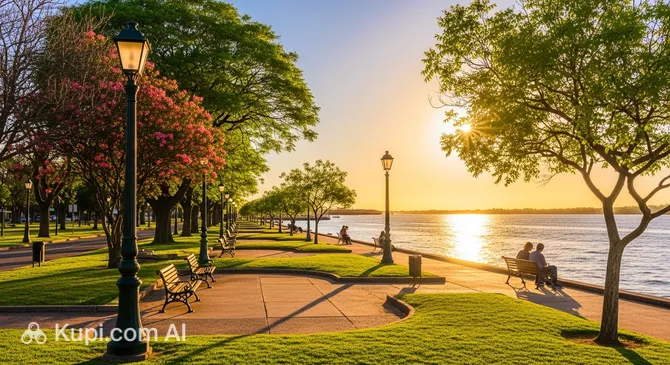
Monte Caseros. Illustration.
Source: Kupi.com AI

Its geographical position provides the city with a humid subtropical climate, favorable for tourism year-round. The population here is about 23,000 people, creating a sense of intimacy and tranquility. The fascinating history of Monte Caseros is closely linked to the development of the railways and the strategic importance of the region, which is reflected in the local architecture and monuments.

The city's main tourist gem is the Thermal Park (Termas de Monte Caseros). This is a unique complex with healing waters located right within the city limits, allowing you to combine wellness treatments with walks through the center. Monte Caseros also proudly holds the title of "Capital of the Artisan Carnival": the colorful annual parades here are distinguished by special attention to the details of the handmade costumes and decorations.

Nature lovers will enjoy the wide waterfront, ideal for evening strolls and watching sunsets over the river. If you are looking for a place to rest your soul and body while enjoying peace and local hospitality, be sure to include this corner of Corrientes Province in your itinerary.

Weather Overview

The climate in this region is mild, making the city accessible for visits almost all year round. Summer here is truly hot: in January, the average temperature is 26.7°C, and on the hottest days, the air warms up to over 31°C. This time is ideal for relaxing by the river, although you should be prepared for periodic precipitation — it can rain for about 10 days a month.

The winter period, lasting from June to August, brings a pleasant coolness without extreme cold. Average figures remain at the level of 14-15°C, and at night the temperature rarely drops below 10°C. June and July are considered the driest months, when the number of rainy days is minimal (about 6 per month).

Expect a warm, sometimes humid summer and mild, relatively dry winters with comfortable daytime temperatures. To accurately plan your wardrobe and activities, we recommend checking the current weather in Monte Caseros before you leave. Spring and autumn serve as an excellent compromise: for example, in March and November, the average temperature fluctuates around 23-24°C, creating ideal conditions for long walks.

Average monthly temperature

Average monthly precipitation

Interesting Facts

In addition to its main attractions, Monte Caseros holds many fascinating secrets that only reveal themselves to the most attentive travelers.

  • A Unique "Water" Border: This is the only place where the national borders of Argentina, Brazil, and Uruguay meet right in the riverbed. Unlike land junctions, here the "Triple Border" (Triple Frontera) is located at the point where the Cuareim River flows into the Uruguay River. From the city's waterfront, a rare view opens up: you can simultaneously observe the shores of three different countries.

  • "The Ford of the Fig Trees": Initially, the settlement bore the poetic name "Paso de los Higos." This name arose thanks to the wild fig trees (higuerones) that grew in abundance along the shore and served as a natural beacon for crossing the river in the 19th century.

  • Handmade Capital: The city is officially recognized as the "National Capital of the Artisan Carnival." Unlike more commercial shows in other regions, here every costume, mask, and detail of the floats is created by hand by local craftsmen. Preparation for this grand event lasts all year, and the rivalry between the main samba schools ("comparsas"), Carun Berá and Orfeo, divides residents into two passionate camps.

  • The City with "Open Arms": Monte Caseros is often called the "City of Open Arms" (Ciudad de los Brazos Abiertos). This nickname is related not only to the hospitality of the residents but also to the unique urban planning: the streets here are unusually wide and designed to run strictly from north to south, providing excellent ventilation and a sense of space.

How to Get There

When planning a trip to this cozy corner of Corrientes Province, it is worth considering that there are no direct flights to the city itself. The journey usually involves a flight to one of the country's major transport hubs, followed by a transfer to ground transport. You can find out more about how to get to Monte Caseros, including schedules and routes, on a separate page, while here we will describe the general travel scheme.

The nearest entry points for international travelers are the airports of Buenos Aires. Most often, tourists arrive at Ministro Pistarini International Airport (Ezeiza) or, in the case of domestic flights, at Jorge Newbery Airport (Aeroparque). The distance from the capital to Monte Caseros is about 600 km. An alternative option is to fly to airports in the cities of Corrientes or Resistencia; however, they are located further north, and the bus journey from them also takes several hours.

The main way to reach the city by land remains long-distance buses and private cars. Passenger rail service in this direction is not currently a primary option for tourists due to irregularity or lack of comfortable services. The road route passes mainly along National Route 14 (Ruta Nacional 14), known as the "Mercosur Highway." This is a modern highway with high-quality paving, and the trip from Buenos Aires will take approximately 7–8 hours, allowing you to enjoy the landscapes of the Argentine Mesopotamia along the way.

Main Attractions

Thermal Park (Termas de Monte Caseros) is the main attraction for those seeking relaxation and wellness. Located right on the banks of the Uruguay River, this complex is unique because it is situated within the city limits, allowing visitors to enjoy the thermal waters without long trips. Several pools are equipped here with water of various temperatures coming from the Guaraní Aquifer, as well as a children's water park and picnic areas. It is an ideal place to watch the sunset while relaxing in the warm water with a view of the river.

The Waterfront (Costanera) is considered the heart of the city's social life and one of the most picturesque walking areas in the province. Stretching for several kilometers along the river, it offers amazing panoramas: from the shore, you can see the lands of two neighboring countries at once — Uruguay and Brazil. Along the promenade are cozy beaches, such as Puerto Ceibo, sculptural compositions (for example, "Lavanderas"), and numerous cafes where it is pleasant to try the local cuisine.

For history buffs, a visit to the "Estación del Este" Museum (Museo Estación del Este) is a must. It occupies the building of the old railway station, opened in 1875 by President Nicolás Avellaneda. Today, this architectural monument houses a rich collection of exhibits telling the story of the city's formation, the development of the railways, and the culture of the region. Special attention should be paid to the hall with historical photographs and household items of the first settlers.

The Triple Border Monolith (Monolito Tripartito) is a symbolic and geographically significant site. This stone marker indicates the point where the borders of Argentina, Brazil, and Uruguay meet. Getting here is a small adventure in itself, often involving a boat trip. It is one of the few places in the world where you can simultaneously observe the shores of three countries, separated only by the waters of the Uruguay and Cuareim rivers.

In the city center, it is worth stopping by Colón Square (Plaza Colón). This is not just an administrative center, but a green oasis with beautiful landscaping. Here you will find the famous "Tanque de Piedra" (Stone Tank) — an old stone tower that once served for the city's water supply and is now an important historical monument and a popular backdrop for tourist photos.

Local Cuisine

The gastronomy of Monte Caseros is a bright reflection of the culinary traditions of the Litoral region, where the flavors of river gifts and the heritage of the Guaraní people intertwine. Since the city stands on the banks of the Uruguay River, the basis of the local menu is fresh river fish. Gourmets should definitely try surubí or dorado. Most often, they are grilled ("a la parrilla") with lemon and aromatic herbs or baked with vegetables. Another local favorite is the pacú fish, known for its tender and juicy meat.

The influence of neighboring countries and indigenous culture is evident in the popularity of pastries made from cassava flour. The main street food hit is chipá, small cheese buns with a crispy crust and a chewy center. You can buy them at any bakery ("panadería") or from street vendors, and they are perfect for a snack during a walk. For a more substantial lunch, locals often choose mbaipy — a thick and hearty dish similar to polenta, prepared with plenty of cheese, chicken, or beef.

While classic Argentine asado (charcoal-grilled meat) is prepared everywhere here and to a high quality, the true symbol of local hospitality is the tereré beverage. Due to the hot climate, hot mate is often replaced here by this cold version: yerba mate leaves are infused with ice-cold water or fruit juice (usually citrus) with the addition of mint and medicinal herbs. This is not just a way to quench thirst, but a real social ritual that brings groups of friends together on the waterfront.

The dining culture in Monte Caseros is characterized by relaxation. The main gastronomic life bustles along the waterfront (Costanera), where restaurants and bars with views of the river and the neighboring shores of Uruguay and Brazil are concentrated. It is customary to dine late here, enjoying the evening breeze. Tourists should also pay attention to local sweets, especially fig jam and desserts, as the city is historically known as "Paso de los Higos" (The Ford of the Fig Trees).

Travel Tips

Monte Caseros will welcome you with the warmth of Corrientes Province and the unique atmosphere of the triple border. To make your trip as comfortable and carefree as possible, we have gathered some practical recommendations that will help you easily navigate local features.

  1. Clothing and Essentials: The climate here is humid and subtropical. In summer (from December to February), be sure to bring light clothing made of natural fabrics, a hat, and a powerful sunscreen. In winter, evenings can be cool, so a windbreaker or sweater will not be redundant. An important accessory in any season is insect repellent, as the proximity to the river guarantees the presence of mosquitoes.

  2. Transport: The city is quite compact, and it is pleasant to move around the center on foot. Public transport is poorly developed, so for long-distance trips (for example, to remote beaches), it is most convenient to use a taxi or "remis" (private cars on call). Renting a car is only worth it if you plan to travel around the surrounding province.

  3. Finance: The official currency is the Argentine peso. In Monte Caseros, it is highly recommended to have cash ("efectivo") on you, especially small bills. Cards are accepted in hotels and large restaurants, but they may not work in kiosks and souvenir shops. ATMs are concentrated around the central square, but they may run out of money on weekends.

  4. Health and Safety: The city is quiet and safe; however, you should stick to basic rules: do not leave your things unattended on the waterfront. Pharmacies (farmacias) are in the center, with those on duty working according to a schedule. Tap water is usually safe, but it is better for tourists to buy bottled water for drinking.

  5. Communication: The main language of communication is Spanish. Few people speak English, so download an offline translator. Due to the proximity of the border, many locals understand Portuguese. Local operator SIM cards (Personal, Claro, Movistar) can be purchased in specialized stores or kiosks in the center.

  6. Local Etiquette: The residents of Monte Caseros are very hospitable. It is customary to say hello when entering any establishment. Consider siesta time: from approximately 1:00 PM to 5:00 PM, many shops and institutions close for a daytime rest, and the city falls quiet. This is the best time for resting in the shade or by the pool, not for shopping.

  7. What to Avoid: Do not swim in the Uruguay River in places not marked as official beaches — the current can be unexpectedly strong. Also, try not to plan dinner too early: local restaurants start filling up with people only after 9:00 PM or even 10:00 PM.

  8. Additional Tip: If you find yourself here in the summer, be sure to visit the Thermal Park in the evening. Swimming in warm pools under the starlit sky is a favorite form of recreation for city residents, allowing you to relax after a hot day in a special, peaceful atmosphere.

By following these simple tips, you will be able to feel not just like a tourist in Monte Caseros, but like a welcome guest. Enjoy the slow pace of life, the picturesque sunsets over the river, and the hospitality of the locals!

Entertainment & Nightlife

Nightlife in Monte Caseros differs from that of noisy metropolises: you won't find endless rows of neon signs here, but you will discover the soulful and relaxed atmosphere characteristic of Corrientes Province. Evening entertainment here is closely tied to socializing, music, and enjoying the cool air after a hot day. The main rhythm of life is set by the weekends, when locals take to the streets en masse to meet with friends and family.

The epicenter of evening activity is The Waterfront (Costanera). This is not just a place for walking, but a true social hub of the city. As dusk falls, numerous bars and cafes open here with views of the Uruguay River. It is the perfect area for "previa" — traditional gatherings with drinks before heading out for the main event. The atmosphere here is democratic and casual: there is practically no dress code, and you will feel comfortable in regular everyday clothes.

Among the specific venues that define the city's nightly leisure, a special place is held by the Monte Caseros Casino (Casino de Monte Caseros). Located in the Manantiales Hotel complex, it is a center of attraction for an adult audience. Here you can not only try your luck at slot machines or roulette but also visit the pastry bar, where musical shows featuring local artists are often held on Tuesdays and Fridays. This place combines excitement with the opportunity to dine in an elegant setting.

If your visit falls in January or February, the nightlife changes dramatically thanks to the famous Carnival. The main point of attraction becomes the "Paso de los Higos" Corsódromo (Corsódromo Paso de los Higos). During these months, the city doesn't sleep until dawn: thousands of spectators gather in the stands to see the grand processions of the samba schools. After the official part ends, the celebration often moves to private clubs and the streets, turning the whole city into one big dance floor.

Practical tips for tourists:

  • Timing: Life starts late here. Restaurants fill up after 10:00 PM, and bars closer to midnight. Don't be surprised if establishments are still empty at 8:00 PM.
  • Safety: Monte Caseros is a quiet and safe city. Walking through the center and along the waterfront at night is generally worry-free. However, to reach remote areas or return to your hotel in the early morning, it is recommended to call a taxi or "remis" (private car service), as public transport practically does not run at night.
  • Prices: The cost of cocktails and dinner here is noticeably lower than in the large tourist centers of Argentina, making your vacation quite budget-friendly.

During the day, the city offers calmer types of leisure. Culture lovers should check out local museums telling the history of the railways or visit the House of Culture (Casa de la Cultura), which often hosts exhibitions. And for those who want to regain their strength before a wild night, a break in the thermal park is ideal, as its pools relax and recharge you.

Parks & Museums

Monte Caseros offers tourists a harmonious combination of relaxation in nature and immersion in the historical past of the region. The city, nestled in the greenery of subtropical trees, has many well-kept spaces for walking, and its cultural institutions carefully preserve the memory of the railway era and the traditions that form the identity of this corner of Argentina.

The heart of the city's green zone is rightfully The Waterfront (Costanera). This is not just a paved path along the river, but an extensive linear park where you can hide from the heat in the shade of spreading willows and eucalyptus trees. Here, nature is in dialogue with the urban environment: manicured lawns coexist with wild stretches of the shore where local birds live. It is an ideal place for picnics and contemplating the Uruguay River, especially at sunset when the water turns golden.

Another important green oasis is Colón Square (Plaza Colón). This is the city's central public space, which looks more like a botanical garden due to the variety of plants planted here. The square is designed with the local climate in mind: thick tree canopies create a natural canopy that protects against the sun. An historical monument stands in the center, and benches are arranged around it where locals like to spend their siesta.

In cultural terms, the city's main site is the "Estación del Este" Museum (Museo Estación del Este). Located in the building of a former railway station, this museum is a key guardian of Monte Caseros' history. The exhibition immerses visitors in the era when the railway was the main artery of life in the region. Here you can see antique tools, documents, photographs of the first settlers, and elements of railway equipment. The building itself, designed in a classical style, is of architectural value.

Art lovers should pay attention to the House of Culture (Casa de la Cultura). This multifunctional space often becomes a venue for temporary exhibitions of local painters, sculptors, and photographers. Here you can get acquainted with the contemporary work of residents of Corrientes Province, as well as learn more about the traditions of the famous local carnival, whose costumes and sketches are sometimes exhibited in the halls.

Among the architectural monuments, the Church of Our Lady of the Rosary (Iglesia Nuestra Señora del Rosario) stands out. This majestic building attracts attention with its simple lines and the peaceful atmosphere inside. Also of interest is the "Tanque de Piedra" — an old water tower which, although a technical structure of the past, is today perceived as a kind of monument to engineering and an important part of the cityscape.

Insider Tip: For a special experience, go for a walk in the Puerto Ceibo area. This is a less formal recreational area south of the center, where the atmosphere of an old fishing village has been preserved. Here you can see the boats of local residents and enjoy the silence surrounded by ceibo trees — the national flower of the country, whose bright red blossoms are particularly beautiful during the flowering period.

Getting Around

The transport system of Monte Caseros is arranged quite simply, which is typical for small provincial cities. Since the city center is compact, most attractions, including the waterfront and the main square, are easy to explore on foot. However, for trips to remote areas, to the thermal park, or to the bus station, you may need transport.

The main form of public transport is city buses (colectivos). The route network here is small and mainly connects residential neighborhoods with the center, schools, and the hospital. There are no subways, trams, or trolleybuses in the city. It is worth considering that the frequency of trips is low: buses may run at intervals of 30–40 minutes, and during siesta hours (roughly from 1:00 PM to 4:00 PM) and on weekends, the waiting time may increase.

The most popular and convenient alternative for tourists is remises. These are private cars with a driver that function as taxis. Unlike a regular taxi, which you hail on the street (a rarity here), a remis must be ordered by phone or found at special stations (remisería). The advantage of this type of transport is fixed rates or calculation by zone, which eliminates surprises with the cost of the trip. This is the most reliable way to get anywhere in the evening or at night.

The payment system for public transport in Argentina is based on the SUBE card. If you already have this card, purchased in Buenos Aires or another large city, be sure to bring it with you. Nevertheless, in small cities, buses sometimes still accept cash, or validators may temporarily not work. Therefore, the main advice: always carry small amounts of cash with you to pay the driver or settle with taxi drivers, as bank cards are practically not accepted on transport.

Thanks to its wide streets and flat terrain, Monte Caseros is excellent for bicycle rides. Although there is no official city bike rental system here, many hotels and private offices offer bicycles for rent. This is a wonderful way to see the long waterfront along the Uruguay River at your own pace. Car-sharing services (car rental via an app) are absent in the city, so if you need a car, it is better to take care of renting one in advance in larger regional centers.

An important transport hub is the Bus Terminal (Terminal de Ómnibus), located some distance from the tourist center. If you arrive in the city by long-distance bus, do not expect to walk to your hotel with suitcases — the distance can be significant. Local taxis and remises usually wait at the exit of the terminal, ready to take you to your address for a reasonable fee.

Accommodation

The hospitality infrastructure in Monte Caseros perfectly matches the spirit of this small provincial city: you won't find huge hotel chains or ultra-luxury resorts here. The basis of the accommodation options consists of cozy family hotels, apart-hotels, and bungalow complexes ("cabañas"), which offer a homey atmosphere and basic comfort. This is a place where property owners often personally greet guests, which adds a special touch of warmth to your stay.

When choosing an area to stay, you should consider the purpose of your visit. Most tourists prefer to stay in the Waterfront (Costanera) area. This is a strategically advantageous location: it offers beautiful views of the Uruguay River, and most importantly, the Thermal Park is within walking distance. Life here is more relaxed, and it is pleasant to walk by the water in the evening. Another popular option is the city center, near Plaza Colón. Here you will be closer to shops, banks, pharmacies, and major historical buildings, but a bit further from the beach areas.

Cabañas (cabins) are particularly popular in the region — independent small houses or cottages, often located on green grounds with a swimming pool and a barbecue area (parrilla). This is an ideal choice for families with children or groups of friends coming for the weekend for the thermal springs and fishing. Such complexes often offer more privacy and freedom than classic hotel rooms.

For those looking for more conventional hotel service, the city has several mid-range hotels. The most famous landmark is the complex where the casino is located; it is considered one of the most comfortable places in the city, offering guests not only accommodation but also entertainment. There are also small budget hostels and guest houses ("hospedajes"), suitable for transit travelers or backpackers.

Booking advice: Monte Caseros is a city of seasonal demand. If you plan a trip in January or February, when the famous Carnival takes place, you need to book accommodation several months in advance. During this period, the city's population effectively doubles due to tourists, and finding a free room upon arrival is practically impossible. The same applies to long holiday weekends.

The price range in the city can be characterized as budget and mid-range. Prices here are significantly lower than in the large tourist centers of Argentina. As for booking methods, while some properties are represented on international online platforms, many local owners prefer direct communication. Often the best options can be found and booked via messaging apps (WhatsApp) or by phone after finding contacts on maps or local tourism websites.

Nearby Cities

For those who want to explore the surrounding area, Monte Caseros serves as an excellent starting point for day trips to several interesting nearby locations:

The most convenient destination for a visit is Concordia, located just 131 km away. This city is famous for its citrus plantations and San Carlos Park, where you can see the picturesque ruins of an old castle and enjoy views of the Uruguay River. Also of interest is the city of Goya, known for its fishing traditions and festivals. Despite being a bit further away, its colonial architecture and the natural beauty of the river delta are worth travelers' attention.

CityPopulationDistance
Bella Union19 1004 km
Baltasar Brum2 53160 km
Chajari45 84865 km
Curuzu Cuatia34 47065 km
Uruguaiana125 43576 km

These nearby destinations provide an insight into the region's diverse culture and landscapes.

Shopping & Souvenirs

General Overview: Shopping in Monte Caseros is a calm and measured activity that fully reflects the provincial way of life. Here you won't find huge shopping malls or luxury world-brand boutiques. The city's shopping scene is focused on meeting the daily needs of residents and offering authentic goods to guests. The main charm of local shopping lies in the opportunity to purchase unique handmade items and gastronomic specialties of the region that are hard to find in major metropolises.

Main Shopping Areas and Streets: The commercial life of the city is concentrated in the center, mainly around the main square, Plaza Colón. The main shopping artery is Calle Eva Duarte de Perón. Walking along it and the adjacent blocks, tourists will find most of the clothing and shoe stores, pharmacies, bookstores, and souvenir shops. It is pleasant to shop here, as the wide sidewalks and abundance of greenery make the walk comfortable even on warm days.

Shopping Centers: Due to the small size of the city, there are no large shopping and entertainment centers in the traditional sense here. Instead, there are small shopping galleries and arcades where several shops and cafes are gathered under one roof. These are places where locals come not only to shop but also to have a cup of coffee and discuss the latest news.

Markets: The most colorful place for shopping is the craft fairs (Ferias de Artesanos), which often take place on the waterfront or the central square on weekends and holidays. Here, local craftsmen display their work: from textiles and ceramics to jewelry. This is a great opportunity to communicate with the creators of the goods directly and feel the spirit of the community.

Souvenirs: From Monte Caseros, it is worth bringing back items that reflect its history and culture. First and foremost, pay attention to fig jam and sweets (dulce de higo), as the city was historically called the "Ford of the Fig Trees." Also popular are leather goods, traditional mate drinking sets (calabashes and bombillas), and handmade knives, which are valued throughout Corrientes Province. During the carnival season, you can find colorful costume elements or souvenirs with the symbols of local samba schools.

Opening Hours and Payment: When planning a shopping trip, be sure to take the siesta into account. Most retail outlets work on a split schedule: from 8:00–9:00 AM to 12:30 PM and then opening again only after 5:00 PM, working until 9:00 PM. Supermarkets may work without a break. The main method of payment remains cash in pesos, especially in small shops and at fairs. Credit cards are accepted in larger stores, but terminals may work intermittently, so always have a supply of cash.

Tax Free: A tax refund system (Tax Free) exists in Argentina (Global Blue), but it is oriented towards stores selling products of national manufacture in major tourist centers. In a small city like Monte Caseros, it is extremely difficult to find stores connected to this system, so you should not count on a VAT refund here.

Reached the end of the page?

That means the route is fully explored