Support

Artigas

About

Artigas is a colorful and lively city located in the far north of the country. It serves as the administrative center of the department of the same name and is an important destination for those who want to see the real, non-touristy Uruguay. Situated directly on the border with Brazil, the city has absorbed a unique blend of cultures, making its atmosphere unlike any other part of the state.
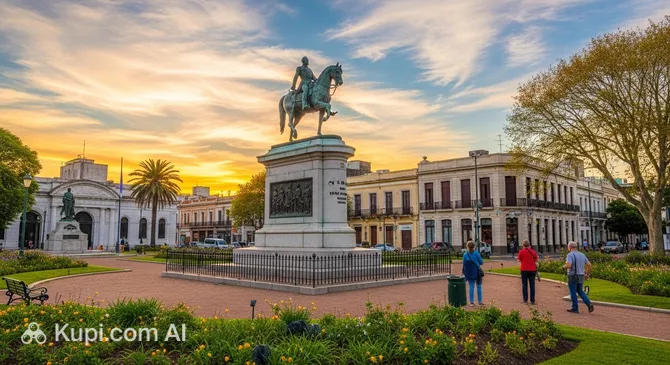
Artigas. Illustration.
Source: Kupi.com AI

The city stands on the banks of the Quareim River and is connected to the Brazilian city of Quaraí by the Concordia Bridge. This proximity strongly influences the local lifestyle, language, and traditions. The rich history of Artigas is inextricably linked with the name of the national hero, José Gervasio Artigas, after whom the settlement is named. Today, more than 40,000 people live here, creating a cozy yet dynamic urban environment.

Travelers are drawn here not only by the duty-free shops but also by the unique natural wealth. Artigas is known as the capital of precious stones: magnificent agates and amethysts are mined in the surrounding areas and exported all over the world. Additionally, the city is famous for its carnival, which, in its scale, color, and samba rhythms, resembles the famous Brazilian processions, attracting thousands of spectators.

A visit to Artigas will give you the opportunity to immerse yourself in the special rhythm of border life—sunny, musical, and hospitable. It is a great place to get acquainted with local traditions and purchase unique souvenirs made of semi-precious stones to remember your trip.

Weather Overview

The climate in this northern region of Uruguay is mild and allows for trips at almost any time of year. Due to its geographical position, it is usually warmer here than in the southern parts of the country, making outdoor activities comfortable for most tourists.

The summer season, which lasts from December to February, is characterized by high temperatures. Average indicators stay around 24-26°C, but during the day, the air often warms up to 30-31°C. This is the hottest time, but be prepared for precipitation: for example, there are about 11 rainy days in January.

Winter (from June to August) is not harsh at all here. The average temperature is about 14-15°C, while nightly minimums rarely drop below 9-10°C. This is the period with the least amount of rainfall, which is great for long walks and exploring architecture. To choose the perfect dates for your visit, we recommend checking the current weather in Artigas before your trip.

The shoulder seasons—spring and autumn—delight with pleasant warmth. In March and November, temperatures often exceed 22-23°C, creating an ideal balance between warmth and freshness. Expect a hot summer with occasional rain and mild, relatively dry winters.

Average monthly temperature

Average monthly precipitation

Interesting Facts

Beyond its main attractions, Artigas holds many fascinating secrets that reveal its unique character at the crossroads of two cultures. Here are some surprising facts to help you see this city in a new light:

  • Amethyst Capital of the World. This region is known for some of the largest and highest quality deposits of amethysts and agates on the planet. It is here, in the Artigas department, that giant geodes weighing several tons are found. Some are so huge that an adult can easily fit inside, and local stones decorate museums and private collections worldwide.

  • Carnival in the Rhythm of Samba. Unlike the rest of Uruguay, where traditional candombe and murga prevail, the carnival in Artigas is a true Brazilian-style show. Thanks to the proximity of the border, there are local Samba Schools (Escuelas de Samba), and the festive processions along the main street resemble the famous Rio de Janeiro carnival with their colorful costumes and fiery rhythms.

  • Unique "Portuñol" Language. Residents of the city are fluent in a special dialect known as "Portuñol" (a mix of Spanish and Portuguese). This is not just a collection of words, but a living border language that is the norm for everyday communication, symbolizing the inseparable link with neighboring Brazil.

  • The Legend of the "Painted Stone." Near the city lies the mysterious geological formation Piedra Pintada—a 19-meter-high sandstone rock. Local legends say that ancient treasures are hidden under this stone, guarded by mystical forces, and many travelers come here not just for photos, but to touch this mystery.

How to Get There

Traveling to this northern corner of the country is a bit of an adventure, as the city is far from the capital and the main coastal tourist routes. Since the airport in Artigas itself primarily handles private aviation, most tourists arrive in the country via the main international airport in Montevideo (Carrasco) and then continue by land. You can find more details on how to get to Artigas and plan your route, taking into account all available options.

The most popular and reliable way to reach the city is by intercity bus. Comfortable buses regularly depart from the central "Tres Cruces" bus station in Montevideo, connecting the capital with the north. The trip takes about 7–8 hours, but modern buses are equipped with everything necessary for passenger comfort. It is a great opportunity to see the changing landscapes of the Uruguayan interior through the window.

For those who prefer independence, renting a car is an excellent solution. The main route from the southern part of the country follows National Route 5 to the city of Tacuarembó, then switches to Route 30. Additionally, Artigas is very easy to reach from neighboring Brazil: the city is connected by a bridge over the Quareim River to the Brazilian city of Quaraí, and many travelers cross the border right here on foot or by car.

Main Attractions

The main "calling card" of the region is undoubtedly Piedra Pintada, or the "Painted Stone." This impressive 19-meter-high sandstone monolith is located in a picturesque nature park about 17 kilometers from the city. Tourists come here not only for photos against the backdrop of the mysterious rock but also to relax in nature: the area is equipped with a camping zone featuring swimming pools and grills, as well as a small ecological reserve where you can see local animals.

As Artigas is known as the capital of precious stones, the Mining Safari (Safari Minero) is considered a must-do. This unique tourist experience allows you to visit active quarries and tunnels where the world-famous Uruguayan amethysts and agates are mined. During the tour, you can learn about geological processes, see giant geodes in their natural environment, and understand the journey the stones take from the depths of the earth to jewelry displays.

In the very center of the city, Plaza Batlle is worth a visit. It is one of the largest squares in the country, occupying two full blocks. It serves as the heart of social life: important historical monuments are located here, including an obelisk and a monument to national hero José Artigas. The square is surrounded by significant architectural buildings, such as the Church of San Eugenio, and is an ideal place for leisurely strolls in the shade of trees.

Another iconic spot is Paseo 7 de Septiembre—a beautiful walking area and park. It is home to the famous "Fountain of Cordiality" (Fuente de la Cordialidad), which captures the imagination with its finish. The structure of the fountain is decorated with thousands of raw semi-precious stones and crystals mined in the vicinity, making it a unique monument to the natural wealth of this region.

Local Cuisine

The gastronomy of Artigas is a vibrant reflection of its geographical position at the intersection of two cultures. The cuisine here is a unique fusion of local traditions and strong Brazilian influence, making the food particularly interesting for foodies. Portions are generally generous, and flavors are rich and honest, based on high-quality farm products from the region.

Meat remains the main element of the menu. As in all of Uruguay, there is a cult of asado—an assortment of various meats and sausages cooked on parrillas (grills). Since the city is located in the heart of cattle country, the beef here is excellent. However, thanks to the proximity to Brazil, feijoada is equally popular—a thick, hearty stew of black beans, pork, and beef, traditionally served with rice, cassava flour, and orange slices.

For a hearty lunch or snack, the famous chivito is perfect. This is a massive sandwich with a thin beef steak, cheese, ham, bacon, egg, and vegetables. Additionally, typical Brazilian snacks are often found on the streets of Artigas: "bauru" sandwiches with melted cheese and roast beef, or crispy "pastel" pastries with various fillings.

The undisputed king of beverages is mate. Locals with thermoses and gourds are seen everywhere: in parks, on the waterfront, and just on the streets, as it is an essential part of social interaction. For alcohol, look for red wine made from the Tannat variety. At the same time, bars will happily prepare an excellent caipirinha—a refreshing cocktail made with cachaça and lime, which is no less popular here than on the Brazilian side.

The dining culture in the city is characterized by informality and warmth. The center of gastronomic life are the "parrillillas" (steak houses), where large groups gather in the evenings. It is customary to dine late here, often after 9:00 PM. The atmosphere in these establishments is usually loud and cheerful, inviting long conversations accompanied by delicious food.

Travel Tips

A trip to Artigas is a journey to a unique cultural zone where Uruguayan traditions are closely intertwined with Brazilian flair. To ensure your visit is as comfortable as possible and leaves only pleasant memories, we have prepared a list of useful recommendations taking into account the specifics of this northern border city.

  1. Clothing and Equipment. Given the region's hot climate, be sure to bring light clothing made of natural fabrics, sunglasses, and a hat in summer (December-February)—the sun here is very active. If you plan a "Mining Safari" excursion to the agate mines, wear comfortable closed shoes that you don't mind getting dusty. For winter evenings (June-August), you will need a light jacket or sweater, as temperature drops can be significant.
  2. Transport. The center of Artigas is compact and best explored on foot. Public transport is represented by buses, but tourists rarely use them. For trips to the outskirts or after dark, it is better to call a taxi (radio-taxi) or "remis" (private hire) through your hotel reception; international apps like Uber may be unstable or unavailable here. To visit Piedra Pintada, it is best to rent a car.
  3. Finance and Currency. The official currency is the peso, but due to the proximity of the border, Brazilian reais and US dollars are readily accepted in many places. Visa and Mastercard work in hotels, large supermarkets, and restaurants, but small shops and kiosks often require cash. BROU and RedBrou network ATMs are available in the city center. It is customary to leave a 10% tip in restaurants if it is not included in the bill.
  4. Health and Safety. Artigas is a calm and safe city; however, you should follow basic precautions and not leave valuables unattended. Pharmacies (Farmacias) are well-stocked; if you need medicine at night or on the weekend, look for a pharmacy with a "de turno" (on-duty) sign. It is better to drink bottled water, especially during the hot season.
  5. Communication. Be prepared for a language mix: locals speak Spanish and "Portuñol" (a blend of Spanish and Portuguese). English is not spoken everywhere, so download an offline translator and learn a few phrases in Spanish. For mobile communication and internet, it is best to buy a prepaid SIM card from the local operator Antel, as they have the most reliable coverage.
  6. Local Etiquette. Locals are very polite and friendly. It is customary to say hello even to strangers in an elevator or a small shop. A traditional greeting is a kiss on the cheek (even upon first meeting). Don't be surprised if you see people with thermoses under their arms everywhere—the culture of drinking mate is sacred here, but you shouldn't touch someone else's gourd (drinking vessel) without permission.
  7. What to Avoid. Don't plan dinner too early: restaurants in Artigas, as in the rest of the country, only start filling up after 9:00 PM or even 10:00 PM. Also, avoid trying to get things done during the "siesta" period (roughly 1:00 PM to 3:30 PM)—many shops and institutions close for a lunch break during this time due to the heat.
  8. Shopping Tip. Take advantage of the border zone! There are duty-free shops (Free Shops) in the city accessible to tourists. This is a great place to buy quality perfume, drinks, and electronics at favorable prices. And of course, don't leave without an amethyst souvenir—it's better to buy them in local workshops where prices are significantly lower than in the capital.

Artigas reveals itself to those ready to embrace its unhurried rhythm and sincere hospitality. By following these simple tips, you can easily blend into local life, avoid minor troubles, and focus on the main thing—enjoying the beauty of the north and connecting with amazing people.

Entertainment & Nightlife

Nightlife in Artigas has a unique character shaped by its close proximity to Brazil. While it lacks the 24/7 noise of a metropolis, the evenings are filled with lively energy, music, and the special flavor of "Portuñol." Locals love to go out to socialize, dine, and listen to music, with the fun often continuing well past midnight, especially on weekends.

The epicenter of evening and night activity is the city's main street—Avenida Lecueder. Most popular establishments are concentrated here and in the adjacent blocks. In the evening, this street turns into a real catwalk where people stroll, showing off their outfits, while the rhythms of samba, sertanejo, and cumbia drift from the open doors of bars. On warm nights, life spills out onto the sidewalks: cafe tables fill with groups enjoying cool drinks.

Among the specific places worth visiting is Casino Artigas. It is not just a gambling establishment but a major attraction for locals and tourists alike. Here, you can not only try your luck at slot machines or card tables but also simply spend time in a bar with good service. The casino stays open late and is considered one of the safest and most respectable places for night leisure in the city.

For those looking for a more relaxed atmosphere with dancing and cocktails, bars and pubs around the central Plaza Batlle are popular choices. For example, "resto-bar" style establishments often offer live music on weekends. Here you can try local beers or a classic caipirinha, which in Artigas is prepared just as well as in Brazil. The crowd in such places is usually mixed, from young people to families, and the dress code is informal but tidy (casual chic).

Practical tips for tourists:

  • Timing: Nightlife here starts late. People come to restaurants around 9:30–10:00 PM, and bars and clubs fill up closer to 1:00 AM.
  • Safety: Central areas (around Avenida Lecueder and the squares) are well-lit and safe for walking. However, it is better to take a taxi back to your hotel late at night.
  • Transport: Public transport practically does not run at night. It is recommended to use a radio-taxi or ask a bartender to call a car.
  • Prices: The cost of drinks and club entry (if there is a fee) is noticeably lower here than in Montevideo or the resorts of Punta del Este.

Regarding daytime and early evening entertainment, the city's cultural program is more relaxed. It is worth visiting the Municipal Auditorium (Auditorio Municipal), which periodically hosts theatrical productions and concerts. Shopping in duty-free stores (Free Shops), which are open until evening and offer a wide range of goods, is also a popular leisure activity. Walkers will enjoy an evening promenade along the embankment, where you can watch the sunset over the Quareim River.

Parks & Museums

The city of Artigas and its surroundings offer tourists a harmonious blend of natural beauty and cultural-historical sites. Here you can relax in shady parks by the river, get acquainted with the region's unique fauna, and dive into the past through the exhibitions of local museums that tell the story of life in this rich land.

One of the most popular places for outdoor relaxation is Parque Congreso de Abril. This extensive municipal park is located about 17 kilometers from the city and is home to the famous "Painted Stone." However, tourists come here not just for the geological wonder: on-site is the Fauna and Flora Ecological Reserve, where you can see local animals in an environment close to their natural one. The park is equipped with everything needed for a long stay: there are camping areas, picnic tables, and swimming pools that offer relief from the summer heat.

Within the city, the favorite spot for strolls remains Paseo 7 de Septiembre. This green zone stretches along the bank of the Quareim River, creating a natural oasis of cool. The park is ideal for morning jogs or leisurely evening walks with traditional mate. Here you can enjoy views of the river separating Uruguay and Brazil, and relax in the shade of eucalyptus trees while admiring the famous fountain inlaid with local agates.

For those who want to deeply understand the history of the region, the Departmental Historical Museum (Museo Histórico Departamental) opens its doors. Its halls contain collections covering various eras: from paleontological finds and fossils found in the area to artifacts of indigenous peoples. A significant part of the exhibition is dedicated to the colonial period and the city's formation, allowing you to trace Artigas's path from a small settlement to an important commercial center.

Near Congreso de Abril Park is another curious site—the Cart Museum (Museo de las Carretas). This is an open-air museum that transports visitors to the era of gauchos and the first settlers. Old carts and wagons that were once the main means of travel and transporting goods across the vast Uruguayan plains are on display. The exhibits clearly demonstrate how difficult and vital the rural lifestyle was in past centuries.

Insider tip: Although there aren't many classic art galleries in Artigas, the local stone workshops (Talleres de Piedras) can be considered true "living museums." Many are open to visitors and allow you to see the process of processing amethysts and agates. This is a unique opportunity to watch how rough pieces of rock turn into shining works of art and learn the masters' secrets passed down through generations.

Getting Around

The public transport system in Artigas matches the size of this compact city: it is simple and understandable, but not very diverse. There is no metro, trams, or trolleybuses. The main way of getting around for residents who do not have a private car is the city buses that run between residential areas and the center.

The bus network covers the main streets, but intervals between buses can be quite long, especially during the afternoon siesta and on weekends. Schedules at stops are often absent, so it is better to orient yourself by asking locals or hotel staff. The buses here look modest but perform their task of delivering passengers from point A to point B quite well.

The fare payment system is very traditional and guest-friendly for those who don't want to deal with complex apps. Fares are paid in cash directly to the driver or conductor upon entry. The ticket price is low, fixed, and does not depend on the length of the route. Tourists are strongly advised to carry small bills and coins in local currency, as drivers may not have change for large banknotes.

For comfortable travel around the city, especially if you are traveling with luggage or in the evening, taxis are the best alternative to buses. The "Radio-taxi" system is widely used in Artigas. Cars can be found at designated ranks in the center (for example, near Plaza Batlle) or called by phone. It is important to remember that global ride-sharing apps may not work here or have very few active drivers, so a classic car order through the hotel reception remains the most reliable option.

Given the city layout, most tourist tasks in the center are easily solved on foot. The main street, Avenida Lecueder, and the adjacent blocks are pleasant for walking. If you plan to visit out-of-town attractions like Piedra Pintada or the amethyst mines, public transport does not go there. In this case, the only solution is to rent a car or arrange a round-trip with a taxi driver, including waiting time.

A unique transport feature of Artigas is its close connection with the Brazilian city of Quaraí. The Concordia Bridge, connecting the two banks of the river, is open for free passage and driving. Many tourists and locals cross the border on foot or by taxi to shop or dine on the other side. This is perhaps the only route where a "local trip" technically becomes an international journey.

Accommodation

The hospitality infrastructure in Artigas is modest but offers travelers the necessary comfort and a homey feel. You won't find luxury world-class chain resorts or massive tourist complexes typical of Uruguay's Atlantic coast here. The bulk of the accommodation consists of mid-range city hotels, small family-run guesthouses, and budget hostels catering to both tourists and business travelers visiting for trade with Brazil.

When choosing an area to stay, it is best to focus on the city center. The most convenient location is the zone around the main street—Avenida Lecueder, as well as the blocks adjacent to Plaza Batlle. By staying here, you will be within walking distance of the main duty-free shops, restaurants, and banks. Furthermore, it is easy to walk to the Concordia Bridge from here if you plan to visit the neighboring Brazilian city of Quaraí.

Several categories stand out among the available accommodation options:

  • Casino and Business Hotels: This is the most comfortable segment in the city. These establishments usually offer rooms with air conditioning, private bathrooms, breakfast, and stable Wi-Fi. They often have their own restaurants and bars, which is convenient for evening relaxation.
  • Family Guesthouses (Posadas): A great choice for those seeking a more soulful atmosphere and looking to save money. These places are often managed by local families who are ready to suggest the best dining spots or help with transportation.
  • Apartments and Campgrounds: For nature lovers, there is an option to stay in an equipped campground in the Congreso de Abril Park (near Piedra Pintada), though this is an option for the warmer season and requires a car.

Important booking tip: Artigas lives at a calm pace for most of the year, and finding a room is usually not difficult even a couple of days before arrival. However, the situation changes drastically during the famous Artigas Carnival (usually February or early March). During this period, thousands of tourists from all over the country and abroad flock to the city. If your trip coincides with the carnival dates, accommodation must be booked several months in advance, as prices skyrocket and vacancies disappear instantly.

The price range in the city can be described as moderate. The cost of living here is generally lower than in Montevideo or Punta del Este. While popular international online platforms can be used for booking, many small hotels in Artigas still prefer direct communication. It is often more advantageous and reliable to contact the hotel directly via messaging apps or phone to confirm current prices and stay conditions.

Nearby Cities

For those who want to expand the horizons of their trip across northern Uruguay, Artigas serves as a convenient starting point. From here, you can take exciting trips to neighboring departments to discover the diversity of local culture and nature:

Rivera. Located about 100 kilometers away, this city offers a unique experience of life on the "Peaceful Border." Rivera essentially merges with the Brazilian city of Santana do Livramento: here you can have breakfast in one country and lunch in another just by crossing the street. Tourists are attracted by the huge selection of duty-free shops and the colorful bilingual atmosphere.

Tacuarembó. Heading south, you will find yourself in the recognized capital of gaucho culture. The city is surrounded by picturesque hills and is famous for its traditions. Here, it is worth visiting the legendary Valle Edén and the museum of Carlos Gardel—the great tango singer, whom locals consider their countryman. This place is ideal for those seeking authenticity.

Salto. The country's second-largest city attracts travelers with its famous thermal springs. Large wellness complexes and water parks with hot mineral water operate here year-round. Additionally, Salto is interesting for its early 20th-century architecture and the beautiful Uruguay River embankment.

CityPopulationDistance
Quarai22 6073 km
Baltasar Brum2 53190 km
Uruguaiana125 43593 km
Alegrete73 02895 km
Paso de los Libres43 25197 km

Each of these destinations allows you to see the country from a new perspective: from relaxing at thermal springs to immersing yourself in history and enjoying bargain shopping at the border.

Shopping & Souvenirs

Shopping in Artigas has its own unique characteristics due to the city's border location. Its proximity to Brazil has turned it into a bustling commercial center where cultures and currencies blend. For tourists, it's an opportunity to buy imported goods at favorable prices and find authentic local products for which this region is famous.

The center of commercial life is the main street—Avenida Lecueder. Most shops, pharmacies, and boutiques are concentrated here. A walk along this avenue allows you not only to make purchases but also to feel the dynamic rhythm of the city, where you can hear speech in a mixture of Spanish and Portuguese.

Particularly popular are the duty-free shops, known as Free Shops. In Artigas, they operate as large department stores offering a wide range of goods: from perfumes and cosmetics of famous world brands to electronics, alcoholic beverages, and chocolate. Prices here are generally lower than in other regions of the country, which attracts many buyers from neighboring states and tourists traveling through Uruguay.

If you are looking for unique souvenirs, pay attention to items made from semi-precious stones. Artigas is called the capital of amethysts and agates. In local specialty shops and workshops, you can find:

  • Raw geodes and crystals of various sizes;
  • Handmade jewelry;
  • Decorative interior items such as stone clocks or boxes;
  • Traditional leather and wool products reflecting gaucho culture.

Fans of colorful markets should visit the local weekend fairs. Here, farmers and artisans offer fresh produce, homemade cheeses, and souvenirs. This is a great opportunity to chat with locals and see the non-touristy side of city life.

Useful information for shoppers:

When planning a shopping trip, take into account the siesta tradition: many small shops close during lunchtime (approximately from 12:30 PM to 3:00 PM) and reopen toward evening. Large duty-free shops usually work without a break. Uruguayan pesos, Brazilian reais, and US dollars are accepted almost everywhere, and major retail outlets accept bank cards.

Reached the end of the page?

That means the route is fully explored