Support

Kitzbuhel

About

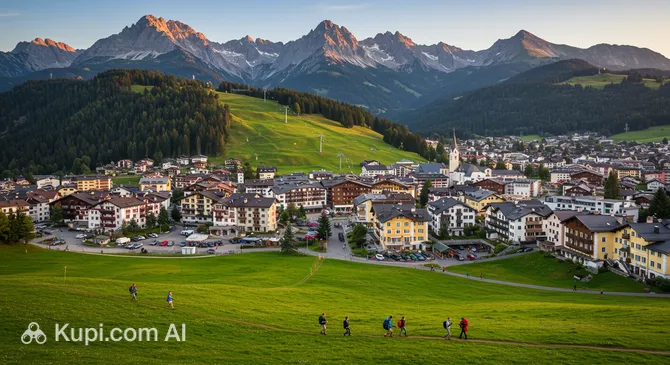
Kitzbühel is a true gem of the Alpine region and one of the most famous resorts that Austria is rightfully proud of. Comfortably nestled in a valley between the majestic mountain ranges of Tyrol, this town attracts travelers with its unique atmosphere, where luxury harmoniously intertwines with centuries-old traditions.

Kitzbühel. Illustration.
Source: Kupi.com AI

The town stretches along the picturesque Kitzbüheler Ache river. With a population of just over 8,000 people, it maintains a cozy, almost intimate scale, yet holds the status of a world-class tourist center. A true Alpine fairy-tale spirit reigns here: narrow cobbled streets, blooming balconies, and neat houses with painted facades create the perfect backdrop for an unforgettable holiday.

The unique history of Kitzbühel is reflected in its architecture and cultural heritage, which are carefully preserved by the locals. The old town center invites leisurely strolls, where you can browse stylish boutiques or stop at a cozy cafe to enjoy the aroma of fresh pastries and the purest mountain air.

Kitzbühel is known primarily as a legendary center for skiing, but its appeal is not limited to the winter season. The destination offers the perfect balance for any tourist: after an active day on the slopes or mountain trails, you can relax in first-class spa centers. It is worth visiting this town to experience the harmony of natural beauty and modern comfort in the heart of the Alps.

Weather Overview

Kitzbühel's climate is typical for high-altitude Alpine resorts: freshness prevails, and seasonality is very pronounced. Winters in the region are truly cool and snowy, creating excellent conditions for skiing. The coldest month is usually January, with an average temperature of about -3.3°C, while night frosts can reach -7.4°C.

The summer season brings pleasant warmth without exhausting heat, making it an ideal time for hiking tours. In July and August, the air warms up to an average of +15.4°C, and on the warmest days, the thermometer rises to +20°C. However, travelers should remember the high humidity: even in summer, precipitation occurs quite often, and May can have up to 22 rainy days.

Before your trip, it's useful to check a detailed forecast, as the weather in Kitzbühel can be changeable. Expect moderately warm summers with occasional rain and cold winters with a stable snow cover.

Average monthly temperature

Average monthly precipitation

Interesting Facts

In addition to the main sights, Kitzbühel holds many fascinating secrets and legends that reveal themselves only to the most curious guests. This Tyrolean corner will surprise you not only with sporting records but also with a rich historical heritage.

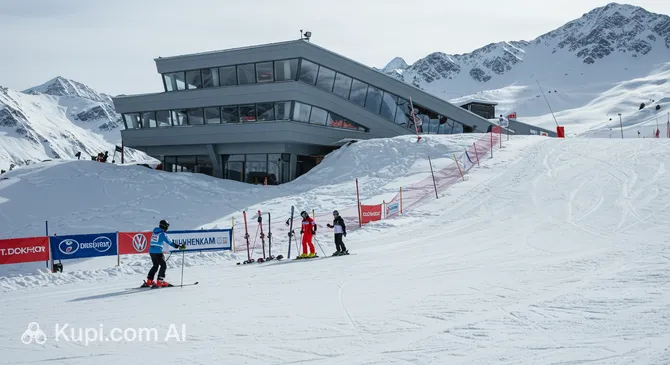
Hahnenkamm Downhill Start House. Illustration.
Source: Kupi.com AI

Traveler photos:

  • Legendary Track. Kitzbühel became world-famous thanks to the "Streif" descent, which is considered one of the most difficult and extreme challenges for skiers. This is where the famous Hahnenkamm Start House is located, from where the world's best athletes start annually as part of the World Cup stage.

  • Silver Past. The town's history dates back to the 12th century, and it owes its prosperity largely to the earth's riches rather than tourism. In the Middle Ages, Kitzbühel was an important center for copper and silver mining, and echoes of that wealthy time are still visible in the architecture of old buildings and Gothic churches.

  • Art from Ice. The cultural life of the resort is filled with vibrant events, among which the snow sculpture festival holds a special place. During this time, the town's streets transform into an amazing open-air museum where masters create masterpieces from snow and ice.

  • Star Guests. The resort has long been a favorite holiday destination for world celebrities. On the local slopes and in cozy establishments, you could meet stars like Arnold Schwarzenegger or members of royal families, such as Prince Charles.

  • Outlaw Legends. The town's surroundings are shrouded in mystery. Local guides often tell legends of medieval outlaws who, according to lore, hid in thick forests and on mountain trails, waiting for travelers.

How to Get There

When planning a trip to Tyrol, it is important to think through your route in advance, as direct access to the resort depends on your chosen mode of transport. Kitzbühel is well-situated between major transport hubs, making it easy to reach from various points in Europe. You can explore all the ways to get to Kitzbühel on a separate page, and below we look at the most popular arrival options via the nearest airports and stations.

Kitzbühel itself does not have its own airport, so travelers usually fly into neighboring cities in Austria or Germany. One of the most convenient options is Salzburg Airport W. A. Mozart (SZG), located in the city of Salzburg. This is the nearest air hub to the resort, just 60 km away. A taxi or transfer will take about 1 hour, making it an excellent choice for those wanting to save travel time.

Another popular option, especially for international tourists, is Munich International Airport (MUC) in Munich (Germany). Despite being in another country, the distance to Kitzbühel is about 110 km. This is a major international hub with a huge number of flights. The journey from here by car takes approximately 1.5–2 hours.

It is also worth considering Innsbruck Airport (INN), located in the administrative center of Tyrol, Innsbruck, about 82 km from the resort. This is a picturesque regional airport that hosts many charter flights during the winter season. Travel time to Kitzbühel is about 1 hour 15 minutes.

For clarity, here is a summary of the main airports:

AirportPassenger trafficDistance
W. A. Mozart Salzburg Airport1.8 mln60 km
Innsbruck Airport862 20282 km
Franz Josef Strauss Airport39.8 mln110 km
Bolzano106 629137 km
Linz Airport232 950160 km

Rail travel is another comfortable way to reach the region. Although there is a train station in Kitzbühel itself, many tourists arrive on high-speed trains in major neighboring cities, from where they transfer to local lines or taxis. For example, Salzburg Hauptbahnhof in Salzburg is located about 64 km from the resort. This is a major transport hub with high passenger traffic, from where it is easy to continue the journey into the mountains.

Also, an important transfer point can be Innsbruck Station, located 78 km from Kitzbühel. Trains from all over Europe arrive here, and from the station, you can reach your destination by car or regional train in about an hour and a bit.

Below is information on the nearest major railway hubs:

StationPassenger trafficDistance
Rosenheim Bus Station7.3 mln49 km
Salzburg Hauptbahnhof5.5 mln64 km
Innsbruck Railway Station14.1 mln78 km
Munich Hauptbahnhof164.3 mln99 km
Villach Central Station4.4 mln144 km

Main Attractions

Kitzbühel is not just a ski resort, but a town with a rich history and stunning natural locations that are worth seeing with your own eyes at any time of year. Walking through the surroundings or climbing to the peaks, you will find many places combining Alpine flavor and breathtaking panoramas.

One of the most iconic spots in the region is the Hahnenkamm Start House. Located at an altitude of 1,665 meters, this place is considered cult-status for ski enthusiasts. This is where the legendary "Streif" descent begins, and even in summer, tourists take the cable car up here to enjoy the dizzying view of the valley and feel the adrenaline of standing at the starting point of the world's most famous races.

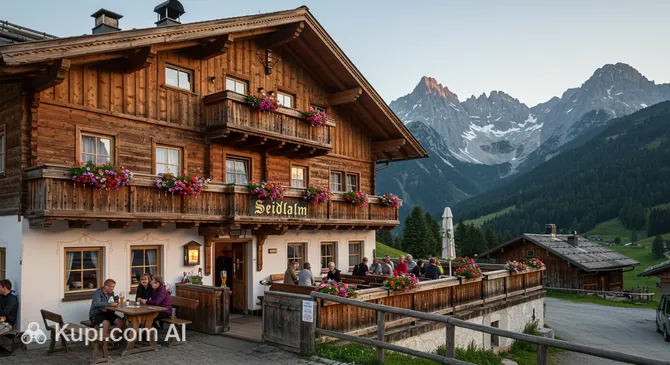
For those who want to combine a walk with gastronomic pleasure and history, Seidlalm is a must-visit. This traditional Alpine hut is located right in the middle of the famous race track. It is known not only for its cozy atmosphere and Tyrolean cuisine but also for being the place where the idea of the Alpine Ski World Cup was born in 1966. It is an ideal place for a break with a view of the Kaiser Mountains.

Seidlalm. Illustration.
Source: Kupi.com AI

Traveler photos:

On the opposite side of the valley rises the Kitzbüheler Horn mountain, which attracts tourists with its Alpine Flower Garden. This is one of the most beautiful high-altitude botanical gardens in Europe, where you can see rare mountain plants in their natural habitat. The panoramic road leading to the summit offers magnificent views and is a popular route for both motorists and cyclists.

If you are looking for tranquility and connection with nature, head to Lake Schwarzsee. This moorland lake is considered one of the warmest and most picturesque in Tyrol. In summer, you can swim in its healing waters, and in the off-season, take a leisurely stroll around the lake, enjoying the reflection of the Wilder Kaiser massif in the mirror-like surface of the water.

Local Cuisine

Kitzbühel's gastronomic map is a fascinating journey through the best traditions of Tyrol. Local cuisine is famous for being hearty and simple, perfectly suited for recovering after an active holiday in the mountains. The main dish every tourist must try is Kaspressknödel — flat cheese dumplings with herbs, usually served in a rich clear broth or with sauerkraut.

Meat lovers will enjoy Schweinsbraten — succulent roasted pork with a crispy crust, often served with dumplings. Equally popular are traditional homemade sausages and Spätzle — tender egg noodles generously seasoned with fragrant local cheese and fried onions. These dishes can be found in almost any establishment in town, from cozy mountain huts to modern restaurants.

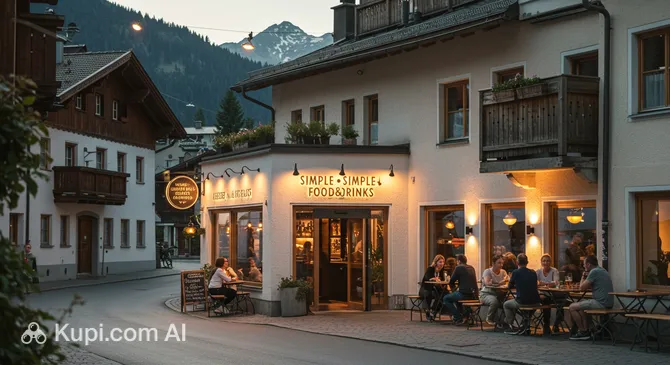
Simple Food & Drinks. Illustration.
Source: Kupi.com AI

Traveler photos:

The sweet side of Kitzbühel deserves special attention. The signature of the dessert menu is Kaiserschmarrn — an airy "imperial" shredded pancake served with powdered sugar and plum compote. In numerous pastry shops, you should order a fresh apple or cherry strudel, as well as the famous "Kirchbühler" doughnuts. If you are looking for a quick but tasty snack, you can stop by Simple Food & Drinks, which has a relaxed atmosphere.

The drink culture here is inextricably linked to local traditions. It is customary to order Tyrolean beer brewed according to old recipes or a glass of Austrian wine with dinner. As a digestif, locals often offer schnapps — a strong drink infused with mountain herbs, pears, or berries. For those who prefer non-alcoholic options, aromatic coffee is always available, prepared here with special care.

The gastronomic life of the town thrives beyond restaurants as well. In winter, the streets are filled with the scents of mulled wine and roasted chestnuts from Christmas markets, and in summer, foodies visit farmers' markets to buy fresh honey, Alpine cheeses, and homemade smoked meats. For an exquisite dinner in an elegant setting, the restaurant offered by Hotel Kaiserhof is an excellent choice, known for its high level of service and attention to detail.

Travel Tips

Kitzbühel is not just about luxury slopes and trendy boutiques, but a town with its own established rules and traditions. To ensure your trip to the heart of Tyrol goes perfectly and leaves only pleasant memories, we have prepared a list of important practical recommendations.

  1. Clothing and gear. Weather in the Alps is changeable even in summer, so the principle of layering is essential. Bring a waterproof windbreaker and comfortable trekking shoes for walking on cobblestones and mountain trails. If you plan to dine in fine-dining restaurants or visit the casino, don't forget smart casual style — you might not be allowed in wearing sportswear, despite the town's resort status.

  2. Getting around town. The historical center is compact and most pleasant to explore on foot. For trips to the lifts, free Ski-Buses run, which can be used with a ski pass. Taxis here are quite expensive, so for visits to neighboring villages, it is more economical to use regional trains. Car rental only makes sense for long-distance travel around the region.

  3. Money and payments. Like the rest of Austria, the resort uses the Euro. Most boutiques and restaurants accept cards, but in small mountain huts (Hütte) and souvenir shops, cash is often required. ATMs are available in the town center. Tipping is welcome: usually 5–10% of the bill or rounding up the amount if you liked the service.

  4. Safety and medicine. It is a very safe place, but you shouldn't lose vigilance in crowded tourist areas. Pharmacies are marked with a red letter "A" (Apotheke); the duty schedule for night pharmacies is usually posted on the door of any of them. We strongly recommend taking out insurance that covers active sports, as evacuation from the slopes and medical care for injuries are very expensive.

  5. Language and communication. The official language is German (with a Tyrolean dialect), but hotel and service staff speak excellent English. Locals will appreciate it if you learn a couple of phrases, such as the traditional greeting "Grüß Gott." Wi-Fi is available almost everywhere, but for stable connection in the mountains, it's better to buy a local SIM card from operators like A1, Magenta, or Drei.

  6. Local etiquette. In Tyrol, it is customary to greet even strangers on walking trails and in elevators. Austrians highly value peace and order: loud conversations in restaurants or on public transport are considered bad manners. Also, be punctual if you have booked a table or a tour.

  7. What to avoid. Do not walk on cycle paths — cycling is very active here, and it can be dangerous. Also, strictly follow the rules for crossing the street: even in such a small town, the police monitor order, and crossing in the wrong place can result in a fine.

  8. Useful life hack. Note that shops here close quite early (around 18:00–19:00), and on Sundays, most supermarkets and boutiques do not work at all. Be sure to ask your hotel for a "Guest Card" — it entitles you to discounts in museums, on lifts, and free travel on regional trains.

By preparing for the trip in advance and considering these simple tips, you can avoid minor troubles and fully immerse yourself in the atmosphere of Alpine coziness. We wish you a comfortable stay and unforgettable impressions in Kitzbühel!

Entertainment & Nightlife

Kitzbühel's nightlife is a separate chapter in the resort's history, as vibrant and intense as its ski slopes. The town is famous for its "après-ski" culture, which has been elevated to a cult status here. The fun starts on the mountain, often around 4:00 PM as skiers make their final runs, and smoothly transitions into venues in the town center, where music doesn't stop until morning.

The epicenter of evening entertainment is the historical center, especially the pedestrian zones of Vorderstadt and Hinterstadt. This is where most of the trendy bars, pubs, and clubs are concentrated. The atmosphere in the town is surprisingly democratic but with a touch of Alpine chic: in one venue, you might find a group in ski boots singing Tyrolean songs alongside guests in evening wear attending a social cocktail party.

If you are looking for a place for a quiet start to the evening or a "warm-up" before the club, consider Simple Food & Drinks. This venue with a modern interior is great for a glass of wine or a cocktail in a relaxed setting, discussing the day's events. For those who prefer a more refined and respectable atmosphere, bars at major hotels are an ideal choice. For example, the bar offered by Hotel Kaiserhof is famous for its coziness, live piano music, and an extensive wine list, making it a wonderful location for a romantic evening.

A legendary spot for fans of rowdy parties is The Londoner pub. People come here for live music and the atmosphere of a real British pub in the heart of the Alps; instructors and professional athletes can often be found here. Closer to midnight, life moves to nightclubs such as Club Take Five, which is one of the resort's most prestigious venues. Glamour reigns here, famous DJs often play, and there is a strict face control at the entrance.

Even high-altitude huts contribute to the entertainment program. The famous Seidlalm, located on the slope, although primarily a daytime and lunch venue, often becomes a site for spontaneous celebrations during major sporting events, charging guests with energy before their descent into the valley.

Practical tips for tourists:

  • Dress code: Ski wear is acceptable in pubs and for après-ski, but for nightclubs and the casino, it is better to choose smart casual or evening attire.
  • Prices: Be prepared for the fact that prices for drinks and entrance fees in Kitzbühel are higher than the Austrian average, as the resort is considered elite.
  • Transport: Ski buses stop running at night, so taxis become the main mode of transport. Taxi stands are located in the center, but during peak hours, it's better to book a car in advance via an app or the hotel reception.
  • Safety: The town is very safe for night walks. The main danger is not people, but slippery cobblestones in winter, so choose comfortable shoes if you plan to walk a lot.

During the day, if you decide to take a break from skiing and partying, Kitzbühel offers more measured leisure. You can visit the local casino, go to the cinema, or enjoy spa treatments at the Aquarena wellness center. Shopping at world-brand boutiques, which are abundant on the central streets, is also popular.

Parks & Museums

Kitzbühel offers its guests not only adrenaline on the mountain slopes but also tranquility in picturesque green areas, as well as a deep dive into the cultural code of Tyrol through the exhibitions of local museums and galleries. The town carefully preserves its heritage, allowing tourists to alternate active leisure with educational walks.

One of the most impressive natural attractions in the region is the Alpine Flower Garden (Alpenblumengarten), located on the slopes of the Kitzbüheler Horn. This unique botanical garden, laid out at an altitude of about 1,880 meters, features more than 400 species of high-altitude plants from all over the world. Tourists are interested in this place for the opportunity to see rare flowers, including the famous edelweiss and gentians, in their natural habitat against a backdrop of breathtaking panoramas.

For family holidays and connection with nature, Wildpark Aurach is ideal, located just a few kilometers from the town. It is the largest animal enclosure in Tyrol, where deer, ibex, lynx, and yaks live in conditions as close to natural as possible. The park's main feature is the possibility of close contact with animals during feeding, which leaves an unforgettable impression on visitors of all ages.

The cultural heart of the town beats in the Museum Kitzbühel, which occupies an old granary building in the historical center. The exhibition covers the region's history from the Bronze Age to the present day, but the main gem is the collection of works by Alfons Walde. Paintings by this artist, depicting snowy slopes and skiers, have become a visual symbol of Tyrol. A visit to the museum will help you understand how a small mountain town turned into a world-class resort.

To learn about the life of locals before the era of tourism, it's worth visiting the Bauernhausmuseum Hinterobernau (Hinterobernau Farmhouse Museum). This is a true architectural monument — a typical Salzburg-Tyrolean farmhouse built in the 16th century. The atmosphere of past centuries is fully recreated here: from living rooms with stoves to outbuildings, making the museum an interesting ethnographic site.

While walking through the town, it is impossible not to notice its historical architecture. Sacred buildings hold a special place, such as the Gothic Church of St. Catherine with its high tower and the famous St. Andrew's Parish Church. These buildings form the town's recognizable silhouette and house valuable frescoes and altars reflecting the region's religious traditions.

Insider Tip: If you are interested in industrial history, head to nearby Jochberg (about 10 km from Kitzbühel) to visit the Kupferplatte show mine. This is a unique opportunity to descend into ancient galleries in a mine car and learn about the times when this region was a center for copper mining, long before the first skiers appeared.

Getting Around

Kitzbühel's transport system is characterized by high efficiency, punctuality, and comfort, which is typical for the entire Tyrolean region. Since the town itself is quite compact, the historical center is best explored on foot — many streets are pedestrian zones. However, for trips to the lifts, neighboring villages, or picturesque lakes, you will need public transport, which here consists of buses and suburban trains. There are no metros or trams in the town due to its small size and mountainous terrain.

The main mode of transport is buses. The route network covers not only the town itself but also connects it with nearby resorts such as Kirchberg, Aurach, and Jochberg. In the winter season, special Ski-Buses are launched, running at short intervals between hotels and the valley stations of the cable cars. For skiers and snowboarders in full gear with a valid ski pass, travel on these is generally free.

An important part of the transport infrastructure is the railway. A line passes through the town on which comfortable regional expresses and S-Bahn commuter trains run. There are several stations within the town: the central station (Kitzbühel Bahnhof), Hahnenkamm station, located in the immediate vicinity of the main lift, and Schwarzsee station by the lake of the same name. The train is a great way to quickly reach neighboring towns without traffic jams, especially during the peak tourist season.

The fare system is integrated into the Transport Association of Tyrol (VVT). Tickets are valid for both buses and trains within the selected zones. They can be purchased from machines at stations, from bus drivers (best to have small cash), or via the VVT Tickets mobile app, which is often slightly cheaper. The cost of a single trip depends on the distance, but there is a more advantageous option for tourists.

The main life hack for resort guests is the Guest Card (Kitzbühel Guest Card / Red Card). You receive it for free when checking into most hotels and pensions in the region. This card entitles you to free travel on all ÖBB regional trains and buses in the Kitzbühel Alps region (from Hopfgarten to Hochfilzen). Be sure to carry it with you along with an identity document, as inspectors check tickets regularly.

A special type of transport here is the cable cars (Bergbahn Kitzbühel). In summer, they operate as lifts for hikers and tourists wanting to enjoy the panorama, and in winter, as the primary means of delivering athletes to the slopes. Tickets for these are purchased separately, or a ski pass is used. The most famous gondola — the Hahnenkammbahn — starts practically from the town center.

As an alternative to public transport, you can use a taxi. Taxi stands are located at the railway station and in the town center, but prices here are quite high. Apps like Uber are not common in this region or work limitedly, so it is better to order a car by phone or through the hotel reception. In the warmer months, renting e-bikes is very popular, with hundreds of kilometers of picturesque routes laid out for them.

If you plan to use transport late in the evening, check the schedule. Regular buses finish work quite early, around 19:00–20:00. However, during the winter season on weekends, night buses (Nightliner) often run, allowing you to get home safely after après-ski parties. You can always check the schedule in the ÖBB Scotty app, which plans convenient routes considering all transfers.
Accommodation

Kitzbühel is famous for its hospitality and offers tourists an impressive choice of accommodation to suit a variety of needs. The range of options varies from luxurious five-star world-renowned resorts to cozy family-run pensions (Gasthof) and apartments decorated in traditional Tyrolean style. Most buildings here maintain an authentic Alpine flavor: wood finishes, carved balconies, and an abundance of flowers create that fairy-tale atmosphere travelers come for.

When choosing an area to stay, it is important to consider the purpose of your trip. For those who want to be in the heart of the action, enjoying shopping and nightlife, staying in the historical town center, in the area of the Vorderstadt and Hinterstadt pedestrian streets, is the best solution. However, for skiers, it is strategically important to choose hotels located in the immediate vicinity of the Hahnenkammbahn valley station. This allows you to be first on the slopes and return to your room directly on skis (ski-in/ski-out), bypassing the need to use a bus or taxi.

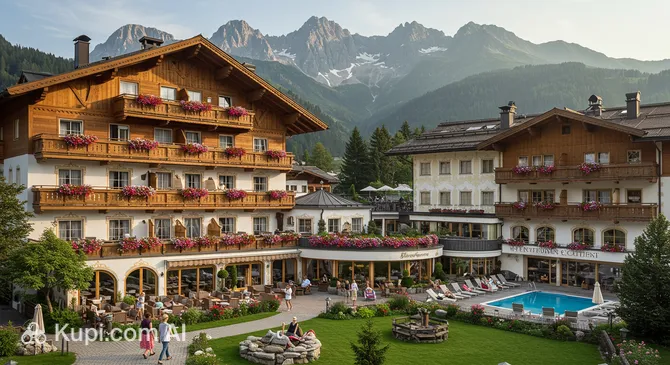
A prime example of high-quality accommodation combining a convenient location and a high level of comfort is Hotel Kaiserhof. This resort hotel is located literally steps away from the legendary lift and offers guests not only cozy rooms but also an excellent spa area for recovery after an active day. Such places are particularly popular due to the perfect balance between sporting functionality and relaxing rest.

Hotel Kaiserhof. Illustration.
Source: Kupi.com AI

Traveler photos:

The pricing policy in Kitzbühel is generally aimed at the "mid-plus" and "luxury" segments. This is a prestigious resort, so there are almost no budget hostels, but affordable guest houses (B&B) can be found a short distance from the center or in neighboring villages such as Aurach or Kirchberg. Accommodation can be booked through major international online platforms as well as directly through hotel websites, which sometimes allows for special offers or welcome bonuses.

The main booking tip is to plan your trip in advance. Kitzbühel is incredibly popular, especially during peak dates: Christmas, New Year, and the days of the famous Hahnenkamm race in January. During these periods, prices reach their peak, and the best rooms are booked 6–12 months in advance. If you want to save money and avoid the rush, consider a trip in early December or in March, when the season is still in full swing but the tourist flow subsides slightly.

Nearby Cities

For those looking to explore the surroundings, Kitzbühel serves as an excellent starting point for day trips to several interesting nearby locations:

Just an hour's drive away is the majestic Salzburg — the birthplace of Mozart and a city with stunning Baroque architecture. Here you can stroll through the gardens of Mirabell Palace, climb to the Hohensalzburg Fortress, and enjoy the atmosphere of Austria's musical capital. This is an ideal choice for history and classical culture enthusiasts.

The capital of Tyrol, Innsbruck, located slightly further, offers a unique combination of urban life and Alpine nature. The city's main symbols are the famous "Golden Roof" and the Hofburg Imperial Palace. Additionally, the Swarovski Crystal Worlds museum is easily accessible from here and will be a highlight for the whole family.

If you are looking for something closer, consider Kufstein, often called the "Pearl of Tyrol." This cozy town on the banks of the Inn River is famous for its imposing medieval fortress overlooking the historical center. It's pleasant to simply wander the narrow streets here and have coffee with a view of the mountains.

CityPopulationDistance
St. Johann in Tirol9 4289 km
Kufstein19 22323 km
Wörgl14 00025 km
Zell am See9 76234 km
Saalfelden16 70034 km

These nearby destinations offer a glimpse into the region's diverse culture and landscapes.

Shopping & Souvenirs

Шопинг:

Shopping in Kitzbühel is an exciting activity that harmoniously complements a holiday at an elite resort. This town is often called an open-air "Alpine boutique." Here, high fashion sits alongside traditional crafts, and the storefronts of world brands are decorated in a cozy Tyrolean style. Kitzbühel is famous primarily for high-quality sports equipment, exclusive clothing, and jewelry, catering to a discerning public.

The heart of the town's commercial life beats on the two central pedestrian streets of the historical center — Vorderstadt and Hinterstadt. Strolling along the cobblestones among colorful old houses, you will find boutiques from fashion giants such as Louis Vuitton, Bogner, and Moncler. Special attention should be paid to the local brand Sportalm, which was born right here in Kitzbühel and has become a symbol of luxurious ski style. Here you can purchase not only functional clothing for the slopes but also elegant outfits for evening outings.

Unlike metropolises, you won't find huge, faceless shopping centers in Kitzbühel. Shopping here is of a more intimate nature. However, it's worth checking out the Kitz Gallerie — a small but stylish shopping arcade in the town center. It brings several clothing and accessory stores and cafes under one roof, offering comfortable shopping in any weather, which is especially relevant during snowfall or rain.

If you want to experience the true taste of Tyrol, be sure to visit the local markets. In the winter season, starting from late November, the town is transformed by the Christmas Market (Christkindlmarkt). It is the perfect place to buy unique Christmas ornaments, woolen goods, and artisan crafts. During the warmer months, farmers' markets are popular, where local producers offer fresh cheeses, homemade bread, and meat delicacies.

When choosing souvenirs, look for items featuring the town's symbol — the Chamois (Gams). Its stylized image can be found on everything from T-shirts and caps to exquisite tableware. A traditional Tyrolean costume — Tracht, including the famous leather lederhosen or a women's dirndl dress, would make an excellent gift. Also, high-quality Austrian Riedel glass and a bottle of local schnapps infused with mountain herbs or fruits are often brought home from Kitzbühel.

When planning your shopping trip, keep in mind local working hours. Most boutiques are open Monday to Friday from 09:00 or 10:00 to 18:00, sometimes with a lunch break. On Saturdays, many shops close as early as the afternoon (around 13:00 or 17:00), and Sunday is traditionally a day off for all trade, except for souvenir shops at the station or gas stations. Credit cards (Visa, MasterCard) are accepted almost everywhere, but for purchases at markets or small kiosks, it's better to have Euro cash on hand.

For tourists residing permanently outside the European Union, a Tax Free system operates in Austria. For a single purchase in one store over 75 euros, you can apply for a value-added tax refund. Don't forget to ask the salesperson for a special receipt and form, which you will need to present at customs when leaving the country along with the purchased goods.

Reached the end of the page?

That means the route is fully explored