Support

Almeirim

About

Almeirim is a captivating destination located in the vast state of Pará, offering visitors a genuine glimpse into life within the Amazon region. Situated on the northern bank of the mighty Amazon River, this city serves as a significant stop for those exploring the waterways of Brazil. With a population of over 33,000 inhabitants, it combines the tranquility of a riverside town with the vibrant energy of the tropics.

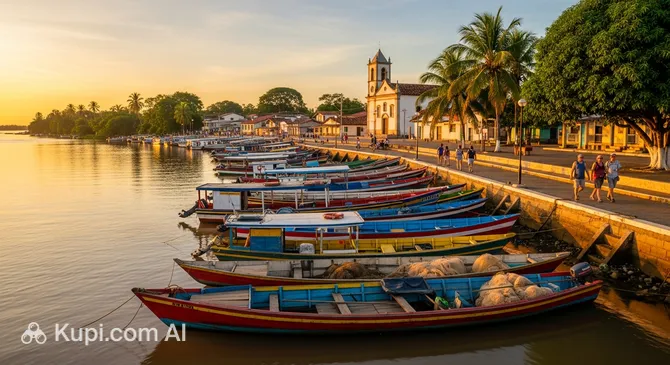
Almeirim. Source: Kupi.Binoculars

The region is known not just for its natural splendor but also for its intriguing background. Visitors can delve into the history of Almeirim to understand its evolution and the cultural heritage that shapes the community today. A notable part of the municipality is the district of Monte Dourado, which sits near the Jari River and offers a contrast with its planned urban structure and industrial significance.

Nature enthusiasts will find plenty to admire here, as the city is surrounded by the lush biodiversity of the rainforest. The sheer scale of the Amazon River provides stunning sunsets and opportunities for boat tours that showcase the local ecosystem. Whether you are interested in exploring the unique geography of the Jari Valley or simply want to experience the authentic hospitality of Pará, Almeirim invites you to discover its charms.

Weather Overview

Almeirim experiences a tropical climate characterized by consistent warmth throughout the year, typical of the Amazon region. Average temperatures remain pleasant, generally fluctuating between 26°C and 30°C, while the hottest months like September and October can see daytime highs reaching up to 34.1°C.

Rainfall patterns vary significantly depending on the season. The first half of the year, particularly from January to May, is quite wet, with precipitation occurring on up to 29 days per month. In contrast, the period from August to November is much drier, offering sunny skies and fewer rainy days. For a detailed forecast and to choose the best time for your visit, be sure to check the weather in Almeirim before you travel.

Interesting Facts

Beyond the scenic views of the Amazon River, Almeirim holds several intriguing stories that surprise many visitors. From ambitious industrial projects to its sheer geographical scale, this municipality is full of unique characteristics that set it apart from typical riverside towns.

  • The Floating Factory: One of the most remarkable episodes in the region's history involves the district of Monte Dourado and the Jari Project. In the late 1970s, an American billionaire had a massive pulp mill and power plant constructed in Japan. These colossal structures were then towed across the oceans to be installed deep within the Amazon rainforest, a logistical feat that remains legendary in the engineering world.

  • Larger Than Countries: The municipality of Almeirim covers a staggering land area of over 72,000 square kilometers. To put this into perspective, its territory is larger than many sovereign nations, including Ireland, Sri Lanka, and the Netherlands, highlighting the immense scale of the Brazilian Amazon.

  • A Tale of Two Cities: Visitors often notice a striking contrast between the main city and the district of Monte Dourado. While the seat of Almeirim retains the charm and organic growth of a traditional riverside community, Monte Dourado was designed as a planned "company town" with organized streets and distinct infrastructure, creating a unique dual identity within the same municipality.

  • Ancient Roots: The city's origins date back to the colonial period when it was known as Aldeia do Paru. It was founded by Capuchin monks in the 17th century as a religious mission to engage with indigenous populations, marking the beginning of the permanent settlement that would eventually become this historic municipality in Brazil.

How to Get There

Reaching this destination in the heart of the Amazon requires a bit of planning, as direct access is limited by the region's vast geography. For a complete guide on logistics and the best routes, you can read more about how to get to Almeirim to help organize your journey.

The city of Almeirim does not have its own major commercial airport for large jets, so most visitors fly into regional hubs first. Macapa International Airport (IATA: MCP) in Macapá is a common entry point, located approximately 242 km away. Another significant option is Santarem-Maestro Wilson Fonseca Airport (IATA: STM) in Santarém, roughly 266 km from the city. Altamira Airport (IATA: ATM) is geographically the closest at about 194 km, but it is important to note that proximity in the Amazon does not always equal accessibility. Unlike typical travel destinations, there are no direct highways connecting these airports to Almeirim. The final leg of the journey typically involves navigating the Amazon River by boat or arranging a regional air taxi, as the dense rainforest terrain limits standard road transport.

For clarity, here is a summary of the main airports in the wider region:

Airport Name City Passenger Traffic Km from City
Macapa International Airport Macapá Medium 242.0
Santarem-Maestro Wilson Fonseca Airport Santarem Medium 265.6
Altamira Airport Altamira Small 194.2

The city of Almeirim does not have a railway station, and trains are not a mode of transport available in this part of the country. Since road access from major capitals is virtually non-existent, the river serves as the main highway. Most travelers arrive via the Amazon River, utilizing the extensive network of boats and ferries that connect the riverside communities.

Main Attractions

Almeirim, located in the vast state of Pará, offers a unique blend of Amazonian nature and intriguing history. While it may not be as famous as some of Brazil's larger metropolises, this municipality on the banks of the Amazon River holds hidden gems for travelers who enjoy eco-tourism and discovering off-the-beaten-path destinations. From majestic waterfalls to planned districts with fascinating backstories, here are some of the main attractions to explore.

Santo Antônio Waterfall
One of the most impressive natural wonders in the region is the Santo Antônio Waterfall (Cachoeira de Santo Antônio). Located on the Jari River, which forms the border between the states of Pará and Amapá, this waterfall is renowned for its sheer power and volume of water. It is a breathtaking spot for nature lovers and photographers, offering a raw glimpse of the Amazon's hydrological force. The surrounding area is lush with vegetation, making it a perfect destination for those seeking to immerse themselves in the pristine environment of the rainforest.

Monte Dourado District
A visit to Almeirim is incomplete without exploring the district of Monte Dourado. This area is historically significant as the center of the famous "Jari Project," a massive agro-industrial undertaking initiated in the 20th century. Unlike typical Amazonian towns, Monte Dourado features a planned urban layout with distinct architecture. Tourists often visit the Mirante de Monte Dourado (Viewpoint), which offers panoramic views of the Jari River and the surrounding industrial and natural landscapes, providing a visual narrative of the region's ambitious history.

Serra da Velha Pobre
For engaging eco-tourism, the Serra da Velha Pobre is a highlight highlighted by local guides. This mountain range breaks the monotony of the flat river plains and serves as a natural leisure spot for hiking and exploration. The elevation provides a unique vantage point to observe the dense forest canopy and the winding rivers below. It is an ideal location for adventurers looking to trek through the jungle and experience the rich biodiversity of the Amazon up close.

Igreja Matriz de Nossa Senhora da Conceição
In the heart of the city, the Church of Our Lady of the Conception (Igreja Matriz) stands as a symbol of local heritage and faith. This architectural landmark is central to the community's cultural life, especially during the festive season in December when the patron saint is celebrated. Nearby, you will find the Praça do Centenário (Centennial Square), a charming public space where visitors can relax, observe local daily life, and enjoy the peaceful atmosphere of this riverside town.

Local Cuisine

The culinary scene in Almeirim is a vibrant reflection of its Amazonian roots, offering visitors a chance to taste the authentic flavors of the rainforest. The local gastronomy is heavily influenced by indigenous traditions, relying on fresh ingredients sourced directly from the river and the jungle. A staple on many tables is freshwater fish, such as Tucunaré and Tambaqui, which are often grilled, fried, or served in a rich stew known as caldeirada.

One of the most distinctive dishes you must try is Tacacá. This warming soup is made with tucupi (a yellow broth extracted from wild manioc), dried shrimp, and jambu, a leafy herb famous for the tingling sensation it causes on the lips and tongue. Another regional classic found here is Pato no Tucupi, consisting of duck simmered in the same savory yellow sauce, traditionally served with white rice and crunchy manioc flour.

For a refreshing break from the tropical heat, local fruits provide an array of delicious options. Juices, ice creams, and desserts made from Cupuaçu, Bacuri, and Taperebá are incredibly popular and widely available. Additionally, no culinary experience in this part of the state of Pará is complete without tasting Açaí. Unlike the sweet, smoothie-like versions found elsewhere, locals typically consume it as a savory side dish, often paired with fried fish and tapioca flour, offering a truly traditional gastronomic experience.

The food culture in Almeirim is laid-back and centers around social gathering spots. You will find that locals often enjoy their meals at open-air restaurants near the riverfront, where the breeze complements the dining experience. Street food stalls and small kiosks are also excellent places to sample quick bites like savory pastries and Tacacá in the late afternoon. For fresh produce and a look at daily life, the local markets are the best places to see the impressive variety of fish and exotic fruits that define the region's diet.

Travel Tips

Visiting Almeirim is an adventure into the heart of the Amazon, requiring a bit more preparation than a typical city break. To ensure your journey through this lush region of Pará is as smooth and enjoyable as possible, here are some essential practical tips to keep in mind.

  1. Clothing and Gear: Given the humid tropical climate, pack lightweight, breathable fabrics like cotton or linen to stay cool. Sudden downpours are common, so a durable raincoat or poncho is indispensable. If you plan to visit the Santo Antônio Waterfall or hike in the Serra da Velha Pobre, bring sturdy, waterproof hiking boots. Don't forget a hat, sunglasses, and a high-quality insect repellent, which is crucial for comfort in the evenings.
  2. Transportation: In the town center, distances are relatively short, and mototaxis (motorcycle taxis) are the most popular and affordable way to get around. They are widely available and can navigate the local streets easily. For travel between Almeirim and the district of Monte Dourado or across the river, you will rely on boats and ferries (balsas). Car rentals are not very common within the main town, so rely on local transport or arrange private transfers if necessary.
  3. Finances: While larger establishments in Brazil generally accept credit cards, cash is king in smaller Amazonian towns. Many small shops, market stalls, and boat operators in Almeirim only accept Brazilian Reais (BRL). There are bank branches and ATMs (typically Banco do Brasil or Bradesco), but they can occasionally run out of cash or experience technical issues, so it is wise to withdraw sufficient funds before arriving or as soon as you can.
  4. Health and Safety: Always drink bottled or filtered water; never drink directly from the tap. Pharmacies are available in the city center for basic needs, but they may not operate 24/7. As you are in the Amazon region, stay hydrated and be mindful of the sun. In terms of safety, Almeirim is generally peaceful, but it is best to avoid walking in unlit or deserted areas at night and to keep an eye on your belongings in crowded public spaces like the port.
  5. Communication: Portuguese is the primary language, and finding English speakers can be quite difficult outside of specialized tourism services. It is highly recommended to learn a few basic phrases like "Bom dia" (Good morning) and "Obrigado" (Thank you). Download offline maps and a translation app beforehand, as mobile signal and Wi-Fi can be spotty or slow, especially when you move away from the town center.
  6. Local Etiquette: The locals in Pará are known for their warmth and hospitality. A handshake or a friendly nod is a common greeting. When entering shops or boarding boats, it is polite to greet people. Life here moves at a more relaxed pace, known as "Amazon time," so patience and a smile go a long way when waiting for service or transport.
  7. What to Avoid: Avoid swimming in the river at unmarked or deserted locations. The Amazon currents can be deceptively strong, and there may be wildlife present. Always ask locals for the safest spots to swim, such as designated river beaches or near the waterfalls where it is known to be safe.
  8. River Travel Tip: If you are traveling by boat to Monte Dourado or nearby areas, pay attention to the schedule. River transport often departs early in the morning. Buying your ticket a day in advance is a good "life hack" to secure a spot, particularly for faster speedboats (voadeiras).

By keeping these practicalities in mind, you will be well-equipped to navigate the unique rhythm of Almeirim. Embrace the local lifestyle, respect the majestic nature around you, and enjoy the unforgettable experience of the Brazilian Amazon.

Entertainment & Nightlife

Nightlife in Almeirim reflects the relaxed yet warm spirit of the Amazon. While you won't find high-tech nightclubs or sprawling entertainment districts here, the city comes alive after sunset with a distinct local charm. The nightlife is centered around social gatherings, cold beer, and the rhythmic beats of Brega, Forró, and Sertanejo music. The atmosphere is unpretentious and welcoming, with most activity concentrated along the riverfront and the main avenues of the city center.

The most bustling area is undoubtedly the Orla do Rio Amazonas (Amazon Riverfront). As the evening heat dissipates, locals flock to the kiosks and open-air bars lining the water to enjoy the breeze and socialize. This area serves as the town's main meeting point, where families, couples, and groups of friends gather. The dress code is casual—shorts and flip-flops are the norm—and the vibe is more about good conversation and music than exclusivity.

For those looking to enjoy a drink and some local snacks, Bar do Peixe is a popular choice. Located near the river, it offers a rustic environment where you can taste fresh Amazonian fish appetizers while enjoying a cold beverage. Another lively spot is Bodega da Sassá, known among residents for its friendly service and occasional live music events that get the crowd dancing. If you are looking for a place to catch up with friends, Resenha Bar is often buzzing with activity on weekends, offering a quintessential Brazilian bar experience.

Practical Tips for a Night Out:

The best time to experience the local nightlife is from Thursday to Sunday, with Saturday nights being the peak. Prices are generally very affordable compared to larger Brazilian cities. Most venues operate until around midnight or 1:00 AM, though some may stay open later on weekends. For transportation, mototaxis are the most efficient way to get around at night; they are inexpensive and readily available. Simply ask the bar staff to call one for you if you don't see any waiting nearby.

Regarding safety, Almeirim is relatively safe, but it is always wise to stay in well-lit, populated areas like the riverfront. Avoid walking alone in dark, residential streets late at night. Carry cash, as smaller bars and snack stands might not accept cards or may have unreliable internet connections for card machines.

While the city is quieter during the day, daytime entertainment focuses on the region's natural beauty rather than indoor facilities. You won't find large museums, theaters, or amusement parks in Almeirim. Instead, the "entertainment" consists of boat trips, fishing, or visiting nearby natural spots. For a cultural touch, the local church squares often host small fairs or community events, offering a glimpse into the daily life of this Amazonian municipality.

Parks & Museums

Almeirim offers a distinct mix of leisure options where the "parks" are often vast, untouched stretches of the Amazon rainforest, and the "museums" are living testaments to the region's ambitious industrial history. While the city center provides charming public squares for relaxation, the true natural grandeur lies in the surrounding conservation units, and the cultural highlights are deeply connected to the unique story of the Jari Project.

Parque Estadual das Árvores Gigantes da Amazônia
Recently established to protect a unique ecological sanctuary, the State Park of Giant Amazon Trees is the crown jewel of Almeirim's natural heritage. This conservation unit was created to safeguard the majestic Angelim-vermelho trees found in the region, some of which reach heights comparable to a 30-story building. It is a destination for true nature enthusiasts and eco-tourists who wish to witness the awe-inspiring scale of the Amazon's flora. The park not only preserves these botanical giants but also serves as a hub for scientific research and sustainable tourism.

Praça do Centenário
In the heart of the city, the Praça do Centenário serves as the primary urban green space and a social hub for residents. It is a well-maintained square where families gather in the late afternoon to enjoy the cooling river breeze. Surrounded by small shops and snack bars, it offers a peaceful environment to sit, observe the local pace of life, and admire the simple yet welcoming atmosphere of this riverside community.

Museu Casa do Jari (Monte Dourado)
For a deep dive into the region's history, a visit to the Museu Casa do Jari in the district of Monte Dourado is essential. This museum preserves the memory of the massive Jari Project, an ambitious agro-industrial venture initiated by billionaire Daniel Ludwig in the 1960s. The collection includes photographs, documents, historical equipment, and even fossils found in the region. It provides a fascinating narrative about the development of the "company town" of Monte Dourado and the social and economic transformation of the Amazon valley.

Praça do Relógio and Forte do Paru Site
While not a museum in the traditional sense, the Praça do Relógio is a site of immense historical importance. It is located where the ancient Forte do Paru (Fort of Paru) once stood, a structure built by the Portuguese in the 17th century to defend the Amazon River from foreign invaders. Although the original fort is no longer standing, the square remains a landmark that connects visitors to the colonial roots of Almeirim. It is an excellent spot for a walk, offering views of the river and a tangible link to the strategic military history of Brazil's north.

Insider Tip:
Experience the architectural contrast between the main city of Almeirim and the district of Monte Dourado. While Almeirim has the organic, spontaneous layout typical of Amazonian river towns, Monte Dourado was meticulously planned with organized streets and modernist structures reminiscent of American suburbs. Taking the ferry across the river to see this "planned city" in the middle of the jungle is like stepping into a different era and offers a unique open-air cultural experience.

Getting Around

Public transport in Almeirim is quite different from what you might find in large metropolitan areas. There is no metro, tram, or extensive municipal bus network. Instead, the system is informal, practical, and adapted to the realities of this riverside town in Brazil. For visitors, getting around is generally straightforward, but it relies heavily on specific local modes of transport rather than standardized mass transit.

Mototaxis are the primary and most efficient way to navigate the city streets. You will see them everywhere, typically identified by the drivers wearing numbered reflective vests. This is the "taxi" of the Amazon—fast, affordable, and able to navigate both paved avenues and smaller dirt roads. It is the standard choice for locals going to work, the market, or home, and it is perfectly safe for tourists to use for short hops across town.

Given the geography of the municipality, River Transport plays a crucial role, essentially functioning as the city's "highway" system. To travel between the main city of Almeirim and the district of Monte Dourado (located on the opposite bank of the Jari River), you must use boats. There are two main options: balsas (ferries), which carry vehicles and passengers and operate on a scheduled basis, and voadeiras (speedboats) or catraias (small boats), which are faster, passenger-only options that depart as soon as they fill up.

Regarding payment, the system is almost exclusively cash-based. There are no electronic travel cards, transport apps, or ticket machines. You pay the driver or boat operator directly before or after the trip. It is essential to carry small bills and coins (Brazilian Reais), as drivers often do not have change for large banknotes. Fares for mototaxis are usually fixed for rides within the city limits, but it is always a good practice to confirm the price before hopping on.

For those preferring four wheels, conventional taxis exist but are far less common than motorcycles. They are typically found at specific stands, such as near the port or the main square, rather than cruising the streets for passengers. Ride-sharing apps like Uber generally do not operate in Almeirim due to the small size of the market. Consequently, if you need a car for a specific trip or to carry luggage, it is best to ask your hotel or a local restaurant to call a trusted taxi driver for you.

Finally, the city center is compact and flat, making walking a viable and pleasant alternative, especially along the riverfront. Most shops, the main church, and the port are within walking distance of each other. However, due to the intense tropical heat, locals tend to avoid walking long distances during the midday sun, preferring the breeze of a mototaxi instead.

Accommodation

Accommodation in Almeirim reflects the municipality's dual nature: the traditional riverside town and the planned industrial district of Monte Dourado. Visitors should not expect international luxury chains or sprawling all-inclusive resorts. Instead, the hospitality scene is dominated by modest, functional establishments known as pousadas (guesthouses) and small, independently run hotels. These places generally offer essential amenities like air conditioning—a must in the Amazonian heat—private bathrooms, and breakfast, providing a comfortable base for exploring the region or conducting business.

Where to Stay
Choosing where to stay depends largely on your itinerary. If your focus is on local culture, the main city of Almeirim (the municipal seat) is the best choice. Hotels here are typically located near the Port or the city center, offering easy access to the riverfront promenade, shops, and restaurants. Staying here puts you in the middle of the daily life of a typical Amazonian town.

Alternatively, the district of Monte Dourado, located across the Jari River, offers a different experience. Originally built to support the Jari Project, this area features a more organized urban layout. Hotels in Monte Dourado often cater to business travelers and engineers visiting the industrial areas. The standard of accommodation here can be slightly higher in terms of infrastructure, and the environment feels quieter and more suburban compared to the bustling river port of the main city.

Booking and Payment
The price range for accommodation in Almeirim is generally very affordable, fitting well within budget to mid-range categories. However, booking can sometimes be a challenge for international travelers. Many local establishments do not list their rooms on major global booking platforms. Instead, reservations are often made via direct phone calls or messaging apps like WhatsApp. While some larger hotels in Monte Dourado may accept credit cards, smaller pousadas in Almeirim may prefer or require cash payment, so it is advisable to confirm payment methods in advance.

Traveler Tip:
If you plan to visit during the Feast of Our Lady of the Conception in early December, booking well in advance is essential, as the city fills up with pilgrims and visitors from neighboring regions. For the rest of the year, availability is usually good, but securing your room before arrival is still recommended to avoid any surprises after a long journey up the river.

Nearby Cities

For those looking to explore the surroundings, Almeirim serves as an excellent base for day trips to several interesting nearby locations:

Monte Alegre
Located relatively close to Almeirim, Monte Alegre is a fascinating destination known for its archaeological significance. It is home to the Monte Alegre State Park, where visitors can hike to see ancient rock paintings that date back thousands of years. The park also offers sweeping views of the Amazon plains, making it a perfect spot for history buffs and nature lovers alike.

Santarém
Further up the river lies Santarém, a major cultural and tourism hub in the region. It is famous for the spectacular "Meeting of the Waters," where the dark blue Tapajós River runs alongside the muddy Amazon River for miles without mixing. Just a short distance from the city is the village of Alter do Chão, renowned for its white sandy river beaches and often referred to as the "Caribbean of the Amazon."

Macapá
As the capital of the neighboring state of Amapá, Macapá offers a unique mix of urban amenities and history. It is the only state capital in Brazil cut by the Equator line, allowing visitors to stand with one foot in the Northern Hemisphere and the other in the Southern Hemisphere at the Marco Zero monument. The city also features the imposing São José de Macapá Fortress, one of the largest colonial fortifications in Brazil.

City Population Distance (km)
Macapá 512,902 242
Santarem 306,480 258
Altamira 109,938 190
Breves 99,080 234
Monte Alegre 56,391 174

These nearby destinations offer a glimpse into the diverse culture and landscapes of the region.

Shopping & Souvenirs

General Overview
Shopping in Almeirim is a modest and functional experience, reflecting the lifestyle of a remote Amazonian municipality rather than a cosmopolitan retail hub. Visitors should not expect high-end luxury brands or sprawling department stores. Instead, the city offers a range of small, family-run businesses and local shops that cater to daily needs. For tourists, the appeal lies in discovering authentic regional products, from tropical foodstuffs to simple handcrafted items, providing a genuine connection to the local culture and economy.

Main Shopping Areas
In the main city of Almeirim, commercial activity is concentrated in the City Center, particularly along the streets closest to the riverfront and the port. This area is bustling with activity during the day, featuring clothing boutiques, pharmacies, hardware stores, and small variety shops. Across the river in the district of Monte Dourado, the shopping scene is more organized due to the district's planned nature. The Centro Comercial (Commercial Center) in Monte Dourado serves as a central hub where residents find supermarkets, banks, and essential services in a convenient, walkable layout.

Shopping Malls
Travelers accustomed to large, air-conditioned shopping malls with cinemas and food courts will not find such facilities in Almeirim. The retail landscape is dominated by street-level shops and small "galerias" (mini-malls) that house a few independent stores under one roof. For extensive shopping sprees involving major international franchises, residents typically travel to larger cities like Santarém or Macapá.

Markets
The heart of the local trade is undoubtedly the Municipal Market and the surrounding stalls near the port. This is where the city comes alive early in the morning. It is the best place to see the incredible variety of Amazonian fish, such as tucunaré and pirarucu, arriving fresh from the river. Alongside the fishmongers, you will find vendors selling locally grown fruits like cupuaçu, bacuri, and açaí, as well as manioc flour and artisanal spices. Walking through these markets offers a colorful and aromatic insight into the region's diet and daily routine.

Souvenirs
When looking for keepsakes to take home, focus on goods that are unique to the Amazon. Edible souvenirs are highly recommended; jars of cupuaçu jam, bags of Brazil nuts (Castanha-do-Pará), and bottles of tucupi sauce are popular choices. You can also find local handicrafts made from natural materials like wood, seeds, and straw. Indigenous-inspired bio-jewelry and small wooden carvings depicting local wildlife are often sold in small shops or directly by artisans at local fairs and events in the main squares.

Opening Hours and Payment
Stores in Almeirim generally operate from 8:00 AM to 6:00 PM on weekdays, often closing for a lunch break between 12:00 PM and 2:00 PM due to the midday heat. On Saturdays, shops usually close around 1:00 PM, and most are closed on Sundays. Regarding payment, cash is essential. While supermarkets and larger stores in the center and Monte Dourado accept credit and debit cards, market vendors, small kiosks, and artisans deal almost exclusively in Brazilian Reais. It is advisable to carry sufficient small bills when shopping in informal settings.

Tax-Free
There is no tax-free shopping or tax refund system available for tourists in Almeirim. The tax refund schemes in Brazil are generally limited to specific authorized stores in major international airports and are not applicable to the local commerce in this region.
Reached the end of the page?

That means the route is fully explored