Support

Monte Dourado

About

Monte Dourado is a fascinating and unique destination tucked away in the vast Amazon rainforest. Unlike many traditional settlements in the region, this planned community offers a distinct atmosphere characterized by organized infrastructure and a quiet, welcoming vibe. Located in the state of Pará, it sits on the banks of the Jari River, right across from the state of Amapá, making it an intriguing stop for travelers exploring the northern reaches of Brazil.

The settlement is renowned for its unusual origins and layout. The history of Monte Dourado is deeply linked to the ambitious Jari Project, a massive venture initiated by American billionaire Daniel Ludwig in the 20th century. As a result, visitors often notice the American-style architecture and urban planning, which stands in stark contrast to the surrounding wild jungle. With a population of approximately 7,000 residents, it provides a comfortable base with modern amenities in the heart of the tropics.
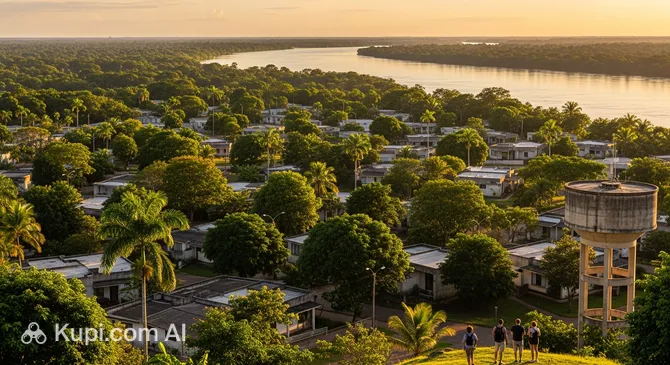
Monte Dourado. Source: Kupi.Binoculars

For tourists, the main allure lies in the blend of industrial history and breathtaking nature. The Jari River offers excellent opportunities for boat trips and fishing, allowing visitors to immerse themselves in the rich biodiversity of the Amazon. The nearby majestic Santo Antônio Waterfall is another highlight, showcasing the raw power of nature. Additionally, the town serves as a gateway to exploring the dense forests and witnessing the local flora and fauna up close.

Whether you are interested in the legacy of grand industrial projects or simply seeking a serene spot to connect with nature, Monte Dourado is worth a visit. Its unique character and strategic location make it a memorable part of any journey through the Brazilian Amazon.

Weather Overview

Travelers visiting this region can expect a tropical climate with consistent warmth throughout the year. The detailed weather in Monte Dourado indicates that temperatures remain high and stable, with daily averages generally hovering between 26°C and 29°C. The hottest period typically occurs in September and October, when maximum temperatures can reach nearly 35°C, while nights remain comfortably warm, rarely dropping below 23°C.

Rainfall patterns vary significantly depending on the season, which is an important factor for planning outdoor activities. The first half of the year, particularly from January to May, is characterized by frequent precipitation, with rain occurring on up to 29 days in a single month. Conversely, the months from August to November are much drier, with September seeing as few as 4 wet days. Expect hot, sunny conditions during the dry season and frequent showers during the earlier part of the year.

Interesting Facts

Beyond the main attractions, Monte Dourado holds many fascinating secrets and historical oddities that set it apart from any other settlement in the Amazon. This planned community was the epicenter of one of the most ambitious and unusual industrial experiments of the 20th century, leaving behind a legacy that feels almost fictional.

  • The Floating Factory: One of the most incredible feats of engineering associated with Monte Dourado is the story of its pulp mill. The entire factory and a power plant were not built on-site but were constructed in Japan on massive floating platforms. In 1978, these colossal structures were towed over 25,000 kilometers (15,000 miles) across the Indian and Atlantic Oceans, around the Cape of Good Hope, and up the Amazon River to their final resting place, where they were installed in a specially designed dock.

  • An American Suburb in the Jungle: Visitors are often baffled by the town's architecture, which bears a striking resemblance to a mid-20th-century American suburb rather than a typical Amazonian town. Designed to house workers for the Jari Project, the settlement features organized street grids, manicured lawns, and bungalow-style houses that were originally intended to replicate the comforts of the United States for the project's managers and engineers.

  • The Gmelina Failure: The city exists because of a botanical gamble that didn't pay off. The founder, billionaire Daniel Ludwig, originally cleared thousands of hectares of rainforest to plant Gmelina arborea, a fast-growing Asian tree species. However, the Amazonian soil proved unsuitable for this specific tree, leading to an agricultural disaster that forced a massive and costly switch to pine and eucalyptus plantations, which still dominate the landscape today.

  • A Billionaire's Kingdom: For years, Monte Dourado operated almost like an independent state within Brazil. It was the headquarters of the Jari Project, an area roughly the size of Connecticut, owned entirely by one man, Daniel Ludwig. At its peak, the project had its own infrastructure, security, and supply chains that were virtually autonomous from the local government, fueling local legends about the "secret city" hidden in the forest.

How to Get There

Reaching this unique planned community in the heart of the Amazon requires some planning, as its location is quite remote. While the journey offers a chance to see the diverse landscapes of Northern Brazil, it is important to know your transport options ahead of time. For a comprehensive guide on routes and travel tips, you can read more about how to get to Monte Dourado.

The city of Monte Dourado does not have its own major international airport, so most travelers arrive via neighboring cities. The most convenient and common gateway is Macapa International Airport (IATA: MCP), located in the city of Macapá. Although it is situated approximately 192 km away in a straight line, the actual journey typically involves traveling by road to the town of Laranjal do Jari and then crossing the river to Monte Dourado. This airport handles a significant volume of regional traffic, making it the most reliable entry point for visitors.

Another regional facility is Altamira Airport (IATA: ATM), located about 266 km from the settlement. However, it is crucial to note that there is no direct road infrastructure connecting Altamira to Monte Dourado. While this airport serves the wider interior of the state, attempting to reach Monte Dourado from here would require complex river travel or private air charters. Therefore, it is generally not recommended as a standard transfer point for tourists unless they have specific travel arrangements.

For clarity, here is a summary of the main airports in the wider region:

Airport Name City Passenger Traffic Km from City
Macapa International Airport Macapá Medium 191.9
Altamira Airport Altamira Small 265.7

Main Attractions

Santo Antônio Waterfall

Undoubtedly the most spectacular natural landmark in the region, the Santo Antônio Waterfall (Cachoeira de Santo Antônio) is a majestic sight located on the Jari River. Standing approximately 30 meters high, this massive cascade showcases the raw power of the Amazon's waterways. Tourists are drawn here not only for the breathtaking views and photographic opportunities but also for the adventurous boat journey required to reach it. The surrounding area offers spots for picnics and, in certain safe zones, refreshing dips in the river, making it a perfect day trip for nature lovers.

Monte Dourado Township and Architecture

Unlike typical Amazonian settlements, the town of Monte Dourado itself is a fascinating attraction due to its unique origins as a planned community. Built by American billionaire Daniel Ludwig for the Jari Project, the town features organized streets, manicured lawns, and bungalow-style houses that resemble a mid-20th-century American suburb. Visitors find it intriguing to walk through this "piece of America" hidden deep within the rainforest, observing the sharp contrast between the disciplined urban planning and the wild jungle that encircles it.

Jari River

The Jari River is the lifeblood of the community and a primary attraction for outdoor enthusiasts. Boat tours are a popular way to explore the waterway, offering chances to spot local wildlife, including river dolphins and diverse bird species. The river also serves as the border between the states of Pará and Amapá; a short boat ride across the water takes you to Laranjal do Jari, where you can witness the famous "Beiradão" stilt houses, providing a vivid cultural contrast to the orderly layout of Monte Dourado.

Iratapuru River Sustainable Development Reserve

For those willing to venture a bit further, this nearby reserve offers an immersive eco-tourism experience. It is home to the community that famously produces Brazil nuts and other forest products in a sustainable manner. Tourists interested in ecology and local economy can learn about the extraction processes and hike through pristine primary forests, gaining a deeper appreciation for the biodiversity of the Amazon basin.

Local Cuisine

The culinary scene in Monte Dourado is a vibrant reflection of the Amazon region and the state of Pará, which is famous for having one of the most distinct and flavorful cuisines in Brazil. The food culture here is heavily influenced by indigenous traditions, relying on fresh ingredients sourced directly from the surrounding rainforest and rivers. Visitors can expect bold flavors, unique textures, and a heavy emphasis on manioc derivatives and freshwater fish.

Given the town's location on the banks of the Jari River, fish is a staple of the local diet. A must-try dish is Caldeirada, a rich and aromatic fish stew typically made with species like Filhote or Tucunaré, cooked with potatoes, eggs, and herbs. For a truly authentic regional experience, seek out Pato no Tucupi. This iconic dish features duck meat simmered in a yellow sauce extracted from wild manioc root (tucupi) and seasoned with jambu, a leafy herb that creates a unique tingling or numbing sensation in the mouth.

Street food plays a significant role in the daily life of the region. In the late afternoons, you can often find vendors selling Tacacá. Served in a natural gourd, this warm soup is a comforting mix of tucupi broth, gum, dried shrimp, and jambu leaves. It is a favorite among locals and offers an adventurous flavor profile for tourists. Another regional classic is Maniçoba, often called the "Amazonian Feijoada," which is made from manioc leaves that have been simmered for days to remove their toxicity, resulting in a deep, earthy flavor.

When it comes to drinks, the variety of exotic fruit juices is a highlight. Be sure to try refreshing beverages made from Cupuaçu, Bacuri, or Taperebá, which are abundant in the area. Açaí is also a cultural staple here, but it is consumed differently than in many other parts of the world. Instead of a sweet smoothie, locals often eat the fresh pulp as a savory side dish, accompanied by manioc flour and fried fish. For those interested in alcoholic drinks, the local Cachaça de Jambu is a popular choice, famous for the numbing effect it has on the lips and tongue.

Dining in Monte Dourado is generally casual and laid-back. You will find simple family-run restaurants and self-service buffets (known as "kilogram restaurants") that serve hearty lunches to workers and residents. For a more bustling market atmosphere, some visitors choose to cross the river to the neighboring town of Laranjal do Jari, where the riverfront stalls offer a wider array of fresh produce and traditional snacks, providing a raw and authentic taste of Amazonian life.

Travel Tips

Visiting Monte Dourado offers a unique experience unlike anywhere else in the Amazon, but its remote location and specific origins as a planned community require some thoughtful preparation. These practical tips will help you navigate the local logistics comfortably, allowing you to focus on the fascinating history and natural beauty of the region.

  1. Clothing and Gear
    Given the tropical climate, lightweight and breathable fabrics like cotton or moisture-wicking synthetics are essential to handle the heat and humidity. Since rain is frequent, especially in the first half of the year, pack a durable poncho or light rain jacket. Comfortable, closed-toe walking shoes are a must, not just for the town's paved streets but also for any excursions to the Santo Antônio Waterfall or forest trails.

  2. Transportation
    Monte Dourado is relatively small and well-planned, making it easy to navigate. Mototaxis are the most common and affordable way to get around quickly. For longer distances or if you prefer more comfort, standard taxis are available but may need to be booked in advance. A significant part of local transport involves crossing the Jari River to the neighboring city of Laranjal do Jari; this is typically done via small passenger boats known as catraias or larger ferries for vehicles.

  3. Finances
    The official currency is the Brazilian Real (BRL). While supermarkets and larger establishments in the town accept credit and debit cards, cash is king for smaller vendors, mototaxis, and boat crossings. ATMs are available, but they can occasionally run out of cash or experience technical issues due to the remote location. It is highly advisable to withdraw a sufficient amount of cash in Macapá or Belém before arriving.

  4. Health and Safety
    As you are in the Amazon region, insect repellent is your most important toiletry; choose one with DEET to protect against mosquitoes. Pharmacies are available in the town for basic needs, but you should bring a personal kit with any prescription medications you require. Regarding safety, Monte Dourado is generally calm and safer than many large Brazilian cities, but it is still wise to avoid poorly lit areas at night and keep valuables secure.

  5. Communication
    Portuguese is the primary language, and English is not widely spoken outside of specific business contexts. Learning a few basic phrases like "Bom dia" (Good morning) and "Obrigado" (Thank you) will go a long way. Mobile signal is available (usually Vivo or Claro), but data speeds can be slow or inconsistent. It is smart to download offline maps and a translation app before your trip.

  6. Local Etiquette
    The people of Pará are known for their warmth and hospitality. It is common to greet shopkeepers and service staff with a smile and a polite greeting. Since Monte Dourado has a history as a company town, there is a certain sense of orderliness here; respecting queues and public spaces is appreciated. When invited to a local's home, removing your shoes at the door is a common practice in many households.

  7. What to Avoid
    Do not drink tap water under any circumstances. Always stick to sealed bottled water or filtered water to avoid stomach issues. Additionally, avoid swimming in the Jari River at random spots; currents can be strong, and wildlife is present. Only swim in designated areas or where locals explicitly say it is safe, such as specific spots near the waterfall.

  8. River Crossing Tip
    If you plan to visit the bustling markets of Laranjal do Jari across the river, try to plan your return boat trip before sunset. While the catraias run frequently, navigating the river is safer and easier during daylight hours, and transport options on the Monte Dourado side may decrease late at night.

By keeping these practicalities in mind, you will be well-equipped to enjoy the distinctive charm of this Amazonian enclave. Whether you are marveling at the industrial legacy or enjoying the river breeze, a little preparation ensures your adventure in Monte Dourado is both safe and memorable.

Entertainment & Nightlife

Nightlife in Monte Dourado is distinctively laid-back and centers around social gatherings, hearty meals, and enjoying the warm Amazonian evenings. Unlike the bustling metropolises of Brazil, you will not find large nightclubs or 24-hour party districts here. Instead, the evening entertainment revolves around open-air restaurants, snack bars known as lanchonetes, and local clubs where residents meet to chat and relax after a day of work.

The heart of the town's social life is the Centro Comercial. As the sun sets, this commercial area becomes a modest hub of activity where families and groups of friends gather. The atmosphere is casual and welcoming, with a dress code that rarely requires more than comfortable summer clothes and flip-flops. Another central pillar of community life is the Clube AREJAR (Associação Recreativa Jari). While it is a popular spot for sports and swimming during the day, in the evenings it often hosts social events, live music, and gatherings that bring the community together in a safe and friendly environment.

Dining out is the primary form of evening entertainment, and there are a few reliable spots to soak up the local vibe. Restaurante Pizzaria e Lanchonete Samambaia is a top choice among locals for a relaxed night out. It offers a comfortable environment perfect for long conversations over pizza or traditional snacks. Another highly recommended establishment is Mesa Sete, which is well-regarded for its food and service. Visiting these venues provides a great opportunity to mingle with residents and experience the town's slow-paced, friendly culture firsthand.

Practical advice for a night out includes carrying cash, as smaller vendors or mototaxis may not accept cards. The best time to head out is between 7:00 PM and 9:00 PM when the streets are liveliest. Getting around is best done via mototaxi, which is the standard and most efficient mode of transport in the settlement. While Monte Dourado is generally safe, it is always wise to stick to well-lit main streets and avoid walking alone in isolated areas late at night.

During the day, entertainment options are equally low-key but charming. Visitors can explore the Museu Casa Jari to understand the region's unique industrial history or spend a relaxing afternoon by the pool at Clube AREJAR, which serves as the primary recreational center for the community.

Parks & Museums

While Monte Dourado is not a metropolis filled with traditional museums or vast botanical gardens, its unique status as a planned community within the Amazon Rainforest means that culture and nature are interwoven into its very fabric. The settlement offers a blend of organized green spaces, historical sites linked to its industrial origins, and access to pristine natural areas that serve as living museums of biodiversity.

Iratapuru River Sustainable Development Reserve

Although located outside the immediate urban perimeter, this reserve is the most significant natural area for visitors to Monte Dourado. It serves as a protected sanctuary for the Amazon’s flora and fauna and is a shining example of sustainable interaction with the forest. Tourists can explore trails that wind through towering trees and observe the extraction of Brazil nuts, a practice that supports local families. It is an ideal spot for eco-tourists looking to understand the delicate balance of the Amazonian ecosystem.

Clube AREJAR (Associação Recreativa Jari)

Within the town itself, the Clube AREJAR acts as the central recreational park and green space for the community. Designed as part of the original urban plan, it offers expansive lawns, swimming pools, and sports facilities surrounded by tropical vegetation. For visitors, it provides a relaxing atmosphere to observe the local social life and enjoy a well-maintained environment that contrasts sharply with the dense jungle just beyond the town limits.

Museu Casa Jari

The primary cultural institution in the settlement is the Museu Casa Jari. This museum is dedicated to preserving the complex and fascinating history of the Jari Project and its founder, Daniel Ludwig. Inside, visitors can find photographs, documents, and artifacts that tell the story of how a massive industrial city and floating factory were established in the middle of the rainforest. It offers a compelling look at the ambition, challenges, and legacy of one of the 20th century's boldest enterprises.

Centro de Artesanato (Artisan Center)

While not a traditional museum, the local artisan center serves as a gallery of regional culture. Here, local craftsmen and women display works made from forest resources, such as seeds, fibers, and wood. It is an excellent place to appreciate the artistic traditions of the Amazonian people and the indigenous influences that permeate the region. Visitors can learn about the materials used and purchase authentic souvenirs that directly support the local economy.

The "American" Streets

In a sense, the residential sector of Monte Dourado acts as an open-air architectural museum. A walk through the neighborhoods of Vila Munguba or the central district reveals bungalow-style houses and street layouts that were directly imported from American suburban designs of the 1970s. For architecture and history buffs, simply strolling these streets offers a surreal experience, highlighting the cultural transplant attempted during the project's inception.

For a truly authentic experience, look for the small community gardens or "quintais" where residents cultivate Amazonian fruit trees like cupuaçu and açaí right in their backyards. Engaging with a local resident about their garden can often yield more insight into the local lifestyle and botany than a formal tour.

Getting Around

The public transport system in Monte Dourado reflects its status as a relatively small, planned community in the Amazon rather than a bustling metropolis. Visitors should not expect a complex network of subways, trams, or extensive municipal bus lines. Instead, the local transportation infrastructure is informal, practical, and heavily reliant on smaller vehicles adapted to the region's specific needs and geography.

Mototaxis serve as the backbone of daily mobility within the town. Due to the compact layout of the settlement and the climate, these motorcycle taxis are the most efficient and popular way to get around. They are easily recognizable, with drivers typically wearing numbered fluorescent vests. You can flag them down on the street or find them waiting at designated stands, particularly near the commercial center and the riverfront. They are perfect for short trips between the residential "Vilas" and the main service areas.

Given the town's location on the banks of the Jari River, river transport is an integral part of the local system. Small passenger boats, known locally as catraias, operate continuously throughout the day, ferrying residents and visitors across the water to the neighboring city of Laranjal do Jari. For those traveling with vehicles, a ferry service (balsa) is available. The river crossing is not just a commute; it is a quintessential Amazonian experience, offering a breezy and scenic alternative to road travel.

Regarding payment, the system is almost exclusively cash-based. There are no electronic travel cards, tap-to-pay turnstiles, or mobile ticketing apps for local transport. Fares for mototaxis and river crossings are generally fixed for standard distances but are quite affordable. It is crucial to carry small denominations of the local currency, as drivers and boat operators often do not have change for large bills. For mototaxis, it is standard practice to confirm the price of the ride before hopping on.

Conventional buses have a very limited role within the town limits. While you may see buses on the roads, they are often dedicated transport for company workers or school children rather than public transit for tourists. For intercity travel, there is a bus station (Rodoviária) that connects the region to other accessible towns, but this is not useful for getting around Monte Dourado itself. Similarly, standard car taxis are available but are far less common than mototaxis; they usually need to be arranged by phone or through your accommodation.

Walking is a viable and pleasant alternative for exploring the town center, thanks to the organized urban planning that features sidewalks and tree-lined streets—a rarity in many remote settlements. However, due to the tropical heat, walking long distances during midday is not recommended. Ride-sharing apps like Uber are generally not available or reliable in this remote location, so tourists should rely on the established local methods of mototaxis and boats.

Accommodation

Accommodation in Monte Dourado reflects its status as a remote, planned community rather than a mainstream tourist destination. Visitors will not find sprawling luxury resorts or international hotel chains here. Instead, the options are primarily practical and modest, catering largely to business travelers, engineers, and eco-tourists visiting the Jari region. The typical range includes small, functional hotels and family-run guesthouses (known locally as pousadas) that offer basic but comfortable amenities such as air conditioning and private bathrooms.

The most convenient area to stay is within the central district of the township, particularly near the Centro Comercial. Choosing accommodation in this area places you within walking distance of the town's main restaurants, the supermarket, and the mototaxi stands. This central location is also safer and more illuminated at night compared to the outskirts. Some visitors might consider staying across the river in Laranjal do Jari for more variety, but staying in Monte Dourado itself offers a quieter, more organized, and secure atmosphere.

Booking Tip: Due to the town's isolation, digital infrastructure can be limited. Many local guesthouses and smaller hotels do not list their properties on major international booking platforms. It is highly recommended to search for contact numbers and book directly via phone or messaging apps (like WhatsApp) in advance. If you are arriving without a reservation, it is wise to arrive during daylight hours to find a place, as options are limited.

Regarding costs, the price range is generally budget to mid-range. You can expect affordable rates compared to larger Brazilian cities, though prices may rise slightly if there is a major corporate event or project happening in the area. Payment methods can vary; while the main hotels usually accept credit cards, smaller pousadas may prefer or require cash, so carrying sufficient Brazilian Reais is essential.

Nearby Cities

For those looking to explore the surroundings, Monte Dourado serves as an excellent base for day trips to several interesting nearby locations:

City Population Distance (km)
Macapá 512902 193
Santarem 306480 298
Altamira 109938 261
Breves 99080 246
Monte Alegre 56391 212

Macapá is a fascinating regional hub and the capital of the state of Amapá. It is widely known for the Marco Zero monument, which marks the exact line of the Equator, allowing visitors to stand with one foot in the Northern Hemisphere and the other in the Southern Hemisphere. The city also features the historic Fortaleza de São José de Macapá, one of the best-preserved colonial fortresses in Brazil, offering a deep dive into the area's strategic past.

Monte Alegre offers a unique journey into the prehistoric Amazon. This destination is famous for the Monte Alegre State Park, which houses ancient caves and rock paintings that date back thousands of years. It is an ideal spot for nature lovers and archaeology enthusiasts who wish to hike through unique geological formations and witness the earliest traces of human settlement in the Amazon basin.

Although a bit further away, Santarém is a major attraction situated at the confluence of the Tapajós and Amazon Rivers. Visitors are drawn to the spectacular "Meeting of the Waters," where the creamy brown Amazon flows alongside the deep blue Tapajós without mixing for miles. The city is also the gateway to Alter do Chão, often referred to as the "Caribbean of the Amazon" due to its stunning white sand river beaches.

These nearby destinations offer a glimpse into the diverse culture and landscapes of the region.

Shopping & Souvenirs

Shopping in Monte Dourado is a practical and culturally immersive experience rather than a spree in high-end boutiques. As a planned community in the heart of the Amazon, the retail scene is modest and functional, designed primarily to serve the needs of residents and workers. However, for visitors, it offers a unique opportunity to purchase authentic regional products and observe the day-to-day commerce of a town isolated in the rainforest.

The primary hub for all commercial activity is the Centro Comercial. Unlike the sprawling shopping districts found in major cities, this is a compact, organized area where you can find the town's main supermarket, pharmacies, clothing stores, and variety shops. It serves as the open-air "mall" of the community. Here, tourists can pick up travel essentials, snacks, and basic apparel. It is also a good place to buy local flip-flops and summer clothing suitable for the humid climate.

There are no large, enclosed shopping malls in Monte Dourado. The retail infrastructure is strictly utilitarian, reflecting the town's origins as a company project. If you are looking for a more chaotic and vibrant market atmosphere, you must cross the river to the neighboring town of Laranjal do Jari. The markets there, often situated near the waterfront or on stilt structures, offer a wider array of electronics, cheap imported goods, and a bustling trade in fresh Amazonian produce, fish, and spices that provides a sharp contrast to the orderly streets of Monte Dourado.

For those interested in bringing home a piece of the Amazon, the Centro de Artesanato (Artisan Center) is the most important stop. Located within Monte Dourado, this venue showcases the talent of local craftsmen and women. You can find beautiful items made from forest resources, such as bio-jewelry created from seeds and fibers, hand-carved wooden objects, and ceramics with indigenous motifs. These items are not only unique souvenirs but also directly support the local economy and sustainable practices.

When it comes to edible souvenirs, Brazil nuts (Castanha-do-Pará) are the top recommendation. The region is a significant producer of these nuts, and buying them fresh from the source ensures a quality and flavor superior to what you might find abroad. Additionally, look for bottles of tucupi (a yellow sauce made from wild manioc) or jars of local fruit jams like cupuaçu and bacuri, which make for exotic gifts for foodies back home.

Store hours in Monte Dourado generally follow a standard schedule, opening around 8:00 AM and closing by 6:00 PM on weekdays, with a lunch break often taken between 12:00 PM and 2:00 PM. On Saturdays, shops typically close in the early afternoon, and most are closed on Sundays. While the main supermarket and established stores in the Centro Comercial accept credit and debit cards, cash is essential for purchasing crafts, buying from small street vendors, or shopping in the markets across the river. The Brazilian Real (BRL) is the only currency accepted.

Tax-free shopping or VAT refunds are not available in this region. The prices you see on the tags are final, though in smaller stalls or artisan markets, polite bargaining might be acceptable if you are purchasing multiple items.

Reached the end of the page?

That means the route is fully explored