Support

Catedral Basílica do Senhor Bom Jesus

About

In the very center of Cuiabá rises the majestic Cathedral Basilica of the Good Lord Jesus—the main Catholic temple and spiritual heart of the state of Mato Grosso. This basilica, which serves as the cathedral of the archdiocese, is considered one of the most beautiful and significant religious structures adorning Brazil.
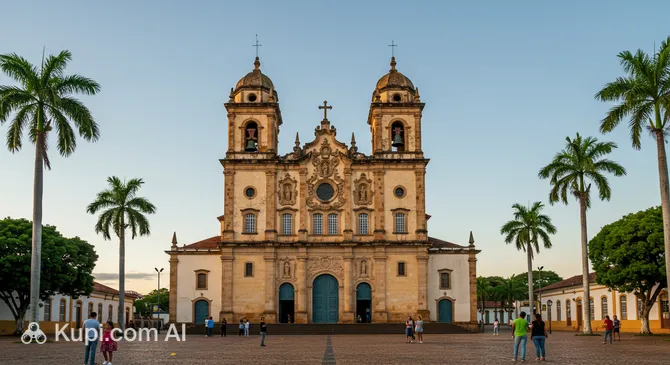
Cathedral Basilica of the Good Lord Jesus
Cathedral Basilica of the Good Lord Jesus. Иллюстрация. Источник: Kupi.com AI

The modern cathedral building was consecrated in 1973 and immediately became an architectural landmark for the region. Its appearance is unique: it wonderfully intertwines elements of the Byzantine style with modern engineering solutions of the second half of the 20th century. The cathedral's monumental forms symbolize the strength of faith and the grandeur of the city's historical heritage.

For travelers, the cathedral is interesting not only as a place of worship but also as an outstanding example of Latin American ecclesiastical architecture. Its impressive facades and rich history make it a mandatory stop on any tourist route through Cuiabá.

Contacts

To plan your visit or check holiday mass times, you can contact the parish administration directly. The cathedral is located on one of the main squares, making it easily accessible for all visitors to the city. The table below provides detailed contact information for communication and navigation.

How to contactContact
AddressPraça da República, s/n - Centro Norte, Cuiabá - MT, 78005-240, Brazil
Phone+55 65 3321-2729
Websitearquidiocesecuiaba.org.br

What to Do

Visitors to the cathedral can not only admire its exterior but also appreciate its rich interior decor. One of the main interior highlights is the vast mosaic image of Christ the King, created by the artist Arystarch Kaszkurewicz. Light passing through the colorful stained glass windows creates a stunning play of colors inside the temple, highlighting the grandeur of the gilded chandeliers suspended at a height of 25 meters.

Be sure to go down to the underground crypt, which contains the burials of prominent historical figures of the state. This place is filled with a special atmosphere of reverence and silence. For those who want to experience the living tradition of the temple, the best time to visit is on weekends and holidays when solemn services are held, attracting many locals.

Getting There

The Cathedral is located in the heart of the historical center at Praça da República, s/n. Thanks to this location, the church serves as an excellent landmark for any tourist walking through the city's central districts.

You can reach the basilica by any public transport route that passes through the center. From other areas of Cuiabá, it is convenient to take a taxi or use car-sharing services. If you are already in the central part of the city, a walk to Praça da República will not take much time and will allow you to enjoy the atmosphere of the old town.

Ближайший город: Cuiabá

History & Facts

The history of this site dates back to 1722, when Captain Jacinto Barbosa Lopes built a modest first chapel here. This occurred shortly after the discovery of gold deposits in a local stream, and the original building was constructed from simple materials—wattle and daub under a thatched roof.

Over time, the status of the temple steadily grew: in 1745 it became the seat of the prelacy, and in 1826 it was elevated to the rank of a diocese. During the 18th and 19th centuries, the building was reconstructed several times, acquiring more solid forms made of adobe. Interestingly, the second bell tower was only added to the facade in the 1920s, finally completing the recognizable look of that era.

The modern appearance of the cathedral is the result of a large-scale reconstruction completed in 1973. The new building amazed contemporaries with its scale and unusual blend of styles. In 1974, Pope John Paul II declared the temple a minor basilica, confirming its high spiritual and historical significance for the entire Catholic world.

Time Needed

To leisurely explore the interiors, study the mosaics, and visit the crypt, a typical visitor will need between 1 and 2 hours. This time is sufficient to appreciate the architectural features and spend a few moments in quiet prayer or reflection.

If you plan to attend a Sunday service or linger at Praça da República to relax, you should budget a bit more time. A visit to the cathedral is easily combined with visits to nearby museums and walks along the city's central streets.

Working Hours

The doors of the basilica are open to visitors daily, though the schedule varies. On Mondays, the cathedral is open only in the afternoon—from 1:00 PM to 7:00 PM. On weekdays (Tuesday–Friday), visiting is possible from early morning until evening, from 6:00 AM to 7:00 PM without a break.

On weekends, the schedule is divided into two blocks: on Saturday, the cathedral is open from 6:00 AM to 1:00 PM and from 4:00 PM to 7:00 PM, and on Sunday from 6:00 AM to 11:00 AM and in the evening from 5:00 PM to 8:00 PM. Please take mass times into account, as sightseeing may be restricted during services.

DayWorking hours
Понедельник1:00 – 19:00
Вторник6:00 – 19:00
Среда6:00 – 19:00
Четверг6:00 – 19:00
Пятница6:00 – 19:00
Суббота6:00 – 13:00, 4:00 – 19:00
Воскресенье6:00 – 11:00, 5:00 – 20:00

Nearby

Exploring the surroundings of the cathedral will allow you to dive deeper into the atmosphere of the Mato Grosso state capital. Near Praça da República, there are interesting sites that will be fascinating for both adults and children to visit.

NameDistance
Alencastro Square0.1 km
Ipiranga Square0.4 km
Parish of Our Lady of the Rosary and Saint Benedict0.5 km
Morro da Caixa D’Água Velha Museum0.6 km
Geodesic Center of South America0.6 km
Praça da Mandioca0.6 km
Deville Prime Cuiabá Restaurant0.8 km

Reached the end of the page?

That means the route is fully explored