Support

Square Cassava

About

If you want to feel the authentic rhythm of life in the heart of the state of Mato Grosso, be sure to visit Mandioca Square. This cozy public space is located in the historic center of Cuiabá and is one of those places where the colonial past meets the daily bustle of modern Brazil.

The square, also officially known as Praça Cassava, was named after cassava (manioc) — a staple product in local cuisine and culture. Surrounded by cobblestone streets and old buildings that have preserved Portuguese-style features, it serves as a living reminder of the region's cultural heritage, where Indigenous, African, and European traditions are intertwined.
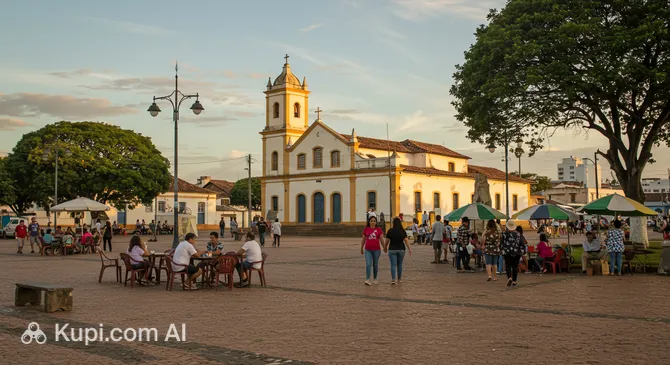
Praça da Mandioca
Praça da Mandioca. Иллюстрация. Источник: Kupi.com AI

For tourists, this place is valuable primarily for its authentic atmosphere. There is no grandeur of large monuments here, but there are shady trees to escape the tropical heat and a chance to observe the lives of city dwellers. The square is considered an important point on the map of the historic center, reflecting the spirit of old Cuiabá.

Contacts

For those planning a visit, it's helpful to have the exact coordinates of this spot in the city's historic center at hand.

How to contactContact
AddressR. Pedro Celestino, S/N - Centro Norte, Cuiabá - MT, 78005-010, Brazil

What to Do

The best way to start exploring this place is with a leisurely stroll along the cobblestone paths. Take note of the architectural details of the surrounding buildings: their facades and wrought-iron grilles provide a perfect backdrop for atmospheric photos in a colonial style. It's a great space to simply sit on a bench in the shade of the trees and watch the city rhythm: merchants, locals hurrying about their business, and street musicians.

Pay special attention to the gastronomic experiences. Since the square is named after manioc, you can often find vendors here offering traditional snacks: crispy cassava chips or freshly made flatbreads. This is a simple but delicious way to touch the culinary traditions of the state of Mato Grosso.

As evening approaches, the atmosphere on the square changes. It becomes a popular spot for informal youth gatherings and local cultural events. If you're lucky, you might catch performances by folklore groups or small street festivals. Many travelers recommend visiting the square at sunset — this is when the daytime heat subsides, and the soft light makes the historic buildings especially picturesque.

Getting There

Getting to this historic corner is easy, as it is located in the heart of the Centro Norte district at R. Pedro Celestino, S/N. If you are staying in one of the central hotels, a walk to the square will take very little time and allow you to admire the city's architecture along the way.

For those arriving from other regions, the journey usually begins at Marechal Rondon International Airport (CGB). From the airport to the city center, you can take a taxi or order a car through mobile apps like Uber. The trip will take about 15–20 minutes. Public buses also run regularly from the terminal towards the center.

If you prefer walking, the path from the banks of the Cuiabá River or the main city square takes about 10–15 minutes. Given the region's hot climate, it is recommended to plan your movements for the early morning or evening when the heat subsides. For active tourists, bike or scooter rentals are also available, which is a great way to explore the surrounding colonial streets.

Ближайший город: Cuiabá

History & Facts

The history of this place is inextricably linked with the era of the "gold rush" and the official founding of the city on April 8, 1719. It was then that Portuguese bandeirantes led by Pascoal Moreira Cabral settled on the banks of the local river. In those times, the square served as an important public space for prospectors and early settlers, becoming a center for trade and socialization in the harsh conditions of the frontier.

In the 18th century, when gold mining was at its peak, the lives of thousands of fortune seekers hummed here. However, by the end of the century, the gold veins were exhausted, and the region's economy began to transform. The city switched to agriculture, and the square became a symbol of a new era, where the cultivation of sugar cane and, of course, manioc (mandioca), which gave the place its current name, played a vital role.

In 1835, when the city solidified its status as the capital of the province of Mato Grosso, the square finally took shape as part of the administrative and cultural core. Despite destructive natural phenomena of the past, such as the earthquake in the mid-18th century, the area managed to preserve the charm of colonial architecture.

In the 20th century, with the development of transport links and aviation, the location turned into a cozy tourist space. Today, it is a living monument to the cultural synthesis of Portuguese, African, and Indigenous traditions that formed the unique look and character of modern life in this region.

Time Needed

For a typical visit to the attraction, 30–60 minutes will be quite enough. This is plenty of time to leisurely walk across the square, take a few bright photos against the backdrop of colonial buildings, and rest for a bit in the shade of the trees.

If you plan to combine a visit to the square with a full walk through the historic center or want to stop by local cafes to try traditional dishes, it's better to budget about 1–2 hours. The evening hours are especially conducive to a longer stay, when local youth and street performers gather in the square.

Working Hours

The square is an open public space and is accessible to visitors around the clock. You can come here at any time of the day or night, as it is open 24 hours a day, seven days a week — from Monday to Sunday.

However, for the most comfortable and safe experience exploring the architecture and local culture, it is recommended to plan your visit for daylight hours or early evening, when there are more people on the square and surrounding establishments are open.

Круглосуточно

Nearby

Exploring the area around the square allows you to dive deeper into the city's atmosphere and find entertainment for every taste, from active recreation to family parks.

NameDistance
Parish of Our Lady of the Rosary and Saint Benedict0.3 km
Alencastro Square0.5 km
Cathedral Basilica of the Good Lord Jesus0.6 km
Deville Prime Cuiabá Restaurant1 km
Ipiranga Square1 km
Morro da Caixa D’Água Velha Museum1.1 km
Geodesic Center of South America1.1 km

Reached the end of the page?

That means the route is fully explored