Support

Chamber House and Jail - Conceição Museum Itanhaém

About

Getting to know the historical heritage preserved by Brazil is impossible without visiting the oldest cities in the state of São Paulo. In the heart of Itanhaém, you will find a unique architectural monument — the House of Chamber and Jail, which today houses the Conceição Museum.
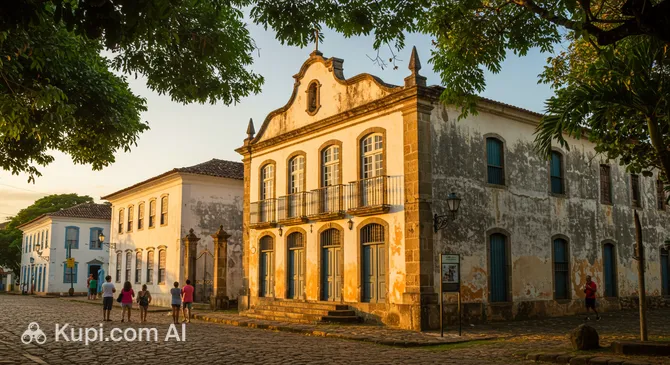
Chamber House and Jail – Conceição Museum
Chamber House and Jail – Conceição Museum. Иллюстрация. Источник: Kupi.com AI

This 18th-century colonial building is a striking example of Portuguese architecture from that era. Its massive stone walls and austere facade hide a rich collection of artifacts that tell the story of Itanhaém's evolution from a small fishing village to a significant cultural center. The museum serves as the primary repository of memory for local traditions, colonial life, and the maritime history of the region.

Visitors are drawn not only by the extensive exhibition featuring rare documents and photographs but also by the atmosphere of the building itself, which has preserved the spirit of the past. With a rating of 4.3 and numerous positive reviews, this place is rightfully considered a must-see for those seeking authentic historical experiences and wanting to understand the roots of Brazilian culture.

Contacts

For visit details or group tour arrangements, you can use the museum's official contact information.

How to contactContact
AddressR. Cunha Moreira, 10 - Centro, Itanhaém - SP, 11740-000, Brazil
Phone+55 13 3426-3682
Websitewww.itanhaem.sp.gov.br

What to Do

Inside the Conceição Museum, a fascinating journey back in time awaits visitors. One of the most impressive parts of the exhibition is the authentic prison cells, where you can see firsthand the conditions in which prisoners were held during colonial times. This creates a powerful contrast with the upper floors, which formerly housed the city council's meeting chambers.

The museum's halls display collections of antique furniture, fishing tools, and everyday items used by colonists. Every detail here helps to better understand how the lives of the first settlers in this region were built. Be sure to pay attention to the collection of historical documents and archival photographs, which vividly show the city's development over the centuries.

For those who love panoramic views, it is worth climbing to the upper levels of the building: from there, you get an excellent view of Itanhaém's historical center. It is a wonderful spot for atmospheric photos of colonial architecture set against the backdrop of the modern city. The museum is ideal for family visits, as the information is presented in an accessible and interesting way, even for young travelers.

Getting There

The museum is located in the heart of the historical center at R. Cunha Moreira, 10. Thanks to its central location, it is easily accessible on foot from almost anywhere in the Old Town. If you are coming from São Paulo, it is most convenient to take a Pássaro Marron bus (the journey takes about 2 hours) or drive via the BR-101 highway.

For those arriving at the Itanhaém bus station, the walk to the museum takes no more than 10–15 minutes. You can also use a local taxi or ride-sharing apps—the trip from the station takes only about 5 minutes.

The city has a well-developed public transport network, so reaching the center from distant beaches by municipal bus is quite easy. Look for signs pointing to the historical center (Centro Histórico) or use a navigator with the site's coordinates.

Ближайший город: Itanhaem

History & Facts

The history of this remarkable building dates back to the 18th century, when it was built to serve as a town hall and jail. At that time, Itanhaém, founded by Portuguese colonists in the 16th century, played a strategic role as an important port and fishing hub. This structure became the embodiment of administrative power and justice in one of the oldest settlements Brazil has ever seen.

For a long time, the building served as the administrative "heart" of the region. Officials held meetings and made important decisions on the upper floor, while the lower floor was reserved for prison cells. This layout was typical of Portuguese colonial architecture of that period.

In the 19th and 20th centuries, as administrative functions moved to more modern buildings, the structure was carefully restored and transformed into the Conceição Museum. It was named in honor of the Virgin of the Conception, who is deeply revered by the locals. Today, the site is recognized as an important cultural heritage site in the state of São Paulo.

During restoration, architects sought to maintain maximum authenticity: the massive stone walls, forged iron bars, and heavy wooden beams allow visitors to literally touch three centuries of history. The museum's collection is constantly expanding, turning it into a living chronicle of the city.

Time Needed

For a thoughtful exploration of the Conceição Museum, most travelers find 1–2 hours to be sufficient. This time is quite enough to examine the artifacts in the halls, study the old prison cells, and enjoy the architectural details of the colonial era.

Since the building is located right in the center, a visit to the museum can easily be combined with lunch at a local restaurant or a walk to the nearby beaches without overcomplicating your travel schedule. If you enjoy photographing historic architecture, allow a bit more time to find the best angles within the interiors.

Working Hours

When planning your visit to the Conceição Museum, please note that it is closed on Mondays. On other days, the doors of this historic building are open to guests according to the following schedule:

  • Tuesday – Friday: from 08:00 to 17:00
  • Saturday – Sunday: from 11:00 to 17:00

It is recommended to arrive an hour before closing to have enough time to explore all the halls without rushing.

DayWorking hours
ПонедельникЗакрыто
Вторник8:00 – 17:00
Среда8:00 – 17:00
Четверг8:00 – 17:00
Пятница8:00 – 17:00
Суббота11:00 – 17:00
Воскресенье11:00 – 17:00

Nearby

A walk through the city's historical center is a great opportunity to see Itanhaém from different perspectives. After visiting the museum, be sure to set aside some time to check out nearby establishments or stroll down to the coast.

Exploring the surroundings will help you feel more deeply the atmosphere of this historic Brazilian city, where history is closely intertwined with the modern rhythm of life and resort relaxation.

NameDistance
Church of Sant'Anna0.1 km
Nô Bar0.4 km
Boca da Barra Beach0.5 km
A Pizza Itanhaém0.6 km
Saudade Beach0.7 km
Guaraú Pier0.7 km
Tia Lena Restaurant0.8 km

Reached the end of the page?

That means the route is fully explored