Support

Itanhaem – Antonio R. Nogueira Jr Airport

About the Airport

Itanhaém – Antonio R. Nogueira Jr Airport is more than just a runway; it is the aerial gateway to the picturesque southern coast of the state of São Paulo. Located in the resort city of Itanhaém, it serves as a starting point for those who wish to reach the sunny beaches of Brazil quickly and without hassle. Although the airport does not receive large commercial flights, its role in developing regional tourism and business aviation is significant. It is the ideal choice for private flights and journeys to coastal beauty spots.
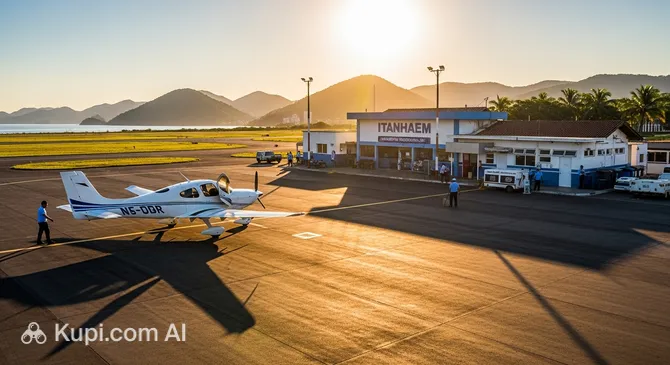
Itanhaem – Antonio R. Nogueira Jr Airport. Source: Kupi.com Binoculars
IATA Code JTN
ICAO Code SDIM
City Itanhaém
Distance to Center About 3 km
Status Domestic
Annual Passengers Serves mainly general aviation and air taxi flights; official passenger traffic statistics are not published.
Popular Airlines Private charters, air taxis, flight schools

The main advantage of Itanhaém Airport is its strategic location. It is situated just a few kilometers from the city center and popular beaches such as Praia dos Sonhos and Cama de Anchieta. This allows travelers to avoid hours of traffic congestion from the metropolis of São Paulo and reach the ocean as quickly as possible.

The airport is an important hub for general and business aviation in the region. Several flight schools are based here, as well as companies offering air taxi and charter services. For private jet owners and those who value speed and comfort, JTN offers convenient infrastructure for aircraft servicing. Despite its modest size, the airport makes a significant contribution to the economy and tourist appeal of the entire southern coast of the state.

Contact Information

For the most up-to-date information regarding the operations of Itanhaém – Antonio R. Nogueira Jr Airport (JTN), it is recommended to contact official channels. The airport is managed by the company Rede VOA.

  • Official Website: redevoa.com.br/aeroportos/itanhaem
  • Information Desk Phone: +55 (13) 3426-5944
  • Airport Address: Av. José Batista Campos, s/n - Cidade Anchieta, Itanhaém - SP, 11740-000, Brazil
  • Email: You can use the contact form on the operator's website or the general address contato@redevoa.com.br.
  • Social Media: Official news from the airport operator, Rede VOA, is published on Instagram and Facebook.
  • Lost Luggage Information: For issues related to lost or damaged luggage, you should primarily contact your airline's representative. Regarding items left behind in the terminal, information can be clarified via the main airport phone number.
  • Passenger Support Contacts: For general inquiries and support, please contact the phone number listed above or reach out via email.

How to Get to the Airport

Getting to Itanhaém – Antonio R. Nogueira Jr Airport (JTN) is quite simple, as it is located close to the center of Itanhaém. Travelers can choose the mode of transport that best suits them, whether it be public transport, a taxi, or a rental car.

Public Transport is the most budget-friendly option. Local buses run through the city, and their routes may pass near the airport. This method is suitable for those traveling light; however, please note that transfers may be required, and schedules are not always convenient. The fare is low, but the travel time will be longer than by car. There is no direct train or metro connection to the airport.

Taxis and Transfers are the most comfortable and fastest way to reach the terminal. A trip from the city center will take approximately 10-20 minutes depending on traffic conditions. You can use official taxi services or book a car through apps popular in Brazil, such as Uber or 99. This is the ideal choice if you are traveling with luggage or value your time. The cost will be higher than the bus, but it ensures door-to-door convenience.

Car Rental is an excellent option for those who plan not only to get to the airport but also to explore the scenic coast of São Paulo state. Both local and international rental companies operate in Itanhaém. The airport provides parking where you can leave a personal or rented vehicle for a short or long term, which is very convenient.

It is worth noting that Itanhaém Airport mainly serves private and regional aviation. For most international and major domestic flights, travelers use the main air gateways of São Paulo — São Paulo-Guarulhos International Airport (GRU) or Congonhas Airport (CGH). From there, you can reach Itanhaém by intercity bus or rental car; the journey takes between 1.5 to 2.5 hours.

Terminals and Map

Itanhaém – Antonio R. Nogueira Jr Airport (JTN) is a small regional airport focused mainly on business and private aviation, as well as helicopter transport. Its structure is simple and intuitive, making navigation extremely convenient.

The airport operates one passenger terminal. It is a compact, modern building serving all flights — both departures and arrivals. Due to its small size, there is no need for complex walkways or long transfers between different zones. All essential services are located in one common space, making it impossible to get lost.

The terminal layout is extremely simple. Upon entering, you find yourself in a small general hall where check-in counters or helicopter company desks may be located. The passenger waiting area is also situated here. Departure and arrival zones are not as strictly separated as in major airports. Passengers departing from Itanhaém proceed to the exit for the airfield after brief formalities, while those arriving from a plane or helicopter enter the terminal building directly.

Check-in and security procedures usually take a minimal amount of time. Due to the specific nature of the flights (charter, business, helicopter) and low passenger volume, all formalities are completed very quickly, usually within 15-20 minutes. Nevertheless, it is always recommended to follow the instructions of your airline or flight operator regarding arrival time at the airport.

Airport History

The history of Itanhaém – Antonio R. Nogueira Jr Airport (JTN) is closely linked to the economic development of the region and all of Brazil. The airport was officially opened on October 19, 1984, under the management of the São Paulo State Air Navigation Department (DAESP). Initially, it was a modest airfield serving primarily private aviation and the needs of the local population of the coastal city of Itanhaém.

A pivotal turn in the airport's fate occurred in the early 2000s with the discovery and active development of large oil and gas fields offshore in the Santos Basin. The state oil company Petrobras chose Itanhaém as a strategic point for its helicopter base, ensuring transport to offshore drilling platforms. This decision catalyzed massive development of the airport's infrastructure.

In 2007, the government of São Paulo state announced significant investments in modernizing the airport. The works included extending the runway, building a new passenger terminal specifically designed to serve rotational workers, and constructing modern hangars. After the reconstruction was completed, the renovated airport was inaugurated in 2013. These transformations turned it into one of the most modern and busy helicopter hubs in Latin America.

Today, Itanhaém Airport is a key logistical node for the Brazilian oil and gas industry. During peak periods, it handles hundreds of helicopter takeoffs and landings daily, ensuring the rotation of thousands of specialists on offshore platforms. An interesting fact: despite its official status as an airport, it functions more like a high-tech industrial facility whose operations are almost entirely subordinate to the needs of the energy sector, making it unique in the country's aviation system.

Services and Facilities

Itanhaém – Antonio R. Nogueira Jr Airport (JTN) is a small regional aviation hub serving mainly business aviation flights and helicopter transport. The airport infrastructure is focused on providing basic comfort and essential services for passengers before departure.

Shopping and dining options here are limited. Typically, you can find a small cafe or snack bar in the terminal selling snacks, sandwiches, and beverages. There are no large restaurants or Duty-Free shops at the airport, so it is best to make any necessary purchases in the city beforehand.

For passenger convenience, basic amenities are provided in the waiting area. Although specialized VIP lounges are absent, you will be able to access Wi-Fi and find outlets to charge electronic devices. Financial services are represented by ATMs; however, there are no currency exchange bureaus here. It is recommended to perform currency exchange operations at banks in the city of Itanhaém.

The airport is equipped to serve all categories of travelers. For passengers with reduced mobility, a barrier-free environment has been created, including ramps and specially equipped restrooms. Families with children can use the mother and child room. In case of need, a medical point is available at the airport to provide first aid.

There are no hotels or business centers on the airport territory. The nearest hotels and apartments are located in the city of Itanhaém itself, just a few minutes' drive from the terminal. Specialized conference rooms for business meetings are also not provided at the airport, which is typical for small aviation hubs in Brazil.

Dining

When planning a trip through Itanhaém – Antonio R. Nogueira Jr Airport (JTN), it is important to consider that this is a small regional airport. Consequently, the selection of dining establishments here is very limited and not comparable to the variety found in major air hubs. Passengers should not expect food courts or a variety of restaurants.

Typically, airports of this size operate one small cafe or snack bar located in the general hall before the security zone. Here you can find a basic selection for a quick bite: coffee, soft drinks, pastries, and popular snacks in Brazil, such as cheese buns (pão de queijo) or sandwiches. Specialized dietary options (vegetarian, gluten-free, Halal, etc.) are likely not represented here.

For a quick snack, the existing cafe will be the only option. However, if you are counting on a full lunch or dinner, it is strongly recommended to eat in advance at one of the numerous restaurants in the city of Itanhaém, where you can experience local cuisine in a more authentic setting. Travelers with specific dietary needs or those flying at odd hours are advised to bring food and beverages with them.

Traveler Tips

To ensure your journey through Itanhaém – Antonio R. Nogueira Jr Airport goes smoothly and without stress, take advantage of these useful tips. This small regional airport serves the city of Itanhaém and its surroundings, and knowing a few nuances will make your experience more comfortable.

Arrival Time: Although it is a small airport, it is recommended to arrive 1.5–2 hours before a domestic flight departure. This will give you enough time for check-in, baggage drop, and passing through security control without rushing. Always check your airline's recommendations, as they may vary.

Check-in and Security: To save time, use online check-in for your flight if your airline provides this option. Security checkpoints at regional airports are usually less busy than at major hubs, but standard rules apply. Keep your boarding pass and ID ready.

Seat Selection: If you have the option to choose a seat, consider your preferences. Window seats (A, F) are ideal for those who enjoy viewing the scenery during takeoff and landing. Aisle seats (C, D) are convenient if you need to stand up during the flight.

Hand Luggage: Rules for carrying hand luggage in Brazil are standard. Liquids (shampoos, creams, perfumes) may be carried in containers of no more than 100 ml, packed in a single transparent bag. Sharp objects, weapons, and flammable substances are prohibited in the cabin. Laptops and other electronics are usually required to be removed from bags during screening.

Connecting Passengers: Itanhaém Airport mainly serves direct regional flights. If you have a connecting flight, it will likely be at one of the major airports, for example, in São Paulo. Check with your airline whether you will need to collect and re-check your luggage at the transit airport.

Customs Control: Since the airport serves domestic flights, there is no need to pass customs control here. Customs and immigration formalities take place at the first airport of arrival in the country for international flights.

Saving Time and Money:

  • Check in for your flight online.
  • Travel light to avoid excess baggage fees.
  • Research transfer options from the airport to the city in advance to choose the best value.
  • Bring an empty water bottle and fill it after passing security control.

Flight Delays: In case of a flight delay or cancellation, contact your airline representative at the airport immediately. Remain calm and keep all documents at hand. Ensure your hand luggage contains essentials for a long wait: a phone charger, medicines, and a light snack.

Reached the end of the page?

That means the route is fully explored