Support

Kampong Cham

About

Kampong Cham is a charming city stretched along the picturesque banks of the mighty Mekong River in eastern Cambodia. It serves as the administrative center of the province of the same name and is the third-largest city in the country, located approximately 124 kilometers north of the capital, Phnom Penh. The city is surrounded by lush green rice fields, rubber plantations, and fruit orchards, creating a unique local flavor.

With a population of about 118,242 people, Kampong Cham maintains a calm, almost provincial atmosphere where life flows at a measured pace without the rush. This place is ideal for those seeking to experience the authentic spirit of the country far from the noisy tourist routes. Here, you will find wide embankments, old colonial-era buildings, and incredibly hospitable locals.
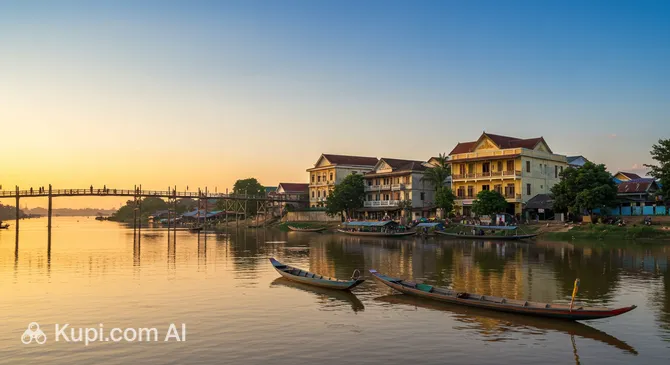
Kampong Cham. Illustration.
Source: Kupi.com AI

One of the main highlights of Kampong Cham is its unique blend of cultures: ancient Khmer temples stand alongside elegant French colonial mansions. The city also serves as an excellent starting point for exploring central Cambodia, discovering its untouched nature, original traditions, and the daily life of the local population. Do not miss the opportunity to admire the unforgettable sunsets over the Mekong.

If you are looking for authenticity, comfort, and amazing discoveries, Kampong Cham undoubtedly deserves your attention. This city is ready to share its secrets with every curious traveler, inviting you to immerse yourself in its unique atmosphere.

You can find more interesting facts on the history of Kampong Cham page.

Weather Overview

The weather in Kampong Cham is typically hot throughout the entire year. Average daytime temperatures range between 30-35°C, dropping to 22-27°C at night, depending on the season. The city is characterized by a distinct wet season that lasts approximately from May to October, bringing frequent rains, and a drier period from November to April when precipitation is minimal, especially from January to March, with February being the driest month. The highest amount of rainfall usually occurs from July to September.

To get detailed monthly weather information, including average temperatures, rainfall, and the number of rainy days, visit the Kampong Cham Climate page.

Average monthly temperature

Average monthly precipitation

Interesting Facts

In addition to its main attractions, Kampong Cham holds many fascinating secrets and unique features that make it a truly interesting place to visit.

  • One of the city's most amazing features is its famous bamboo bridge. This impressive structure is built and dismantled annually by locals, connecting Kampong Cham with Koh Paen Island. It is considered one of the longest bridges in the world built entirely of bamboo, and you can not only walk across it but also ride a motorcycle.

  • In the vicinity of Kampong Cham, you can touch ancient history by visiting Angkorian-era temples. A striking example is Wat Nokor, an 11th-century temple complex where ancient ruins harmoniously coexist with an active Buddhist monastery, creating a special atmosphere.

  • The city has a rich trading past, especially during the French protectorate. Even today, you can find elegant colonial-era buildings on the streets of Kampong Cham, which give it a unique charm and serve as a reminder of times past.

  • Kampong Cham and its surroundings are home to many ethnic minorities, each of which carefully preserves its unique traditions and customs. Visiting local craft villages provides an opportunity to get acquainted with ancient techniques of weaving, wood carving, and the production of traditional fabrics.

How to Get There

The city of Kampong Cham does not have its own airport, so a journey here usually begins with a flight to one of Cambodia's major international hubs or neighboring Vietnam. Most tourists choose a route through the capital, Phnom Penh, from where it is easy to continue the journey by land. You can find out all the ways to get to the city on a dedicated page of our guide.

The most convenient option is arriving at Phnom Penh International Airport (IATA: PNH). It is located in the capital city, Phnom Penh, about 84 km from Kampong Cham. This is the main aviation hub, receiving many international flights. The journey from the airport to Kampong Cham by taxi or bus takes approximately 2.5–3 hours, depending on traffic.

An alternative option is flying into Siem Reap International Airport (IATA: SAI), located in the city of Siem Reap. This is a good choice if you plan to visit the Angkor temples before traveling to Kampong Cham. The distance is about 204 km, and the travel time by land is about 5–6 hours. You could also consider flying through Vietnam via Tan Son Nhat International Airport (IATA: SGN) in Ho Chi Minh City (183 km), though this would require crossing an international border.

For convenience, here is a summary of the main airports:

AirportPassenger trafficDistance
Phnom Penh International Airport2.5 mln84 km
Tan Son Nhat International Airport41 mln183 km
Siem Reap International Airport1.4 mln204 km
Can Tho Airport1.3 mln213 km
Sihanouk International Airport55 000253 km

As for rail connections, there are no active railway stations in the city of Kampong Cham or its immediate vicinity. Trains in Cambodia run on limited routes that do not pass through this province. Therefore, the main methods of travel between cities remain buses, minivans, and taxis.

Bus service in the region is quite well-developed. Comfortable buses and minivans from various companies depart regularly from Phnom Penh to Kampong Cham. The journey takes place on paved roads and allows you to enjoy views of the countryside. Tickets can be purchased at bus stations or through local travel agencies.

Main Attractions

Kampong Cham, a charming city on the banks of the Mekong, offers travelers several unique attractions that will introduce you to the culture and history of Cambodia. There is none of the hustle and bustle of major tourist centers here, allowing for a deeper immersion into the local atmosphere and the exploration of authentic corners of the country.

One of the most famous and truly unique attractions is the Koh Paen Bamboo Bridge. This impressive bridge, made entirely of bamboo, is hand-built every year during the dry season to connect the mainland part of the city with the fertile island of Koh Paen. Walking or cycling across this slightly creaky but surprisingly sturdy structure is an unforgettable experience and a great opportunity for vibrant photos. With the arrival of the rainy season, the bridge is dismantled so it isn't swept away by the powerful current of the Mekong, making it a truly seasonal wonder of local engineering.

History and ancient architecture enthusiasts should definitely visit Wat Nokor Bachey. This ancient temple, dating back to the 11th century, is an important historical monument built before the peak of the Angkor Empire. The complex is interesting for its combination of Hindu and Buddhist architectural styles, featuring characteristic carved stone walls, towers, and quiet courtyards. A visit to Wat Nokor Bachey is a wonderful opportunity to touch the ancient history of the region and enjoy the peaceful atmosphere of this sacred place.

Not far from the city are two picturesque hills – Phnom Pros (Man Hill) and Phnom Srey (Woman Hill). According to local legend, these hills were created as a result of an ancient competition between men and women to see who could build a stupa faster. Active pagodas and temples are located on the hilltops, offering magnificent panoramic views of the surrounding plains and the Mekong River. This is a popular spot among locals for prayer and relaxation, and for tourists, it's a great chance to learn more about Cambodian legends and enjoy natural beauty.

Local Cuisine

The gastronomic scene of Kampong Cham is a true immersion into the world of freshness and authentic flavors of Cambodia. The proximity of the mighty Mekong defines the basis of local cuisine, offering an abundance of fish and seafood. Be sure to try Amok — tender fish steamed in banana leaves with coconut milk and aromatic spices. This dish is rightfully considered the hallmark of Khmer culinary arts and one of the main gastronomic magnets for tourists.

Besides Amok, other culinary discoveries await you. Don't miss the chance to try a Khmer sandwich — a crispy baguette with juicy meat filling, fresh vegetables, and savory sauces. It resembles the famous Vietnamese Banh Mi but has its own distinct Asian accent. Lovers of river delicacies will enjoy river shrimp and small fried fish, which are often served as a snack with local beer. It's also worth paying attention to various Khmer soups and aromatic spicy stir-fry dishes that reflect the richness of the local culinary tradition.

As for drinks, in addition to the mentioned local beer, which perfectly complements hot and spicy dishes, be sure to try fresh-pressed juices made from exotic fruits. These can be found everywhere, especially at street stalls and markets, and will be a great refreshing addition to your gastronomic journey.

Food culture in Kampong Cham is closely linked to the bustling local markets and street food. Markets are a true paradise for gourmets, where you can not only buy fresh fruit and vegetables but also try a famous Khmer dessert — mango sticky rice. Street food here is an adventure in itself: aromatic skewers, fried bananas, and rice cakes are prepared right before your eyes, and hospitable vendors are always happy not only to share their food but also to talk about their signature recipes.

Occasionally, Kampong Cham hosts gastronomic festivals. This is a wonderful opportunity not only to enjoy the full variety of traditional dishes in one place but also to see the cooking process and get to know the local culture more deeply through the taste and aroma of authentic Cambodian cuisine.

Travel Tips

Planning a trip to charming Kampong Cham? Wonderful! To ensure your journey through this Cambodian city on the banks of the Mekong is as smooth and pleasant as possible, we have prepared some practical tips.

  1. Clothing and Essentials:

    In Kampong Cham, as in all of Cambodia, a tropical climate prevails – hot and humid year-round. Choose light, breathable clothing made of natural fabrics (cotton, linen). Don't forget a hat, sunglasses, and sunscreen with high SPF. You will need comfortable shoes for walking. During the rainy season (roughly from May to October), a light raincoat or umbrella will be useful. When visiting temples and other religious sites (e.g., Wat Nokor Bachey), choose modest clothing that covers your shoulders and knees. A universal power adapter may also be useful (Cambodia uses Type A, C, and G sockets).

  2. City Transport:

    The main and most colorful form of transport in Kampong Cham is the tuk-tuk. Always agree on the fare in advance, before getting in. Renting bicycles or motorbikes (motodops) for independent exploration of the city and its surroundings is also popular – it’s a great way to feel the local rhythm of life. Public transport in the conventional sense is poorly developed. Ride-hailing apps like Grab may be available, but tuk-tuks are easier to find.

  3. Financial Matters:

    The official currency of Cambodia is the Cambodian riel (KHR), but US dollars (USD) are in wide circulation and accepted almost everywhere, especially in the tourism sector. Change for dollars is often given in riels. Credit cards (Visa, Mastercard) are accepted in large hotels and some restaurants, but cash is necessary for markets, street food, and tuk-tuks. ATMs are available in the city and usually dispense US dollars. It is best to exchange currency at banks or official exchange offices. Tipping is not mandatory but appreciated for good service (e.g., 10% in a restaurant or a small amount for a tuk-tuk driver).

  4. Health and Safety:

    Kampong Cham is considered a relatively safe city. Nevertheless, follow standard precautions: watch your belongings in crowded places, do not leave valuables unattended, and avoid walking in poorly lit areas at night. Drink only bottled water. There are pharmacies in the city where you can buy basic medications. For serious medical cases, it is better to go to clinics in Phnom Penh. Having travel insurance that covers medical expenses is highly recommended.

  5. Language and Communication:

    The official language is Khmer. In tourist areas (hotels, restaurants, popular attractions), staff often speak English, especially the younger generation. Learning a few simple phrases in Khmer will definitely endear you to the locals: "Suo s'dei" (Hello), "Orkun" (Thank you), "Baat/Chaa" (Yes – male/female), "T’lai ponmaan?" (How much?). You can buy a local SIM card with internet access (operators include Cellcard, Smart, Metfone). Wi-Fi is available in most hotels, guesthouses, and cafes.

  6. Local Etiquette and Traditions:

    Cambodians are very friendly and smiling people. The traditional greeting is the "sampeah" (palms pressed together at chest or face level with a slight bow), but a simple smile and nod will suffice. Show respect for local customs: do not raise your voice, and dress modestly when visiting temples. The head is considered a sacred part of the body – do not touch the heads of locals, especially children. Feet, conversely, are considered the "lowest" part of the body, so try not to point them at people or images of Buddha.

  7. What Else is Important to Know:

    Avoid any criticism of the Royal Family or religion – these are very sensitive topics. Always ask permission before photographing people, especially monks. Don't miss the opportunity to walk along the picturesque Mekong embankment, especially at sunset. If your visit falls during the dry season (usually November to April), be sure to see the famous Koh Pen Bamboo Bridge, which is built and dismantled annually – it is a unique sight and an engineering marvel.

We hope these tips help you better prepare for your trip and get the most out of your stay in the original and hospitable Kampong Cham. Have a pleasant journey!

Entertainment & Nightlife

Kampong Cham, a charming city on the banks of the Mekong in Cambodia, offers its guests a calm and authentic atmosphere that extends to its evening entertainment. The nightlife here is far from the noise of megacities but possesses its own unique charm, centered mainly around the embankment and a few central streets.

The main part of the evening entertainment in Kampong Cham consists of cozy restaurants and bars, many of which are located along the Mekong River. For example, establishments like Lazy Mekong Daze or Mekong Crossing Restaurant & Pub offer beautiful river views and a relaxed atmosphere for evening rest. Smile Restaurant is also popular, known for its hospitality and a good selection of dishes. Here, you can enjoy dinner while trying both local Khmer cuisine and more familiar Western dishes. The atmosphere in such places is usually relaxed and friendly, ideal for a quiet evening. The crowd is mixed—locals and a small number of tourists. There is generally no dress code; casual style is welcomed. Establishments usually stay open until late evening but not until early morning.

While Kampong Cham is not famous for loud nightclubs or major concert venues, you can find several local bars where you can have a cool drink and socialize. Some guesthouses also have their own small bars open to visitors. Evening markets, if they are operating during your visit, mainly offer street food and local goods, creating a pleasant atmosphere for a leisurely stroll and a glimpse into local life.

Practical tips for evening leisure:

The best time to start your evening program is early evening when the daytime heat subsides. Prices in Kampong Cham establishments are quite affordable. Getting around the city at night is most convenient by tuk-tuk; always agree on the fare in advance. Central areas of the city, especially the embankment, are considered safe enough for walks after dark, though usual precautions should always be taken. If you need a taxi or tuk-tuk at night, it is best to ask the staff at your hotel or restaurant to call one, or use drivers waiting near popular spots.

Daytime entertainment:

During the day, Kampong Cham offers plenty of interesting activities. You can explore local temples and pagodas such as Wat Nokor Bachey, visit the colorful central market, or simply walk across the famous bamboo bridge (if it is built during the current season) connecting the city to Koh Paen Island. It is also pleasant to spend time relaxing on the banks of the Mekong, watching the slow-paced life of local fishermen.

Parks & Museums

Kampong Cham invites travelers to enjoy not only its local color and views of the Mekong but also to get acquainted with its cultural heritage through preserved historical sites and green zones. Although the city does not abound in traditional museums in the European sense, its history comes alive in ancient temples and on busy streets.

One of the city's main green zones is the Mekong River embankment. This is a popular spot for walks among both locals and tourists, where you can enjoy the fresh river breeze, observe daily life, and admire the sunsets. Another noteworthy place is Koh Pen island, connected to the city by a unique bamboo bridge (in the dry season) or accessible by ferry. The island offers an immersion into rural Cambodia with its rice fields, fruit orchards, and quiet villages, perfect for bicycle tours.

The main historical and cultural gem, serving in place of a traditional museum, is the ancient temple of Wat Nokor Bachey. This 12th-century temple complex, built of sandstone and laterite, impresses with its Angkor-style architecture and later additions. An active pagoda is also located on its territory, making this site a living center of spiritual life and allowing visitors to touch the centuries-old history of the region.

Among other interesting sites is the French Lookout Tower, a legacy of the colonial era, which offers a panoramic view of the city and the river. While it is not a museum, the tower serves as a reminder of Kampong Cham's historical past. To deeply experience the local culture, it is worth visiting the central market, where life is in full swing and local produce, textiles, and handicrafts are sold. This is an excellent place to observe daily life and buy authentic souvenirs.

For a truly authentic experience, rent a bike and explore the peaceful villages and plantations on Koh Pen island. And in the evening, join the locals on the embankment to enjoy cool drinks and the leisurely atmosphere of the departing day on the banks of the Mekong.

Getting Around

Public transport in Kampong Cham is mainly represented by modes more traditional to Southeast Asia. You will not find a metro, trams, or a developed network of city buses with a clear schedule here. The main ways to get around the city and its immediate surroundings are motorcycle taxis (motodops) and tuk-tuks (remorks). Occasionally, you may encounter pickup trucks or minibuses acting as share taxis, especially on routes to neighboring settlements.

The payment system in Kampong Cham transport is predominantly cash-based. For a trip on a motodop or tuk-tuk, the cost should be discussed in advance, before the start of the trip, as there are usually no fixed tariffs, and the price depends on the distance, time of day, and your bargaining skills. Specialized travel cards, transport apps, or unified tickets do not exist in the city. It is recommended to have small denominations of local currency for convenience.

Practical tips for tourists: tickets for improvised minibuses, if encountered, are paid directly to the driver. For motorcycle taxis and tuk-tuks, always agree on the price before boarding. Most drivers work from early morning until late evening; however, after dark, the amount of available transport may decrease, and prices may slightly increase. Ticket validation in the usual sense is absent, as payment happens on the spot or by agreement.

As an alternative to public transport, bicycle rental is popular in Kampong Cham, providing an excellent way for a leisurely exploration of the city and its embankment. Many hotels and guesthouses offer this service. You can also always use the services of private drivers with cars for longer trips, negotiating the price individually. Walking is also relevant, especially in the central part of the city, where the main attractions can be within walking distance.

Accommodation

When planning a trip to Kampong Cham, you will find a variety of accommodation options suitable for different budgets and preferences. The city offers mainly budget and mid-range options, making it attractive for many travelers. Guesthouses, small local hotels, and a few more comfortable options for those seeking more amenities are common here.

Most housing options are concentrated along the picturesque Mekong River embankment. Staying here will allow you to enjoy beautiful views and easy access to walking areas. Hotels and guesthouses located in the central part of the city, near markets, cafes, and main transport points, are also popular. This is convenient for those who want to be at the center of the action and have quick access to local infrastructure.

While there may be no major international hotel chains in Kampong Cham, the city offers a decent selection of local hotels and cozy guesthouses, many of which are known for their hospitality and authentic atmosphere. You will find both simple rooms for budget travelers and more well-appointed rooms with air conditioning and additional services.

Regarding booking, it is recommended to book accommodation in advance during the peak tourist season or local holidays. This will help you secure the best choice and possibly better prices. You can book stays through popular international online platforms, or in some cases, by contacting the hotel or guesthouse directly. Keep in mind that not all small establishments may accept bank cards, so it is useful to have some cash with you.

Nearby Cities

For those looking to explore the surrounding area, Kampong Cham serves as an excellent starting point for day trips to several interesting nearby locations:

Particularly interesting for short trips are Phnom Penh, the dynamic capital of Cambodia, which offers rich history and culture, including the Royal Palace and the National Museum. You should also consider a trip to Prey Veng to get acquainted with the more measured life of the Cambodian province and its picturesque rural landscapes. A more detailed list of nearby cities with distances is provided below:

CityPopulationDistance
Suong35 05422 km
Prey Veng74 00058 km
Svay Pak19 04275 km
Phnom Penh2 129 37176 km
Ta Khmau220 00082 km

These nearby destinations allow for a deeper dive into the diverse culture, history, and natural landscapes of Cambodia, complementing the experience of staying in Kampong Cham.

Shopping & Souvenirs

Shopping in Kampong Cham offers tourists an immersion into the authentic atmosphere of Cambodian trade, far from the glitz of major megacities. The city is not famous for huge shopping centers or global brand boutiques, but here you can find interesting local goods, fresh produce, and feel the rhythm of everyday life.

The main commercial activity is concentrated around the Central Market (Phsar Thom Kampong Cham) and its adjacent streets. Busy trading spots can also be found along the Mekong River embankment, where locals offer their wares. There are no designated fashionable shopping streets here; shopping is more like an exploration of small shops and market stalls.

There are no large modern shopping centers in the Western sense in Kampong Cham. Instead, you will find small local department stores or clusters of shops offering everyday goods, clothing, and electronics of local production or brought in from neighboring countries.

The main point of attraction for shopping lovers is, without a doubt, the Kampong Cham Central Market. This is a bustling place where you can find almost everything: from fresh fruit, vegetables, meat, and fish to clothing, shoes, household goods, and, of course, souvenirs. The market is also a great place to try local street food. The atmosphere here is very colorful, and visiting the market is an interesting experience in itself.

As souvenirs from Kampong Cham, you should look for traditional Cambodian kramas (cotton or silk scarves), silk products, carved wooden figurines, woven palm leaf or rattan items, as well as local spices or palm sugar. When buying silver items, pay attention to the quality.

Shops and markets in Kampong Cham usually open early in the morning, around 7-8 AM, and many of them, especially the markets, close by 5-6 PM. Small private shops may have more flexible hours. The main method of payment is cash, predominantly Cambodian riels (KHR) or US dollars (USD). Dollars are widely accepted, especially for larger purchases, but change is often given in riels. The possibility of paying by bank card is extremely rare, mostly found in some hotels or large restaurants, but not in regular shops or markets.

A Tax-Free refund system for tourists in Kampong Cham, as in Cambodia as a whole, is currently not common for most goods that travelers typically purchase in such cities.

Reached the end of the page?

That means the route is fully explored