Support

Prey Veng

About

Prey Veng is the administrative center of the province of the same name, located in the southeast of Cambodia. This city offers travelers a unique opportunity to immerse themselves in the relaxed atmosphere of Khmer provincial life, far from the hustle and bustle of major tourist routes, and to feel the true spirit of the country.

The city is situated on the fertile plains characteristic of this region of Southeast Asia, not far from the mighty Mekong River. The climate in Prey Veng is typically tropical monsoonal, with a clear distinction between the dry and wet seasons, which is worth considering when planning your trip. The city's population is about 74,000 people, giving it a cozy feel and allowing it to maintain a friendly, almost home-like atmosphere.
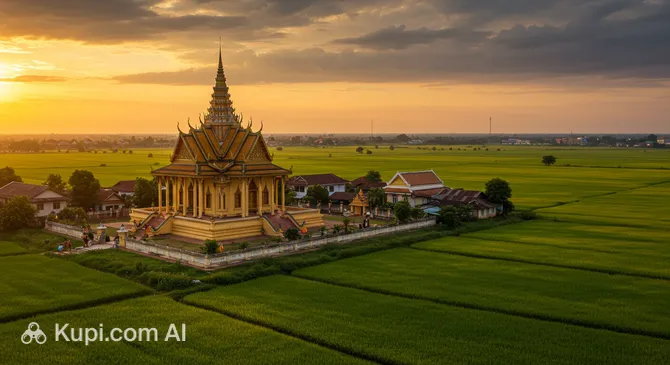
Prey Veng. Illustration.
Source: Kupi.com AI

While Prey Veng may not boast world-famous ancient temple complexes, its charm lies elsewhere. Here, you can explore picturesque local markets full of exotic fruits, vegetables, and handicrafts, visit small but inviting Buddhist pagodas reflecting the spiritual life of the community, or simply enjoy leisurely walks through its streets, observing the daily lives of the locals. The city's surroundings also offer opportunities to get to know rural Cambodia and its nature.

If you aim to see the real, non-touristic side of Cambodia and meet its hospitable people, Prey Veng will be a wonderful addition to your itinerary. It is a place where you can relax your soul and gain authentic experiences.

You can find more interesting facts on the Prey Veng city history page.

Weather Overview

A hot climate prevails in Prey Veng throughout the year. Average annual temperatures range from 27°C to 30.8°C, with maximum values often reaching 31-35°C, especially in March and April. Minimum temperatures usually fluctuate between 22.8°C and 26.6°C.

The city has a distinct dry season from January to March, when precipitation is minimal (0-1 mm) and the number of rainy days does not exceed 2-5 per month. The rainy season lasts from May to October, bringing the highest amount of precipitation (5-9 mm per month) and a significant number of rainy days (24-28 days per month). April and November are transitional months. In general, expect hot weather with a pronounced wet season from May to October and a drier period from December to April. You can find more detailed information on the Prey Veng Climate page.

Average monthly temperature

Average monthly precipitation

Interesting Facts

Prey Veng, the administrative center of the province of the same name in Cambodia, might seem quiet at first glance, but it has its own curious features. Here are a few little-known facts that will add color to your image of this city:

  • The name of the city, Prey Veng, translates from the Khmer language as "long forest" or "tall forest." Interestingly, today the city and its surroundings are predominantly flat agricultural lands, especially rice fields, rather than dense forests, indicating significant changes in the landscape over time.

  • Prey Veng plays an important, though not always obvious to tourists, role as a transport hub. The city is located on the route connecting the capital Phnom Penh with the eastern regions of Cambodia and Vietnam, which historically facilitated local trade and exchange.

  • Despite its modest size, Prey Veng is one of the oldest provincial centers in Cambodia. Its history dates back centuries, and although many ancient structures have not survived to this day, the historical spirit can be felt in the city's atmosphere.

  • The Prey Veng province, centered around the city, is considered one of the "rice bowls" of Cambodia. The fertile lands surrounding the city provide a significant portion of the country's rice harvest, and agriculture is the backbone of the local economy.

  • In Prey Veng, you can notice architectural heritage from the French colonial period. Some buildings built during that time are still preserved, though not always in perfect condition, and present an interesting contrast to traditional Khmer buildings.

How to Get There

You can reach the city of Prey Veng in various ways, but the main route for most travelers is traveling through the capital of Cambodia. There is no airport in the city itself, so tourists usually fly into the nearest major international airports and then continue their journey by ground transport. You can find all ways to get to the city on a separate page.

The most convenient option is flying into Phnom Penh International Airport (IATA: PNH). It is located in the country's capital, Phnom Penh, just 53 km from Prey Veng. This is a major transport hub receiving many flights. The journey from the airport to the center of Prey Veng by taxi or bus takes about 1.5–2 hours, depending on traffic.

An alternative for transit travelers could be Tan Son Nhat (IATA: SGN), located in Ho Chi Minh City, Vietnam (approximately 162 km away). This is the largest airport in the region with a huge passenger flow. However, when choosing this route, you should consider the need to cross the Cambodian-Vietnamese border and check the visa requirements in advance.

For convenience, here is a summary of the main airports:

AirportPassenger trafficDistance
Phnom Penh International Airport2.5 mln53 km
Can Tho Airport1.3 mln160 km
Tan Son Nhat International Airport41 mln162 km
Phu Quoc Airport4.1 mln206 km
Sihanouk International Airport55 000210 km

There is no direct rail connection to the city of Prey Veng. The railway in Cambodia is poorly developed and does not cover this region. The nearest station is in Phnom Penh, but it does not play a significant role in the route to Prey Veng.

The main way to travel between cities remains the roads. Buses, minivans, and shared taxis regularly depart from Phnom Penh to Prey Veng. The road passes through picturesque countryside and includes crossing the Mekong River (via the Tsubasa Bridge), which in itself can be an interesting part of the trip.

Main Attractions

Prey Veng, the cozy administrative center of the eponymous province in Cambodia, warmly welcomes travelers seeking an authentic experience. Here, far from the noisy tourist trails, you can immerse yourself in real Khmer culture and observe the slow flow of local life. The city holds several interesting corners that are definitely worth exploring.

One of the city's main spiritual attractions is Wat Prey Veng. This significant pagoda serves not only as an important religious center for local residents but also represents a beautiful example of traditional Khmer temple architecture. Its peaceful atmosphere invites contemplation, and the decorative details allow for a deeper connection with the spiritual traditions of the region.

To feel the vibrant pulse of Prey Veng, be sure to stop by the Central Market (Psar Prey Veng). This colorful and lively place features stalls overflowing with the freshest exotic fruits, vegetables, aromatic spices, and, of course, local dishes. Here you can also find handicrafts and unique souvenirs, and most importantly, observe the daily life of the townspeople and experience the authentic atmosphere of Cambodian lifestyle.

A landmark site in Prey Veng is the Independence Monument. Similar monuments, symbolizing important historical milestones on the country's path to sovereignty, can be found in many provincial centers of Cambodia. The monument in Prey Veng serves as an important city landmark and a reminder of the nation's striving for freedom and self-determination.

For leisurely walks and peaceful relaxation in the fresh air, the riverside area of the Tonle Toch River, on whose banks the city lies, is perfectly suited. Although there may not be a formally developed embankment like in large cities, the atmosphere by the river itself attracts locals for evening strolls and relaxation. Here you can watch the river flow, see the boats, and enjoy the cooler air, especially at sunset when the sky turns warm colors, creating picturesque landscapes.

Local Cuisine

The gastronomy of Prey Veng is a wonderful opportunity to dive into the authentic world of Khmer cuisine, enjoy the freshness of local products, and discover the traditional flavors of Cambodia. The culinary traditions here are closely linked to the gifts of the fertile land and surrounding waters, offering guests of the city a truly unforgettable experience.

Be sure to try the famous Amok Trei—delicate fish steamed in a coconut curry and often served in a banana leaf. This dish is considered the hallmark of Khmer cuisine. No less popular are the hearty noodle soup Kuy Teav, which locals often eat for breakfast, and Nom Ban Chok—rice noodles with a fragrant fish curry and fresh herbs. It is also worth paying attention to Bai Sach Chrouk (pork with rice) and Lok Lak (stir-fried beef with rice and egg).

Among the drinks in Prey Veng, you will find refreshing coconut water directly from the nut, sweet sugarcane juice, and various fruit shakes. Locals also love strong Cambodian coffee, which is often served with ice and condensed milk. Among alcoholic beverages, local beers such as Angkor or Cambodia are popular, as is traditional palm wine (tnaot chu).

The food culture in Prey Veng centers around local eateries, lively street stalls, and, of course, the markets. It is at the markets where you can not only buy the freshest produce but also try many prepared dishes and snacks while observing the daily life of the locals. Although there may be few high-end restaurants here, authentic local cafes will offer you a real taste of Khmer home cooking.

The gastronomic scene of Prey Veng charms with its simplicity and authenticity. Here you won't find the refinements of haute cuisine, but you can enjoy honest, delicious, and fresh dishes prepared with soul. It is a great chance to get to know the real Cambodia through its culinary traditions, tasting dishes that reflect the heart and soul of the region.

Travel Tips

Welcome to Prey Veng! To make your trip to this authentic Cambodian city as comfortable and memorable as possible, we have prepared some practical tips. They will help you navigate better and enjoy the local flavor.

  1. Clothing and belongings: Cambodia has a predominant tropical climate, so choose light, breathable clothing made of natural fabrics (cotton, linen). Be sure to bring comfortable shoes for walking, as exploring the city on foot is a pleasure. Don't forget a hat, sunglasses, and high SPF sunscreen for sun protection. A universal adapter for electronics will also be useful. When visiting temples or other religious sites, it's important to follow the dress code: clothing should cover shoulders and knees.

  2. Transport: The main forms of transport in Prey Veng are mototaxis (motodops) and tuk-tuks (remorks). This is a convenient and inexpensive way to move over short and medium distances. Always agree on the fare in advance, before boarding. Public transport as we know it (scheduled buses) may not be developed. Renting a car for moving around the city itself is usually not required.

  3. Finance: The official currency of Cambodia is the Cambodian riel (KHR). However, US dollars (USD) are in wide circulation and are accepted almost everywhere, especially for larger purchases and services. It is recommended to carry small dollar bills. Change is often given in riels. You can exchange currency at banks or licensed exchange offices. Credit cards may be accepted in large hotels, but in most cases, it is better to rely on cash. There are ATMs in Prey Veng, but there may be fewer than in the capital. Tipping is not mandatory but is always welcomed for good service (usually 5-10% or rounding up the amount).

  4. Health and Safety: Pharmacies with a basic set of medicines can be found in the city. For serious medical cases, a trip to Phnom Penh may be necessary. It is strongly recommended to take out comprehensive travel insurance before your trip. Drink only bottled or boiled water. Prey Veng is generally considered a quiet city; however, always follow basic precautions: watch your belongings, do not display expensive jewelry or large sums of money, and avoid poorly lit areas after dark.

  5. Communication: The official language is Khmer. In the tourism sector, some locals may speak English, but proficiency is not universal. Learn a few basic phrases in Khmer, such as "Suos-dei" (Hello), "Orkun" (Thank you), "Baat/Chah" (Yes – male/female), "Ot-tei" (No)—this will elicit a smile and goodwill from the locals. A local SIM card with internet access can be purchased upon arrival; it is inexpensive and convenient. Wi-Fi is usually available in hotels and some cafes.

  6. Local Etiquette: The traditional Khmer greeting is called "sampeah"—palms pressed together in front of the chest or face with a slight bow. The higher the hands and the lower the bow, the more respect is shown. Be polite and smiling when communicating with locals. Remove your shoes when entering private homes and temples. It is considered impolite to speak loudly or express emotions intensely in public.

  7. What to Avoid: Do not touch the head of another person, even a child, as the head is considered sacred in local culture. Also, avoid pointing your feet at people or religious symbols (such as Buddha statues), as feet are considered the "lowest" part of the body. Public displays of affection should be avoided.

  8. Additional Tip: Try to visit the local market—it is the heart of any Cambodian city. Here you can not only buy fresh fruits and local products but also observe the daily life of Prey Veng residents and feel its authentic atmosphere. Don't hesitate to bargain, but do so with a smile and respect.

Prey Veng is a wonderful opportunity to see the real, non-touristic Cambodia, get to know its culture and hospitable people. We hope these tips make your stay here even more pleasant and fulfilling. We wish you unforgettable impressions!

Entertainment & Nightlife

Prey Veng, as the administrative center of the province of the same name in Cambodia, offers its guests a fairly quiet and authentic evening experience. Nightlife here differs from bustling metropolises and is more focused on local traditions and socializing.

Evening entertainment in Prey Veng centers around authentic local establishments. For example, along the main road, National Road 11, which passes through the city, you will find many local restaurants offering traditional Khmer cuisine and drinks in a relaxed setting. In the area of the Central Market (Psar Prey Veng) and on the busy streets adjacent to it, you can find karaoke bars (KTV) popular among locals, where you can have fun with friends. There are also cozy small cafes, some of which may be located by the river or along the main streets, perfect for a quiet evening. Night markets, if they are operating, will offer you street food and a special atmosphere after sunset. It is important to understand that you should not expect large nightclubs or European-style concert venues here; the nightlife is more intimate and geared toward the local population.

The atmosphere of evening Prey Veng is generally relaxed and friendly. Most activity is concentrated along the city's main streets or in the central market area. The crowd is mostly local, providing an opportunity to dive into the daily life of Cambodians. There is usually no special dress code; simple and comfortable clothing is welcomed. Establishments typically come to life towards evening and may stay open until 22:00-23:00, with some small eateries staying open longer.

If you are planning an evening walk, the best time for it is early evening when the daytime heat subsides. Prices in local establishments are very affordable. To get around the city in the evening, you can use tuk-tuks—a common and inexpensive form of transport. It is recommended to agree on the fare in advance. In the central part of the city, if it is well-lit, you can also move around on foot.

In terms of safety, Prey Veng is considered a relatively quiet city. Nevertheless, as in any other place, common precautions should be taken in the evening: avoid poorly lit and deserted streets, and keep an eye on your belongings. Calling a tuk-tuk is usually not difficult; they can be found on busy streets or requested through your hotel or restaurant.

Instead of famous tourist nightclubs, Prey Veng offers a more authentic experience. You can enjoy dinner in family-run restaurants serving freshly prepared local dishes, spend the evening in one of the karaoke bars (KTV) popular with the townspeople, or simply relax in a small cafe with a drink. The best way to discover these places is to walk along the central streets in the evening or ask for advice from your hotel staff or locals, who will be happy to recommend popular spots.

During the day, you can get to know the calmer side of life in Prey Veng. You can visit local markets to see the variety of goods and watch the trade, explore pagodas that are an important part of Cambodian culture, or simply stroll through the city enjoying its provincial charm. Near the city, there may be interesting natural landscapes typical of rural Cambodia.

Parks & Museums

Prey Veng, a charming provincial city in Cambodia, offers travelers the chance to immerse themselves in authentic local life, enjoy the tranquility of green spaces, and get to know the cultural heritage of the region. Although there may not be world-famous parks and museums here, the city is capable of surprising you with its special character.

Speaking of green zones, Prey Veng and its surroundings offer peaceful natural landscapes rather than formal city parks. Often, the best-maintained and most beautiful green areas in Cambodian cities are the spaces around local pagodas. These places serve not only as spiritual centers but also as oases of calm where you can rest in the shade of trees. The rural area surrounding the city, with its rice fields and traditional villages, also allows you to feel a closeness to nature and see the real Cambodian heartland.

As for museums in the classic sense, there may be few of them in Prey Veng. However, the city itself can be considered a kind of living museum. Cultural heritage here manifests in daily life, architecture, and traditions. Visiting local pagodas, such as the temple complexes significant to the city, will allow you to see examples of traditional Khmer architecture, wall paintings, and sculptures telling of religious stories and local history. A visit to the central market, where life is in full swing and you can get acquainted with local crafts and products, will also leave a vivid impression.

The historical and architectural sights of Prey Veng are mainly concentrated around religious buildings. Ancient and modern pagodas are not only centers of spiritual life but also guardians of history. In the city, you can also come across individual buildings preserved from the French colonial period, which add a special touch to its appearance. As in many provincial centers of Cambodia, there may be monuments dedicated to important historical events in the country.

To gain authentic impressions of Prey Veng, we recommend strolling through its streets without a specific goal, observing the daily lives of the townspeople. Peek into the local market early in the morning when it is most lively, or visit one of the pagodas during a service to feel the spiritual atmosphere of this corner of Cambodia.

Getting Around

Public transport in Prey Veng is primarily represented by informal and flexible ways of getting around, characteristic of many cities in Southeast Asia. You won't find subways or trams here, but you can easily move around the city using available options.

The main and most popular form of transport for short trips around Prey Veng are mototaxis (locals call them "motodops") and tuk-tuks (remorks). This is the fastest and most convenient way to reach your destination within the city. Bus service within the city itself may be limited or non-existent, but Prey Veng is connected by intercity buses to other cities, which is convenient for traveling around the region. Minibuses as such may be represented in the form of passenger pickups or minivans running in certain directions, often without a clear schedule.

The fare payment system in Prey Veng is predominantly cash-based. For trips on mototaxis or tuk-tuks, payment is made directly to the driver. It is highly recommended to agree on the fare in advance, before boarding, to avoid misunderstandings. There are generally no transit cards or specialized transport apps for the city. Carry small bills of local currency for ease of payment.

Practical tips for tourists: mototaxis and tuk-tuks can be found on almost any busy street or near markets. They operate from early morning until late evening, but traffic intensity may decrease during night hours. For longer distances or travel between cities, you can use the services of the bus station, where intercity buses depart. Tickets for them are usually purchased at the bus station ticket offices shortly before departure.

As an alternative to public transport in Prey Veng, you can consider renting a bicycle for a leisurely exploration of the city and its surroundings. In some places, it is also possible to rent a motorbike, which provides greater freedom of movement. Taxis in the classic sense (cars) are less common for intra-city trips compared to mototaxis but may be available for more comfortable or long-distance transfers, such as to the airport or another city.

Accommodation

When planning a trip to Prey Veng, you will find several accommodation options catering to different budgets and preferences. The city is dominated by guesthouses and small hotels offering basic amenities at affordable prices. Do not expect luxury resorts here, but you can count on hospitality and an authentic stay experience.

For the convenience of tourists, it is recommended to choose accommodation in the central part of the city or near the main transport arteries. This will ensure easy access to local markets, cafes, and main points of interest that may be in Prey Veng. Since the city is not very large, most places will be within walking or short driving distance.

Although specific well-known hotels are not listed in the available data for Prey Veng, travelers can usually find suitable options through popular online booking platforms or by contacting local tourist information points upon arrival. Family-run hotels and guest houses offering cozy accommodation are common in cities of this size.

Regarding booking, in small towns like Prey Veng, you can usually find accommodation upon arrival, especially in the non-peak season. However, to guarantee availability and the best prices, it is recommended to browse options and book in advance, especially if your trip coincides with local holidays or events. Accommodation prices in Prey Veng generally fall into the budget and mid-range segments. Booking is most often done through international travel websites or directly at the hotel if they have contact details online.

Nearby Cities

For those looking to explore the surroundings, Prey Veng serves as an excellent starting point for day trips to several interesting nearby locations:

The proximity of Prey Veng to other interesting places makes it a convenient base for short excursions. For example, you can head to Phnom Penh (about 44 km)—the vibrant capital of Cambodia, where the Royal Palace, Silver Pagoda, and National Museum await you. The city of Ta Khmau (approximately 42 km) will allow you to immerse yourself in a more relaxed local life and discover authentic markets. And Kampong Cham (about 58 km), located on the banks of the Mekong, attracts visitors with its colonial architecture and the famous bamboo bridge (which is built during the dry season).

CityPopulationDistance
Ta Khmau220 00042 km
Phnom Penh2 129 37144 km
Svay Pak19 04252 km
Kampong Cham118 24258 km
Suong35 05459 km

These nearby destinations provide an insight into the diverse culture and landscapes of the region.

Shopping & Souvenirs

Prey Veng, as the administrative center of the province of the same name, offers an authentic Cambodian shopping experience rather than a variety of large shopping centers. Here you won't find boutiques of global brands, but you can immerse yourself in the local trading culture and purchase fresh produce, household items, and traditional products. The city is not famous for any specific goods, but shopping here is an opportunity to see the daily life of Cambodians and find something truly local.

The main trading activity in Prey Veng, as in many Cambodian provincial towns, is concentrated around the central market (psar) and the streets adjacent to it. It is here that you can find the largest concentration of shops, stalls, and street vendors offering various goods. There are likely no separate, clearly defined "shopping streets" in the European sense; trade fits organically into the overall city landscape.

Large modern shopping centers with air-conditioned mall galleries and entertainment zones are not typical for Prey Veng. Shopping here is more traditional, focused on markets and small private shops. If larger retail outlets are encountered, they usually offer basic necessities and local products rather than branded items.

The main place for shopping in Prey Veng is undoubtedly the local market (psar). This is a lively and colorful place where life is in full swing from early morning. Here you can find almost everything: from fresh fruits, vegetables, meat, and fish to clothing, shoes, household goods, and inexpensive souvenirs. Visiting the market is not just shopping, but an opportunity to observe the life of local residents and feel the authentic atmosphere of the Cambodian province.

As souvenirs from Prey Veng, traditional Cambodian products are worth paying attention to. These could be kramas (traditional checkered scarves used everywhere), items made of palm wood or bamboo, and perhaps simple ceramics or locally produced textiles. You can also bring back local spices or dried fruits sold at the market. The choice of souvenirs here will be more modest than in the major tourist centers of Cambodia, but they will be more original.

Shops and markets in Prey Veng usually start working early in the morning, around 7-8 AM, and close by evening, around 5-6 PM. Some small stalls may work longer. The primary currency for payments is the Cambodian riel (KHR), however, US dollars are also widely accepted, especially for larger purchases. Small change is most often given in riels. Payment by bank cards in most places, especially in markets and small shops, will likely be impossible, so it is better to carry enough cash.

The tax refund system (Tax Free) for tourists in Cambodia is poorly developed and mainly oriented towards large purchases in specialized stores in major tourist cities like Phnom Penh or Siem Reap. In a provincial city like Prey Veng, the possibility of using a Tax Free service is extremely unlikely.

Reached the end of the page?

That means the route is fully explored