Support

Tay Ninh

About

Tay Ninh is a fascinating city that serves as the heart of the province of the same name in southern Vietnam. It is nestled near the border with Cambodia, just a few hours' drive from bustling Ho Chi Minh City, offering its guests a completely different, more relaxed atmosphere. The city is surrounded by picturesque rice fields and coconut groves, creating a peaceful landscape.

With a population of about 135,000, Tay Ninh retains the charm of a compact administrative center. There is no metropolitan hustle here; life flows to the rhythm of slow-paced markets, cozy family cafes, and traditional crafts, giving the city a unique provincial charm. This is a place where you can experience the authentic spirit of the country without excessive tourist crowds.
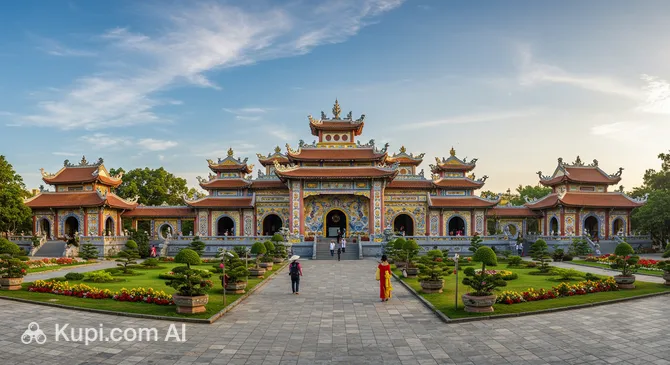
Tay Ninh. Illustration.
Source: Kupi.com AI

Tay Ninh is a place where culture, religion, and nature are wonderfully intertwined. The city is world-famous as the birthplace of the unique syncretic religion Cao Dai, and its main temple, the Cao Dai Holy See, captures the imagination with its bright architecture, unusual symbols, and mystical atmosphere. Another iconic attraction is the majestic Black Virgin Mountain (Nui Ba Den) — the highest point in Southern Vietnam, offering breathtaking panoramic views and serving as an important pilgrimage site.

In Tay Ninh, travelers will find authentic Vietnam, stunning landscapes, an introduction to ancient traditions, and the opportunity to make unusual discoveries. If you are looking for new horizons, inspiration, and genuine emotions away from the beaten tourist paths, Tay Ninh is the perfect choice for you.

You can find more interesting facts on the history of Tay Ninh page.

Weather Overview

Tay Ninh experiences a tropical climate with distinct dry and wet seasons. The average annual temperature fluctuates slightly, remaining high throughout the year. Expect hot weather with temperatures ranging on average from 27°C to 30.5°C. The hottest months are March and April, when maximum temperatures can reach 34-35°C. The highest rainfall occurs from May to October, with July and September being the wettest months. The dry season lasts from December to March, when precipitation is minimal, and February is often completely rain-free. To find out more details, study the detailed climate of Tay Ninh.

Average monthly temperature

Average monthly precipitation

Interesting Facts

In addition to its famous landmarks, the city of Tay Ninh hides many amazing stories and features that make it a truly unique place. Here are just a few curious facts that might surprise you:

  • Did you know that it was in Tay Ninh that the syncretic religion of Cao Dai originated, honoring among its saints and prophets such unexpected figures as Leo Tolstoy and Victor Hugo? The main temple of this religion, resembling a fantastic Oriental palace, is one of the most unusual religious buildings in the world.

  • The local Nui Ba Den, or Black Virgin Mountain, is shrouded in mystical legends. According to one of them, the mountain guards the spirit of a girl who refused a forced marriage, and it is believed that climbing to its summit can grant a cherished wish.

  • Tay Ninh is transformed annually during the colorful Cao Dai religious festivals. During these days, thousands of pilgrims dressed in traditional white robes gather at the Great Temple to participate in mesmerizing ceremonies and processions, creating a truly unforgettable sight.

How to Get There

Since the city of Tay Ninh itself does not have its own airport, a trip here usually begins with a flight to one of the nearby major cities. The most convenient and popular transport hub for tourists is Tan Son Nhat (IATA: SGN), located in Ho Chi Minh City. This is the country's largest international airport, receiving flights from all over the world. The distance to Tay Ninh is about 82 km, and the journey by taxi or bus will take approximately 2–2.5 hours depending on traffic density.

Alternatively, you can consider Can Tho Airport (IATA: VCA) in Can Tho, which is 145 km from Tay Ninh. This option might be interesting for those planning to combine the trip with a visit to the Mekong Delta, although the transfer will take more than 3 hours. Also geographically close is Phnom Penh International Airport (IATA: PNH) — only 140 km away, but it is located in Cambodia, which requires crossing the state border. You can explore all ways to get to the city to choose the optimal route.

For convenience, here is summary information on the main airports:

AirportPassenger trafficDistance
Tan Son Nhat International Airport41 mln82 km
Phnom Penh International Airport2.5 mln140 km
Can Tho Airport1.3 mln145 km
Lien Khuong Airport2.5 mln251 km
Ca Mau Airport200 000260 km

There is no direct rail connection to the city of Tay Ninh as there is no railway station here. The nearest major station is in Ho Chi Minh City (Saigon Station), where "Reunification" trains arrive from northern and central Vietnam. Tourists choosing this mode of transport usually reach Ho Chi Minh City and then cover the remaining part of the journey by intercity buses or taxis. Bus service between Ho Chi Minh City and Tay Ninh is very well developed: comfortable buses depart regularly, making the trip affordable and untiring.

Main Attractions

The city of Tay Ninh and its surroundings offer tourists several unique and memorable attractions that reflect the cultural and natural wealth of this region of Vietnam. A journey here allows you to touch unusual religious traditions and enjoy picturesque landscapes.

The crown jewel of Tay Ninh is undoubtedly the Cao Dai Holy See (Tòa Thánh Tây Ninh). It is not just a temple, but the Holy See of the unique syncretic religion of Cao Dai, which harmoniously combines elements of Buddhism, Christianity, Taoism, Confucianism, and Islam. The temple building is striking with its bright and unusual architecture, symbolism, and rich interior decoration. Tourists can visit the temple, observe the colorful daily ceremonies (usually at 6:00, 12:00, 18:00, and 24:00), and learn more about this fascinating faith that attracts pilgrims from all over the world.

Another iconic site is Ba Den Mountain (Núi Bà Đen), also known as Black Lady Mountain. It is the highest mountain in southern Vietnam (986 meters) and is considered a sacred place. Numerous pagodas and temples are located on its slopes and summit, attracting pilgrims. For tourists, it is an excellent spot for trekking, enjoying spectacular panoramic views of the surrounding plains, and visiting religious shrines. The summit can also be reached by a modern cable car, making it accessible to everyone.

Not far from Tay Ninh lies Dau Tieng Lake (Hồ Dầu Tiếng) – one of the largest man-made freshwater lakes in Southeast Asia. This picturesque spot is perfect for those seeking peace and contact with nature. The lake offers beautiful views, opportunities for boat trips and fishing, and is an important water source for the region. Its calm waters and green shores create an atmosphere of relaxation and a break from the city bustle.

Local Cuisine

The gastronomy of Tay Ninh is an amazing journey for your taste buds, harmoniously combining local culinary traditions with hints of Cambodian and Southern Vietnamese cuisine. It is a true kaleidoscope of flavors that makes the city's cuisine distinctive and memorable.

The star of the local cuisine is undoubtedly bánh tráng phơi sương – ultra-thin rice paper dried in the morning dew. It is served with various fillings, from spicy pork to the freshest herbs and vegetables. This is a light, aromatic, and very homey dish that is a must-try. Another culinary pride of Tay Ninh is muối tôm, a spicy shrimp salt. Locals use it as a universal seasoning, sprinkling it on fruits, meat, and other dishes, and consider it a true symbol of the city.

To get to know Tay Ninh's everyday food, head to the local markets. Here, an abundance of street food awaits you: from snacks made of fresh vegetables and fried bananas to sweet coconut soups and unusual tapioca desserts. During the mango and dragon fruit season, you can find small fruit festivals and enjoy the juiciest produce. Farmers' markets are also worth noting – they are a great place to find fresh spices, herbs, and exotic products that give local dishes their unique flair.

The food culture in Tay Ninh is largely centered around family cafes serving homemade soups, including fragrant noodle soup with herbs, as well as dishes made from fresh local fish and river shrimp. As for drinks, as in all of Vietnam, green tea, freshly squeezed tropical fruit juices, and, of course, the famous Vietnamese coffee are popular. Among alcoholic beverages, you can find local beer or rice wine.

Travel Tips

Planning a trip to Tay Ninh, the heart of the unique Cao Dai religion in Vietnam? To ensure your journey goes smoothly and leaves only pleasant impressions, we have prepared some practical tips.

  1. Clothing and Essentials:

    Tay Ninh has a tropical climate, so choose light, breathable clothing made of natural fabrics. T-shirts, shorts, sundresses, and light trousers will be ideal. Don't forget a hat, sunscreen, and comfortable shoes for walking. In the rainy season (from May to November), a raincoat or umbrella will come in handy. For visiting the Great Cao Dai Temple and other religious sites, modest clothing covering shoulders and knees is required. Bring a universal adapter for electronics (Type A, C, and G sockets are used in Vietnam, voltage is 220V).

  2. Transport in the City:

    The main modes of transport in Tay Ninh are taxis and motorcycle taxis (xe om). Public transport in the conventional sense is poorly developed. Taxis can be ordered through a hotel or hailed on the street; always check for a meter or agree on a price in advance. Ride-hailing apps like Grab may be available, but they are less common than in larger cities. Renting a motorbike is possible but requires experience driving in Asian traffic and appropriate licenses.

  3. Financial Matters:

    The local currency is the Vietnamese Dong (VND). It is best to exchange money at banks or official exchange offices. Credit cards (Visa, Mastercard) are accepted in large hotels and some restaurants, but cash is indispensable for markets and small establishments. ATMs are available in the city. A rough daily budget can range from 25-30 USD per person for an economical holiday. Tipping is not mandatory but appreciated for good service (5-10%).

  4. Health and Safety:

    Tay Ninh is considered a relatively safe city. Observe standard precautions: watch your belongings, drink bottled water, and wash fruit thoroughly. Pharmacies are available in the city, but it's better to have a basic set of medicines with you. Be sure to get travel medical insurance. In case of serious health problems, a trip to clinics in Ho Chi Minh City may be required.

  5. Language and Communication:

    The official language is Vietnamese. English is common in the tourism sector (hotels, large restaurants), but overall proficiency is not high. Learn a few simple phrases: "Xin chào" (Sin chow) – hello, "Cảm ơn" (Kam on) – thank you. A local SIM card with internet access is easy to buy. Wi-Fi is available in most hotels and cafes.

  6. Local Etiquette and Traditions:

    Vietnamese people are friendly and hospitable. A smile and politeness are the keys to pleasant communication. Greet people with a slight nod. When visiting temples, especially the Cao Dai Temple, behave respectfully, follow the dress code, and photography rules (often no photos during ceremonies or in certain areas without permission). It is not customary to speak loudly in public places or publicly express anger.

  7. What to Avoid:

    Do not touch the heads of local residents, as the head is considered a sacred part of the body. Also, avoid pointing at people or objects with your foot. Refrain from discussing sensitive political topics.

  8. Special Tip – Ceremonies at the Cao Dai Temple:

    Try to attend one of the daily prayer ceremonies at the Great Cao Dai Temple (usually held at 6:00, 12:00, 18:00, and 24:00). This is an incredibly colorful and unique sight that allows you to touch a distinctive culture and religion. Check the schedule in advance and remember the rules of behavior and dress code.

We hope these tips help you better prepare for your trip and get the most out of exploring the wonderful city of Tay Ninh and its unique attractions. Have a great journey!

Entertainment & Nightlife

Evening Tay Ninh offers its own more relaxed and authentic leisure options compared to the bustling metropolises of Vietnam. Here, nightlife is centered not so much on loud clubs as on cozy cafes, local restaurants, and lively streets where locals gather.

The main centers of evening activity are often the areas around the Tay Ninh Central Market (Chợ Tây Ninh), where numerous street cafes and eateries open at sunset, offering fragrant local dishes, or along the city's main streets. The atmosphere is usually very friendly and laid-back. Many establishments stay open late, allowing for socializing and delicious food. A popular form of evening entertainment is also karaoke bars; venues like Karaoke Star or Melody Lounge (names are typical examples) can be found in various parts of the city – this is an important part of the local leisure culture.

While Tay Ninh might not be famous for a large number of nightclubs in the European sense, you can find cozy local bars and cafes where it’s pleasant to spend time over a drink. For example, you can drop into one of the local cafes with a nice atmosphere, such as Cafe Amour, or find a lively quán nhậu (a traditional Vietnamese eatery with drinks) serving fresh bia hơi (draught beer) and local delicacies. The crowd is mostly local, which adds to the flavor. There is usually no special dress code; casual style is welcomed. Prices in Tay Ninh venues are generally very affordable. To find a suitable place for dinner or a get-together with friends, it is recommended to explore popular central streets, such as the lively 30/4 Street (Đường 30/4), or ask for recommendations from locals or at your hotel.

For getting around the city in the evening, it is best to use taxis or motorcycle taxis (xe om). It is recommended to use the services of official companies or agree on the price in advance if using private drivers. Most central areas of Tay Ninh are considered safe enough for evening walks, however, you should always observe standard precautions: watch your belongings and avoid poorly lit and deserted areas late at night.

As for daytime entertainment, Tay Ninh and its surroundings offer interesting opportunities for cultural leisure. The main attraction is the majestic Cao Dai Temple (Thánh Thất Cao Đài), impressive for its unique architectural style and religious significance. You can also visit local markets to dive into the daily life of the city or stroll through city parks, enjoying the slower pace of life in this region of Vietnam.

Parks & Museums

Tay Ninh and its surroundings are not just about world-famous landmarks, but also places where you can dive deeper into local culture and enjoy a relaxing break. The city offers corners for peaceful time in nature as well as sites that preserve its rich history and the unique traditions of Vietnam.

For those seeking tranquility and greenery within the city or its immediate surroundings, it is worth paying attention to developed recreation zones. Although Tay Ninh is better known for its large natural sites, locals and tourists find opportunities for picnics and walks in less crowded areas, such as along certain stretches of the Dau Tieng Lake shore, where you can enjoy silence and picturesque views. Also, look for small public squares or walking areas within the city itself that can offer a pleasant respite.

A key place to learn about the history and culture of the region is the Tay Ninh Provincial Museum (Bảo tàng tỉnh Tây Ninh). It houses exhibits telling the story of the province's development through various stages: from ancient times and archaeological finds to ethnographic collections representing the life and traditions of local peoples, as well as highlighting periods of the historical journey toward development. A visit to the museum allows for a better understanding of the historical context and cultural diversity of Tay Ninh.

Those interested in historical sites will find the Central Office for South Vietnam (Căn cứ Trung ương Cục miền Nam) historical complex fascinating. This site, located in a forested area, features a former underground headquarters from a past era. Today, it is a kind of open-air museum where you can see restored shelters and workspaces, and learn about life and activities in those challenging conditions. This place provides a vivid representation of an important period in the history of Vietnam.

While the Cao Dai Holy See is primarily an active religious center, its vast territory and unique architecture also carry elements of a museum exhibition. Careful study of the building details, symbolism, and learning about the principles of Cao Dai through information stands or interaction with followers (if possible) can be a profound cultural experience, akin to visiting a themed museum dedicated to this unique religion. This allows for a different perspective on the complex, complementing the impression of its spiritual significance.

For more authentic experiences and an introduction to the daily life of Tay Ninh, stroll through the local markets. These are not just places for buying fresh products, but vibrant cultural venues where you can observe the lifestyle of the residents and feel the local flavor. To find a secluded spot for relaxation in nature, you can explore less-known parts of the Dau Tieng Lake shore, offering quietude away from the main tourist routes.

Getting Around

Getting around Tay Ninh is fairly simple, although there are no subways or trams like in major metropolises. The main types of public transport for tourists and locals are buses, motorcycle taxis (the famous "xe om"), and regular taxis. The choice depends on your budget, distance, and desired level of comfort.

Buses in Tay Ninh are the most economical way to travel, especially if you need to cover significant distances within the city or travel to the nearby outskirts. The route network usually covers key points in the city, including markets, the bus station, and some tourist sites. Fare payment is most often made in cash directly to the conductor or driver when entering the bus. It is recommended to have small bills, as there may be difficulties with change. Buses usually run during the daytime, from early morning until evening.

Motorcycle taxis (xe om) are perhaps the most authentic and flexible way to travel in Vietnamese cities, and Tay Ninh is no exception. Motorcycle taxi drivers can be found on almost every corner. They maneuver easily in traffic and can take you directly to your destination, even if it is in a narrow alley. The key point is to always agree on the cost of the trip before it starts, as there are no fixed tariffs here. This is a fast and relatively inexpensive option for short and medium distances.

Taxis are also available in Tay Ninh. They can be found at ranks near hotels, large shops, markets, and popular attractions, or called by phone. Most taxis are equipped with meters, but it won't hurt to make sure one is present and working before starting the journey. If there is no meter or it's not working, be sure to agree on the price with the driver in advance. In recent years, mobile apps for ordering taxis and motorcycle taxis (such as Grab) have become increasingly popular, offering convenient booking and often more transparent pricing.

For tourists, it is practical to know that bus tickets are purchased on the spot. If you prefer more independent travel, you can consider renting a bicycle or scooter, though this requires some confidence in operating a two-wheeled vehicle in local traffic conditions. For exploring the central areas of Tay Ninh, walking can also be a great option, allowing you to better feel the city's atmosphere.

Accommodation

When planning a trip to Tay Ninh, you can choose from various accommodation options suitable for different budgets and preferences. The city features both budget guesthouses and small family-run hotels, as well as more comfortable mid-range hotels. For those seeking more independence or planning a long stay, apartment or room rentals are also available. To be closer to the main attractions and transport hubs, consider staying in the city's central districts or along key streets.

There are various hotel options in Tay Ninh, from budget to more comfortable ones. When choosing a specific place to stay, it is recommended to study current offers on online platforms, pay attention to reviews from previous guests, and the location relative to the sites you are interested in. Regardless of your choice, especially if your trip coincides with the peak tourist season or during local festivals and holidays in Vietnam, it is recommended to book your accommodation in advance. This will help not only guarantee availability but also secure more favorable terms.

The price range for accommodation in Tay Ninh is generally affordable, allowing you to find an option for almost any budget – from budget offers to rooms in mid-range comfort hotels. Booking a room or apartment is most convenient through popular international and local online booking services. It is also possible to book directly through hotel websites (where available) or, in the case of small guesthouses, sometimes upon arrival, although pre-planning is always preferable for peace of mind and better selection.

Nearby Cities

For those who want to explore the surroundings, Tay Ninh serves as an excellent starting point for day trips to several interesting nearby locations:

CityPopulationDistance
Hoa Thanh152 3398 km
Svay Rieng41 42443 km
Trang Bang183 38543 km
Chon Thanh121 08357 km
Ap Khanh Hung18 87461 km

These nearby destinations provide insight into the diverse culture and landscapes of the region. Each of these cities offers its own unique attractions, from bustling metropolises to quieter administrative centers, making them a wonderful addition to your journey through Vietnam.

Shopping & Souvenirs

Shopping in Tay Ninh offers tourists an immersion into the authentic atmosphere of Vietnamese trade, dominated by local markets and small private shops. The city is not famous for huge malls, but you can find unique local goods here. Tay Ninh is particularly known for its special variety of rice paper – "bánh tráng phơi sương," as well as sugarcane products and shrimp salt (muối tôm).

Main shopping spots are concentrated along the city's central streets, such as Cách Mạng Tháng Tám Street, and in the central market area. Here you will find many small shops offering clothing, shoes, fabrics, household goods, and, of course, local food products.

There are practically no large modern shopping centers typical of metropolises in Tay Ninh. Instead, you can find small department stores or shopping rows where the assortment is primarily oriented toward local residents, but tourists can also find something interesting.

The Tay Ninh Central Market (Chợ Tây Ninh) is the heart of the city's commercial life and a must-visit place. There is a lively atmosphere here, and stalls are bursting with fresh fruits, vegetables, seafood, meat, spices, and prepared local dishes. You can also purchase clothing, souvenirs, and household items at affordable prices at the market. It is a great place to observe the daily life of the locals and try local delicacies.

As souvenirs from Tay Ninh, it is worth bringing back the already mentioned famous rice paper "bánh tráng phơi sương," local shrimp salt, and coconut or peanut candies. You can also look for traditional Vietnamese conical non la hats, silk or cotton products, and various local herbs and spices. If you visit the Cao Dai temple complex, you can find souvenirs with religious symbols nearby.

Shops in Tay Ninh usually open in the morning, around 8:00-9:00, and work until evening, around 20:00-21:00. Markets start their work very early, at dawn, and are most active in the first half of the day. The main means of payment, especially in markets and small shops, is cash in Vietnamese Dong (VND). Some larger shops or hotels may accept bank cards, but it is better to always have enough cash with you. ATMs are available in the city.

The possibility of a Tax-Free refund for tourists in Vietnam is usually provided at international airports upon departure from the country for goods purchased in shops participating in this system. If you plan large purchases, check with the sellers about the possibility of preparing documents for a VAT refund.

Reached the end of the page?

That means the route is fully explored