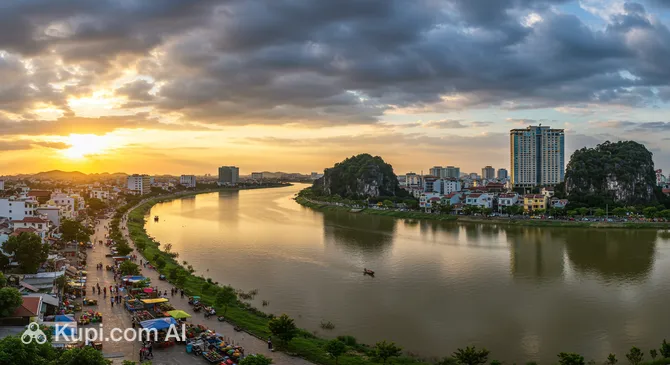
Located on the banks of the scenic Dong Nai River, Bien Hoa is a fascinating blend of a booming industrial center and a guardian of Vietnam's ancient traditions. As a major satellite city of Ho Chi Minh City, it attracts travelers with its authentic atmosphere, where modern industry exists alongside quiet streets and historic temples. With a population of over 1.1 million people, the city is rightfully considered one of the country's most dynamic and densely populated regions.
Bien Hoa. Illustration.
Source: Kupi.com AI
The geographical location of Bien Hoa makes it a gateway to the southern part of the country. Here, in Dong Nai Province, a vast number of industrial enterprises are concentrated, yet behind the factory facades lies a rich cultural heritage. Travelers appreciate this city for the chance to see the real Vietnam, unburdened by mass tourism, and to discover a unique pottery culture with roots reaching back centuries.
Exploring the historical past of Bien Hoa, you will find traces of the colonial period and ancient citadels. The city is famous for its craft villages, where artisans have been creating exquisite ceramics for three centuries. A visit here is an invitation to immerse yourself in the world of traditional art, enjoy the tranquility of riverside parks, and discover new facets of Vietnamese hospitality.
Weather Overview
The climate in Bien Hoa is typical for the southern region and is characterized by a clear division into dry and rainy seasons. The average annual temperature here stays around 27–29°C, making the city accessible for visits year-round, although weather conditions can significantly influence the style of your holiday.
The period from November to April is considered the dry season. At this time, sunny weather sets in with minimal precipitation, and temperatures can reach 34–35°C, especially in March and April. Weather in the city during these months is most favorable for long excursions and walks in Buu Long Mountain park.
The rainy season begins in May and lasts until October. Expect warm days with occasional but intense downpours, which usually happen in the afternoon. July is traditionally the wettest month, when air humidity increases significantly. Despite the precipitation, rains are usually short-lived, and with an umbrella, they will not be a serious hindrance to sightseeing.
Average monthly temperature
Average monthly precipitation
Interesting Facts
Pottery Heritage: The Bien Hoa craft village has existed for over 300 years. The first artisans settled on Cu Lao Pho Island and along the Lo Gom Canal at the end of the 17th century, laying the foundation for the famous ceramic school.
School of Fine Arts: At the beginning of the 20th century, French authorities founded a specialized School of Fine Arts here, which still operates today, combining European techniques with traditional Vietnamese craftsmanship.
Global Renown: Since the end of the 19th century, unique Bien Hoa ceramics have been exported to many countries worldwide and remain a target for antique collectors due to their special glaze.
Ancient Fortress: The city preserves the remains of the Bien Hoa Citadel, which was rebuilt in 1834 by order of Emperor Minh Mang, making it one of the region's oldest defensive structures.
Third Most Densely Populated: Bien Hoa ranks third in Vietnam for population density, surpassed only by the megacities of Ho Chi Minh City and Hanoi, highlighting its status as a powerful economic hub.
How to Get There
Bien Hoa boasts excellent transport accessibility, making it a convenient destination to visit. Thanks to its location at the intersection of key routes in Southern Vietnam, getting here is easy from both the neighboring metropolis and distant provinces. Detailed information about routes will help you plan your trip as efficiently as possible.
For air travelers, the main hub is Tan Son Nhat International Airport (SGN) in Ho Chi Minh City, located just 30-40 minutes away from the center of Bien Hoa. The most convenient way to get from the airport is by taxi or a pre-booked rental car. There are also regular bus services connecting the airport with Dong Nai Province.
Railway communication is another reliable way to reach the city. The country's main North-South railway line passes through Bien Hoa. Bien Hoa Station receives trains from Ho Chi Minh City, Hanoi, and other major cities, offering tourists a comfortable and scenic way to travel. The train journey from Ho Chi Minh City takes just under an hour.
Station
Passenger traffic
Distance
Biên Hòa railway station
6
2 km
Gò Vấp railway station
6
23 km
Saigon railway station
13
27 km
Binh Thuan Railway Station
5
127 km
Da Lat Railway Station
7
207 km
Phnom Penh railway station
12
221 km
Additionally, the city is crossed by National Highway 1, making it accessible for long-distance buses and private vehicles. A car trip from the center of Ho Chi Minh City usually takes about an hour, depending on traffic conditions.
Main Attractions
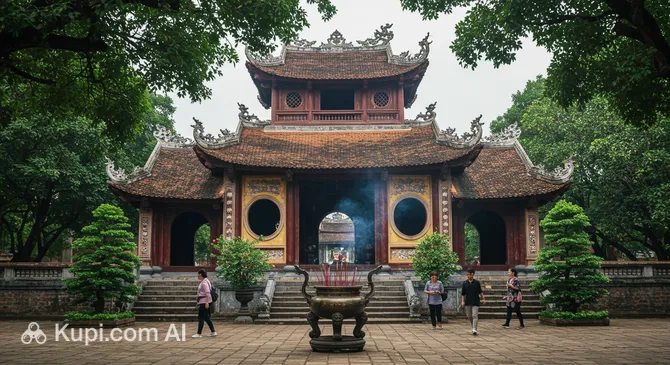
One of the city's most majestic and revered landmarks is the Tran Bien Temple of Literature. Founded in the 18th century and carefully restored, this architectural ensemble serves as a tribute to Confucian traditions and education. Strolling through its well-kept grounds, you can feel the deep serenity and grandeur of Vietnamese history.
Tran Bien Temple of Literature. Illustration.
Source: Kupi.com AI
Traveler photos:
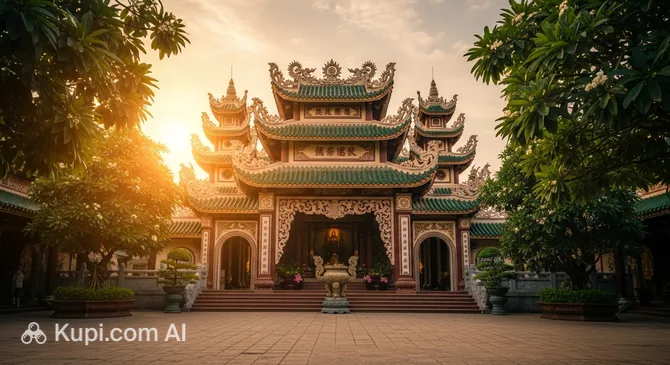
For those seeking spiritual solitude, a visit to the Phuoc Vien Pagoda is a must. This Buddhist complex impresses with its exquisite decoration and atmosphere of piety. Equally interesting is the ancient Buu Phong Temple, located on a hill offering panoramic views of the surroundings, housing an ancient sculpture of Amitabha Buddha inside.
Phuoc Vien Pagoda. Illustration.
Source: Kupi.com AI
Traveler photos:
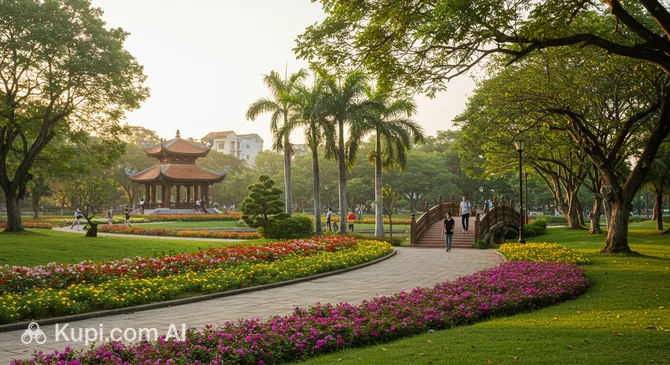
If you want to spend time outdoors, head to Bien Hung Park. It is a popular recreation spot for both locals and tourists, offering shaded green alleys and spaces for walks by the water. Also worth noting is the Hanoi Church, whose Neo-Gothic spires look especially striking in the rays of the setting sun, creating a European accent unusual for an Asian city.
Bien Hung Park. Illustration.
Source: Kupi.com AI
Traveler photos:
Local Cuisine
The gastronomic scene in Bien Hoa is a feast for lovers of authentic Asian cuisine. The local menu is based on the freshest ingredients and an abundance of herbs. You should definitely try the traditional rice noodles and the famous Vietnamese spring rolls—thin, transparent rolls with various fillings, prepared here with special skill.
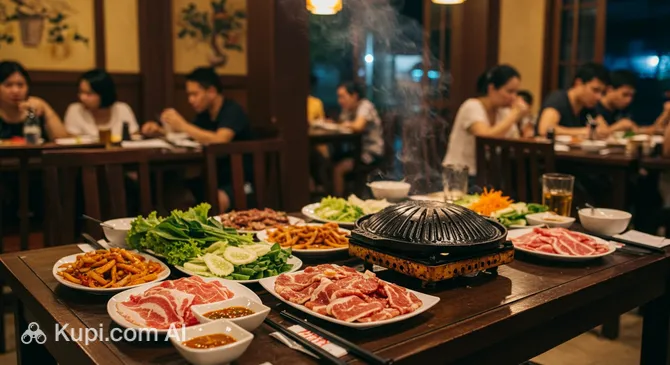
For those who prefer an interactive dining experience, Chu Beo BBQ Buffet is an excellent choice. Here you can grill meat and seafood yourself on a cast-iron pan while enjoying the process and socializing. If you miss familiar flavors with an Asian twist, stop by Jollibee Pham Van Thuan, where popular fast food is adapted to local preferences.
Chu Beo BBQ Buffet. Illustration.
Source: Kupi.com AI
Traveler photos:
The street food culture in the city is excellently developed. At evening markets and in small shops along the roads, you can find real delicacies: Vietnamese kebabs, soups, and various snacks made from rice flour. For drinks, locals prefer strong Vietnamese coffee with condensed milk or refreshing sugarcane juice, which perfectly quenches thirst on a hot afternoon.
Travel Tips
Bien Hoa welcomes travelers warmly, and to make your trip as comfortable as possible, we have prepared some practical tips from experienced tourists.
Clothing and Dress Code: Choose light clothing made of natural fabrics, as a humid tropical climate prevails in the region. When visiting temples, such as the Tran Bien Temple of Literature, be sure to cover your shoulders and knees—this is a sign of respect for local traditions.
Transport: To move around the city, it is best to use the Grab mobile app. If you are planning a trip to Ho Chi Minh City, renting a car will take about an hour and ensure maximum comfort.
Finance: The official currency is the Vietnamese Dong. Credit cards are accepted in shopping centers, but you will definitely need cash at markets and in pottery villages. The tipping culture is not developed in ordinary cafes, but a small reward in restaurants will be met with gratitude.
Communication: You can buy a local SIM card at Tan Son Nhat Airport or at mobile phone shops in the city. Wi-Fi is available in most cafes and hotels for free.
Etiquette: Greet locals with a slight bow or a smile. It is customary to remove your shoes when entering a private house or certain temples.
Safety: Bien Hoa is a fairly safe city. However, follow standard precautions in crowded places and keep an eye on your belongings.
What to Avoid: You should not publicly express strong emotions or anger—in Vietnamese culture, this leads to "loss of face." It is also not recommended to drink tap water.
Golden Hour: To get the best shots of the Hanoi Church, come to it right after sunset, when the lights come on and the building looks truly magical.
May your acquaintance with this industrial, yet at the same time surprisingly soulful city, leave only the most pleasant memories!
Entertainment & Nightlife
Daytime entertainment in Bien Hoa is centered around natural areas and parks. The Buu Long Mountain park is immensely popular and is often called "miniature Ha Long Bay" because of its picturesque lakes and rocky outcrops. Here, you can not only take impressive photos but also visit a hippopotamus farm or cool off in a pool with ocean water, making it an ideal place for family holidays.
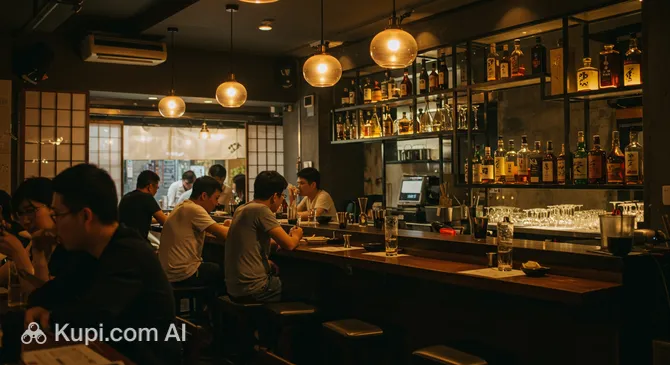
As dusk falls over the city, the center of gravity shifts toward cozy bars and karaoke clubs. Fans of Japanese aesthetics and gastronomy should check out Izakaya Toru, which boasts a relaxed atmosphere. The nightlife here is less noisy than in neighboring Ho Chi Minh City, but it is filled with local flavor and genuine fun.
Izakaya Toru. Illustration.
Source: Kupi.com AI
Traveler photos:
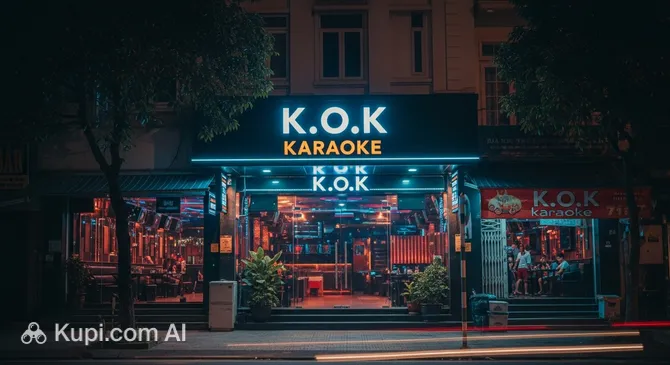
Karaoke is an integral part of Vietnamese leisure, and Bien Hoa offers many high-quality venues for singing enthusiasts. Popular spots include Karaoke 126 and K.O.K Karaoke, where you can book a private room and have a great time with friends. The safest way to get around the city at night is by taxi, which can be easily called via mobile apps.
K.O.K Karaoke. Illustration.
Source: Kupi.com AI
Traveler photos:
Parks & Museums
The main natural gem and a point of attraction for all visitors to the city is the Buu Long Mountain park. This space impresses with its lakes featuring fountains and rocky landscapes overgrown with exotic greenery. From the park's heights, breathtaking views of Bien Hoa open up, making it the best spot for panoramic photography and peaceful relaxation in nature.
For those who prefer walks within the city limits, Bien Hung Park is perfect. This cozy green space with walking paths is ideal for observing the leisurely pace of the townspeople's life. Another important cultural site is the Tran Bien Temple of Literature, which, although a religious structure, functions as an open-air museum, introducing visitors to the architectural heritage of the Nguyen Dynasty.
While there are few classic museums in the city, their role is successfully fulfilled by ancient temple complexes. For example, the Phuoc Vien Pagoda and the 17th-century Buu Phong Temple house unique works of religious art, sculptures, and artifacts that tell the story of the Dong Nai region better than any exhibition. Visiting these places allows for a deep dive into the cultural context and spiritual traditions of Southern Vietnam.
Getting Around
The transport system in Bien Hoa is focused on practicality and close connection with neighboring regions. The main form of public transport here is buses, which connect different areas of the city and provide regular service to Ho Chi Minh City. Bus routes cover all key points, including industrial zones and shopping centers, while fares remain very budget-friendly.
For more comfortable and faster travel, tourists often choose taxis or popular mobile apps to call cars and motorcycle taxis. Using Grab is the most reliable way to know the fare in advance and avoid translation difficulties. Motorcycle taxis (xe ôm) are a great option for short distances and those who want to feel the real Vietnamese drive on the roads.
Since the city is a major transport hub, a railway and National Highway 1 pass through it. This provides easy access to intercity transport. If you plan to move around a lot between Bien Hoa and Ho Chi Minh City, renting a car with a driver can be the most convenient option, providing flexibility in route planning.
Accommodation
The choice of accommodation in Bien Hoa will pleasantly surprise practical travelers. Due to its status as a major industrial center, the city offers a wide range of options: from modern business hotels to cozy budget guest houses. Many tourists choose to stay here to save on accommodation costs while maintaining the ability to quickly reach Ho Chi Minh City.
The most convenient accommodation options are concentrated along the main highways and near the administrative center. Here, you can find mid-range hotels offering quality service, a swimming pool, and breakfast at very attractive prices. For those planning a longer stay, apartments for rent in modern residential complexes are available.
If your goal is to explore history and culture, look for hotels in the Dong Nai River area. During peak season and major national holidays, it is recommended to book rooms in advance, as the city is popular with business travelers. Major international booking systems work smoothly here, making it easy to find a suitable option online.
Nearby Cities
Thanks to its strategic position, Bien Hoa serves as an ideal starting point for exploring the country's southern region. Proximity to major centers and cozy towns allows tourists to discover something new every day, returning to the city's calm atmosphere in the evening.
Just a few kilometers away are interesting destinations such as Ho Nai and Long Binh, which are closely linked to Bien Hoa economically and historically. Also noteworthy is Di An, which takes very little time to reach. The main destination for day trips remains Ho Chi Minh City, where the largest museums, shopping centers, and historical monuments of the colonial era are concentrated.
City
Population
Distance
Ho Nai
41 922
4 km
Long Binh
133 206
5 km
Tan Van
14 086
5 km
Di An
73 859
12 km
Binh Hoa
88 500
14 km
The transport network, including the railway and national highway, makes it easy to plan excursions to neighboring provinces. Don't miss the opportunity to explore this dynamic region, where every small town preserves its unique traditions and way of life.
Shopping & Souvenirs
Shopping in Bien Hoa is primarily a hunt for unique ceramics. The city has been famous for centuries for its pottery workshops, such as Thu Duc and Binh Duong. Here, you can purchase authentic clay products: from elegant decorative vases to authentic kitchenware and jars. These handmade items will make an ideal and truly unique souvenir of your trip.
For more traditional purchases and a taste of local flavor, head to the city's central markets. There is a lively atmosphere here, and stalls are bursting with fresh tropical fruits, spices, and textiles. Trading at markets is an important part of the local culture, so don't hesitate to bargain politely, which is considered quite natural here.
The modern side of commerce is represented by large shopping centers. In places like the shopping complex on Pham Van Thuan Street, you will find clothing, cosmetics, and electronics stores from well-known brands. Most shops are open from morning until late evening; large centers accept bank cards, but at markets and small craft shops, it is better to have cash with you—Vietnamese Dong.