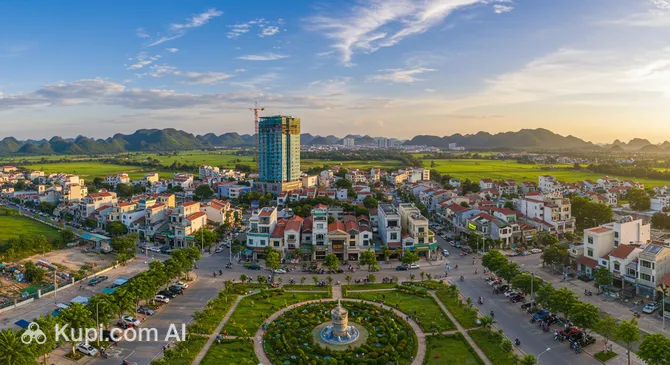
Long Khanh is a charming spot in Dong Nai province in southeastern Vietnam, offering travelers a rare opportunity to see the country's authentic life, unpolished by tourist commercialization. Located approximately 80–100 kilometers from bustling Ho Chi Minh City, the city maintains a calm pace and the authentic atmosphere of a provincial center. With a population of about 245,000, it serves as an independent economic hub where life revolves around agriculture and the daily routines of the locals.
Long Khanh. Illustration.
Source: Kupi.com AI
The city is famous for its cleanliness and quiet, making it a pleasant destination for those looking to escape the hustle and bustle of megacities. While Long Khanh does not claim the status of a major tourist hub, its sincere hospitality and slow pace create a unique charm. Exploring the city's history allows for a better understanding of how this region developed, transforming from a provincial capital into a modern urban district.
A visit to Long Khanh is primarily an introduction to the lifestyle of southern Vietnam. Here, it is worth strolling through the central streets, visiting local markets, or simply watching life go by from a cozy cafe window. We invite you to discover this "off-the-beaten-path" Vietnam, where every passerby is not just a tourist, but a welcome guest.
Weather Overview
Long Khanh is located in a tropical climate zone typical of the southern part of Vietnam. There are two distinct periods: the wet season, lasting from May to November, and the dry season, from December to April. The average annual temperature stays in a comfortable range from 25°C to 32°C, though high humidity can make the heat feel more intense.
If you are planning a trip, keep in mind that peak rainfall occurs in September and October. During this time, short but very intense tropical downpours are possible, which sometimes lead to local flooding in low-lying areas. January and February, by contrast, offer dry and sunny weather, with average temperatures around 27°C and rain being very rare.
Thanks to the flat terrain and the absence of large industrial plants, air quality in the city is usually higher than in neighboring Ho Chi Minh City. Nevertheless, before your trip, it is always useful to check the current Long Khanh climate to choose the right wardrobe and plan outdoor walks.
Average monthly temperature
Average monthly precipitation
Interesting Facts
Former Capital: Before administrative reforms, Long Khanh was the administrative center of the South Vietnamese province of the same name, established back in 1956.
Minimal Tourists: The city remains a "hidden gem" on the tourist map; on popular global travel services, the number of reviews for it is often only a few dozen.
Cleanliness and Order: Among the residents of Dong Nai province, Long Khanh has earned a reputation as one of the quietest and most well-maintained settlements in the region.
Agricultural Hub: The city is surrounded by vast farmlands, so local markets are always full of the freshest tropical fruits at very low prices.
How to Get There
Long Khanh enjoys good transport accessibility despite not having its own airport. The main flow of travelers arrives here from Ho Chi Minh City via a well-developed road network. To plan your route most effectively, we recommend checking the section on how to get to Long Khanh.
The main air gateway for the trip remains Tan Son Nhat International Airport (SGN) in Ho Chi Minh City. From there, the most convenient way to reach Long Khanh is by taxi or ride-hailing apps (such as Grab); the journey takes between 1.5 and 2.5 hours depending on traffic. Long-distance buses also depart regularly from Ho Chi Minh City's Mien Dong station, with the travel time usually around 3 hours.
There is no direct rail link to the city. The nearest major station is in the city of Bien Hoa, from where you can reach Long Khanh by local bus or taxi. Independent travelers often choose to rent a motorbike in Ho Chi Minh City to travel along highway QL1A, though the heavy traffic leaving the metropolis should be taken into account.
Station
Passenger traffic
Distance
Biên Hòa railway station
6
46 km
Gò Vấp railway station
6
62 km
Saigon railway station
13
64 km
Binh Thuan Railway Station
5
83 km
Da Lat Railway Station
7
173 km
Main Attractions
Long Khanh is a city where the main attraction is everyday life itself. There are no world-famous architectural monuments here, but that is precisely its appeal for the thoughtful explorer. Main public spaces are centered around central markets and squares, which turn into lively hubs of trade and socializing in the mornings and evenings. Here, you can watch the brisk trade of fresh fruit and produce from local farms.
One of the landmarks for visitors is often the Spring Garden Hotel, which stands out against the city skyline. Cozy cafes are located around it and along the central streets, becoming popular gathering spots for residents. While Long Khanh has no large temple complexes aimed at tourists, small local pagodas offer a glimpse into the region's religious traditions in a completely natural setting.
Travelers looking for something more large-scale often use the city as a base for exploring Dong Nai Province. Interesting archaeological sites and farmlands can be found in the surrounding areas. If your goal is to feel the true spirit of the provincial south, simply take a walk through the streets at sunset, when the city comes alive and locals head to the squares to relax.
Local Cuisine
The gastronomic scene in Long Khanh is a paradise for lovers of authentic Southern Vietnamese cuisine. Simple but incredibly delicious dishes based on rice, fresh herbs, and seafood prevail here. A must-try hit is com nieu—rice cooked in a traditional clay pot. The best place for this is the Cao Phat restaurant, where the serving of the dish turns into a small culinary show.
Besides clay pot rice, various versions of com tam (broken rice with side dishes) and fresh soups are popular in the city. The food culture here is closely linked to street food: the best taste discoveries often happen at markets or small family-run stalls. Prices in Long Khanh establishments are pleasantly surprising, as they are significantly lower than in touristy Ho Chi Minh City.
As for drinks, Long Khanh, like all of Vietnam, lives for its coffee culture. Be sure to order cà phê sữa đá—strong black coffee with condensed milk and ice. At places like The Coffee Vy’s Garden or Huyen Hau Rest Stop, you can not only enjoy the drink but also relax in the shade of tropical plants. For those who prefer lighter options, fresh juices made from exotic fruits grown in the gardens of Dong Nai province are always available.
Travel Tips
A trip to Long Khanh will be a pleasant and calm experience if you consider a few practical nuances of life in the Vietnamese province.
Clothing and Season: The best time to visit is the dry season from December to April. Bring light clothing made of natural fabrics, but don't forget a hat and sunscreen. When visiting temples, choose outfits that cover your shoulders and knees.
Transport: For moving around the city, it is most convenient to use the Grab app. If you decide to rent a bike, be extremely careful: traffic can seem chaotic, especially when merging onto the highway.
Finance: In Long Khanh, "cash is king." Cards are rarely accepted, so always carry a sufficient supply of Vietnamese Dong. It is better to exchange currency in advance in Ho Chi Minh City or at local banks.
Safety: The city is very safe, but standard precautions are still wise. Keep an eye on your bags when in crowds at the market and avoid unlit outskirts at night.
Language: English is not widely spoken here. Download an offline translator and learn a couple of basic phrases: "Xin chào" (hello) and "Cảm ơn" (thank you)—this always brings a smile to the locals.
Etiquette: Vietnamese people are very friendly. Greet people with a slight nod of the head. Do not show strong emotions or anger in public—this is considered "losing face."
What to Avoid: Do not drink tap water (use only bottled water) and do not agree to the services of suspicious guides without a clearly agreed price.
Connectivity: Buy a SIM card from a local operator (Viettel or Vinaphone) at Ho Chi Minh City airport—it may be more difficult to do this in Long Khanh, and Wi-Fi is not available in all cafes.
May your journey to this quiet corner of Vietnam be filled with kind encounters and bright discoveries!
Entertainment & Nightlife
Unlike the bright lights of neighboring metropolises, nightlife in Long Khanh is virtually non-existent. This is a city of early sunrises and quiet evenings. There are no clubs or noisy bars here; instead, the main activity after sunset moves to local cafes and small restaurants where families gather. For those accustomed to a busy evening program, the best solution is a trip to Ho Chi Minh City or Bien Hoa.
Daytime entertainment in the city is more contemplative. Places like The Coffee Vy's or The Wonder Coffee are popular, offering a pleasant environment to spend a few hours over a cup of famous Vietnamese coffee. These are excellent spots for slow reading or observing street life through panoramic windows.
Safety in the city is high, so even late-night walks along the central streets are not a cause for concern. However, keep in mind that most establishments close quite early. If you want to experience the local flavor, check out the evening food markets, which stay open until 9:00 or 10:00 PM, offering freshly prepared snacks in a friendly atmosphere.
Parks & Museums
In Long Khanh, you won't find classic museums with vast historical collections, which is typical for developing provincial centers. Cultural heritage here is passed down through living traditions and the architecture of local pagodas rather than museum exhibits. To learn about the region's history, residents and visitors often turn to the archives in neighboring Bien Hoa.
Park areas within the city itself are limited to small squares located near markets and administrative buildings. One such place is the central square, where townspeople gather in the evenings to relax. These are not so much classic parks as centers of public life where you can feel the rhythm of the city.
The lack of large parks is more than compensated for by the surrounding landscape. Long Khanh is surrounded by lush agricultural lands and private gardens. A walk on the outskirts of the city can replace a visit to an arboretum: exotic fruit trees grow everywhere here, creating a natural green belt. For a full forest getaway and nature reserves, tourists usually head further into Dong Nai province.
Getting Around
The transport system in Long Khanh is simple and straightforward, which is typical for small Vietnamese cities. The main mode of transport for locals is motorbikes, while for tourists, it is buses and taxis. Distances within the city are small, so any trip usually takes between 10 and 20 minutes.
One of the most convenient ways to get around is the Grab app, which allows you to call both a car and a motorbike taxi at a fixed price. This eliminates the need to haggle with drivers and ensures safety. Traditional taxis also wait near hotels and markets. If you feel confident on the road, you might consider renting a scooter, which gives you complete freedom to move around the city and its picturesque surroundings.
Public buses mainly connect Long Khanh with other settlements in Dong Nai province. Inside the city itself, there are practically no traffic jams, except for sections adjacent to the main highway during peak hours. Overall, the city's transport accessibility is rated as good for a provincial town, although there are no metro or tram lines.
Accommodation
Accommodation options in Long Khanh are primarily geared toward transit travelers, business tourists, and those seeking deep immersion in the local environment. You won't find luxury five-star resorts or giant hotel chains here, but the city offers a decent selection of budget hotels and clean motels. Room rates start from a very modest 300,000 Vietnamese Dong per night.
Among the most popular accommodation options are the Spring Garden Hotel and Hapyson Hotel, which offer comfortable conditions and modern service. Quoc Thanh Hotel and Sunshine Hotel are also worth noting. Most hotels are concentrated in the central part of the city, which is convenient for accessing cafes and markets.
For those planning to stay in the city for a longer period, you can consider renting apartments in residential areas—this will save you money and let you feel like a local. It is recommended to book accommodation in advance if your trip coincides with major Vietnamese holidays (such as Tet); otherwise, finding a vacant room is usually easy.
Nearby Cities
Long Khanh serves as an excellent starting point for exploring the surroundings of southeastern Vietnam, offering tourists the chance to see the region's diversity in just one day. From here, it is convenient to reach neighboring cities, each possessing its own unique character.
Just 31 kilometers away is Ngai Giao, where a trip allows you to enjoy rural landscapes. You should also pay attention to Long Thanh, known for its developed infrastructure. For those who want to see larger settlements, Long Binh or Ho Nai are great options, as the journey there doesn't take much time. Another interesting destination is Phu My, located 43 kilometers from Long Khanh.
City
Population
Distance
Ngai Giao
16 522
31 km
Long Thanh
27 084
37 km
Long Binh
133 206
39 km
Ho Nai
41 922
40 km
Phu My
29 738
43 km
Dong Nai Province, where the city is located, is rich in natural areas and small settlements where local festivals are often held. We recommend not limiting yourself to city walks and heading out to explore these hospitable places to fully experience the flavor of southern Vietnam.
Shopping & Souvenirs
Shopping in Long Khanh is primarily an introduction to local life rather than a hunt for global brands. There are no giant shopping malls in the city, but there is an abundance of colorful markets and small shopping centers catering to the daily needs of residents. The main shopping points are concentrated in the city center, where life begins to buzz from early morning.
If you want to bring something special home from your trip, look for local products. The province is famous for its high-quality coffee and rice. At local markets, you can find excellent varieties of beans that make for a wonderful gift. It is also worth looking at handmade items, which are sometimes found in small shops near hotels.
Shops usually operate from early morning until 8:00–9:00 PM. Most retail outlets only accept cash in Vietnamese Dong, so you should take care of currency exchange in advance. Cards may be accepted in large hotels or modern supermarkets, but for strolling through the markets, paper money is essential. For serious brand shopping and Western-style souvenirs, it is better to head to Ho Chi Minh City.