Support

Carleton-sur-Mer

About

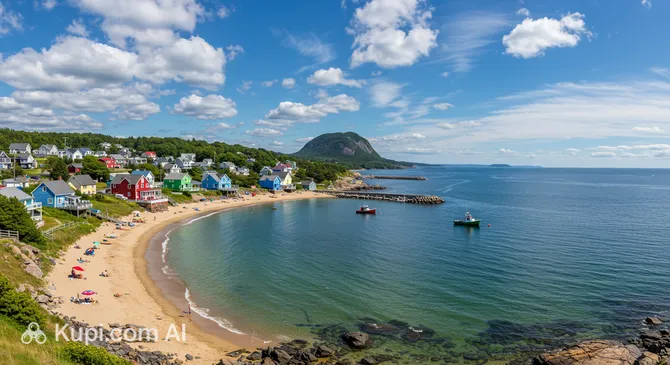
Carleton-sur-Mer is a picturesque resort town located on the southern coast of the Gaspé Peninsula in the province of Quebec. It is a place where majestic mountains meet the sea, creating unique landscapes and a distinct microclimate. It is here, on the shores of the famous Chaleur Bay, that travelers discover just how diverse and beautiful Canada truly is.

Carleton-sur-Mer. Illustration.
Source: Kupi.com AI

Despite its modest size and population of about 4,000 people, the town boasts a well-developed tourism infrastructure and a special charm. The cozy atmosphere is perfect for a relaxing getaway, and the rich history of Carleton-sur-Mer, closely tied to Acadian culture and maritime traditions, gives a special meaning to strolling through its streets. Thanks to its geographic location, the waters in the bay warm up better than in many other places in the region, making the town a popular destination for summer vacations.

One of the main attractions is Mont Saint-Joseph. From the observation deck at its summit, a breathtaking panorama unfolds over the town, sandy spits, and the endless expanse of water. Nature lovers will also appreciate the long beaches and the scenic promenade, which is ideal for evening walks and watching the sunset.

Carleton-sur-Mer is an excellent destination for those seeking a harmony between nature and comfort. Come here to enjoy the fresh sea air, the hospitality of the locals, and the tranquility that is so often lacking in large metropolises.

Weather Overview

The climate of Carleton-sur-Mer is shaped by the influence of Chaleur Bay, which provides the town with pleasant summers and a true Canadian winter. The warmest month is July, with an average temperature of 19.2°C and daytime highs up to 23.8°C, creating excellent conditions for relaxing by the water. August also remains warm and comfortable with average readings around 18.1°C.

The winter period here is quite harsh: in January and February, the average temperature drops to -10...-11°C, and night frosts can reach -15°C. Transition seasons are characterized by gradual weather changes: while the air warms to an average of 9°C in May, by October the temperature drops back down to 7.5°C.

Precipitation occurs quite regularly: on average, there are between 11 and 15 wet days per month regardless of the season. Expect moderately warm summers and cold winters with frequent precipitation. To pack correctly, we recommend checking what the weather in Carleton-sur-Mer will be like during your visit.

Average monthly temperature

Average monthly precipitation

Interesting Facts

Beyond its popular beaches and mountain trails, Carleton-sur-Mer holds many fascinating stories that link indigenous culture, the fates of settlers, and unique natural phenomena. Here are a few facts that will help you see this town in a new light:

  • "The place where herons gather": Originally, the settlement bore the melodic name Tracadigash. This word from the Mi'kmaq language translates to "the place where herons gather," accurately describing the marshy lagoons filled with birds. It wasn't until the end of the 18th century that the town was renamed in honor of the British Governor Guy Carleton, but the historical name can still be found in the names of local parks and organizations.

  • Abnormally warm water: Carleton-sur-Mer boasts a surprising climatic phenomenon. Thanks to the shallow waters and protection from cold currents in Chaleur Bay, the sea water here warms up more than anywhere else on the Atlantic coast in Canada (north of Virginia). This makes the town a rare northern resort where swimming in the ocean is truly comfortable.

  • A Breton sanctuary in the clouds: At the summit of Mont Saint-Joseph, at an altitude of 555 meters, stands an unusual oratory chapel. Built in 1935, it is designed in a Breton style rare for the region and decorated with impressive mosaics and stained glass. This site has been a center of pilgrimage since the 19th century, when locals installed the first statue here, asking for protection for fishermen and crops.

  • The mystery of the "barachois": The sandy spits characteristic of the town's landscape, which form lagoons, are called by the beautiful word "barachois." Linguists still debate the term's origin: some believe it is a corruption of the French barre à choir (a shoal where a boat can be safely grounded), while others look for roots in the Basque language, recalling the ancient links of Basque whalers to these shores.

How to Get There

When planning a trip to the picturesque Gaspé Peninsula, it is important to think through the logistics in advance, as there may not be direct flights to the town itself. You can find out more about how to get to Carleton-sur-Mer on our dedicated page, and below we will look at the main transport hubs located nearby.

Carleton-sur-Mer does not have its own airport, so travelers often use air hubs in neighboring regions. Geographically, the closest is Bathurst Airport (ZBF), located approximately 60 km from the destination. However, there is an important detail to consider: the airport is on the opposite shore of Chaleur Bay. While the straight-line distance is small, the actual road trip requires driving around the bay, so the car journey will take more time than it might appear on a map.

A popular alternative is Mont-Joli Airport (YYY). This is an important regional hub with scheduled flights. It is located on the same shore as the resort, at a distance of about 165 km. The drive from here is a scenic journey along the coast. You can also consider flying into Michel-Pouliot Gaspé Airport (YGP), located closer to the tip of the peninsula, 142 km from the town.

Below is a summary of the regional airports (distance is indicated in a straight line):

AirportPassenger trafficDistance
Bonaventure15 00049 km
Bathurst Airport51 88859 km
Michel-Pouliot Gaspé Airport25 000142 km
Mont Joli Airport60 000165 km
Baie-Comeau Airport22 500192 km

Railway service in this remote corner of the province is less developed, and trains do not go directly to the resort. The nearest major station is the Moncton Railway Station (station code: XDP). Keep in mind that it is located quite far away—about 246 km in a straight line from Carleton-sur-Mer—and the road journey will be even longer. This option is usually chosen by tourists planning a large road trip through Atlantic Canada.

Information on the nearest railway station:

StationPassenger trafficDistance
Moncton Railway Station246 km

Main Attractions

Carleton-sur-Mer offers an amazing combination of seascapes and mountain peaks, making it an ideal destination for a versatile vacation. This small town is home to several iconic sites that allow you to experience the unique atmosphere of the Gaspésie region. Here is a list of the main attractions you should definitely include in your travel itinerary.

Mont Saint-Joseph

This is perhaps the town's most recognizable landmark. Rising 555 meters above sea level, the mountain offers one of the best observation decks in Eastern Canada. The summit provides a breathtaking view of the vast Chaleur Bay and the coastline. The historical oratory chapel, built in the Breton style in 1935 and decorated with unique mosaics, deserves special attention. For active tourists, there is a network of scenic hiking and mountain biking trails that allow you to enjoy nature in all its glory.

Parc des Horizons

The heart of resort life in Carleton-sur-Mer is right here. This well-maintained park, which transitions seamlessly into the town beach, is a favorite spot for both locals and tourists. Take a stroll along the wooden boardwalk by the sea, breathe in the salt air, or have a picnic with a view of the water. In the summer, the area is full of life: you can play volleyball, enjoy water sports, or simply watch the stunning sunsets for which this region is famous.

Le Naufrageur Microbrewery

To get a taste of local life, be sure to visit this iconic establishment. Le Naufrageur is more than just a brewery; it is a true cultural hub for the town. They brew excellent craft beer using local ingredients and offer a cozy atmosphere with live music and a terrace. It is the perfect place to relax after a day spent in nature and mingle with the hospitable residents of Gaspésie.

Le Barachois

A unique natural attraction consisting of a long sandy spit that separates a lagoon from the open sea. This place possesses a special tranquility and beauty. Le Barachois is perfect for leisurely walks or bike rides. Additionally, it is an important bird-watching area: in the calm waters of the lagoon, you can see many species of birds, including herons, making a stroll here a real treat for wildlife enthusiasts.

Local Cuisine

The cuisine of Carleton-sur-Mer is a true feast for seafood lovers, as its gastronomic traditions are inextricably linked to the waters of Chaleur Bay. The main delicacy of the region is rightfully considered to be Gaspé lobster. During the season, you can try it almost everywhere, from fine dining restaurants to simple roadside cafes. Locals value it for its sweet, tender meat and often serve it simply boiled in sea water with melted butter.

Another iconic dish you should definitely order is the guédille (lobster roll). This hearty and delicious snack consists of a toasted hot dog bun generously filled with a salad of lobster meat, northern shrimp, or snow crab, dressed with mayonnaise and herbs. Also, you cannot leave Quebec without trying the local version of the famous poutine. В In Carleton-sur-Mer, the classic combination of fries, cheese curds, and gravy is often topped with seafood, turning fast food into a gourmet dish.

As for drinks, the region is famous for its vibrant craft brewing culture. Local brewers often experiment with ingredients, adding sea salt, seaweed, or spruce needles to ales and stouts, giving the drinks a unique flavor of the Gaspé Peninsula. Among non-alcoholic and dessert drinks, keep an eye out for ice cider (cidre de glace)—a pride of the province, with a rich apple flavor and sweetness that is perfect for ending a dinner.

The dining culture in the town is characterized by its casual and relaxed atmosphere. Locals and tourists often eat at so-called "casse-croûtes"—small seasonal snack bars where food is prepared quickly but from the freshest ingredients. Many restaurants have outdoor terraces with sea views, where you can enjoy the fresh breeze and the sunset during your meal. It is also popular to buy fresh fish and seafood at specialized shops (poissonneries) to have a picnic on the shore.

Travel Tips

Welcome to Carleton-sur-Mer! To ensure your trip to this picturesque corner of Quebec is as comfortable and worry-free as possible, we have prepared a selection of useful recommendations based on the local lifestyle and climate.

  1. Clothing and Gear. The weather by Chaleur Bay is changeable, so the best principle for your wardrobe here is layering. Even in summer, evenings can be cool due to the sea breeze, so be sure to bring a windbreaker or a warm fleece. If you plan on climbing Mont Saint-Joseph or hiking the trails, you will need comfortable trekking shoes.
  2. Transport. Carleton-sur-Mer is a small town, and public transport is limited. The most convenient way to get around is by renting a car. This gives you the freedom to explore nearby beaches and observation points at your own pace. Taxis exist, but there are few cars, and it's best to order them in advance by phone, as popular apps may not find drivers.
  3. Finances. The official currency is the Canadian dollar. Cards are accepted almost everywhere, but it's recommended to carry some cash for payments at small seasonal kiosks (casse-croûtes) or farmers' markets. Keep the tipping culture in mind: in restaurants and cafes, it is customary to leave 15–20% of the bill, as service is usually not included in the price.
  4. Health and Safety. This is a very peaceful and safe place for tourists. There are pharmacies in town (for example, the Jean Coutu chain), but they operate on standard hours rather than 24/7, so it's best to bring essential medications with you. In summer, mosquitoes and flies can be a nuisance in wooded areas—be sure to pack repellent.
  5. Communication. The primary language is French. While many in the tourism industry speak English, locals will be sincerely pleased if you start a conversation with a friendly "Bonjour" (Good day). Wi-Fi is available in most hotels and cafes, but mobile signals can be spotty on remote beaches and mountain trails.
  6. Local Etiquette. A relaxed and friendly atmosphere prevails in Gaspésie. It is customary to greet strangers while out walking and drivers when boarding transport. Locals value politeness and a slower pace of life, so don't hesitate to ask for advice or help—they will be happy to assist.
  7. What to Avoid. Strictly avoid entering private property. In rural areas, property boundaries may be subtly marked, but the right to private property is held sacred here. Also, do not leave trash on beaches and do not light fires in unauthorized places—this can lead to large fines and local disapproval.
  8. Seasonal Tip. If your trip is planned for July or August, book accommodation and even tables at popular restaurants well in advance (several months). Carleton-sur-Mer is a very popular resort, and finding a free spot spontaneously during high season can be extremely difficult.

We wish you an unforgettable journey! May Canada reveal its most hospitable side to you, and may your holiday on the shores of Chaleur Bay bring nothing but joy, peace, and new discoveries.

Entertainment & Nightlife

The nightlife in Carleton-sur-Mer is not about noisy metropolitan clubs with neon signs, but rather cozy evenings filled with live music, the sound of the waves, and warm conversation. After sunset, the town, being a popular resort, doesn't go to sleep but transitions into a relaxed "après-ski" mode, except with the sea and beaches instead of skis. Most activity is concentrated along the town's main artery—Boulevard Perron—where the primary restaurants, bars, and cultural venues are located.

The center of gravity for all evening leisure lovers is the Le Naufrageur microbrewery. This iconic spot has an atmosphere reminiscent of a friendly party. In the evenings, local bands often perform folk or jazz, and tourists and locals gather on the spacious terrace to sample seasonal beers. The dress code is entirely casual: you will feel just as comfortable in shorts and sandals as you would in evening wear.

For those who prefer cultural recreation, Quai des Arts opens its doors. This is a multifunctional cultural center located near the marina. During the summer season, it regularly hosts theater productions, concerts, and film screenings. It is a great place to spend an intellectual evening and get acquainted with the work of Quebec artists. It's best to purchase tickets for popular shows in advance, as the hall is small and fills up quickly.

The atmosphere in Carleton-sur-Mer's establishments is exceptionally friendly and safe. You can safely walk along the waterfront or return to your hotel on foot even late in the evening—the crime rate here is extremely low. However, keep in mind that public transport does not run at night, and taxi services are limited. If you plan to stay late at a distant restaurant, arrange for a transfer in advance or ask the staff for a local taxi driver's number.

In addition to evening entertainment, the town offers a rich daytime program. History buffs can visit small museums and galleries that tell the story of the region's maritime past. Families with children will enjoy walking through the parks and well-equipped beach areas, where daytime animation programs and kite festivals are often held.

Parks & Museums

Carleton-sur-Mer harmoniously combines the natural splendor of the coast with a careful preservation of heritage, offering tourists not only a beach holiday but also interesting walking routes and cultural discoveries. Green zones here transition seamlessly into seascapes, while local galleries and historical monuments tell the story of the creative spirit and rich past of this corner of Quebec.

Among the natural areas, Parc des Horizons holds a special place. This is the town's central public space, located right by the water. The park is a well-maintained area with wooden boardwalks, picnic zones, and playgrounds. For tourists, it is interesting for its versatility: you can start the morning with a jog to the sound of the waves and enjoy cultural events in the evening, which are often held outdoors. It is an ideal point for getting to know the rhythm of the town.

Another important natural location is the Pointe Tracadigash area. This park is situated at the tip of the sandy spit and serves as a kind of historical beacon for the town. Here, you'll find a real lighthouse surrounded by walking paths and benches. This spot draws travelers with the chance to feel the power of the elements: one side offers views of the quiet lagoon, and the other, the endless bay. The park is particularly popular with photographers and bird watchers.

The town's cultural life is vividly represented at the Centre d'artistes Vaste et Vague. It is not just a gallery but a dynamic space dedicated to contemporary art. The center specializes in research and experimental projects, exhibiting works by both local and international artists. For tourists, this is a great opportunity to see Canada through the eyes of modern creators and get acquainted with the current artistic trends of the region, which are often inspired by the sea and nature.

The historical and architectural complex at the mountain's summit—the Oratory of Mont-Saint-Joseph—is also not to be missed. Although the site is often perceived as an observation deck, the chapel itself is an important museum object. Built in the first half of the 20th century, it is decorated with magnificent mosaics and stained glass brought from Europe. Inside, there are often exhibitions detailing the history of pilgrimages and the spiritual life of the early settlers, allowing for a deeper understanding of local traditions.

For those seeking authentic experiences, we suggest a walk to the old cemetery located near the beach. This quiet place preserves the memory of the first Acadian families who founded the town and allows you to touch living history in a peaceful atmosphere.

Getting Around

Given the modest size of Carleton-sur-Mer and its status as a resort town with a population of about 4,000, you won't find subways, trams, or trolleybuses here. The public transport system is adapted to the needs of a small region and differs significantly from typical urban logistics. The primary mode of transport for locals remains the private car, but there are certain options for tourists to reach their desired destinations without a vehicle.

The main public transport operator in the Gaspésie region is the Régîm network (Régie intermunicipale de transport Gaspésie – Îles-de-la-Madeleine). These are regional buses that connect Carleton-sur-Mer with neighboring municipalities and villages. It is important to understand that these are not city buses running every 10 minutes, but rather intercity shuttles with a fixed schedule. Stops are often marked with special signs featuring the Régîm logo, but it's best to check the schedule in advance on the carrier's official website, as trips may only occur a few times a day.

Paying for fares on Régîm buses is quite simple but requires preparation. Drivers accept cash upon entry, but change is generally not provided, so tourists are strongly advised to carry the exact amount in coins. There are also paper tickets and monthly passes available at some local sales points (usually pharmacies or small convenience stores known as "dépanneurs"), but for a short-term visit, paying in cash remains the most convenient option. Fare prices depend on the zone and distance but are very affordable.

If you need more freedom of movement, you can use taxi services. There are no ride-sharing services like Uber in Carleton-sur-Mer, so you should rely on local taxi companies. Practical tip: there are few cars on the line, so it's best to order a taxi by phone in advance, especially if you need to go to the airport or station early in the morning or late at evening. Hailing a car just by waving your hand on the street is almost impossible here.

In the summer season, a bicycle becomes an excellent alternative for transport. The town is stretched along the coast, and the terrain is relatively flat, making cycling not only pleasant but also efficient for getting around. Bicycle rentals, including electric bikes, are usually available at tourist centers or campgrounds. This is an ideal way to get from your hotel to the beach, lighthouse, or a restaurant while enjoying the sea breeze.

For those planning to actively explore the surroundings, climb Mont Saint-Joseph, or visit distant natural parks, the most rational solution is to rent a car. This will give you full independence from the regional bus schedules and allow you to see the most beautiful, hidden corners of the coast.

Accommodation

Accommodation in Carleton-sur-Mer perfectly reflects its status as a popular summer resort. You won't find massive high-rise hotel chains here; instead, guests are offered coziness and proximity to nature. The typical range of housing varies from scenic campgrounds right on the seashore to comfortable motels, family inns (auberges), and private chalet or cottage rentals.

The town's geography is linear, and most accommodation options are concentrated along the main transport artery—Boulevard Perron. This is the most convenient area for tourists: by staying here, you will be within walking distance of restaurants, bakeries, and the main attractions. The area around the lighthouse and the sandy spit (Barachois) is particularly popular. This is where the famous municipal campground is located, considered one of the most beautiful in Quebec because it allows you to set up a tent or an RV literally a few meters from the water.

An important planning tip: Carleton-sur-Mer is a summer tourism "hotspot" in Gaspésie. The demand for accommodation here is colossal, especially during the construction holidays (the last two weeks of July) and in August. We strongly recommend booking your stay 4 to 6 months in advance. The best spots in campgrounds and rooms with sea views are often snapped up as early as winter.

The price range can be described as mid-range to high-end, due to the resort's high popularity. Budget options are mainly represented by tent sites. Hotels and mini-inns offer mid-range pricing, while renting entire cottages for large groups falls into the more expensive segment. You can book accommodation through popular international online platforms; however, many small family-run hotels and B&Bs (Gîtes) prefer direct booking through their own websites or by phone.

Nearby Cities

For those looking to explore the surroundings, Carleton-sur-Mer serves as an excellent starting point for day trips to several interesting nearby locations:

Rimouski is a lively regional center located further west along the coast. The city attracts tourists with its rich maritime history. Here, you can visit the Pointe-au-Père maritime historic site, climb one of the tallest lighthouses in Canada, and even step inside a real submarine, the "Onondaga." Additionally, Bic National Park is nearby with its stunning islands and seal colonies, making Rimouski an ideal place for nature and history lovers.

Bathurst is an interesting option for those ready to cross into the province of New Brunswick. The city is located on the opposite shore of Chaleur Bay. Although the straight-line distance is short, driving around the bay takes some time, but the reward is the scenic views. Bathurst is known for its hospitality, excellent golf courses, and the Daly Point Nature Reserve, where you can walk trails through salt marshes and go bird watching.

CityPopulationDistance
Charlo79720 km
New Richmond4 89320 km
Campbellton10 41143 km
Bonaventure2 70049 km
New Carlisle5 00059 km

These nearby destinations provide a great overview of the region's diverse culture and landscapes.

Shopping & Souvenirs

Shopping in Carleton-sur-Mer is not about chasing global brands in massive malls, but rather a leisurely introduction to the creativity of local artisans and the flavors of the Gaspésie region. In this small resort town, commerce is distinctly seasonal and local. Tourists come here for unique handmade items, works of art, and gastronomic souvenirs that cannot be found elsewhere in the country. Shops here are often combined with workshops or cafes, creating a particularly cozy atmosphere.

The main shopping artery of the town is Boulevard Perron, which is actually part of regional Route 132. Most of the commercial life is concentrated along this street, which stretches along the coast. Strolling or driving along the boulevard, you will find art galleries, clothing boutiques, souvenir shops, and specialized outdoor equipment stores. There is no hustle and bustle here, and shopkeepers are always ready to tell the story behind every item.

Despite the town's modest size, it has its own shopping center—Place Carleton. This is an indoor complex where locals and tourists can find everything they need for daily life. It houses a supermarket, a pharmacy, clothing and shoe stores, and several household goods outlets. If you need to restock groceries, buy beach supplies, or a warm sweater for a cool evening, Place Carleton is the most convenient place for such purchases.

A special place in the heart of the town is occupied by the Public Market (Marché public de Carleton-sur-Mer). During the summer season, it becomes a magnet for all gourmets. Here, farmers and artisans from all over the peninsula offer the freshest vegetables, homemade cheeses, pastries, and deli meats. It is the best place to buy products for a picnic by the bay and to chat with producers who proudly present the fruits of their labor.

As souvenirs from Carleton-sur-Mer, it is worth bringing back something authentic. Look for maple products, local berry jams, and, of course, maritime-themed items. A great gift would be craft beer or branded merchandise from the local microbrewery, as well as works by Gaspésie artists—ceramics, glass jewelry, or paintings of seascapes that will serve as a reminder of your journey to this picturesque corner that Canada is so proud of.

Shops in town typically operate from 9:00 or 10:00 AM until 5:00 or 6:00 PM. On Thursday and Friday, many outlets, including supermarkets and the shopping center, are open later—until 9:00 PM. On weekends, hours may be reduced, especially on Sundays. Bank cards (Visa, Mastercard) are accepted almost everywhere, but at the market or small kiosks, it's better to have some cash in Canadian dollars.

In the province of Quebec, two taxes are added to the cost of goods: federal (GST – 5%) and provincial (QST – 9.975%), totaling about 15%. These taxes are usually not included in the price on the tag and are calculated at the register. There is currently no special Tax-Free refund system for tourists on regular consumer goods in Canada, so it's worth budgeting with this markup in mind.
Reached the end of the page?

That means the route is fully explored