Support

Haines Junction

About

Haines Junction is a picturesque village often called the “gateway to Kluane Park.” Located in the southwest of the Yukon Territory in Canada, this town offers travelers a unique combination of rugged northern beauty and genuine hospitality. With a population of only about 854 people, it provides a rare sense of solitude and peace while being situated at the strategically important intersection of two major transportation arteries—the Alaska Highway and the Haines Road.

Its geographical location makes this place incredibly spectacular: the village lies right at the foot of the majestic Saint Elias Mountains, which create a dramatic backdrop for any landscape. The climate here is subarctic, meaning snowy winters and fresh summers that are comfortable for hiking. Exploring the historical heritage of the city, you will learn how the thousand-year-old traditions of the Southern Tutchone people and the spirit of the pioneers who arrived here during the construction of the famous northern roads are harmoniously intertwined.
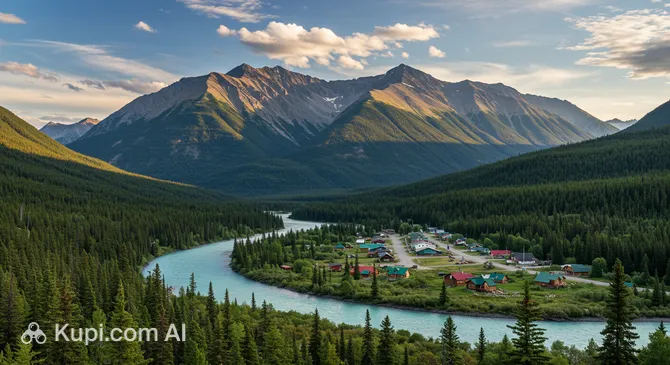
Haines Junction. Illustration.
Source: Kupi.com AI

The main reason to visit this corner of the planet is its proximity to Kluane National Park and Reserve, a UNESCO World Heritage site. Haines Junction serves as an ideal base for exploring vast ice fields and the country's highest peaks. Tourists are drawn here by breathtaking panoramas, the chance to see grizzly bears in the wild, and the crystal clarity of local lakes.

This town is an ideal destination for those dreaming of escaping the city bustle and taking a deep breath of the purest mountain air. Come to Haines Junction for real adventures, the magic of the Northern Lights, and a silence that can only be found at the edge of the world.

Weather Overview

The climate in Haines Junction is typical of the subarctic zone: long, frosty winters and short but pleasant summers prevail here. When planning your trip, expect moderately warm summers with occasional rain and cold, snowy winters that require serious preparation in terms of clothing.

The summer season, lasting from June to August, is considered the most comfortable time to visit. The average temperature in July is about +12.6°C, and on the warmest days, the air warms up to +17.5°C. However, the weather can be changeable: even in summer, 12 to 14 rainy days per month are recorded, so a waterproof jacket will come in handy. Spring and autumn here are short-lived; already in September the temperature drops to +4.8°C, and in May the air barely warms up above zero.

Winter is a time for real extreme adventurers and Northern Lights hunters. The coldest month is January, when the thermometer drops to an average of -18.6°C, and night minimums reach -21.3°C. There is not much precipitation in the form of snow, but it lies in a thick blanket all winter. To ensure your adventure is comfortable, we recommend finding out in advance what the expected weather in Haines Junction will be for your travel dates and dressing in layers.

Average monthly temperature

Average monthly precipitation

Interesting Facts

Beyond its main attractions, Haines Junction holds many fascinating secrets that reveal themselves only to the most curious travelers. This small village on the edge of the wilderness is full of amazing stories, from architectural curiosities to ecological phenomena.
  • The Architectural “Muffin.” One of the most recognizable buildings in town is the St. Elias Convention Centre, which locals affectionately call “The Muffin.” The building earned this nickname due to its unusual cylindrical shape with an overhanging roof. Although the design looks amusing, it was specifically engineered for the harsh climate to ensure maximum energy efficiency and resistance to snow loads.

  • The Secret of the name “Dakwakada.” In the language of the Southern Tutchone indigenous people, this place has been known since time immemorial as Dakwakada, which translates as “High cache place.” This name recalls a time when hunters built special wooden platforms on high poles here to store food. Such a design was the only reliable way to protect food supplies from the grizzly bears for which this region is famous.

  • The Invisible Giant. Even though Haines Junction is called the gateway to Mount Logan—the highest peak in Canada—it is impossible to see the mountain itself from the town center. This geographical paradox is explained by the fact that Logan is securely hidden behind the massive front range of the Saint Elias Mountains. To see the peak, tourists have to book flightseeing tours, as from the ground it only becomes visible deep within the park.

  • The Color-Changing Forest. Travelers are often surprised by the vast areas of forest around the town that have an unusual reddish-grey hue. This is not seasonal wilting, but the result of a large-scale natural phenomenon—an infestation of the spruce bark beetle that lasted several decades. Locals have adapted to the changes in the landscape and now actively use the dry wood (“beetle-killed wood”) for building houses and creating unique furniture, turning an ecological feature into a resource.

How to Get There

A journey to Haines Junction is an immersion into the Yukon wilderness, and the road here is an adventure in itself. Since the village is located in a remote area, logistics require advance planning. You can explore all the ways to get to the city on our detailed page, but the main option for most travelers remains a combined route: a flight to the regional capital and a car rental.

There is no airport in the town of Haines Junction that accepts regular flights. The main air gateway to the region is Whitehorse Airport (YXY), located in the city of Whitehorse. It is situated approximately 133 km from Haines Junction. This is the territory's main transportation hub, receiving flights from major Canadian cities such as Vancouver. The trip from the airport to Haines Junction by rental car along the scenic Alaska Highway will take about 2 hours. The road is very beautiful and comfortable, but there is practically no public transport, so a car is a necessity.

For clarity, here is a summary of the main airports within reach:

AirportPassenger trafficDistance
Whitehorse Airport400 000133 km
Yakutat Airport24 000183 km
Haines Municipal Airport13 002201 km
Gustavus Airport20 610279 km

There is no rail connection to Haines Junction. In this region of Canada, there are no passenger trains connecting the village with other cities. The nearest historical narrow-gauge railway, the White Pass & Yukon Route, is a tourist attraction and does not function as regular transport to Haines Junction.

Since it is impossible to get there by train, the main means of transport remains motor vehicles. Haines Junction stands at the intersection of two legendary roads: the Alaska Highway and the Haines Road. Many tourists arrive here by car or RV from Whitehorse or from the American border (from the town of Haines, Alaska), enjoying the views of mountains and forests along the way.

Main Attractions

Haines Junction may seem small, but the concentration of interesting places here is surprisingly high. In addition to the famous national park, there are several locations in the town itself and its immediate surroundings that every traveler should include in their itinerary to experience the atmosphere of this region.

Our Lady of the Way Church. This building is hard to miss or mistake for anything else. Built in 1954, the Catholic church is a striking reminder of the era of large-scale construction of the Alaska Highway. It was converted from a military metal hangar (a so-called “Quonset hut”) left behind by the American army after World War II. Thanks to its unusual semi-cylindrical shape and picturesque location against the backdrop of the rugged mountains, the church has become one of the most photographed architectural landmarks in the village.

Dezadeash River Trail. If you don't have time for challenging multi-day mountain hikes, this trail is the perfect alternative. The route starts right within the town limits and is an easy loop walk about 5 kilometers long. The trail passes through dense forest and picturesque wetlands equipped with convenient wooden boardwalks. It offers stunning views of the Icefield Ranges, and attentive tourists can often spot moose, beavers, and many species of birds here.

Pine Lake. Located just a few minutes' drive east of Haines Junction, this lake is considered the “beach” for locals. Unlike the deep glacial waters of Kluane Park, the water here warms up enough in the summer for comfortable swimming. The lakeshore is ideal for family picnics, and the calm water surface attracts kayaking and paddleboarding enthusiasts. It’s worth coming here at sunset to enjoy the silence and see the perfect reflection of the forest in the turquoise water.

Local Cuisine

The cuisine of Haines Junction is a reflection of the harsh but generous North. You won't find Michelin-starred fine dining restaurants here, but you will be able to enjoy simple, hearty, and incredibly delicious food made from local products. The gastronomic scene of this small village is geared toward travelers and outdoor enthusiasts who need energy to conquer mountain peaks and glaciers.

The main delicacy of the region is undoubtedly Yukon salmon. This fish is prepared here in all forms: smoked, grilled, or baked. It is definitely worth trying a Chinook or Sockeye salmon steak—the local fish is particularly fatty and rich in flavor due to the cold waters. Another signature Yukon dish is game meat, specifically bison or moose. A burger with a bison patty is a popular item on local diner menus, offering a healthy and lean alternative to the usual beef.

The center of attraction for all foodies during the summer season is the legendary Village Bakery and Deli. This place is not just a cafe, but the true heart of the town's social life. Tourists and locals line up for fresh sourdough bread, huge cinnamon buns, and homemade pies with northern berries. They are especially famous for their Friday nights, when a traditional Salmon Bake is held with live music.

As for drinks, a culture of warming teas and strong coffee prevails, which is not surprising given the cool climate. Among alcoholic beverages, you should pay attention to the products of the local Yukon Brewing brewery. Although the production itself is in neighboring Whitehorse, you can always find their famous “Yukon Gold” ale or “Chilkoot” lager in Haines Junction establishments, which perfectly complement a hearty dinner after a long hike.

The food culture in the town is very democratic and relaxed. There is no dress code: you can safely enter a restaurant in hiking boots and a fleece jacket. In addition to the few cafes and roadside diners, picnics are extremely popular. Travelers often buy smoked meats, cheeses, and pastries at local stores to have lunch with a mountain view in Kluane Park or on the shores of Pine Lake.

Travel Tips

Welcome to Haines Junction! To ensure your journey to the majestic mountains and glaciers goes perfectly, we have prepared a list of important practical recommendations that will help you avoid surprises in this wild and beautiful corner of Canada.

  1. Clothing and Gear. The weather in the mountains changes rapidly, so the layering principle is your golden rule. Even in summer, be sure to bring a fleece sweater and a quality waterproof jacket. Footwear should be trekking boots that have been broken in beforehand, as the best views are found on hiking trails. In winter, specialized thermal clothing designed for temperatures down to -30°C is necessary.
  2. Transport. There is no public transport, subway, or standard taxi services like Uber in the village. The only way to move comfortably and visit remote natural locations is by rental car. It is better to rent a car upon arrival in the region in the city of Whitehorse, as there are practically no rental agencies in Haines Junction itself.
  3. Finance. The official currency is the Canadian dollar. Bank cards are accepted in most hotels, restaurants, and gas stations, but having some cash (5-20 dollar bills) is useful for small purchases or tips. There is an ATM in town, but it may not work or may charge a high fee. It is customary to leave a tip of 15–20% of the bill.
  4. Health and Safety. There is a small medical center in town for basic assistance, but the nearest large hospital is a two-hour drive away. The main safety aspect here is related to wildlife: be sure to buy and learn how to use bear spray if you plan to go beyond the central streets.
  5. Communication and Navigation. The mobile network works within the village, but the signal often disappears on mountain roads and trails. Wi-Fi is available in most accommodation and cafes. We strongly recommend downloading offline maps of the region in advance, as GPS may be your only guide in the park. The main language of communication is English.
  6. Local Etiquette. The atmosphere here is very friendly and informal. It is customary to greet people you meet on hiking trails. Treat indigenous culture with special respect: do not photograph people without permission and do not enter areas marked as private property of First Nations communities.
  7. What to Avoid. Never leave food, trash, or even empty wrappers on the street, in the back of a pickup truck, or on a picnic table unattended. This attracts bears into the town and creates a deadly hazard for both you and the animals.
  8. Useful Hack. Before leaving Whitehorse, fill up your gas tank and buy a basic supply of groceries and snacks. There are shops and gas stations in Haines Junction, but prices there are noticeably higher and the choice of goods is limited due to the village's remoteness.

Haines Junction is a place where civilization meets pristine nature, requiring mindfulness and respect from the guest. By following these simple tips, you can focus on the main thing—enjoying the incredible views and the spirit of the real North without unnecessary household worries.

Entertainment & Nightlife

The nightlife in Haines Junction has its own unique character, which is fundamentally different from the usual rhythm of big cities. Here you won’t find noisy nightclubs, neon signs, or blocks of bars open until dawn. Evening entertainment in this village primarily consists of cozy gatherings with locals, live music in an intimate setting, and contemplating the majestic northern nature, which becomes even more mysterious at night.

The center of attraction during the summer season is undoubtedly the Village Bakery and Deli. While it is famous for its baked goods during the day, in the evenings, especially on Fridays, it transforms into the village's main cultural venue. This is where the famous “Salmon Bake” nights are held, featuring grilled salmon accompanied by performances by local musicians. The atmosphere here is incredibly friendly and relaxed: tourists and locals sit at communal outdoor tables, enjoying food and conversation to the sounds of folk or country music.

If you're looking for a place to have a drink and play a game of pool, it's worth checking out the bar at the Kluane Park Inn, known among locals as “The Raven.” This is a classic, no-frills northern bar where you can feel the true spirit of the Yukon, meet colorful characters, and hear hunting stories. Another popular spot for an evening dinner with drinks is Frosty's restaurant in the Alcan Motor Inn complex, which stays open longer than most other establishments and offers hearty meals in a quiet setting.

It's important to remember that “nightlife” here ends quite early. Most establishments close by 9:00 PM or 10:00 PM, even on weekends. There is no dress code in Haines Junction: a comfortable fleece jacket and hiking boots will be appropriate absolutely everywhere, whether it's dinner at a restaurant or a concert at the bakery. The crowd here is simple and open, so don't hesitate to start a conversation—it's the best way to find out the local news.

The main “nightclub” of the region is the sky itself. In winter, when the nights are long and dark, Haines Junction becomes an ideal platform for observing the Northern Lights (Aurora Borealis). The lack of light pollution allows you to see the bright dancing lights right from your hotel porch. In summer, during the period of the midnight sun, the sun barely dips below the horizon, allowing for walks and mountain photography practically around the clock.

Regarding safety, Haines Junction is a very quiet place, and crime is practically non-existent. However, night walks require caution because of wild animals. Bears can enter the village limits in search of food, so try to move in groups, carry a flashlight, and be alert. There are no taxis or Uber here, but the village is so compact that most places can be reached on foot if you are staying in the center.

During the day, entertainment is more active. Guests visit the Da Kų Cultural Centre, take light aircraft flights over the glaciers, or explore the numerous hiking trails of the national park. But it is the quiet evenings with views of the Saint Elias Mountains that leave the deepest impression of the trip.

Parks & Museums

Haines Junction is a unique place where the boundaries between the urban environment and the wilderness are practically blurred. Cultural life here is inextricably linked to the history of indigenous peoples and majestic landscapes, so parks and museum displays often form a single whole, telling the story of the land and the people who have lived on it for millennia.

Kluane National Park and Reserve. Although technically it is a vast protected area starting right outside the town’s doorstep, for tourists it serves as the main “city park.” It is a UNESCO World Heritage site and home to the highest mountains in Canada. Visitors can explore the park's front ranges by heading out for walks directly from the town center. Here you will find alpine meadows, glacial valleys, and the chance to experience the true majesty of the north without traveling far from civilization.

Kathleen Lake Recreational Area. Located just 20 minutes' drive south of town, this area is a favorite holiday spot for both locals and tourists. It is one of the few lakes in the region accessible by car, with a developed picnic area and walking paths. The crystal clear water and mountains reflecting in the lake make it an ideal place for quiet nature contemplation or starting hikes of varying difficulty, including the popular trek to the “King's Throne.”

Da Kų Cultural Centre. The center's name translates from the Southern Tutchone language as “Our House,” and it is undoubtedly the town's main cultural institution. This modern space combines a museum, a gallery, and a visitor center. It features magnificent displays dedicated to the history, traditions, and art of the Champagne and Aishihik First Nations. You will see exquisite beadwork, traditional tools, and learn about the seasonal migrations and lifestyle of the indigenous population.

Kluane Park Visitor Centre. Located under the same roof as the cultural center, this zone functions as a separate museum of natural history. Interactive exhibits, 3D maps, and video installations tell the story of the region's geology, the formation of glaciers, and the rich wildlife of the Yukon. This is the best place to understand the scale of the surrounding mountains before heading out on a hike, and to see the world through the eyes of an eagle or a grizzly bear thanks to modern technology.

From an architectural standpoint, the Da Kų Centre building itself deserves special attention. Its design, constructed using massive wooden beams and huge windows, symbolizes the traditional fish traps used by the ancestors of the local people. The building is harmoniously integrated into the landscape, and the panoramic windows offer a view of the very mountains that inspired the center's creators.

Insider Tip: Be sure to check the event schedule at the Da Kų Cultural Centre. On summer evenings, cozy campfire gatherings are often held here with stories from elders or performances by local artists, allowing you to immerse yourself in the Yukon atmosphere much more deeply than a standard tour.

Getting Around

There is no public transport system in Haines Junction in the sense that a city dweller is used to. Due to the small size of the settlement and its secluded location, there are no shuttle buses, trolleybuses, trams, or subways. The municipal transport network is not developed, as the main infrastructure facilities are within walking distance, and for long-distance trips, locals use private cars exclusively.

Since regular city transport does not run, tourists will not have to deal with payment zones, buy transit passes, or look for validators. Mobile apps for public transport routing are also useless here. Not having to pay for travel around the town is a nice bonus; however, this imposes certain requirements on logistics planning.

The main and practically only option for comfortable movement is a rental car. A car is vital for travelers who want to explore the surrounding area and Kluane National Park, as natural attractions are dozens of kilometers apart. It's important to keep in mind that the usual car-sharing services and popular taxi aggregators (like Uber) do not work in the village, and local taxi services may be unavailable or run irregularly.

For moving directly within the village boundaries, a bicycle serves as an excellent alternative to a car. In the summer season, this is a popular way to get around: the terrain in the town itself is relatively flat and the traffic is calm. Some local lodges and visitor centers offer bike rentals. If you limit yourself to exploring the central part, you can get everywhere on foot: Haines Junction is very compact, and a walk from one edge to the other will take no more than an hour.

Accommodation

The choice of accommodation in Haines Junction perfectly matches the spirit of this secluded northern land. Here you won't find huge skyscraper hotel chains or luxury five-star resorts with butler services. Instead, the hospitable village offers travelers cozy roadside motels, atmospheric lodges, small Bed & Breakfasts (B&Bs), and individual wooden cabins. The main focus in all accommodation options is on functional comfort, warmth, and proximity to the wilderness.

Areas to Stay. Given the compactness of the village, the division into areas is quite arbitrary. Most accommodation facilities are conveniently grouped along the main transportation artery—the Alaska Highway—and its intersection with the Haines Road. Staying here puts you within walking distance of key infrastructure: grocery stores, the bakery, gas stations, and the Da Kų Cultural Centre. This is an ideal location for road trippers, allowing for a quick departure on your route early in the morning.

Accommodation in campgrounds and RV parks is particularly popular in the region. In summer, many tourists prefer to stay this way to be closer to nature. If you are looking for more privacy, you should pay attention to cabins and lodges located a bit further from the highway, closer to the boundaries of the national park, where the windows offer panoramic mountain views without the noise of passing cars.

Booking Tips. The tourist season in the Yukon is short and very intense, lasting mainly from late May to early September. Since the number of rooms in Haines Junction is limited, they sell out lightning fast. We strongly recommend booking accommodation in advance—ideally 3–4 months before your trip. Hoping to find a vacant room on a “walk-in” basis in the middle of July may not pay off.

Prices and Payment Methods. The price range generally stays at a medium level, although costs can be higher than in southern cities due to the region's remoteness and short season. Budget options are represented by spots in campgrounds and hostels. You can book accommodation through major international online platforms; however, many small family-run hotels and lodges prefer direct booking through their websites or by phone.

Nearby Cities

For those who want to explore the surrounding area, Haines Junction serves as an excellent starting point for day trips to several interesting nearby locations. Just a two-hour drive along a scenic highway is the territory's capital—Whitehorse. This is an ideal place to dive into city life, visit Yukon history museums, and restock supplies. For history buffs, an interesting destination, although it requires a longer drive, is the legendary Dawson City, which has preserved the spirit of the Klondike Gold Rush.

CityPopulationDistance
Burwash Landing73105 km
Whitehorse25 085134 km
Yakutat600182 km
Skagway1 200189 km
Haines2 500205 km

These nearby destinations provide an insight into the region's diverse culture and landscapes, making your journey through northern Canada even more rewarding.

Shopping & Souvenirs

General Overview: Shopping in the town of Haines Junction has its own unique features, dictated by its location in the heart of the wilderness. Here you won't find the usual shopping malls, fashion boutiques, or clothing chain stores. Retail in the village is primarily focused on providing travelers and locals with essential items, outdoor gear, and unique local goods. This is a place where the shopping process becomes a way to get to know Yukon culture and support local artisans.

Main Shopping Areas and Streets: All commercial life in the village is concentrated along the main transportation artery—the Alaska Highway. Driving through town, you will see most shops and services specifically on this street. Thanks to the compactness of Haines Junction, you can visit all the interesting spots on foot while enjoying the mountain views. Grocery stores, souvenir shops, and gas stations are located here, often doubling as mini-marts with an expanded range of goods.

Shopping Centers: There are no large malls or shopping complexes in the town. The role of a general store is fulfilled by small local markets where you can buy food, household goods, and basic clothing. For large-scale shopping, residents usually head to the territory's capital, Whitehorse, located two hours away.

Markets: During the summer season, small farmers' markets and craft fairs (pop-up markets) are periodically organized in the town. They often take place outdoors near community centers or popular gathering spots. Here you can buy fresh pastries, homemade preserves, and handmade items while personally chatting with their creators.

Souvenirs: Haines Junction is a great place to buy authentic northern souvenirs. Special attention should be paid to the work of indigenous artisans: beaded moccasins, traditional jewelry, and carvings made from antler. The gift shop at the Da Kų Cultural Centre offers a wide selection of books about Yukon nature, art postcards, and high-quality works by local artists. Popular gifts also include gastronomic souvenirs: fireweed jelly, wild berry syrups, and smoked salmon.

Hours of Operation and Payment: Shops usually operate from 9:00 AM or 10:00 AM until 6:00 PM. During the summer tourist season, hours may be extended; however, in the off-season and winter, many spots close earlier or operate on a reduced schedule. Sunday is often a day off for small family businesses. Credit and debit cards are accepted almost everywhere, but having a small supply of cash in Canadian dollars is recommended for small purchases.

Taxes (Tax Free): A pleasant feature of shopping in the Yukon Territory is the absence of a Provincial Sales Tax (PST). When making purchases, you only pay the federal Goods and Services Tax (GST) of 5%. This makes purchasing souvenirs, clothing, and expensive equipment here more advantageous compared to many other provinces in Canada, where the total tax can be significantly higher.

Reached the end of the page?

That means the route is fully explored